
James William Hamblen
Murderer Brian Kevin Rosenfeld
Murderer · USA · 1985
Brian Kevin Rosenfeld Brian Kevin Rosenfeld was sentenced to three concurrent l…
23 victims
Brian Kevin Rosenfeld
Murderer · USA · 1985
Brian Kevin Rosenfeld Brian Kevin Rosenfeld was sentenced to three concurrent l…
23 victims
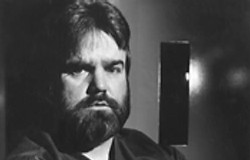 Marvin Gray
Murderer · USA · 1975
Marvin Gray was convicted killer who claimed responsibility for 23 slayings and…
23 victims
Marvin Gray
Murderer · USA · 1975
Marvin Gray was convicted killer who claimed responsibility for 23 slayings and…
23 victims
 Yahweh ben Yahweh
Murderer · USA · 1980
Yahweh ben Yahweh was born and legally named Hulon Mitchell Jr. (October 27, 19…
23 victims
Yahweh ben Yahweh
Murderer · USA · 1980
Yahweh ben Yahweh was born and legally named Hulon Mitchell Jr. (October 27, 19…
23 victims
 Russell Ellwood
Murderer · USA · 1991
Russell Ellwood was a former taxi driver. Authorities suspected him of killing…
20 victims
Russell Ellwood
Murderer · USA · 1991
Russell Ellwood was a former taxi driver. Authorities suspected him of killing…
20 victims
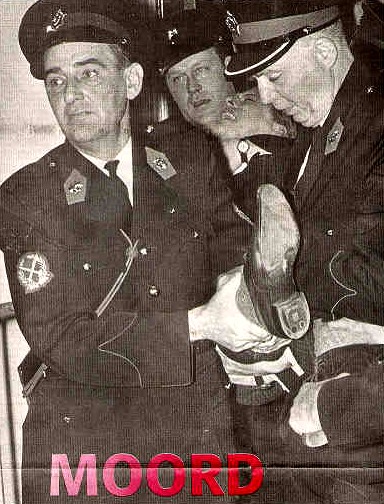 Hans Van Zon
Serial killer · Netherlands · 1964
Hans van Zon was born in Utrecht, Holland, in April 1942. He was described as a…
5 victims
Hans Van Zon
Serial killer · Netherlands · 1964
Hans van Zon was born in Utrecht, Holland, in April 1942. He was described as a…
5 victims
 Cherrylle Dell
Murderer · Canada · 1995
Cherrylle Dell poisoned her husband, Scott Dell, with antifreeze-laced wine. Sc…
2 victims
Cherrylle Dell
Murderer · Canada · 1995
Cherrylle Dell poisoned her husband, Scott Dell, with antifreeze-laced wine. Sc…
2 victims
 Gerald Lee Powers
Murderer · USA · 1996
Gerald Lee Powers was convicted in Tennessee of first degree felony murder in t…
1 victim
Gerald Lee Powers
Murderer · USA · 1996
Gerald Lee Powers was convicted in Tennessee of first degree felony murder in t…
1 victim
 Renee Bowman
Murderer · USA · 2006
Renee Bowman was a foster parent to three adopted daughters. The children were…
2 victims
Renee Bowman
Murderer · USA · 2006
Renee Bowman was a foster parent to three adopted daughters. The children were…
2 victims
 Yolanda Saldivar
Murderer · USA · 1995
Yolanda Saldívar (born September 19, 1960) was convicted in 1995 for the murder…
1 victim
Yolanda Saldivar
Murderer · USA · 1995
Yolanda Saldívar (born September 19, 1960) was convicted in 1995 for the murder…
1 victim
- Gender
- male
- Country
- USA
- Location
- Texas/Florida, USA
- Date of birth
- 1929
- Age at first offence
- 55
- Characteristics
- robbery
- Victim profile
- Debbie Abbott, 20 / Laureen Jean Edwards, 34 (store owner)
- Method of murder
- Shooting ( .38 caliber automatic pistol )
- Date(s) of murder
- March 1984 / April 24, 1984
- Years active
- 1984
- Date of arrest
- Same day
- Status
-
Executed
Executed by electrocution in Florida on September 21, 1990
Case record: James William Hamblen
Background
James William Hamblen was a state prisoner in Florida who was condemned to die. He was described as a tall, middle-aged man at the time of the April 24, 1984 killing. He was reported as 61 years old at execution. Before his electrocution, he spent the night before execution listening to classical music.
Hamblen had a prior conviction of rape in Indiana in 1964. The state introduced evidence at trial concerning the circumstances of the crime and also introduced evidence that Hamblen had been convicted of rape in Indiana in 1964. Hamblen asked standby counsel to cross-examine only one witness, a police records custodian from Indiana. He accepted the state's version of the facts and conceded one point as to his prior record that the state was having some difficulty establishing. Hamblen said that he dropped the "Jr." from his name when his father died, and that he was the person convicted of rape in Indiana in 1964.
Hamblen had been indicted for first-degree murder after the April 24, 1984 killing.
The offence
On April 24, 1984, Duval County Sheriff's officers responded to a silent alarm at a Jacksonville boutique. When the officers arrived, they saw a tall, middle-aged man inside the store. At first they thought he was the proprietor or an employee, but when they could not get him to open the locked door, they became suspicious. When he finally emerged, the officers told him that the alarm had summoned them.
The man, who later identified himself as James William Hamblen, responded that he was aware of this and stated that he had "just killed a woman inside."
In a dressing room, the officers found the partially clothed body of Ms. Laureen Jean Edwards. She had been shot once in the back of her head. Another shot apparently had struck the wall of the dressing room.
Hamblen was arrested, and a .38 caliber automatic pistol was taken from him. The arresting officers reported that Hamblen offered no resistance to arrest and that he was lucid and coherent.
Hamblen gave a statement at police headquarters. He said he had driven to Florida from Texas, where he alleged later that he had murdered an estranged lover. He said he needed money to park his rental car at the airport and decided to steal the necessary funds. While driving around the Jacksonville area, one store, the Sensual Woman, caught his eye as a potential target. Finding Ms. Edwards alone in the store, Hamblen pulled his gun and told her he wanted money. She gave him a small amount of cash from her cash drawer. He then told her to go into a dressing room and disrobe.
Hamblen told police he had no intention of sexually abusing Ms. Edwards; he only wanted to make it difficult for her to follow him as he made his escape. According to Hamblen, his pistol fired accidentally in the dressing room as the woman disrobed.
Ms. Edwards then told Hamblen she had more money in the back of the store. She said she would take him to it if he would accompany her. As they proceeded toward the rear, he saw her touch a button that he suspected (correctly) was for a silent alarm. Angered that "anybody could be so stupid over so little money," Hamblen ordered her back into the dressing room where he shot her once in the back of the head.
The physical evidence at the scene was described as bearing out Hamblen's story. The medical examiner reported that Ms. Edwards died from a single bullet wound from a .38 caliber weapon held at close range. The medical examiner said that the gun barrel probably touched her head and that she had not been sexually abused. Death was described as virtually instantaneous. Shell fragments and a spent bullet recovered at the scene were determined to have been fired by the gun taken from Hamblen.
The New York Times reported that Hamblen said he shot Mrs. Edwards in the back of the head because she pressed a silent alarm button when he tried to rob her on April 24, 1984.
The New York Times also reported that Hamblen admitted that he killed Debbie Abbott, a 20-year-old woman he was dating, less than a month before in Spring, Tex.
Investigation
Duval County Sheriff's officers responded to a silent alarm at a Jacksonville boutique on April 24, 1984. When they arrived, they saw a tall, middle-aged man inside the store and became suspicious when they could not get him to open a locked door. When he emerged, he stated that he had "just killed a woman inside."
The officers found the partially clothed body of Ms. Laureen Jean Edwards in a dressing room, shot once in the back of her head, with another shot apparently striking the wall of the dressing room.
Arrest
Hamblen was arrested at the scene.
Trial
After a grand jury indicted Hamblen for first-degree murder, his public defender moved for psychiatric examinations. Both doctors reported that Hamblen was competent to stand trial and was legally sane at the time of the offense.
Upon receiving news of the doctors' reports, Hamblen asked the court to revoke the appointment of the public defender and allow him to represent himself. He simultaneously announced his intention to plead guilty.
The trial judge conducted a hearing according to the requirements of Faretta v. California, 422 U.S. 806 (1975), and Goode v. State, 365 So.2d 381 (Fla. 1978), cert. denied, 441 U.S. 467 (1979), to determine Hamblen's fitness for self-representation. The evidence at this hearing showed that Hamblen had had two years of college education, that he understood courtroom procedure, and that he had represented himself while a state prisoner in Indiana.
The judge determined that Hamblen met the criteria enabling him to exercise his right of self-representation, but ordered two assistant public defenders to be in the courtroom as emergency backup counsel.
Hamblen pleaded guilty and waived his right to have a jury consider whether he should be executed.
The state introduced evidence concerning the circumstances of the crime. The state also introduced evidence that Hamblen had been convicted of rape in Indiana in 1964. Hamblen asked his standby counsel to cross-examine only one witness, a police records custodian from Indiana. Hamblen accepted the state's version of the facts and conceded one point regarding his prior record that the state was having some difficulty establishing.
Hamblen presented no evidence of mitigating factors. He commented that it was a purely technical matter concerning whether James William Hamblen, the name under which Hamblen had been arrested and indicted in Florida, and James William Hamblen, Jr., who had been imprisoned in Indiana for rape, were the same person. Hamblen announced to the court that he dropped the Jr. from his name when his father died and that it was he who had been convicted of rape in Indiana in 1964.
Hamblen said: "the prosecutor has correctly assessed my character, and certainly has established the aggravated nature of the crime. Therefore, I feel his recommendation of the death penalty is appropriate."
Hamblen also stated that the probation officer, one Chance, had recommended life imprisonment without hope of parole "so that I may reflect upon the senselessness of my crime." Hamblen continued:
"Mr. Chance might have a valid point if I were a young man with a whole lifetime ahead of me and with a whole pocketful of hopes and dreams . . . . But, as a matter of fact, I'm 55, almost 56 years old and I don't harbor any dreams that are going to be realized in this world, and I am not particularly given to reflection. Therefore, it seems to me that Mr. Chance's recommendation in this instance is inappropriate and [the prosecutor] Mr. Bledsoe's, on the other hand, is appropriate."
After reviewing the record, including the psychological reports, the trial judge sentenced Hamblen to death. The judge found three aggravating factors: cold, calculated and premeditated manner; previous conviction of a felony involving violence against another person; and committed in the course of a robbery. The judge found none in mitigation.
Hamblen did not take an appeal from the sentence. The public defender's office was appointed as appellate counsel. After Hamblen's motion to withdraw was denied, the public defender prosecuted this appeal.
Sentencing
The judge found three aggravating factors—cold, calculated and premeditated manner, previous conviction of a felony involving violence against another person, and committed in the course of a robbery—and none in mitigation.
Appeals
Supreme Court of Florida docket #68843: James William Hamblen, Appellant, vs. State of Florida, Appellee, 527 So. 2d 800, with an opinion on June 2, 1988 (review pursuant to article V, section 3(b)(l) of the Florida Constitution). The opinion noted that the case was described as an unusual case and that the issue raised was never before considered by the court.
The record also lists:
- Docket #74269: James William Hamblen, Petitioner, vs. Richard L. Dugger, etc., Respondent, 546 So. 2d 1039, with an opinion on July 6, 1989 (petition for extraordinary relief).
- Docket #76315: James William Hamblen, Appellant, vs. State of Florida, Appellee, 565 So. 2d 320, with an opinion on July 16, 1990.
The United States Supreme Court turned down a final request for a stay. The vote was 7 to 1, with the sole dissent coming from Justice Thurgood Marshall, who objected to capital punishment in all cases.
Outcome
The court affirmed Hamblen's judgment and sentence of death. It was so ordered.
Hamblen was executed in Florida by electrocution on September 21, 1990.
Before his electrocution, he was reported as smiling, winking, and sticking his tongue out at witnesses. Judith Dougherty, one of his state-financed lawyers, said afterward that he was mentally ill and added, "The system failed Jim Hamblen."
A spokesman for Gov. Bob Martinez, Jon Peck, said in Tallahassee of the electrocution, "No problems - just strictly, procedurally, routine."
The New York Times reported that the execution was pronounced at 7:12 A.M.
The New York Times reported that Hamblen became the 140th prisoner in the United States and 24th in Florida to be executed since a 1976 Supreme Court ruling allowed states to resume use of the death penalty.
Aftermath
The New York Times reported that Hamblen made a written request to prison officials that Robert Edwards, his victim's husband, be given a special area to wait during the execution instead of in a cow pasture across from the prison where the public and reporters gathered. Hamblen wrote: "These are good people, and they deserve better than this." Prison officials did not make special arrangements, and Mr. Edwards waited at the cow pasture. He refused to comment.
The New York Times reported that while two death penalty supporters applauded when the execution was confirmed, six opponents of executions held a candlelight vigil, complaining that executions were becoming routine.
The New York Times reported that Hamblen, described as the convicted killer, once called himself "a lost cause." It reported that he shot Mrs.
The New York Times reported that Florida's electric chair malfunctioned during an execution in May, and three jolts of electricity were required to kill a condemned prisoner, Jesse Tafero. It also reported that Hamblen's execution occurred without problems described as strictly procedurally routine.
Timeline
- April 24, 1984 — Duval County Sheriff's officers responded to a silent alarm at a Jacksonville boutique; James William Hamblen identified himself after saying, "just killed a woman inside"; Laureen Jean Edwards was found in a dressing room after being shot once in the back of the head.
- 1964 — Hamblen was convicted of rape in Indiana (evidence introduced at trial).
- June 2, 1988 — Supreme Court of Florida docket #68843 (527 So. 2d 800) with an opinion.
- July 6, 1989 — Supreme Court of Florida docket #74269 (546 So. 2d 1039) with an opinion.
- July 16, 1990 — Supreme Court of Florida docket #76315 (565 So. 2d 320) with an opinion.
- September 21, 1990 — James William Hamblen was executed by electrocution in Florida.

Spotted an error, or have more information about this case?