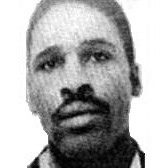
Van Roosevelt Solomon
Murderer Ervil LeBaron
Murderer · USA · 1972
Ervil Morrell LeBaron (1925 to August 16, 1981) was the leader of a polygamous…
35 victims
Ervil LeBaron
Murderer · USA · 1972
Ervil Morrell LeBaron (1925 to August 16, 1981) was the leader of a polygamous…
35 victims
 Brian Kevin Rosenfeld
Murderer · USA · 1985
Brian Kevin Rosenfeld Brian Kevin Rosenfeld was sentenced to three concurrent l…
23 victims
Brian Kevin Rosenfeld
Murderer · USA · 1985
Brian Kevin Rosenfeld Brian Kevin Rosenfeld was sentenced to three concurrent l…
23 victims
 Marvin Gray
Murderer · USA · 1975
Marvin Gray was convicted killer who claimed responsibility for 23 slayings and…
23 victims
Marvin Gray
Murderer · USA · 1975
Marvin Gray was convicted killer who claimed responsibility for 23 slayings and…
23 victims
 Yahweh ben Yahweh
Murderer · USA · 1980
Yahweh ben Yahweh was born and legally named Hulon Mitchell Jr. (October 27, 19…
23 victims
Yahweh ben Yahweh
Murderer · USA · 1980
Yahweh ben Yahweh was born and legally named Hulon Mitchell Jr. (October 27, 19…
23 victims
 Luigi Chiatti
Murderer · Italy · 1992
Luigi Chiatti was an Italian serial killer. He was born Antonio Rossi to a 24-y…
2 victims
Luigi Chiatti
Murderer · Italy · 1992
Luigi Chiatti was an Italian serial killer. He was born Antonio Rossi to a 24-y…
2 victims
 Lawrence Bittaker
Serial killer · USA · 1979
Lawrence Sigmund Bittaker was adopted shortly after his birth by Mr. and Mrs. G…
5 victims
Lawrence Bittaker
Serial killer · USA · 1979
Lawrence Sigmund Bittaker was adopted shortly after his birth by Mr. and Mrs. G…
5 victims
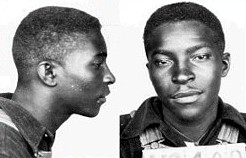 J. C. Levice
Murderer · USA · 1942
J. C. Levice · Charles Sanders · Grady B. COLE · Coy Collier Qualls (deceased)…
1 victim
J. C. Levice
Murderer · USA · 1942
J. C. Levice · Charles Sanders · Grady B. COLE · Coy Collier Qualls (deceased)…
1 victim
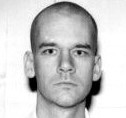 Robert Donald Atworth
Murderer · USA · 1995
Robert Donald Atworth was executed by lethal injection in Texas on December 14,…
1 victim
Robert Donald Atworth
Murderer · USA · 1995
Robert Donald Atworth was executed by lethal injection in Texas on December 14,…
1 victim
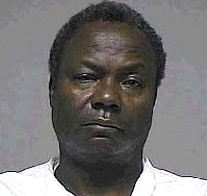 Said Ali Biyad
Mass murderer · USA · 2006
Said Ali Biyad — defendant. · Christie Foster — representing the Commonwealth's…
4 victims
Said Ali Biyad
Mass murderer · USA · 2006
Said Ali Biyad — defendant. · Christie Foster — representing the Commonwealth's…
4 victims
- Gender
- male
- Country
- USA
- Location
- Cobb County, Georgia, USA
- Date of birth
- 1943
- Age at first offence
- 36
- Characteristics
- armed robbery
- Victim profile
- Roger Dennis Tackett ( gasoline station manager )
- Method of murder
- Shooting
- Date(s) of murder
- June 16, 1979
- Years active
- 1979
- Date of arrest
- Same day
- Status
-
Executed
Executed by electrocution in Georgia on February 20, 1985
Case details
Van Roosevelt Solomon was convicted in Georgia state court of first-degree murder and armed robbery for events in June 1979 involving the attempted robbery of a convenience store.
Background
The victim, Roger Dennis Tackett, was the manager of a Tenneco self-service gasoline station and convenience store in Cobb County, Georgia.
Two employees, Linda Rosenfield and Carol Menfee, worked the evening shift. They realized they did not have the keys to lock the station when it closed at midnight. One employee talked to Roger by phone and he then came into the station at 11:20 p.m. to lock the store after closing. After the station closed, the two employees left and Roger locked the station but remained to catch up on some paper work so that he could be with his family the next day, Father’s Day.
Early in the evening on the 16th of June, Jill Cindy Rhoda picked up her dinner date at an apartment complex located near the Tenneco station. She drove her date back to his apartment at approximately 12:30 a.m., they argued, and her date took her car keys and went to his apartment. Ms. Rhoda contacted the police in order to get her keys back.
Investigation
Officer Kendle of the Cobb County Police Department accompanied Ms. Rhoda to the apartment complex, but she could not find her boyfriend’s apartment. She remembered his phone number. At approximately 1:50 a.m., the officer drove her to the Tenneco station in order to call and find out where the apartment was. When they arrived at the station, Ms. Rhoda went to use the pay phone.
Officer Kendle noticed an unattended green Dodge automobile parked in front of the station with its door open and a loaf of bread in the front seat. As he went to investigate, he noticed a black male, later identified as Wilbur May, open the back storeroom door inside the station, quickly look out, and then close the door. He found the front door unlocked, drew his weapon, and proceeded inside.
Inside the store, Officer Kendle heard three closely spaced shots, a pause, and then another shot. He ordered the person in the storeroom to come out but received no response. He opened the door and standing near a walk-in cooler were two black males, Wilbur May and Van Roosevelt Solomon. Officer Kendle placed both persons under arrest and asked what they were doing there. The defendant said that "they were burglarizing."
Officer Kendle ordered the police radio operator to call the emergency number listed on the door of the Tenneco station. He learned that Roger was supposed to be in the store at the time. Officer Kendle broke into the back of the store using a crowbar. When he entered, he found Roger’s body.
The body had been beaten and shot five times. There was a time interval of approximately twenty to thirty-five minutes between the arrest and the discovery of the body. Near the body, officers found two guns, one with the hammer cocked. One gun was a Colt .38 short revolver with four spent rounds in the chambers. The other was a Smith & Wesson .38 with one spent round.
Also discovered near the scene, well hidden in underbrush, was a van that Solomon and his co-defendant were driving. It contained a large number of tools.
Both the appellant and his co-defendant were subjected to neutron activation tests, and both were determined to have recently fired weapons.
A witness from the Georgia State Crime Laboratory testified that analysis of the swabbings showed that both petitioner and May had recently fired guns.
Arrest
At approximately 1:50 a.m. on June 17, 1979, Officer Roy Kendle of the Cobb County Police Department noticed the unattended green Dodge automobile parked in front of the store with its driver’s door open. As he began to investigate, he saw co-indictee Wilbur May open the rear storeroom door from inside the store, look out, and quickly close the door.
Officer Kendle approached the front door, found it unlocked, drew his gun, entered the store, and heard multiple gunshots as described during the investigation. He then discovered Wilbur May and petitioner standing near a walk-in cooler. He placed both under arrest.
Officer Kendle radioed for assistance and gave Miranda warnings. Officer Kendle placed petitioner in the rear seat of his car while May stood by the front of the car. Officer Kendle was shortly joined at the scene by Alex Woodard, a private security guard who had heard Officer Kendle’s radio call. Woodard guarded petitioner and May at gunpoint while Officer Kendle surveyed the scene.
Statements
After the arrest, when asked what May and he were doing there, petitioner replied that they were "burglarizing."
Three hours after his arrest, petitioner gave a statement at the police station. In the statement, he said he and Wilbur May had been driving around, and he wanted to show Mr. May the Atlanta area. He stated that he did not know how the van got to the Tenneco station because he was tied up in the back of the van by Mr. May. He stated that Mr. May untied him and made him go into the Tenneco station and put him into the cooler. He did not hear any sounds and did not remember having gloves on.
Officer Kendle took swabbings from the front and back of both hands of petitioner and May. Petitioner was wearing gloves when he was taken into custody, but he was not wearing these upon his arrival at the police station. Officer Kendle found petitioner’s gloves stuffed under the front seat of his patrol car.
Trial
Petitioner was tried before a jury on counts of armed robbery and murder in the Superior Court of Cobb County, Georgia.
The jury returned a general verdict of guilty after deliberations.
At the sentencing phase, the state introduced evidence of three prior convictions. The defense presented testimony from four character witnesses and petitioner testified. The jury returned a sentence of death.
Petitioner was sentenced on September 27, 1979.
Petitioner’s conviction and sentence were affirmed and a motion for rehearing was denied by the Georgia Supreme Court. Solomon v. State, 247 Ga. 27, 277 S.E.2d 1 (1980).
The United States Supreme Court denied Solomon’s petition for a writ of certiorari. Solomon v. Georgia, 451 U.S. 1011, 101 S.Ct. 2348, 68 L.Ed.2d 863 (1981).
Jury instructions on malice murder and conspiracy
During instructions, the jury was charged on malice murder and general conspiracy.
The jury was instructed as follows:
Now, it is contended by the state that the defendant committed the crime charged in this indictment when he, together with another, conspired to commit a crime and that the charge in this indictment was an incidental probable consequence of the crime agreed to by them.... If a conspiracy is established beyond a reasonable doubt, then any act done by any of the parties pursuant to such agreement is, in contemplation of the law, the act of each of them and they are jointly responsible therefor. This means that everything done by any of the conspirators in accomplishing or in furtherance of the common purpose is deemed to have been done by each of them. R.Vol. III at 635-36.
The court then immediately charged the jury as to the elements of murder:
Now, the defendant in this case is charged with the offense of murder. I charge you that a person commits murder when he unlawfully and with malice aforethought, either express or implied, causes the death of another human being. To constitute murder, the homicide must have been committed with malice. Legal malice is not necessarily ill will or hatred, but is the unlawful intention to kill, without justification, excuse or mitigation. R.Vol. III at 636-37.
Sentencing
At the sentencing phase, the jury returned a sentence of death and petitioner was sentenced on September 27, 1979.
Appeals
Direct review
Solomon’s conviction and sentence were affirmed and a motion for rehearing was denied by the Georgia Supreme Court. Solomon v. State, 247 Ga. 27, 277 S.E.2d 1 (1980). Solomon v. Georgia, 451 U.S. 1011, 101 S.Ct. 2348, 68 L.Ed.2d 863 (1981).
Federal habeas corpus
On August 26, 1981, Solomon filed a petition for a writ of habeas corpus in the Superior Court of Butts County, Georgia. Following an evidentiary hearing, the court on February 18, 1982 entered an unpublished order denying all relief. An application for a certificate of probable cause before the Georgia Supreme Court was denied in an unpublished order on April 20, 1982.
On April 28, 1983, the Superior Court of Cobb County signed a death warrant ordering Solomon’s execution on May 11, 1983.
On May 6, 1983, Solomon filed an application for federal habeas corpus relief pursuant to 28 U.S.C. Sec. 2254 (1980) and a motion for a stay of execution in the United States District Court for the Northern District of Georgia. The district court immediately entered a stay. Following an evidentiary hearing conducted on August 2, 1983, the court on September 6, 1983 entered an order denying the application for a writ and lifting its previously issued stay of execution.
On October 11, 1983, the district court issued a certificate of probable cause to authorize appeal pursuant to 28 U.S.C. Sec. 2253 (1980) and a stay of execution pending appeal. Solomon on the same day filed a notice of appeal before this court.
On June 12, 1984, the United States Court of Appeals, Eleventh Circuit affirmed the district court’s decision with respect to each of petitioner’s claims and affirmed the denial of the writ.
Solomon raised six issues in his appeal:
- whether the prosecutor impermissibly commented on petitioner's post-arrest silence and failure to testify;
- whether petitioner was denied his right to reasonably effective counsel at the culpability and sentencing phases;
- whether the trial court's conspiracy instruction relieved the state of the burden of proving intent to kill;
- whether the prosecution rendered improper and prejudicial comments during sentencing closing argument so as to render the trial fundamentally unfair;
- whether a prospective juror was properly excused for cause under Witherspoon v. Illinois; and
- whether the district court properly concluded that petitioner failed to establish that his sentence of death was the product of arbitrary and discriminatory application of the Georgia death penalty statute.
Verbatim prosecutor comments and related testimony
During direct examination of Officer Kendle, the prosecutor asked:
"Prior to your discovering the body after you broke into the storeroom door, did Mr. Van Roosevelt Solomon ever tell you anything about that?"
Petitioner’s counsel immediately objected and requested a Jackson–Denno hearing.
After the hearing and when the jury returned, the prosecutor again asked:
"Officer Kendle, I believe the question I asked was did Solomon make any other statements other than the one you have already testified to concerning the body in the store prior to your discovering it independently?"
The officer responded:
"No, sir."
The prosecutor also argued during closing argument:
The evidence shows what? Both guns fired, both guns causing injuries to Roger Tackett, both defendants shooting the firearms. Neither defendant admitted to this brutal murder. They are getting their money, their dirty deed is over, they have killed Roger Tackett, and even while he was laying there dying, they didn't have the decency--we ought to try to save him by telling the police. Thirty minutes went by and then Van Solomon never told them about Roger Tackett. It was finally Wilbur May who admitted, thirty minutes later, that a man was lying down in the storeroom. Van Solomon has got to be the man who knew what was going on and was in control. His van, his burglary tools, his gun. Never said a word about, first, to speak up to the police. There is no question about that, ladies and gentlemen, no question about that. Now, ladies and gentlemen, I am always reminded, when there are two defendants and one is talking and the other is trying to get their story straight, the saying by Thomas Jefferson when he says: "The sword of law should never fall but on those whose guilt is so apparent as to be pronounced by their friends as well as their foes." See R.Vol. VII at 1366.
During closing argument, the prosecutor stated:
"We don't know which defendant had which gun. The only person who can tell us that is Van Solomon."
The prosecutor argument cited as improper included:
At the outset let me say that I do not stand here today with the least bit of reluctance to ask you to return a verdict of the death penalty. I have no qualms about it. I have no concern that the evidence does not meet the aggravating circumstances and I feel strongly that it is the only punishment in this case. Now ladies and gentlemen, I want to talk to you about the death penalty and capital punishment. It is one of our pressing issues you hear so much about and nobody can talk more about it than prosecutors who have to be involved every day with those life and death decisions. I don't take them lightly. I don't think I have lost any sleep on this one. And you make a decision of this sort you don't take life cheap and I have to divorce myself or take myself out of the thoughts of the victim and family who I have to talk to and explain the legal ramifications to, and I have to start thinking about the defendant. Am I really justified in asking for the death penalty and am I really doing what is just? So, that issue I struggle with every day on my job. The teachers and the philosophers and the sociologists that you all hear that are so vocal for or against the death penalty, they are looking at it abstractly. I have to deal with it every single day. I am the person who has to ask you to take another life in the interest of justice. And it doesn't bother me at all in this case. I am outraged by this crime. The only punishment is the death penalty, the only punishment that fits the crime. R.Vol. III at 698-99.
Witherspoon voir dire of prospective juror Barbara Brendle
At voir dire, the following exchanges occurred:
THE COURT: Are you telling me that you would automatically vote against capital punishment? MRS. BRENDLE: Yes. THE COURT: Regardless of what the evidence might be? MRS. BRENDLE: Yes, sir. I could find guilty or not guilty but I could not vote for capital punishment. THE COURT: Are your feelings toward capital punishment such that you would never vote to impose the death penalty regardless of the facts in the case? MRS. BRENDLE: Yes, sir. MR. CHARRON: I challenge for cause. THE COURT: You are challenging her for cause? MR. CHARRON: Yes, Your Honor. THE COURT: Do you want to question her? MR. STEIN: Mrs. Brendle, do you say that you could make a fair determination of the guilt or innocence of the case? MRS. BRENDLE: Yes; as far as finding him guilty or not guilty, but the second part where I would have any responsibility in causing--I do not vote--again, the death penalty, I just firmly do not believe in it, for about fifteen years, it is not something I just decided since I came into the courtroom. R.Vol. I at 196.
The United States Court of Appeals determined the juror was properly excluded for cause under Witherspoon.
Other proceedings (prison conditions lawsuit)
Prison visitation and access to courts
In a separate appeal, Solomon had brought an action pursuant to 42 U.S.C. Sec. 1983 while incarcerated on death row at the Georgia Diagnostic and Classification Center. After the filing of the lawsuit, the state of Georgia executed Solomon, and the district court allowed his widow, Beatrice Thomas Solomon, to be substituted as party plaintiff.
In this case, the defendants included Walter Zant, and the defendant-appellant was Willis Marable.
Facts
On January 20, 1984, Van Roosevelt Solomon's lawyer arrived at the Georgia Diagnostic and Classification Center at Jackson, Georgia to see Solomon. The lawyer had called twenty-four hours ahead to set up an appointment for an oral argument of Solomon's habeas corpus petition in this court scheduled for January 30, 1984.
When the lawyer arrived, he was not permitted to see Solomon. Willis Marable, the official in charge of the visitation program at the prison, informed the lawyer that Solomon had refused to shave and, as a result, Solomon could not visit with the lawyer.
Marable called to Solomon's cell block a second time to give him another chance to comply with the rules, and Solomon again refused. The visit was not allowed.
The evidence indicated that the institution had not denied other inmates access to their lawyers for refusing to shave. Marable admitted that disciplinary procedures did not permit a disciplinary committee to deny an inmate access to his lawyer as punishment. Nevertheless, Marable felt this was an appropriate form of discipline in Solomon's case and that it did not conflict with prison rules and regulations.
Procedure and district court ruling
A non-jury trial with consent was held before a United States Magistrate on May 26, 1988. In an order dated June 9, 1988, the magistrate held that Marable violated Solomon's constitutional rights by refusing to allow him to visit with his lawyer. The magistrate held that Marable's decision to deny the visit was an “exaggerated response” to Solomon's persistent refusal to shave, and that Marable was not entitled to qualified immunity.
The magistrate awarded Solomon $1 as nominal damages, $1,500 as punitive damages, and all costs of the proceedings and attorney's fees.
Appellate outcome
In reversing the district court’s judgment, the United States Court of Appeals, Eleventh Circuit held that the institutional policy prohibiting inmates from leaving death row unless shaving requirements were complied with was a permissible restriction on an inmate's access to the courts, and that Marable’s enforcement of the rule did not violate constitutional rights. The court accordingly reversed the judgment of the district court.
Timeline
- June 1979 (early evening on the 16th) — Jill Cindy Rhoda picked up her dinner date at an apartment complex located near the Tenneco station.
- June 17, 1979, 11:20 p.m. — Roger Tackett arrived at the Tenneco station to lock the store after closing.
- June 17, 1979, 12:30 a.m. — Ms. Rhoda drove her date back to his apartment; they argued; he took her car keys.
- June 17, 1979, approximately 12:30 a.m. to 1:50 a.m. — Ms. Rhoda and Officer Kendle went to the apartment complex to retrieve keys; they could not find the boyfriend’s apartment; Officer Kendle drove Ms. Rhoda to the Tenneco station to call and find the apartment.
- June 17, 1979, approximately 1:50 a.m. — Officer Roy Kendle noticed an unattended green Dodge automobile in front of the Tenneco station; Wilbur May opened the rear storeroom door from inside; Kendle entered after finding the front door unlocked; he discovered Wilbur May and Van Roosevelt Solomon and placed both under arrest.
- June 17, 1979, approximately 2:15 a.m. — Petitioner was arrested (as reflected in the described neutron activation time sequence).
- June 17, 1979, approximately 3:40 a.m. — Swabbings were taken from petitioner’s hands (as reflected in the described neutron activation time sequence).
- June 19, 1979 — Neutron activation tests were conducted at the Georgia state crime laboratory (as reflected in the described neutron activation time sequence).
- September 27, 1979 — Petitioner was sentenced to death.
- 1980 — Georgia Supreme Court affirmed and denied a motion for rehearing. Solomon v. State, 247 Ga. 27, 277 S.E.2d 1 (1980).
- 1981 — United States Supreme Court denied certiorari. Solomon v. Georgia, 451 U.S. 1011, 101 S.Ct. 2348, 68 L.Ed.2d 863 (1981).
- August 26, 1981 — Solomon filed a petition for a writ of habeas corpus in the Superior Court of Butts County, Georgia.
- February 18, 1982 — Superior Court of Butts County entered an unpublished order denying all relief.
- April 20, 1982 — Georgia Supreme Court denied an application for a certificate of probable cause in an unpublished order.
- April 28, 1983 — Cobb County signed a death warrant ordering execution on May 11, 1983.
- May 6, 1983 — Solomon filed federal habeas corpus application and motion for a stay of execution.
- August 2, 1983 — Federal evidentiary hearing took place.
- September 6, 1983 — District court denied the application and lifted the previously issued stay of execution.
- October 11, 1983 — District court issued a certificate of probable cause and a stay of execution pending appeal; Solomon filed a notice of appeal.
- January 30, 1984 — Oral argument of Solomon’s habeas corpus petition in this court was scheduled (with the lawyer appointment attempt on January 20, 1984).
- January 20, 1984 — Solomon’s lawyer arrived at the Georgia Diagnostic and Classification Center to see him; the visit was denied due to Solomon’s refusal to shave.
- June 12, 1984 — The United States Court of Appeals, Eleventh Circuit affirmed the district court’s denial of habeas corpus relief.
- May 26, 1988 — A non-jury trial occurred before a United States Magistrate.
- June 9, 1988 — The magistrate held Marable violated constitutional rights and awarded damages and attorney’s fees.
- Nov. 30, 1989 — The Eleventh Circuit reversed the district court in the prison visitation enforcement case.
- Jan. 23, 1990 — The decision was amended.
- February 20, 1985 — Solomon was executed by electrocution in Georgia.
Outcome
The United States Court of Appeals, Eleventh Circuit affirmed the district court’s denial of Solomon’s federal habeas corpus petition in the murder and armed robbery case.
The United States Court of Appeals, Eleventh Circuit reversed the district court in the prison visitation case regarding enforcement of grooming rules and access to counsel, and it held the institutional restriction was permissible and did not violate constitutional rights.
Solomon was executed by electrocution in Georgia on February 20, 1985.
Spotted an error, or have more information about this case?