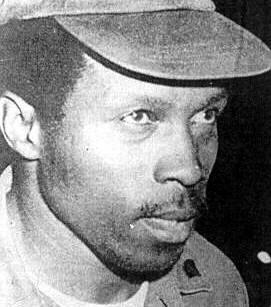
Lloyd Wayne Hampton
Murderer Brian Kevin Rosenfeld
Murderer · USA · 1985
Brian Kevin Rosenfeld Brian Kevin Rosenfeld was sentenced to three concurrent l…
23 victims
Brian Kevin Rosenfeld
Murderer · USA · 1985
Brian Kevin Rosenfeld Brian Kevin Rosenfeld was sentenced to three concurrent l…
23 victims
 Yahweh ben Yahweh
Murderer · USA · 1980
Yahweh ben Yahweh was born and legally named Hulon Mitchell Jr. (October 27, 19…
23 victims
Yahweh ben Yahweh
Murderer · USA · 1980
Yahweh ben Yahweh was born and legally named Hulon Mitchell Jr. (October 27, 19…
23 victims
 Russell Ellwood
Murderer · USA · 1991
Russell Ellwood was a former taxi driver. Authorities suspected him of killing…
20 victims
Russell Ellwood
Murderer · USA · 1991
Russell Ellwood was a former taxi driver. Authorities suspected him of killing…
20 victims
 Robert Martines Perez
Murderer · USA · 1994
Name: Robert Martines Perez · Other name used in proceedings: Robert Martinez P…
15 victims
Robert Martines Perez
Murderer · USA · 1994
Name: Robert Martines Perez · Other name used in proceedings: Robert Martinez P…
15 victims
 Robert Latimer
Homicide · Canada · 1993
Robert Latimer (born March 13, 1953) was a Canadian farmer who was sentenced to…
1 victim
Robert Latimer
Homicide · Canada · 1993
Robert Latimer (born March 13, 1953) was a Canadian farmer who was sentenced to…
1 victim
 Evan David Smyth
Spree killer · USA · 2003
Evan David Smyth was 41 years old at the time of sentencing. He was described a…
4 victims
Evan David Smyth
Spree killer · USA · 2003
Evan David Smyth was 41 years old at the time of sentencing. He was described a…
4 victims
 Joseph Naso
Serial killer · USA · 1977
Joseph Naso was convicted by a Marin County jury of the murders of four women d…
4 victims
Joseph Naso
Serial killer · USA · 1977
Joseph Naso was convicted by a Marin County jury of the murders of four women d…
4 victims
 Winston Moseley
Murderer · USA · 1963
Winston Moseley was convicted in the murder of Catherine “Kitty” Genovese and w…
3 victims
Winston Moseley
Murderer · USA · 1963
Winston Moseley was convicted in the murder of Catherine “Kitty” Genovese and w…
3 victims
 Genene Jones
Serial killer · USA · 1977
Genene Anne Jones (born July 13, 1950) was a former pediatric nurse who worked…
11 victims
Genene Jones
Serial killer · USA · 1977
Genene Anne Jones (born July 13, 1950) was a former pediatric nurse who worked…
11 victims
 Errol Dehaney
Murderer · USA · 1995
Errol Dehaney was sentenced to life in prison on December 8, 1999. He was charg…
3 victims
Errol Dehaney
Murderer · USA · 1995
Errol Dehaney was sentenced to life in prison on December 8, 1999. He was charg…
3 victims
- Gender
- male
- Country
- USA
- Location
- Madison County, Illinois, USA
- Date of birth
- 1954
- Age at first offence
- 36
- Characteristics
- robbery, torture
- Victim profile
- Roy E. "Jasper" Pendleton, 69
- Method of murder
- St abbing with knife
- Date(s) of murder
- February 8, 1990
- Years active
- 1990
- Date of arrest
- Next day
- Status
-
Executed
Executed by lethal injection in Illinois on January 21, 1998
Case record: Lloyd Wayne Hampton
Background
Lloyd Wayne Hampton was a Texas-born drifter. He was 44 years old at the time of his lethal-injection execution in Illinois. He was a 7th grade dropout and had spent most of his life in prison, free for only 4 years since 1973.
Hampton had prior convictions for robbery and assault with a deadly weapon, after torturing a woman in Bakersfield, California in 1987.
He wrote letters to Madison County prosecutors promising to kill a jail guard if he were not executed. He also told court officials that he enjoyed killing Roy E. “Jasper” Pendleton and felt no remorse.
At his capital sentencing hearing, Hampton waived his right to a jury. He also later waived his right to all but one appeal. He requested to be executed and told court officials he wanted to be executed.
The offence
In 1990, Hampton confessed to torturing, robbing and murdering a 69-year-old widower, Roy E. “Jasper” Pendleton, in a Downstate motel room in Troy, Illinois.
The killing occurred in the motel room where Pendleton lived in Troy after his wife’s death. Hampton gained access to Pendleton’s motel room by asking to use the bathroom. Pendleton had been preparing to make a trip to Las Vegas to visit his dying brother.
Once inside, Hampton tied Pendleton, including tying him with ropes and a nylon dog leash. Hampton taped Pendleton’s mouth shut and tried to suffocate him. Hampton burned Pendleton’s eyelids with a cigarette. Hampton stabbed Pendleton in the forehead, leaving a butcher knife protruding from Pendleton’s neck.
After leaving with Pendleton’s suitcase, microwave, and a $500 check forced to be made out to him, Hampton drove to a bar where he tried to cash the check and bought everyone a round of drinks.
Police said Hampton was “cool as a cucumber. No remorse.”
Investigation and evidence
After Hampton’s arrest and questioning by Troy police officers, he admitted killing Pendleton and gave a videotaped statement detailing his commission of the crime.
During the subsequent investigation, Hampton’s fingerprints were lifted from the scene. Saliva samples consistent with Hampton were taken from cigarette butts found at the scene. A spot of blood found on Hampton’s pants was consistent with Pendleton’s and inconsistent with Hampton’s.
At the crime scene, evidence indicated signs of torture. Evidence included ashes on the body and cigarette burns on the victim’s eyes.
Deanna Schaefermayer testified that Hampton attacked her in California and that she was convicted of assault with a deadly weapon. She described Hampton striking her across the face, wrapping a leather strap around her neck, waving a butcher knife in front of her face, drawing the point of the knife down her body, holding the point or the blade of the knife against her throat, placing the tip of the knife in her vagina, and plunging the knife into the mattress beside her, missing her by two inches. She described Hampton terrifying her for seven or eight hours.
The State presented certified copies of Hampton’s substantial criminal record and asked the judge to take judicial notice of information in the presentence report, detailing a history of delinquency and criminality and statements Hampton made after the killing that he smoked a cigarette and looked at the body, enjoying the feeling of having killed the old man.
The State submitted a letter Hampton wrote to the police chief describing Pendleton as a “rotten bastard” and a “worthless piece of shit,” and stating that his only regret was that he had not cut Pendleton’s head off.
Arrest
Hampton was arrested the next day at a truck stop in Troy while driving Pendleton’s car. The arresting officers recognized the Pontiac as belonging to Pendleton. After the officers confirmed the ownership of the car, one of them went to the motel and discovered Pendleton’s body in the ransacked room.
He was also arrested on an unrelated charge.
Trial
In 1990, Hampton pled guilty to:
- intentional murder
- murder in the course of a forcible felony, i.e., burglary
- murder in the course of a second forcible felony, armed robbery
At his capital sentencing hearing, Hampton waived a jury trial. Under the two-phase procedure of Illinois’ death penalty statute, the judge first found that Hampton was eligible for the death penalty and then found that there were no mitigating factors sufficient to preclude a sentence of death.
A death sentence was imposed.
Before sentencing, Hampton said he would not want his case appealed by anyone after State appeals had to be gone through. He also referenced Supreme Court rulings concerning appeals filed in behalf of a condemned man.
“I would say that should I be sentenced to death I am aware of the Supreme Court ruling in April concerning appeals filed in behalf of a condemned man, if he doesn't want those appeals and I would like to state for the record, although it has been pointed out to me that I have State appeals I have to go through, once those are over, I don't wish to have my case appealed by anyone.”
Sentencing
Hampton was sentenced to die in June 1990.
The case involved a two-phase sentencing determination under Illinois’ death penalty statute. The eligibility phase required, among other elements, that a person be at least 18 years old at the time of the crime and that the person committed first degree murder. One of eight statutory aggravating factors had to exist.
The aggravating factor at issue was § 9-1(b)(6), which provided eligibility if the victim was killed in the course of another felony from among those specifically listed, including armed robbery and burglary (and not, at the time, residential burglary).
Hampton argued that the judge characterized burglary as an aggravating factor when he was not guilty of burglary but rather of residential burglary. It was discussed that Illinois’ death penalty statute listed “burglary” in 1990 as a factor making one eligible for death but omitted “residential burglary,” an omission corrected later.
The trial judge stated in a written order that “the following statutory aggravating fact exists....” and specified that the murdered individual was killed in the “course of another felony (Burglary and Armed Robbery)....” The trial judge also stated on the record that he found beyond a reasonable doubt that the following statutory aggravating factor existed in relation to the offense, and that the aggravating factor was No. 6: that the murdered individual was killed in the course of another felony, “That aggravating factor being No. 6, the murdered individual was killed in the course of another felony, that being Burglary and Armed Robbery.” The judge referred in the singular to one statutory aggravating factor.
The Illinois Supreme Court later affirmed the death sentence in 1992.
Appeals
Hampton’s appeal history included direct appeal and later postconviction and federal habeas proceedings.
The Illinois Supreme Court affirmed the death sentence in 1992 in People v. Hampton, 149 Ill.2d 71, 171 Ill.Dec. 439, 594 N.E.2d 291 (1992), with rehearing denied June 25, 1992.
Hampton filed a petition for postconviction relief seeking to set aside his guilty plea and sentence. The denial of that request was affirmed by the Illinois Supreme Court in 1995 in People v. Hampton, 165 Ill.2d 472, 209 Ill.Dec. 189, 651 N.E.2d 117 (1995), with rehearing denied May 30, 1995.
A federal habeas corpus petition pursuant to 28 U.S.C. § 2254 followed. Judge Paul E. Riley of the Southern District of Illinois denied the petition, and Hampton appealed.
The federal appeal included the issue whether reliance on an invalid aggravating factor required reweighing or harmless error analysis. The alleged invalid aggravating factor was the murder being committed during the commission of a burglary rather than a “residential burglary.”
The United States Court of Appeals, Seventh Circuit, considered the petition in Lloyd Wayne HAMPTON, Petitioner-Appellant, v. Thomas PAGE, Warden, Menard Correctional Center, Respondent-Appellee, No. 96-1571. The court heard argument October 22, 1996 and decided January 6, 1997. Rehearing and suggestion for rehearing en banc were denied March 6, 1997. The panel included Circuit Judges FLAUM, RIPPLE, and EVANS, with Circuit Judge TERENCE T. EVANS writing the decision.
The Seventh Circuit affirmed the district court’s denial of Hampton’s petition for a writ of habeas corpus. It stated: “Therefore, we AFFIRM the district court's denial of the petition for a writ of habeas corpus.”
Outcome
Hampton was executed by lethal injection in Illinois on January 21, 1998. He was pronounced dead at about 12:30 a.m. after lethal chemicals flowed into his body. He coughed as the lethal chemicals flowed into his body and raised his head once.
Before his execution, Hampton wanted only Coca-Cola and unfiltered Camel cigarettes, and did not take a traditional last meal choice beyond that.
Two attorneys visited with Hampton on Tuesday. No members of Hampton’s family had asked to witness the 12:01 a.m. execution, according to Department of Corrections spokesman Nic Howell.
“I offer no excuses for things I have or haven't done, and the reasons are irrelevant,” he said in a statement released after his death. “I've been running from myself since I was a small boy in Texas, and my 44 years have been filled with intense and rage!”
Earlier statements included:
- “I offer no excuses for the things I have done or have not done,” he said Tuesday.
- “The reasons are irrelevant.”
- “I've been running from myself since I was a small boy in Texas, and my 44 years have been filled with intense anger and rage. I blame no one but myself, and I hope my loved ones will forgive me for the sorrow I have caused them. If God feels I am worthy of his forgiveness, I'll soon be with my grandparents, brother and daughter.”
Timeline
- 1987 — Hampton was convicted of torturing a Bakersfield, California woman.
- 1973 — Hampton spent most of his life in prison, free for only 4 years since 1973.
- 1990 — Hampton gained access to Pendleton’s motel room by asking to use the bathroom; he tied Pendleton, taped his mouth shut, tried to suffocate him, burned his eyelids with a cigarette, stabbed his forehead leaving a butcher knife protruding from Pendleton’s neck, and after leaving with a suitcase, microwave, and a $500 check, attempted to cash the check and bought drinks; he pled guilty to intentional murder, murder in the course of a forcible felony (burglary), and murder in the course of a second forcible felony (armed robbery).
- June 1990 — Hampton was sentenced to die.
- Nov. 11, 1992 — Hampton’s first scheduled execution was held off after he visited with his sister and several friends and then had his court-appointed attorney file an appeal.
- 1992 — The Illinois Supreme Court affirmed the death sentence in People v. 439, 594 N.E.2d 291 (1992).
- June 25, 1992 — Rehearing was denied in the direct appeal.
- 1995 — The Illinois Supreme Court affirmed the denial of postconviction relief in People v. 189, 651 N.E.2d 117 (1995).
- May 30, 1995 — Rehearing was denied in the postconviction decision.
- Oct. 22, 1996 — The Seventh Circuit heard argument.
- Jan. 6, 1997 — The Seventh Circuit decided the appeal.
- March 6, 1997 — Rehearing and suggestion for rehearing en banc were denied.
- Jan. 21, 1998 — Hampton was executed by lethal injection in Illinois at Stateville Correctional Center outside Joliet, and was pronounced dead at about 12:30 a.m.
Other details
Police Chief William Brown said: “he was cool as a cucumber. No remorse.”
Hampton wrote that his only regret was that he had not cut Pendleton’s head off.
Hampton tried to cash a $500 check payable to Pendleton at a bar in Livingston, Illinois, and bought everyone a round of drinks.
Hampton drove to a Texaco truck stop in Troy, where he was arrested on an unrelated charge. Hampton’s conduct included taking Pendleton’s suitcase and microwave and forcing a $500 check to be made out to him.
A videotaped statement detailed Hampton’s commission of the crime.
The butcher knife remained protruding from Pendleton’s neck when the body was found.
Spotted an error, or have more information about this case?