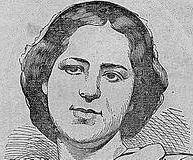
Lizzie Lloyd King
Murderer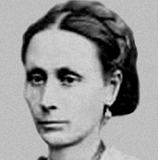 Lydia Sherman
Murderer · USA · 1864
Lydia Sherman was also known as “The Derby Poisoner.” She was born in 1824 in B…
10 victims
Lydia Sherman
Murderer · USA · 1864
Lydia Sherman was also known as “The Derby Poisoner.” She was born in 1824 in B…
10 victims
 Martha Grinder
Murderer · USA · 1864
Martha Grinder was convicted of murder in the first degree for poisoning Mary C…
2 victims
Martha Grinder
Murderer · USA · 1864
Martha Grinder was convicted of murder in the first degree for poisoning Mary C…
2 victims
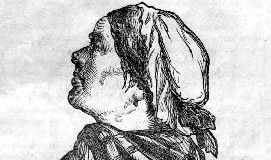 Bridget Durgan
Murderer · USA · 1867
Bridget Durgan was an Irish domestic who was hanged on August 30, 1867. She was…
1 victim
Bridget Durgan
Murderer · USA · 1867
Bridget Durgan was an Irish domestic who was hanged on August 30, 1867. She was…
1 victim
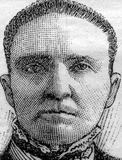 Emeline Meaker
Murderer · USA · 1880
Emeline Meaker (sometimes reported as Lucy Emeline Meaker) was convicted of mur…
1 victim
Emeline Meaker
Murderer · USA · 1880
Emeline Meaker (sometimes reported as Lucy Emeline Meaker) was convicted of mur…
1 victim
 Susan Eberhart
Murderer · USA · 1872
Susan Eberhart was a white woman aged between 17 and 21. She served as the hous…
1 victim
Susan Eberhart
Murderer · USA · 1872
Susan Eberhart was a white woman aged between 17 and 21. She served as the hous…
1 victim
 Roger Wayne Murray
Murderer · USA · 1991
Roger Wayne Murray was sentenced to death on October 26, 1992. The case involve…
2 victims
Roger Wayne Murray
Murderer · USA · 1991
Roger Wayne Murray was sentenced to death on October 26, 1992. The case involve…
2 victims
 Patrick Okot
Mass murderer · Uganda · 2013
March 5, 2013 — Gunmen attacked Mbuya barracks to steal arms. · February 4, 201…
10 victims
Patrick Okot
Mass murderer · Uganda · 2013
March 5, 2013 — Gunmen attacked Mbuya barracks to steal arms. · February 4, 201…
10 victims
 Edson Isidoro Guimaraes
Serial killer · Brazil · 1999
Edson Isidoro Guimarães was a Brazilian nursing assistant and nurse’s aide at S…
131 victims
Edson Isidoro Guimaraes
Serial killer · Brazil · 1999
Edson Isidoro Guimarães was a Brazilian nursing assistant and nurse’s aide at S…
131 victims
 Tianle Li
Murderer · USA · 2011
Tianle Li was convicted of fatally poisoning her husband, Xiaoye Wang, with tha…
1 victim
Tianle Li
Murderer · USA · 2011
Tianle Li was convicted of fatally poisoning her husband, Xiaoye Wang, with tha…
1 victim
- Gender
- female
- Country
- USA
- Location
- Brooklyn, New York City, New York , USA
- Date of birth
- 1847
- Age at first offence
- 26
- Characteristics
- mentally ill
- Victim profile
- Charles Goodrich, 41
- Method of murder
- Shooting
- Date(s) of murder
- March 20, 1873
- Years active
- 1873
- Date of arrest
- July 8, 1873
- Status
-
Life imprisonment
Unfit to stand trial; committed to a life sentence at the State Lunatic Hospital at Auburn, New York on July 21, 1874
Case details
Elizabeth “Lizzie” Lloyd King (born 1847) was accused of murdering Charles Goodrich in Brooklyn, New York, United States.
Timeline
- 20 March 1873 — Charles Goodrich was shot three times in the head at his home.
- 22 March 1873 — Goodrich’s body was removed from his residence at 17:00, placed in a hearse, transported to Cumberland Street at the residence of his brother William Goodrich, and a funeral service was conducted there on the afternoon of 23 March.
- 23 March 1873 — Goodrich’s body was transported by train to Albany and buried in a family vault the next day.
- 19 April 1873 — David Goodrich requested coroner Whitehill inspect the pistol used in the murder.
- 8 July 1873 — King was arrested after Mary Handley observed her at the Fulton Ferry dock.
- 11 July 1873 — King’s identity was confirmed and she confessed to being Kate Stoddard and to the murder of Goodrich.
- 12 July 1873 — An inquest was held.
- 15 July 1874 — A court investigation concluded King was not fit for trial and an order of commitment would be issued pending a reply from the Poughkeepsie facility.
- 21 July 1874 — King was committed to the State Lunatic Hospital at Auburn, New York.
- 14 July 1874 — The District Attorney sent a letter requesting information about the Poughkeepsie facility and whether it would accept patients.
- 17 July 1874 — King objected to the wording of the commitment announcement in the newspapers.
- 19 July 1873 — Simmons and Burgess were pardoned by the governor.
- 2 March 1874 — New counsel D.B. Thompson applied to be released from further conduct in the case.
- 24 November 1874 — The Law Committee of the Brooklyn Common Council heard testimony and passed a resolution recommending payment of a reward.
- 15 April 1873 — Brooklyn Common Council changed the street name from Degraw Street to Lincoln Place.
Background
King was born Elizabeth Lloyd King in Plymouth, Massachusetts to Isaac B. King and Harriet A. King, and had an older sister. She was described to have a normal childhood, for which her mother could not recall King as having “ever said an immodest word”. After puberty, she “grew more and more unnatural and strange,” and led a troubled youth, leaving and returning to school at her whim. When in school, she did well in her studies. She left home shortly afterward.
On 25 April 1867, a probate court in Boston committed her to the Taunton Lunatic Asylum; during this period she was also known as Alice Howard. Her attending physician was Norton Folsom, who indicated the “form of her disease was mania, which was manifested by excitement, irascibility, incoherence of speech and violent conduct,” and that her condition was “caused by some disease peculiar to females”. He indicated that by 10 May 1867, she appeared better. She was discharged on 10 September 1867.
From then until 1873, she worked as a milliner and teacher in New York City, Philadelphia, and Hartford. She did not return to her hometown during this period.
The offence
Charles Goodrich was the victim. King was accused of shooting him in the head three times at his home. The murder was committed during an argument, and King shot Goodrich at the time he followed her down to the basement. The post-mortem investigation revealed that Goodrich had been shot three times, and the “three bullets in the brain...being as fatal to the theory of self-destruction as they were to the victim”.
The jury later found that Goodrich came to his death by pistol-shot wounds in the head, inflicted by Lizzie Lloyd King, alias Kate Stoddard, with intent to cause death on the evening of 20 March 1873 or the morning of 21 March 1873, at his house on Degraw Street, Brooklyn.
Investigation
During the first few days of the investigation, it was hypothesized that Goodrich had committed suicide. Others persisted in the suicide conjecture, claiming that he shot himself once, and that the person who discovered him shot him twice more to give the appearance of a murder, and then wiped away the blood. By 25 March 1873, this conjecture was abandoned.
Neighbors were questioned up to 26 March 1873. An accurate account of the events could not be established because neighbors offered conflicting information. It was unanimous that a woman was either visiting or living at Goodrich’s house, but little was known about her. A newspaper quotation recorded:
“We have very little to work on, and there is nobody to give us anything. If this woman has been visiting or stopping at the house, as is alleged, I should think it not unnatural to suppose that somebody should know her name or where she belongs, State or town. Now, I will say emphatically that there is nobody to give any information of this woman, or where she belongs, notwithstanding all that has been stated about letters, and all that. No name is known. I wish it was; the papers would have it mighty quick.” —The New York Times
The neighbors unanimously endorsed the hypothesis that it was murder and that the woman was “directly concerned in the affair”.
Goodrich’s body was removed from his residence at 17:00 on 22 March 1873 and transported to Cumberland Street at the residence of his brother William Goodrich. A funeral service was conducted on the afternoon of 23 March 1873. The body was then transported on that evening’s train to Albany and buried in a family vault the next day.
Three days later, William Goodrich offered a $2,500 reward for the capture of the woman who had sent him the letter. On 2 July 1873, Brooklyn Common Council adopted a motion to offer another $1,000 reward for the capture of King, bringing the total reward to $3,500.
King was the primary suspect from the start of the investigation, according to the New York Times:
“Yesterday's developments were trivial and unimportant, going only to further establish the undeniable complicity of a woman, and her presence in the house on the night of the murder” —The New York Times
During the search for suspects, the name Kate Stoddard was first considered when a book of poems was found in Goodrich’s home by detectives Folk and Videtto during their search for evidence. Her name appeared on one of the pages.
By 1 April 1873, several suspects for the murder had been proposed: an Englishman named Barnet or Barrett; a man named James, using the alias “Pop” Tighe, and two other burglars; a Spaniard named Roscoe; and Kate Stoddard, based on several letters found during the initial investigation.
The suspicion of Roscoe was based on an interview of Lucette Meyers by Chief of Police Patrick Campbell, in which she proposed that Goodrich had been “followed to his house and killed by a man—an enemy”.
Police efforts were criticized for failing to apprehend or even nominate a viable suspect. A New York detective had apprehended a Frenchman named Charles Dalzen of “Hayti, West Indies” (sic), mistakenly believing him to be Roscoe. The New York Times noted:
“The clumsy and ineffectual efforts of the Brooklyn detectives were yesterday imitated by a New-York officer.” —The New York Times
Lucette Armstrong was in jail at this time, unable to make a $1,000 bail. She refused to divulge information she claimed to know about the murder. Police used an undercover female detective described as a petticoat by the press, “by whose wiles it was confidently expected Mrs. Armstrong would be induced to tell all she is supposed to know about the Goodrich murder”. The detective was placed in the same room as Armstrong posing as a witness named Lucy in a civil case, but failed to elicit relevant discussion.
David Goodrich requested coroner Whitehill inspect the pistol used in the murder on 19 April 1873. He stated that it was not his son’s pistol, noting it had a white handle, ivory or pearl, while the inspected pistol had wood. Lucette Meyers corroborated the father’s account in May.
Various stories regarding Roscoe were known. By July 1873, Roscoe was deemed an accomplice of King to the murder.
Because police efforts had failed to apprehend Stoddard, Mary Handley was hired as a detective to the chief of police, with a stipend of $2 per day for 40 days. Handley revealed she was an “intimate friend” of King and had approached police to assist in searching for her. Handley initially dealt with a cold trail like other detectives, but after a public tip “relating to the former haunts of Kate Stoddard” was given to the chief, Handley was “put on the track”. She made trips to Glen’s Falls, Gloversville and Albany, but none were productive.
Arrest
On the afternoon of 8 July 1873, Mary Handley was returning to Brooklyn from Manhattan via the Fulton Ferry. She exited the gates at the ferry dock and observed King heading that way, presumably on her way to Manhattan. Handley asked officer Doherty, the on-duty ferry officer, to arrest King. He arrested her after some persuasion and took both Handley and King to the Second Precinct Station of the Brooklyn police at York Street.
On the way, King was seen to discard several letters onto the street; an officer collected them. Handley introduced King to chief Campbell and captain James McConnell as the fugitive Kate Stoddard. King was interviewed and denied the charge that she was Kate Stoddard.
Chief Campbell noticed a large gold locket pendant from a chain about her neck and requested to see it. King denied, but Campbell took it anyway. After fumbling with it for some time, it opened and some contents fell to the floor. King picked them up and ate them. The flakes were desiccated blood. When questioned, she replied “that’s blood—dried blood” and refused to answer further queries. She was taken to the Raymond Street Jail.
Campbell inspected the letters addressed to individuals in Manhattan and New Jersey and inferred that King must reside in Brooklyn. Police were reticent with the media at this time, having not yet ascertained the identity of the woman. The New York Times included a remark on earlier arrest confusion:
“...their answers to all questions relating to it varying from weak prevarication to flat denial. Captain McConnell, of the Second Precinct, and his sargeants profess astonishment at being suspected of having charge of any prisoner connected with the Goodrich case; Chief Campbell and his detectives know, or profess to know, nothing of the arrest...” —The New York Times
Detectives continued search for Roscoe, who was also considered a myth in some circles. Dr. Reuben Smith and Charles Green were summoned to the police station. These men were friends of Charles Goodrich and had met King during her relationship with Goodrich, supporting identification of the woman in jail as Stoddard.
Identification and confession
King’s identity was confirmed on 11 July 1873. She confessed to being Kate Stoddard and to the murder of Goodrich.
She admitted boarding at the home of widow Ann Taylor at 127 High Street in Brooklyn, a three-story brick house near Jay Street. Taylor’s daughter Anna Knight later testified at the inquest that King used the alias Minnie Waltham while associating with Taylor.
King had been living at High Street since the third week of April and continued to work in Manhattan. By June, she discontinued her work commute and worked from her room at Taylor’s house. She had friendly and frequent association with the Taylor family; they were unaware of her true identity. The family became concerned about her disappearance on 8 July 1873, and King’s friends suggested she had gone to visit her parents in Trenton, New Jersey. They learned of her capture two days later following her confession, when an officer was dispatched to Taylor’s house.
Taylor was brought to the Second Precinct for questioning. Taylor identified King by her alias Minnie Waltham.
Evidence
A police officer and a detective searched King’s room at the Taylor residence. They found two trunks, one of which contained a watch, pocket book, revolver, a ring, and two seals, all possessions of Goodrich, and these were seized as evidence.
A New York Times quotation commented on the effect of the evidence:
“If the police regarded her confession with doubt, here was corroborative and unmistakable evidence, and in a moment all mystery surrounding the affair had vanished.” —The New York Times
While in jail, King reverted to using the name Lizzie Lloyd King and abandoned the Stoddard alias. She requested the day’s papers and read reports about the earlier proceedings at the inquest and all else pertaining to herself. A New York Times quotation described:
“After tea in the prison she was provided, at her own request, with the evening papers, and seating herself under the gas-light in the corridor near the cell, she eagerly read over the reports of the earlier proceedings at the inquest, and all else pertaining to herself.” —The New York Times
Inquest
An inquest was held on 12 July 1873 at the court house on Livingston Street. Stoddard arrived by carriage with Captain McConnell at 11:00 that morning, but the court room was already full by 10:00, because some believed the inquest to start earlier.
Spectators who wished to attend had to endure petty cases or relinquish their seats. The New York Times recorded:
“The spectators were therefore forced either to relinquish the advantageous positions gained by early attendance or to listen patiently to the hearing of petty larceny cases for two hours.” —The New York Times
The captain escorted King to coroner Whitehill’s office. The captain met with the jury in consultation for about an hour. At 13:00, the captain entered the courtroom with Mary Handley, causing “a decided sensation,” as many spectators mistook Handley for Kate Stoddard. The jurors entered the courtroom via the clerk’s office at 13:10 and took their seats. King entered shortly after via the main corridor accompanied by Captain McConnell and her counsel William C. de Witt, to a “great uproar”.
Testimony
Nine people provided testimonials to the court.
Lucette Meyers identified King by several aliases, including Kate Stoddard, Amy Snow, Amy Stone and Amy Gilmore, and stated that “she is called by all of these names”. She also identified various articles.
Adeline Pabor, engaged to Goodrich for months before the murder, testified that Goodrich had introduced her to King, claiming King was his sister, and she identified articles presented to her.
Mary Handley testified next. She stated she had known King when they roomed together at an apartment at 45 Elizabeth Street between February and June or July 1872. At that time King was known as Kate Stoddard and made straw bonnets. King then left for the Working-women’s Home. Handley did not see King again until Handley spotted her on Fulton Street in Brooklyn, when she requested an officer apprehend King. Handley was employed as a detective for chief Campbell at that time.
Anna Knight testified that King boarded at a home owned by Knight’s mother at 127 High Street and paid rent of $2.50 per week despite being “in rather poor circumstances”. Knight indicated King used the alias Minnie Waltham during her stay from April 1873 until her capture. Knight also stated King worked in New York or sometimes brought work home.
David Goodrich, the father of the victim, identified various items. He noted wooden-handled pistols were not like those owned by his son, which had a white handle. He also stated that in February 1872, a woman brought him a letter signed Amy G., and he verified some contents of the letter with his son and advised him to extricate himself from the position resulting from the association with King.
Captain McConnell testified he had seized a trunk from King’s boarding room on High Street. The trunk contained items presented to the court and two pistols, one of which was used to fire the three shots that killed the victim. He noted King had been apprehended and brought to the Second Precinct station at noon on the previous Tuesday.
Charles Green testified that he had spent a night in Goodrich’s house with King. During that time, King penned the letter signed Amy G. and he identified the articles presented to the court.
General Jourdan, president of the Board of Police Commissioners, testified that the day before the trial he warned King “not to commit herself to the Jury without the advice of counsel”.
Patrick Campbell, chief of police of Brooklyn, indicated King made “statements to me as to the manner in which Charles Goodrich came to his death” and that she requested to be called Amy G. during her first interrogation at the police station. He also stated he hired Mary Handley as a detective “on account of her personal acquaintance with Kate Stoddard”.
Finally, King identified herself as Lizzie Lloyd King and stated she was a bonnet maker. She declined further comment regarding Goodrich on counsel’s advice and was dismissed.
Trial and verdict
The jury retired at 16:00 and returned at 16:30 to announce the testimony was sufficient to render a verdict. They received usual instructions from the judge and retired for final deliberations while the courtroom crowd openly discussed the possible outcome. At 18:00, the jury returned and rendered the verdict:
“We find that the said Charles Goodrich came to his death by pistol-shot wounds in the head, inflicted by Lizzie Lloyd King, alias Kate Stoddard, with intent to cause death, on the evening of the 20th or morning of the 21st of March, 1873, at his aforesaid house on Degraw-street, Brooklyn.” —The New York Times
Jailhouse and counsel
After the verdict, King was remanded to the custody of sheriff and keeper Courady of the county jail at Raymond Street. She was assigned a room by herself on the second floor. Three prisoners—Fanny Hyde, Mrs. Burgess, and Mrs. Simmons—were assigned to keep constant watch over her to prevent a suicide attempt. Simmons and Burgess were pardoned by the governor on 19 July 1873, and then released from jail and from supervisory duties.
On 22 July 1873, King’s father and brother-in-law visited her at the jail with her counsel for the future trial, O.T. Gray of Hyde Park. The visit lasted over three hours and nobody else was allowed into that part of the prison.
King’s new counsel, D.B. Thompson, applied to the court on 2 March 1874 to release himself from “further conduct in the case,” citing King’s actions to dismiss various previous counsels and that “so many embarrassments had been put in their way”. Judge Gilbert denied the request and instructed Thompson and Lowe to act as defense counsel for King.
Thompson indicated that although the defense was insanity, “the accused is not now insane, but was insane at the time of the crime, if any crime is proven, was committed”.
While in jail, King was deemed to have normal disposition, with her conduct continuing without “any marked eccentricity,” while “mysteriously whispered among the lower ranks of the police force that the prisoner is insane.”
Sentencing and commitment
A psychological assessment determined King was unfit to stand trial. Dr. Charles Corey examined King sometime in May 1874. On 21 July 1874, King was committed to the State Lunatic Asylum in Auburn, New York, for life.
King had stated she preferred the new asylum in Poughkeepsie and to stay at the Raymond Street Jail until that facility’s completion. On 14 July 1874, the District Attorney sent a letter requesting information about the status of the Poughkeepsie facility and whether it would accept patients. A court investigation into King’s state of mind concluded on 15 July 1874 that she was not fit for trial and that an order of commitment would be issued pending a reply from Poughkeepsie.
Even after being sent to Auburn, King asked whether she could be transferred to Poughkeepsie upon completion. A quote recorded:
“If I go to Auburn now, I wish to know if I can be transferred to Poughkeepsie as soon as there is any room for me there”. —The New York Times
King continued reading stories about herself and sent complaint letters to newspapers about inaccuracies in the reports she read. On 17 July 1874, she objected to the wording of the commitment announcement by Judge Moore. She noted that the newspapers misrepresented the jury’s indictment from the inquest:
“Your Honor's attention I wish to call to the wording of your commitment of me in yesterday's newspapers. It reads that I was indicted for having "feloniously, and willfully, and of her malice aforethought, killed and wounded Charles Goodrich." Please, your Honor, I was present when the indictment was read, July, 1873, and it read: "That Charles Goodrich came to his death by pistol shot wounds in the head, inflicted with intent to cause death." —The New York Times
A syndicated report published by the Oswego Daily Times of 18 May 1880 indicated that at the asylum King composed a letter by cutting separate letters from a book furnished by the American Bible Society, arranging them so as to make a readable letter, and then sowing letter by letter, word by word, sentence by sentence until two full sheets were covered, including directions on the envelope. The report stated that she used this method because inmates were prohibited from having pens, ink, paper, knife or scissors. The report further described King criticizing the New York state “lunacy law” authorizing those indicted for a crime but not convicted to be sent to an insane asylum, and stated she considered this an ex post facto law. The letter was given to Alonzo B. Cornell, Governor of New York.
Relationship with Charles Goodrich
King roomed with Mary Handley at 45 Elizabeth Street from February 1872 until late June or early July 1872. Handley knew King by the name Kate Stoddard, an alias in recent use by her and the name by which she was commonly known then. Handley testified that King worked as a milliner making straw bonnets at a warehouse on the corner of Broadway and Spring Street and that King was an inmate of the Working Women’s Home.
King met Charles Goodrich after responding to a personal ad in a newspaper. She identified herself to him as Kate Stoddard. A relationship ensued, established no later than early 1872.
In a letter to Goodrich from early 1872, King referred to him as “my dear Charlie”. She wrote seven more letters between then and March 1873, and he wrote five times. King signed letters using the alias Amy, or sometimes Kate. The letters indicated that the two had married on 20 May 1872; after the marriage, her letters were addressed “my dearest husband”. Goodrich always addressed her as “Amy” in his letters.
Goodrich’s second letter after their marriage stated: “it is better for both that we should separate”. Goodrich’s last letter stated he intended to provide her with a room in New York City and to aid her financially if she ceased to refer to herself as his wife and did not mention their relationship to his family.
King refused the proposal. She wrote to William Goodrich, his brother, on the evening of 15 February 1873 and sent it to his office. In that letter, she revealed she had been living in the third Brownstone house from Fifth Avenue on Degraw Street. Seven units had been built and owned by Charles Goodrich and were completed in the fall of 1872. Charles assumed residence in the unit at 731 Degraw Street. The letter stated Goodrich had married her in a mock marriage conducted by Reuben Smith, a doctor by trade and a friend of Goodrich. It also stated Goodrich treated her cruelly, that they had a child in December, and that on the day she wrote the letter he evicted her, throwing her trunks and clothing into another unit. She lamented having no friends or money and wrote, “it seems like some dreadful nightmare”. She signed the letter Amy G., intended to mean Goodrich.
At the urging of his brother, Charles Goodrich temporarily separated from King for about a week. King later returned to live with him for at least a few days before he was shot.
Eviction, shooting, and investigation details
When Goodrich attempted to terminate the relationship and evict her, King shot him in the head three times. King descended to the basement with Goodrich following her during an argument. He insisted she leave his house and reiterated that he “would do all he could afford for her”. At that time, she shot him, dragged his body near the fireplace grate, and cleaned off the blood.
Police search of the house netted a set of letters with only the Christian name of the writer signed therein.
Lucette Meyers corroborated the father’s account about pistol handle color in May. By July 1873, Roscoe stories evolved, with Roscoe deemed an accomplice of King. In parallel, police hired Mary Handley to pursue former haunts of Kate Stoddard, leading to the arrest.
Capture and later movements
By the time King was captured, she had reverted to the name Lizzie Lloyd King and abandoned the Stoddard alias. She was interested in news about herself and read the papers after tea in prison as described in a New York Times quotation.
At the inquest, Captain McConnell escorted King to coroner Whitehill’s office and met with the jury in consultation for about an hour. King entered the courtroom after jurors.
Aftermath
Neighborhood residents were concerned about “the unpleasant associations” of the name of their street with the murder. Within days they petitioned to change it to “Lincoln Place” in honor of Abraham Lincoln. Brooklyn Common Council changed Degraw Street between Fifth Avenue and Sixth Avenue to Lincoln Place on 15 April 1873. Eventually, the remainder of the eastward segment to Prospect Park was also renamed Lincoln Place.
In May 1873, Goodrich’s father filed a lawsuit against Mrs. Finlay of Staten Island. They had an apparent agreement to exchange the brownstone houses owned by Charles Goodrich for the clipper brig Hattie Haskett owned by Finlay. The suit was denied because it was signed by Finlay’s husband, who “had not been shown to be an authorized agent for his wife”.
In 1874, Mary Handley applied to claim the $1,000 reward offered by Brooklyn Common Council in June 1873. After the Law Committee heard testimony on 24 November 1874 from Hanley, with corroboration from Patrick Campbell and General Jourdan, it passed a resolution recommending payment of that reward. The committee planned to present the resolution to council when it next convened.
Other details
Ann Jones, in Women Who Kill, argued about crimes attributed to women like Lizzie Lloyd King. A quotation was included:
“Their stories are almost interchangeable. Like Amelia Norman and like the typical seduced-and-abandoned maiden sketched in the pages of the Advocate, all of these women were young, poor, friendless, and innocent.” —Women Who Kill, page 153
A newspaper report in 1889 about Charles McElvaine, who murdered a grocer, recounted the Goodrich murder and incorrectly noted that Stoddard “remained in hiding for over six months” (it was actually three and a half months).
Patrick Campbell spoke in 1895 after announcing his retirement about loyalty necessary to conduct police duties and cited the King case as an exemplary demonstration. A quote recorded:
“There's where the loyalty of the Captains came in. It would have been death to me to have made a failure. The community would have risen up against me for interference with personal rights. I don't think I could have lived in this city if it had been a non-success. This case is an example of your loyalty to me. I have tested your loyalty, and I say to you that I'll never forget you as long as I live.” —The New York Times
A 1906 interview with the Brooklyn Daily Standard Union recorded that Campbell, chief of police for Brooklyn from 1870 until 1895, identified the Kate Stoddard case as “a great one”. It also recorded that although he accurately recounted many details, he stated that “as she made no effort to escape we got her easily enough”.
After King was sent to the asylum in 1874, Campbell did not keep track of her, and a quote stated:
“A commission adjudged her insane and she was sent to an asylum. She may be living yet, for all I know.”

Spotted an error, or have more information about this case?