
Sarah Malcolm
Murderer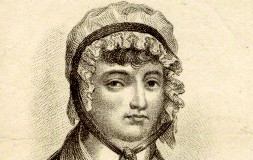 Catherine Hayes
Murderer · United Kingdom · 1726
Catherine Hayes (also spelled Catharine Hayes) was an English murderess. Cather…
1 victim
Catherine Hayes
Murderer · United Kingdom · 1726
Catherine Hayes (also spelled Catharine Hayes) was an English murderess. Cather…
1 victim
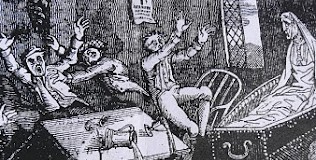 Margaret Dickson
Murderer · United Kingdom · 1724
Margaret Dickson was executed by hanging at Edinburgh on September 2, 1724. She…
1 victim
Margaret Dickson
Murderer · United Kingdom · 1724
Margaret Dickson was executed by hanging at Edinburgh on September 2, 1724. She…
1 victim
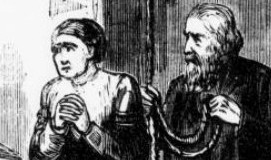 Margaret Waters
Murderer · United Kingdom · 1866
Margaret Waters was an English murderess who was hanged by executioner William…
19 victims
Margaret Waters
Murderer · United Kingdom · 1866
Margaret Waters was an English murderess who was hanged by executioner William…
19 victims
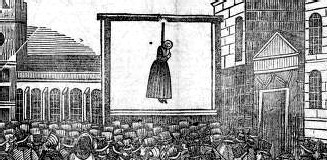 Catherine Wilson
Murderer · United Kingdom · 1854
Catherine Wilson was a British nurse who poisoned victims after befriending the…
7 victims
Catherine Wilson
Murderer · United Kingdom · 1854
Catherine Wilson was a British nurse who poisoned victims after befriending the…
7 victims
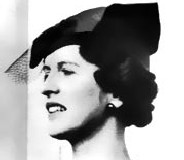 Florence Ransom
Murderer · United Kingdom · 1940
Florence Ransom was a middle-aged woman who was described as physically beautif…
3 victims
Florence Ransom
Murderer · United Kingdom · 1940
Florence Ransom was a middle-aged woman who was described as physically beautif…
3 victims
 Andrea Volpe
Murderer · Italy · 2004
The Beasts of Satan were a suspected satanic cult in Italy. Members of this gro…
3 victims
Andrea Volpe
Murderer · Italy · 2004
The Beasts of Satan were a suspected satanic cult in Italy. Members of this gro…
3 victims
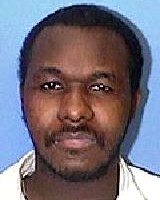 T.J. Jones
Homicide · USA · 1994
T.J. Jones was a juvenile at the time of the offences and was executed by letha…
1 victim
T.J. Jones
Homicide · USA · 1994
T.J. Jones was a juvenile at the time of the offences and was executed by letha…
1 victim
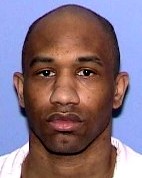 Elijah Joubert
Murderer · USA · 2003
Elijah Joubert was convicted of capital murder in October 2004 and was sentence…
2 victims
Elijah Joubert
Murderer · USA · 2003
Elijah Joubert was convicted of capital murder in October 2004 and was sentence…
2 victims
 Kenneth Bianchi
Serial killer · USA · 1977
Kenneth Alessio Bianchi (born May 22, 1951) was an American serial killer. He a…
12 victims
Kenneth Bianchi
Serial killer · USA · 1977
Kenneth Alessio Bianchi (born May 22, 1951) was an American serial killer. He a…
12 victims
 Jennifer Mee
Murderer · USA · 2010
Jennifer Mee became known as the “Hiccup Girl” after she experienced a case of…
1 victim
Jennifer Mee
Murderer · USA · 2010
Jennifer Mee became known as the “Hiccup Girl” after she experienced a case of…
1 victim
- Gender
- female
- Country
- United Kingdom
- Location
- London, England, United Kingdom
- Date of birth
- 1711
- Age at first offence
- 22
- Characteristics
- robbery
- Victim profile
- Lydia Dunscomb, 80 (her employer) , Elizabeth Harrison, 60 (servant) , and Ann Price, 17 (servant)
- Method of murder
- Strangulation - Cutting the throat
- Date(s) of murder
- February 4, 1733
- Years active
- 1733
- Date of arrest
- 2 days after
- Status
-
Executed
Executed by hanging on March 7, 1733
Overview
Sarah Malcolm was a powerfully built 22-year-old Irish laundress employed in the Fleet street home of Mrs Lydia Dunscomb, a wealthy widow. On the night of 5 February 1733 she entered the bedroom of her 80-year-old employer and strangled her as she slept. To ensure that there would be no one to point the finger she also strangled 60-year-old Elizabeth Harrison and cut the throat of 17-year-old Ann Price, the other servants in the house that night. She fled from the house after ransacking it and gathering valuables.
When she was apprehended she was still carrying stolen goods. Although Sarah denied any knowledge of the crimes, the evidence was described as overwhelming, and she was sentenced to death. She was hanged on 7 March 1733 on a gallows erected in the middle of the street between Mitre Court and Fetter Lane by John Hooper.
Timeline
- 3 February 1733 — Sarah called at Mrs Duncomb’s chambers in Tanfield Court in the Inner Temple, ostensibly to visit Elizabeth Harrison, who had been ill.
- 4 February 1733 — The indictment date given in court proceedings for the murder of Ann Price; the indictment also charged the murders of Elizabeth Harrison and Lydia Duncomb and the breaking and entering of Lydia Duncomb’s dwelling-house with theft.
- 5 February 1733 — Sarah entered the bedroom of her 80-year-old employer and strangled her as she slept; she also strangled Elizabeth Harrison and cut the throat of Ann Price.
- 6 February 1733 — Sarah appeared before Sir Richard Brocas and gave a statement on oath about planning the robbery while remaining on the stairs outside the old lady’s apartment.
- 21 February 1733 to 24 February 1733 — The February Sessions for the City of London and County of Middlesex were held at the Old Bailey.
- 23 February 1733 — Sarah’s trial was scheduled for Friday the 23rd.
- 7 March 1733 — Sarah was taken from Newgate in the horse-drawn cart to the gallows near Fetter Lane in Fleet Street and executed by hanging.
Background
Sarah Malcolm was employed as a laundress in London. She worked initially in the Black Horse Inn near Temple Bar, where she met two brothers, Thomas and James Alexander. She later obtained a job as a laundress in a set of lawyers’ chambers in the Inns of Court. One of her employers was a young Irishman named Mr Kerril, and another employer was Mrs Lydia Duncomb, described as a reputedly wealthy 80-year-old lady who had two maids: Elizabeth Harrison and Ann Price.
Sarah’s background included that she originated from Durham and was born in 1711. She was forced to move to London and go into service after her father squandered the family’s money. In prison accounts, her father had come to London with his wife and daughter and later went back to Ireland after her mother’s death, leaving Sarah behind as a servant in an ale-house called the Black Horse.
She was associated with individuals described as disreputable, including a woman named Mary Tracey and thieves called Alexander.
The offence
Victims and setting
The victims were:
- Mrs Lydia Duncomb, described as an 80-year-old wealthy widow.
- Elizabeth Harrison, described as 60 years old.
- Ann Price, described as 17 years old and referred to as a spinster.
The killings occurred in the Fleet street home and in Mrs Duncomb’s chambers in Tanfield Court in the Inner Temple, with bodies discovered across rooms within the chambers.
Conduct attributed to Sarah
Sarah entered the bedroom of Mrs Duncomb and strangled her as she slept. She also strangled Elizabeth Harrison and cut the throat of Ann Price. After the killings, she ransacked the house and gathered valuables.
Evidence of injuries and discovery details
When the bodies were discovered, the description included:
- Ann Price’s body lay on a bed, with her throat cut from ear to ear.
- Elizabeth Harrison was found lying across her bed and was described as having been strangled.
- Mrs Duncomb was found lying across her bed, described as having been strangled, with conjecture that death might have been caused by shock and fright and the weight of an assailant’s body on top of her.
A chest where valuables had been kept was broken into and its contents removed. A strong-box containing money and papers was described as having been forced open and stripped of valuables, including the absence of the tankard and packets of money.
Investigation
Initial discovery and alarm
A friend of Mrs Duncomb’s called at the block of chambers but received no reply and could not raise any sign of life. The chamber was accessed after a window was broken, and the discoverers were “horrified at the gruesome sight” of Ann Price’s body with her throat cut, and the presence of Elizabeth Harrison and Mrs Duncomb in adjoining rooms.
A doctor was sent for and Mr Thomas Bigg, a surgeon, made a preliminary examination of the three deceased women.
Search and arrest
Mr Kerril (spelled “Kerril” in parts of the record, with variation “Kerrol/Kerrel” in others) found Sarah Malcolm at the location of the discovery and observed her lighting fires. A bundle lay on the floor; on querying it, Sarah replied that it was her gown and other garments and that decency would deter him from opening it. Watchmen then searched the building and found some of Mr Kerril’s belongings hidden in her rooms, leading to Sarah’s arrest.
Under a bed, a bloodstained shift and apron were found, and in a close-stool a silver tankard with blood on the handle was found. Sarah was caught by watchmen by the Inner-Temple Gate and brought back to John Kerrel’s apartment, where she was asked if the tankard was hers. She told him it was given her by her mother.
She was taken to a constable and before Alderman Brocas, who sent her to the Compter (local lock-up jail). On the Monday morning she was committed to Newgate prison.
Items found and admissions
On arrival at Newgate, Sarah was searched. A small bag containing coins amounting to over a hundred pounds in value was hidden beneath the thick coiled tresses of her hair. Sarah admitted the money belonged to Mrs Duncomb and offered an arrangement to keep it secret, including her request for “threepence or sixpence a day till the court sessions are over” and then to “shift for myself.”
A silver tankard with a bloodstained handle was concealed in the lavatory. Sarah alleged under interrogation that the blood was from her own hand after cutting her finger that morning.
A purse containing twenty-one guineas was found in the bosom of her dress. Sarah claimed she had found the purse in the street and offered the purse to Mr Johnson if he made no mention of it; Mr Johnson refused and reported the attempt to bribe him.
Roger Johnson, the turnkey, described sealing up the bag and locking it away to await trial.
Named associates and competing explanations
Sarah claimed in court that the murders were committed by the Alexander brothers. She stated that, having keys to the chambers as required by her job, she admitted the Alexander brothers to Mrs Duncomb’s rooms but took no part and watched from the stairs.
In one sworn statement recorded as taken on oath when Sarah appeared before Sir Richard Brocas on 6 February 1733, Sarah affirmed that she planned the robbery but remained on the stairs outside the old lady’s apartment while it was carried out by Tracey and the Alexanders.
Arrest
Sarah was arrested after watchmen searched the building and found items hidden in her rooms, including some of Mr Kerril’s belongings and further discoveries including linen and the silver tankard with blood on the handle.
She was taken to the Compter and then to Newgate prison, where she was searched as part of admissions procedures.
Trial
Court and dates
Sarah came to trial at the Old Bailey at the February Sessions for the City of London and County of Middlesex, held on Wednesday the 21st to Saturday the 24th of February. Her trial was scheduled for Friday the 23rd.
Indictment and plea
Sarah pleaded not guilty to the charges.
The indictment read: “Sarah Malcolm, alias Mallcombe was indicted for the Murder of Ann Price, Spinster, by wilfully and maliciously giving her with a Knife one mortal Wound on the Throat, of the length of two Inches, and depth of one Inch, on the 4th of February instant, of which wound the said Anne Price instantly died. She was a second time indicted for the Murder of Elizabeth Harrison, spinster, by strangling and choking her with a cord, on the said 4th of February; by reason of which strangling and choking the said Elizabeth Harrison instantly died. She was a third time indicted for the Murder of Lydia Duncomb , Widow, by strangling and choking her with a Cord, on the said 4th of February, by which Strangling and Choking the said Lydia Duncomb instantly died. She was again indicted for breaking and entering the dwelling-house of Lydia Duncomb , Widow, and stealing 20 Moidores, (Spanish gold coins valued at 27 shillings each) 18 Guineas, one Broad-Piece, value 25 s. 4 Broad-Pieces, value 23 s. each, one half Broad-Piece, value 11 s. 6 d. 25 s. in Silver, a Silver Tankard, Value 40 s. a Canvas Bag, Value 1 d. and two Smocks, value 12 s. on the 4th day of February instant, about the hour of 2 in the night of the same day.”
As capital offences, it was decided to proceed with the first charge only (the murder of Ann Price) to save court time.
Evidence and witness testimony
The record described evidence including:
- John Kerrel’s testimony about events leading to the arrest.
- John Gehagan’s testimony confirming discoveries of blood stained clothes and the tankard.
- Watchmen John Mastreter and Richard Hughs giving evidence of Sarah’s arrest and how she claimed the blood on the tankard was her own from a cut finger.
- Frances Rhymer identifying the tankard and the purse found on Sarah and describing the contents of Mrs Duncomb’s strong box.
- Roger Johnson’s testimony about searching Sarah in Newgate and finding the bag of money hidden beneath her hair; he described her statements and offer to keep the matter secret.
- Mr Alstone confirming Johnson’s account and adding that Sarah told him she planned the robbery with Martha Tracey and the Alexander brothers.
Quoted statements in court context
Sarah was quoted as offering: “I’ll make you a present of it if you will but keep it to yourself and let nobody know of anything of the matter; for the other things against me are nothing but circumstances, and I shall come off well enough. So I only desire you to let me have threepence or sixpence a day till the court sessions are over, and then I’ll be at liberty to shift for myself.”
Johnson’s quoted statement in his recorded testimony included: “Child,'' he said, "there is reason to suspect that you are guilty of this murder, and therefore I have orders to search you.''
And, as recorded testimony included: “But, Mr Johnson,' says she, 'I'll make you a present of it if you will keep it to yourself, and let nobody know anything of the matter. The other things against me are nothing but circumstances, and I shall come well enough off. And therefore I only desire you to let me have threepence or sixpence a day till the sessions be over; then I shall be at liberty to shift for myself.''
Defence and statements
Sarah was not represented by counsel but offered a defence. She claimed:
- the murders had been committed by the Alexander brothers;
- she was innocent of the murders while admitting planning the robbery;
- blood on her shift and apron was from her period;
- the blood on the handle of the tankard was from her finger cut;
- she asked the judge to order the return of the money found on her over and above that stolen from Mrs Duncomb.
At the end of her defence, the jury retired for fifteen minutes to consider their verdict.
Verdict
Sarah was found guilty of the robbery and the one murder charge that was proceeded with, and she was also guilty in accordance with the verdict of the Coroner's Inquisition, i.e. the other two murders.
Sentencing
After conviction, Sarah was sentenced to death. She was taken back to Newgate and returned to court the following day, at the end of the Sessions, to be sentenced to death along with nine men.
Appeals
No appeal information was included.
Outcome
Sarah Malcolm was executed by hanging on 7 March 1733.
Execution details and witnesses’ descriptions
On 7 March 1733 Sarah was taken from Newgate in a horse-drawn cart accompanied by John Hooper, the hangman, with a troop of Javelin Men and the Under Sheriff. The set of gallows was near Fetter Lane in Fleet Street.
An onlooker described her preparation and appearance as: She had rouged her cheeks heavily to conceal her prison pallor, and was wearing a black gown, white apron, a hood made of sarsenet and black gloves. She appeared very serious and devout, crying and wringing her hands in an extraordinary manner.
She was helped in her devotions by the Reverend Peddington of the Church of St Bartholomew the Great, and Mr Guthrie, the Ordinary of Newgate Prison, went with her.
Another observer stated: “at one time that she was in the cart, what with praying, Agony and Passion, she fell down, but was immediately rais’d, and laid her head against hangman John Hooper, and Mr Peddington read to her.”
On arrival she called out to the bellman and gave him a shilling with which to buy himself a bottle of wine. She told the crowd:
- “that her employer Mr Kerril knew nothing of her intentions of the robbery and the terrible deeds that followed”
- and she said “she had given Mr Peddington a letter in which she related what she had to say about the fact”.
On the scaffold she was seen to sway momentarily but recovered as Hooper dropped the noose over her head. Climbing down out of the cart, Hooper gave the horse a sharp slap on its flanks, causing the steed and cart to move away and leave Sarah swinging and kicking for some little time in the empty air. She was cut down and taken by coach back to Newgate.
Statements made during the execution
The record included a reported outcry while in the cart: “Oh, my mistress, my mistress! I wish I could see her!”
And before calling upon Christ to receive her soul, she cast her eyes towards heaven and called upon Christ to receive her soul.
Aftermath
Sarah’s body was taken down and buried. According to parish records she was buried in the churchyard of St Sepulchre’s church on the 10th of March.
The crowd after she was cut down was described as so great that the scaffold itself almost collapsed, and that thieves in the crowd stole purses and watches.
Other details
Trial associates and named persons
The record named multiple other individuals connected to events:
- Mrs Lydia Duncomb (victim, widow).
- Elizabeth Harrison (victim, 60 years old).
- Ann Price (victim, 17 years old).
- John Hooper (hangman).
- John Kerril / John Kerrel (named as a tenant/employer; the spelling varied in accounts).
- John Gehagan (neighbour; testified).
- John Mastreter and Richard Hughs (watchmen).
- Frances Rhymer (identified the tankard and purse; associated as handling Mrs Duncomb’s financial affairs).
- Roger Johnson (turnkey/warder).
- Mr Alstone (Johnson’s superior).
- Alderman Brocas (sent her to the Compter).
- Sir Richard Brocas (appears in the sworn statement context on 6 February 1733).
- Mr Kerril (referred to in execution crowd statement).
- Reverend Peddington of the Church of St Bartholomew the Great (devotions).
- Mr Guthrie (Ordinary of Newgate Prison).
Mary Tracey and Alexander brothers
Sarah attempted to implicate Martha Tracey and the Alexander brothers in the planning and/or execution of the robbery, and she claimed they carried out the murders. The authorities had no evidence against Martha Tracey and the Alexander brothers and did not charge them with anything.
Hogarth and prison portraits
The record described that William Hogarth visited Sarah in prison two days before her execution and sketched her prior to painting her portrait. It also described that Sarah was among three educated, middle class young women in that series and that Hogarth’s portrayal included her in a grey gown, with a white cap and apron, with a rosary and a crucifix on the table.
Confession-related materials
Sarah was reported to have confessed on the night before she was hanged, with details printed in “A Paper delivered by Sarah Malcolm on the Night before her Execution to the Rev. Mr. Piddington, and published by Him” (London, 1733). The record characterized this as more of a self justification than a confession.
A long quoted confession statement included admissions and descriptions, including the following verbatim excerpt attributed to Sarah: “I freely own that my crimes deserve death; I own that I was accessory to the robbery, but I was innocent of the murder, and will give an account of the whole affair.”
The quoted confession also included: “I passed her [Nanny Price] and went down, and spoke with Tracey and Alexander, and then went to my master’s chambers, and stirred up the fire. I stayed about a quarter of an hour, and when I came back I saw Tracey and Tom Alexander sitting on Mrs Duncomb's stairs, and I sat down with them. At twelve o'clock we heard some people walking, and by and by Mr Knight came home, went to his room, and shut the door. It was a very stormy night; there was hardly anybody stirring abroad, and the watchmen kept up close, except just when they cried the hour. At two o'clock another gentleman came, and called the watch to light his candle, upon which I went farther upstairs, and soon after this I heard Mrs Duncomb's door open; James Alexander came out, and said, 'Now is the time.' Then Mary Tracey and Thomas Alexander went in, but I stayed upon the stair to watch. I had told them where Mrs Duncomb's box stood. They came out between four and five, and one of them called to me softly, and said, 'Hip! How shall I shut the door?' Says I, ` 'Tis a spring-lock; pull it to, and it will be fast.' And so one of them did. They would have shared the money and goods upon the stairs, but I told them we had better go down; so we went under the arch by Fig-tree Court, where there was a lamp. I asked them how much they had got. They said they had found fifty guineas and some silver in the maid's purse, about one hundred pounds in the chest of drawers, besides the silver tankard and the money in the box and several other things; so that in all they had got to the value of about three hundred pounds in money and goods.”
Bellman verses
The record included bellman verses recited as part of pious admonition: “All you that in the condemned hold do lie, Prepare you, for to-morrow you shall die. Watch all and pray; the hour is drawing near That you before th' Almighty must appear. Examine well yourselves, in time repent, That you may not t'eternal flames be sent: And when St 'Pulchre's bell to-morrow tolls, The Lord above have mercy on your souls! Past twelve o'clock!”
Burglary/robbery items
The record listed stolen items in the indictment, including: “20 Moidores, … 18 Guineas, one Broad-Piece, value 25 s. … 4 Broad-Pieces … one half Broad-Piece … 25 s. a Canvas Bag, Value 1 d. and two Smocks, value 12 s.”

Spotted an error, or have more information about this case?