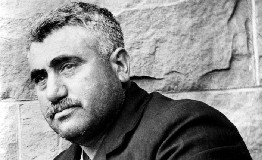
Emilio Picarielo
Murderer Lila Gladys Young
Murderer · Canada · 1928
Lila Gladys Young was also named Lila Gladys Lila Coolen. Lila Gladys Young was…
100 victims
Lila Gladys Young
Murderer · Canada · 1928
Lila Gladys Young was also named Lila Gladys Lila Coolen. Lila Gladys Young was…
100 victims
 Bobby Jack Fowler
Murderer · Canada · 1973
Bobby Jack Fowler (June 12, 1939 – May 15, 2006) was an American who was a nati…
20 victims
Bobby Jack Fowler
Murderer · Canada · 1973
Bobby Jack Fowler (June 12, 1939 – May 15, 2006) was an American who was a nati…
20 victims
 Allan Legere
Murderer · Canada · 1986
Name: Allan Legere · Citation: R. v. Legere (1988), 89 N.B.R. (2d) 361 · Other…
5 victims
Allan Legere
Murderer · Canada · 1986
Name: Allan Legere · Citation: R. v. Legere (1988), 89 N.B.R. (2d) 361 · Other…
5 victims
 James Roszko
Murderer · Canada · 2005
James Roszko was a Canadian man operating a hydroponic marijuana grow-op in Roc…
4 victims
James Roszko
Murderer · Canada · 2005
James Roszko was a Canadian man operating a hydroponic marijuana grow-op in Roc…
4 victims
 Angelo Colalillo
Murderer · Canada · 1993
Angelo Colalillo was suspected of committing serial sexual assaults and murders…
3 victims
Angelo Colalillo
Murderer · Canada · 1993
Angelo Colalillo was suspected of committing serial sexual assaults and murders…
3 victims
 Denis Lortie
Murderer · Canada · 1984
Denis Lortie was a Canadian army corporal in the Royal 22 e Régiment of the Can…
3 victims
Denis Lortie
Murderer · Canada · 1984
Denis Lortie was a Canadian army corporal in the Royal 22 e Régiment of the Can…
3 victims
 Mitchell Scott Johnson
Mass murderer · USA · 1998
Mitchell Scott Johnson was born August 11, 1984. He lived in Jonesboro with his…
5 victims
Mitchell Scott Johnson
Mass murderer · USA · 1998
Mitchell Scott Johnson was born August 11, 1984. He lived in Jonesboro with his…
5 victims
 Juan Manuel Álvarez
Mass murderer · California · 2005
Juan Manuel Álvarez (born February 26, 1979) was a laborer from Compton, Califo…
11 victims
Juan Manuel Álvarez
Mass murderer · California · 2005
Juan Manuel Álvarez (born February 26, 1979) was a laborer from Compton, Califo…
11 victims
 Stressla Johnson
Murderer · USA · 1987
Name: Stressla Johnson · Full name: Stressla Lynn Johnson · Date of birth: 4/9/…
2 victims
Stressla Johnson
Murderer · USA · 1987
Name: Stressla Johnson · Full name: Stressla Lynn Johnson · Date of birth: 4/9/…
2 victims
 Alexander Williams
Homicide · USA · 1986
Alexander Williams was 17 years old at the time of the offense and was diagnose…
1 victim
Alexander Williams
Homicide · USA · 1986
Alexander Williams was 17 years old at the time of the offense and was diagnose…
1 victim
 Larry Kenneth Jackson
Murderer · USA · 1985
Larry Kenneth Jackson was an inmate at the Joseph Harp Correctional Center. He…
2 victims
Larry Kenneth Jackson
Murderer · USA · 1985
Larry Kenneth Jackson was an inmate at the Joseph Harp Correctional Center. He…
2 victims
 Eddie James Johnson
Murderer · USA · 1987
Eddie James Johnson was executed by lethal injection in Texas on June 17, 1997.…
3 victims
Eddie James Johnson
Murderer · USA · 1987
Eddie James Johnson was executed by lethal injection in Texas on June 17, 1997.…
3 victims
- Gender
- male
- Country
- Canada
- Location
- Coleman, Alberta, Canada
- Date of birth
- 1875 or 1879
- Age at first offence
- 47
- Characteristics
- drugs
- Victim profile
- Steve Lawson (Alberta police constable)
- Method of murder
- Shooting
- Date(s) of murder
- September 12, 1922
- Years active
- 1922
- Date of arrest
- Two days after
- Status
-
Executed
Executed by hanging at Fort Saskatchewan on May 22, 1923
Case record: Emilio Picariello
Other names
Emilio Picariello was also known as Emileo Picariello and Emil Picariello.
Background
Emilio Picariello was an Italian-Canadian bootlegger and convicted murderer. He was born in Sicily and migrated to Canada in 1899. He settled in Toronto, worked as an electrician and labourer, and later earned enough money to buy an Italian grocery.
In 1900, he married Maria Marucci, whom he had met at a boarding house where she worked as a housekeeper. They had seven children. The eldest child was Stefano (Steve) Picariello.
In 1911, Picariello moved to Fernie, British Columbia, where he worked in G. Maraniro’s macaroni factory. When Maraniro moved to Lethbridge to open a factory there, Picariello rented the Fernie factory and hired women to roll cigars in it.
In 1916, he began to manufacture ice cream at a rate of 400 imperial gallons (1,800 l) per day. He sold this from a wagon during the summer of 1916 and shortly thereafter established ice cream parlours in Trail and Blairmore. He sometimes accepted payment in bottles, which he then sold to bottlers. By 1916, he had achieved a local monopoly. This gained him a reputation as the “Bottle King”, and he embraced the reputation with newspaper ads reading “E. Picariello, the Bottle King, requests that all persons selling bottles hold them until they see E. Picariello, who pays top prices.”
In 1914, he became the local representative for the Pillock Wine Company. Two years later, prohibition was enacted in Alberta. It was initially still legal to import alcohol from outside of the province, and Picariello profited by transporting alcohol through the Crowsnest Pass.
In 1917, British Columbia also introduced prohibition. Picariello decided to move to Alberta to be closer to Montana, which allowed the sale of alcohol, while remaining close to the British Columbia distilleries from which he purchased. He bought Blairmore’s Alberta Hotel as a base of operations.
In 1918, Alberta outlawed the importation of alcohol and Picariello was forced to operate covertly. He excavated a room under the hotel and dug a tunnel from it out to the road so that alcohol could be smuggled directly into this cellar. He had a player piano in the hotel lounge whose noise drowned out these activities.
The Alberta Provincial Police (APP) set up checkpoints in the Crowsnest Pass, but Picariello adopted tactics to foil them. He sometimes loaded his cars—Ford Model Ts, initially, later replaced in 1918 by three McLaughlins, with the number growing to six by 1922—with sacks of what appeared to be flour. The sacks on the outside of the car, most susceptible to being searched, actually contained flour, but buried beneath them were sacks containing bottles of alcohol. Another tactic was to send two cars at once: the first empty and the second transporting alcohol; if a checkpoint stopped the first car, the second would quietly retreat.
Picariello became a wealthy and respected citizen. He was elected alderman of Blairmore and was praised for his philanthropy, including the distribution of decoy flour sacks to needy families. During World War I, he bought $5,000 worth of victory bonds. While coal miners in the area were on strike in 1918, he contributed money to their families.
Despite being widely known as a bootlegger, in 1921 he was fined $20 after the APP found four barrels of alcohol in his warehouse. In January 1922, the APP recovered 70 barrels of beer from a railway car with a bill of lading in Picariello’s name. His claim that the beer had been erroneously sent in response to his order for carbonated water did not convince the judge, who fined him $500.
Relationship and family details
Carlo Sanfidele worked for Picariello first as a legitimate travelling salesman dealing in cigars and ice cream, and later in less legal capacities.
In October 1915, Picariello married fourteen-year-old Philomena Costanzo, who had taken the name Florence since her arrival in Canada in 1909. Picariello supplied the venue for the wedding and acted as best man. Local gossip claimed that this entitled him to have sex with Florence on her wedding night.
Shortly after the wedding, Sanfidele and his bride moved to Pennsylvania, entering the United States illegally. When he decided to return to Canada in 1916, he adopted the name Charles Lassandro to cross the border more easily. Picariellio hired Charles as hotel manager and Florence as a waitress. Florence became involved in Picariello’s bootlegging activities.
Sometimes Florence accompanied Steve Picariello, driving the decoy car, and they posed as a young couple out for a picnic. Other times, she drove and reached speeds as high as 50 miles per hour (80 km/h). Picariello and Florence eventually separated.
The offence: killing of a police constable
On September 21, 1922, an informant alerted the Blairmore APP detachment that Picariello would be bringing a load of liquor from Fernie.
Picariello’s three-car convoy crossed the border. The first car was driven by J. J. McAlpine, the second by Steve Picariello, and the third by Emilio Picariello. APP Constable Stephen Oldacres Lawson was stationed at the border town of Coleman and radioed to Blairmore that Picariello was on his way.
When the bootleggers arrived at the Alberta Hotel, two APP officers arrived and presented a search warrant. Picariello leaned through the window of his vehicle and honked its horn to alert his son of danger. Stefano “Steve” Picariello began speeding back to British Columbia immediately.
Emilio got back in his car and used it to block the road and prevent the police from giving chase to Steve. The APP contacted Steve Lawson in Coleman to alert him to Steve Picariello’s impending arrival. When the younger Picariello arrived in Coleman, Lawson fired his gun: first in the air as a warning and then directly at Picariello’s car when that warning went unheeded. A bullet hit Steve Picariello in the hand, but he escaped when the car Lawson commandeered got a flat tire.
Emilio Picariello was also heading for the Alberta–British Columbia border. In Coleman, he met Lawson. They had a tense conversation. Picariello warned Lawson that if he did not bring his son back from British Columbia, the APP would.
Returning to Blairmore, Picariello met APP sergeant James Scott, the head of the Blairmore detachment and one of the officers who had come to search the hotel. Picariello taunted him about not finding his shipment of alcohol. Scott replied that he would press charges against Emilio and Steve Picariello for their dangerous driving. Picariello responded that this did not bother him as long as his load was safe.
Picariello added that Lawson was lucky that he had not shot Steve Picariello, because if he had Emilio would have killed him.
On his arrival in Blairmore, Picariello learned that his son had been shot, although he did not know his condition. Enraged, he vowed to go to Coleman to confront Lawson.
When they travelled to Coleman, Picariello removed two guns from his coat, gave one to Lassandro, and kept one for himself. When they reached the Coleman APP barracks, Lawson came out to meet them. Discussion initially was civil, but it degenerated into a physical confrontation between Lawson and Picariello.
One version of events stated that Picariello came to Coleman to convince Lawson to help him find his son, and that Picariello drew his gun when Lawson refused. In that version, Lawson attacked Picariello, and Lassandro shot him as he had his hands around Picariello’s neck.
Another version stated that Picariello shot Lawson as he was fleeing the vehicle.
Whatever the sequence, Lawson was fatally shot. Picariello drove the vehicle quickly away.
A separate account described that later that same evening Picariello, accompanied by Florence Losandro (Constanzo), confronted Constable Lawson at his home after learning that his son was wounded, arrested, and held in Michel. In that account, an argument ensued, shots were fired, and Lawson died in the street in front of his wife and daughter. Picariello and Florence sped away and were caught the next day.
Arrest and trial
After leaving the scene of the crime, Picariello and Lassandro spent the night in an abandoned shack in Blairmore. The next day, Picariello fled on his own into the surrounding hills.
He was arrested there by three APP officers, as part of a manhunt involving officers from across central and southern Alberta. Picariello asked the arresting officers about the condition of his son and Lawson and told them that his son was only slightly injured but that Lawson was dead; he said nothing.
Lassandro was captured shortly after Picariello, and they were charged with murder.
At their October 2 preliminary hearing in the Coleman opera house—chosen because it was the only building in town able to accommodate the 500 spectators—a joint trial was set for Macleod. The defence later requested a change of venue because of strong feelings in the Crowsnest area. The presiding judge granted a change to Calgary.
Provincial Attorney-General John Edward Brownlee authorized a special sitting of the Supreme Court of Alberta to try the pair beginning November 27. Brownlee attended the entire trial but took no active part. The prosecution was headed by A. A. McGillivray. J. McKinley Cameron was chief defence counsel.
Outcome and execution
Picariello was hanged at Fort Saskatchewan on May 22, 1923. Another dated reference in the material stated that “On May 3, 1923, in a Fort Saskatchewan jail, the saga of Emilio Picariello ended in what many consider a harsh and unforgiving manner; he was hung.”
Other details
The material discussed “Rum Running” and described prohibition-era illegal clandestine operations with “high speed chases and riots by outraged soldiers and thirsty miners.” It described that Picariello used Model T Fords with front bumpers of piping filled with concrete for running barriers, that “Whisky Sixes” were McLaughlin Six Specials and that anyone who owned one was eyed with suspicion, and that officials faced increasing bootlegging and enforcement activity. It also stated that Picariello was confronted by the APP during a run from BC, and that Lawson was “Fernie’s Chief of Police from 1920 to 1922.”
It described imprisonment and holding in Michel. It also described that Lawson died in the street in front of his wife and daughter. The material stated “Wikipedia.org Days of the Rumrunners” and included the phrase “Emperor Pic,” “Bottle King,” and “E.
Spotted an error, or have more information about this case?