
LaFonda Fay Foster
Mass murderer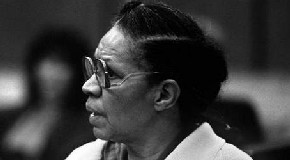 Priscilla Ford
Mass murderer · USA · 1980
Priscilla Ford was sentenced to death for killing six people and injuring 23 mo…
6 victims
Priscilla Ford
Mass murderer · USA · 1980
Priscilla Ford was sentenced to death for killing six people and injuring 23 mo…
6 victims
 Timothy McVeigh
Mass murderer · USA · 1995
Timothy James McVeigh (April 23, 1968 – June 11, 2001) was a United States Army…
168 victims
Timothy McVeigh
Mass murderer · USA · 1995
Timothy James McVeigh (April 23, 1968 – June 11, 2001) was a United States Army…
168 victims
 Julio Gonzalez
Mass murderer · USA · 1990
Julio Gonzalez was sentenced to 174 twenty-five-year sentences (a total of 4,35…
87 victims
Julio Gonzalez
Mass murderer · USA · 1990
Julio Gonzalez was sentenced to 174 twenty-five-year sentences (a total of 4,35…
87 victims
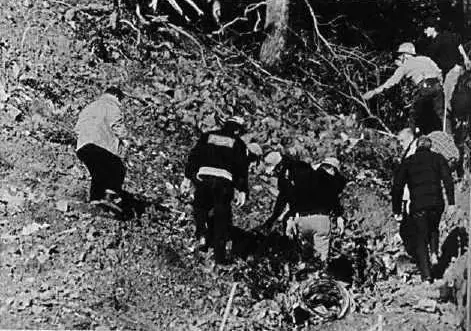 David Burke
Mass murderer · USA · 1987
David Augustus Burke (May 18, 1952–December 7, 1987) was an employee of USAir,…
43 victims
David Burke
Mass murderer · USA · 1987
David Augustus Burke (May 18, 1952–December 7, 1987) was an employee of USAir,…
43 victims
 David Junior Ward
Murderer · USA · 1991
David Junior Ward was the defendant. He was tried in connection with the robber…
1 victim
David Junior Ward
Murderer · USA · 1991
David Junior Ward was the defendant. He was tried in connection with the robber…
1 victim
 Charlene Dorcy
Murderer · USA · 2004
Charlene Dorcy, diagnosed as a paranoid schizophrenic, pleaded guilty to two co…
2 victims
Charlene Dorcy
Murderer · USA · 2004
Charlene Dorcy, diagnosed as a paranoid schizophrenic, pleaded guilty to two co…
2 victims
 Roy Ramsey
Murderer · USA · 1988
Roy Ramsey (Roy Ramsey Jr.) Roy Ramsey was executed on April 14, 1999. · 1971 0…
2 victims
Roy Ramsey
Murderer · USA · 1988
Roy Ramsey (Roy Ramsey Jr.) Roy Ramsey was executed on April 14, 1999. · 1971 0…
2 victims
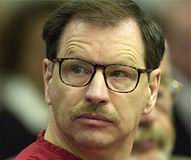 Gary Ridgway
Serial killer · USA · 1982
Gary Leon Ridgway Ridgway was born 18-February-1949 in Salt Lake City, UT. He w…
49 victims
Gary Ridgway
Serial killer · USA · 1982
Gary Leon Ridgway Ridgway was born 18-February-1949 in Salt Lake City, UT. He w…
49 victims
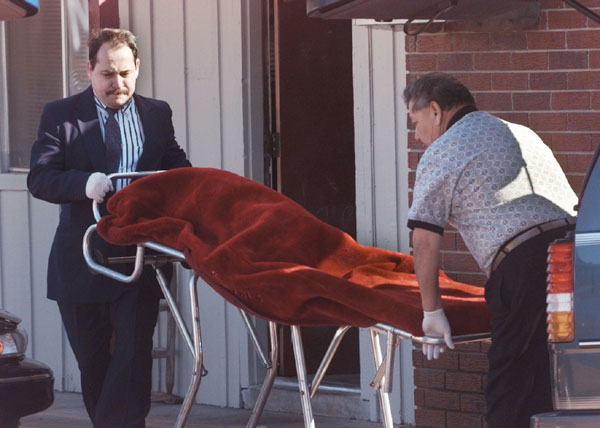 Edwin Bell
Mass murderer · USA · 1999
February 12, 1999 — Edwin Bell shot his estranged girlfriend, their three young…
5 victims
Edwin Bell
Mass murderer · USA · 1999
February 12, 1999 — Edwin Bell shot his estranged girlfriend, their three young…
5 victims
 Seema Gavit
Murderer · India · 1990
Seema Mohan Gavit and her sister Renuka Shinde received death sentences. The se…
9 victims
Seema Gavit
Murderer · India · 1990
Seema Mohan Gavit and her sister Renuka Shinde received death sentences. The se…
9 victims
- Gender
- female
- Country
- USA
- Location
- Lexington, Kentucky, USA
- Date of birth
- 1963
- Age at first offence
- 23
- Characteristics
- drugs
- Victim profile
- Carlos Kearns, 73 / Virginia Kearns, 45 / Trudy Harrell, 59 / Jimmy Roger Keene, 47 / Theodore Sweet, 52
- Method of murder
- Shooting - Stabbing with knife - Running over
- Date(s) of murder
- April 23, 1986
- Years active
- 1986
- Date of arrest
- Next day
- Status
-
Life imprisonment
Sentenced to death on April 26, 1987; resentenced to life in prison without parole in 1991
Case overview
LaFonda Fay Foster and Tina Hickey Powell were convicted by a Fayette County jury of five counts of intentional murder for a mass murder spree in Lexington, Kentucky, that left five people dead.
Timeline
- April 23, 1986 — Lexington police responded to a telephone complaint by Virginia Kearns about two intoxicated women in her apartment who would not leave; two officers arrived at the Jennifer Road complex at 4 p.m., found Virginia Kearns highly intoxicated and belligerent, questioned the appellants, and left after determining they were not intoxicated.
- April 24, 1987 — LaFonda Fay Foster was sentenced to death in Kentucky.
- April 26, 1987 — LaFonda Foster was sentenced to death for her role in the murders of five people.
- 1991 — Foster’s death sentence was reversed and the convictions were remanded for a new punishment hearing; Foster was resentenced to life in prison without parole.
The offence
On April 23, 1986, Lexington police responded to a telephone complaint by Virginia Kearns about two intoxicated women in her apartment who would not leave. Two officers arrived at the Jennifer Road complex at 4 p.m. and found the complainant, Mrs. Kearns, to be highly intoxicated and belligerent. After questioning the appellants and determining that they were not intoxicated, the police left.
The appellants walked to an adjacent parking lot where several people were having a party. While they were drinking, Powell attempted to sell a knife to raise some money for more alcohol. Around that time, Mrs. Kearns left her apartment. Powell threatened her and then she and Foster followed Mrs. Kearns to a drug store where Foster was seen shaking Mrs. Kearns violently.
The three women returned to the Kearnses’ apartment where Mrs. Kearns lived with her semi-disabled husband, Carlos, and their live-in housekeeper, Trudy Harrell. Mrs. Kearns asked her husband to give money to the appellants; he refused and an argument ensued. Mr. Kearns eventually agreed to write them a check but stated he would have to drive somewhere in his car to get it cashed.
Roger Keene and Theodore Sweet, friends of Mr. Kearns, arrived at the apartment while Powell, Mrs. Kearns, and Ms. Harrell went to get Mr. Kearns’ car. Foster drove the car containing Powell and the five ultimate victims to a bait shop where the manager cashed Mr. Kearns’ $25 check sometime between 6:00 and 7:00 p.m. Powell stated that she and Foster were attempting to raise enough money to purchase a gram of cocaine.
The appellants next stopped at the home of Lester Luttrell, where an argument between Luttrell and the appellants ended with Foster firing a .22 bullet into the window of his home.
Between 8:00 and 9:00 p.m., the car was driven to a field off Mount Tabor Road. According to Powell, the five victims were forced out of the car and told to lie face down in the grass. The appellants shot and stabbed Ms. Harrell and Mr. and Mrs. Kearns, according to demonstrative evidence found in the field. Although wounded, the Kearnses, along with Mr. Keene and Mr. Sweet, who were not injured at that time, got back in the car at the appellants’ direction.
Trudy Harrell
Ms. Harrell’s body was discovered 225 feet from the field in the Berke Plaza parking lot. Her body had become lodged underneath the car and was dragged a considerable distance in the parking lot before becoming dislodged. She was fatally shot in the back of her head, stabbed five times in her face and chest, and her throat had been cut. No alcohol was found in her system.
Powell drove the car to a tavern located two miles from where Ms. Harrell’s body was found. A customer testified that Powell came up and asked if he had any “.22s or .38s,” to which he replied that he did not. Powell asked the manager of the store the same question, explaining that she needed them to “shoot some rats.” The manager gave Powell four .22 caliber bullets. The manager observed blood on the right passenger door of the car and told Powell she “better wash that blood off.” The manager could not clearly see who was in the car but noticed a “big guy in it, with no shirt on.” The car was driven to a loading area behind a paint store, where Mrs. Kearns was killed.
Virginia Kearns
The state medical examiner testified that Mrs. Kearns had been shot in the head, her throat had been cut, and she had multiple stab wounds, including sixteen wounds to her neck. Her body had become lodged under the car and dragged. Despite the wounds, Mrs. Kearns died as a result of being run over by the car and had a .32 blood alcohol level at the time of her death.
A large sweat shirt identified as belonging to Roger Keene was found at the scene with blood smears consistent with a knife being wiped off. The blood was identified as belonging to Virginia Kearns.
The appellants returned one hour later to the tavern and again asked the manager for more bullets without success. The manager observed the blood he had noticed earlier on the car had been wiped off. Foster was driving the car.
Carlos Kearns and the remaining victims
The appellants went next to the trailer home of LaFonda Foster’s father, where he provided a nail and showed how to use it in the .22 caliber revolver in place of the cylinder rod, which had been lost at the Mount Tabor field. The substitution would have made the firing of the pistol “more difficult,” according to the state firearms examiner.
Powell stated that while Foster was inside the trailer, the three remaining men begged her to do something to help them. Powell explained she was unable because Foster had taken the keys to the car and stated she believed she could best help them by staying. Powell did not deny she had honked the car horn for Foster to hurry up.
At an undetermined time during the evening, the appellants stopped at another bar. Carolyn Cross, sitting in a car outside the bar, testified that Foster asked her for some money because she “needed a fix.” When asked what was wrong, Foster replied that “she had just shot a man” and that she “told the old man when he got in the car if he bled in the car that she would shoot the old son of a bitch again.” When Cross asked what she was going to do with the rest of the people in the car, Foster replied, “I’ll shoot them, too.” Cross testified Powell and a man in the car called to Foster and said, “Let’s go.” Cross believed Foster had been drinking but was “in control of herself.” Cross observed Foster exhibited no problem standing, walking, or communicating and was “calm” and “not in a hurry.”
The remaining victims asked the appellants for something to eat. The appellants went to a drive-in restaurant for food but left before receiving their order. They then were driven to a field off Richmond and Squires Roads, where they were killed in the same manner as the two women: each was shot in the head, stabbed repeatedly, throat cut, and run over by the car. The car was then set ablaze with gasoline.
Roger Keene was shot two times in the back of the head and once in the ear and was left pinned under the car while it burned. Theodore Sweet was found lying face down on the ground near the car. Sweet had been shot in both ears. Both Carlos Kearns and Roger Keene had defensive injuries to their right hands. An RG .22 caliber revolver with a missing cylinder rod was found in the field near the burning car. Bullets found at the three homicide scenes and inside the bodies of the victims were consistent with having been fired from this handgun.
Toxicology and death at Humana Hospital
A postmortem toxicology report on Theodore Sweet and Roger Keene indicated blood alcohol levels of .35 and .22, respectively. Mr. Kearns was transported to Humana Hospital, where he died as the result of two gunshot wounds to the head. No alcohol was found in his system.
The pathologists listed the penetrating gunshot wounds to the head of Roger Keene as the primary cause of death and stated that Mr. Sweet died from “multiple injuries inflicted in multiple fashions.”
After setting fire to the car, the appellants walked to Humana Hospital on Richmond Road. Powell telephoned for a taxi while Foster went into a bathroom to wash blood off her face and clothes. An emergency room nurse noticed the blood on their clothing and notified the police. The nurse observed that the appellants were both coherent in speech and able to walk without a stagger. Police separately questioned the appellants to determine whether they were injured. Foster and Powell told the police they had been in a fight with one another, but no injuries were found. The arresting officer noticed an odor of alcohol but observed both were capable of communicating and walking without difficulty.
Foster and Powell were arrested for public intoxication when they became belligerent and a “danger to themselves and others.” The arresting officers stated they were arrested only because “they were in a public place.” The appellants were driven to the Fayette County Detention Center. Foster was placed in a holding cell while Powell was booked.
Evidence of conduct before and after arrest
While in the bathroom of the cell, Foster removed her bloody socks and shoestrings and flushed them down the toilet. She wiped blood off her shoes with water and exchanged her blood-stained sweat pants with another inmate. Police obtained the unwashed pants from the home of the inmate the next day. Three .22 caliber bullets were found on the appellants and a blood-stained knife was taken from Powell. The booking was videotaped and played during trial, and again upon request by the jury during their penalty phase deliberations.
During pretrial confinement, Foster told another inmate, Betty McLean, that she had shot the women first and made the men watch. When asked why she killed them, Foster told Betty and other inmates the women were “bitches” and the men were witnesses who saw too much. Commenting on one victim, Foster stated: “The son of a bitch wouldn’t die. He was the hardest man I ever killed.” Foster explained she did not believe the police could connect the crimes. Foster claimed to Zina Montgomery that she was going to play insane and she also corroborated that she had destroyed evidence.
Investigation and arrest
Lexington police responded to the telephone complaint by Virginia Kearns on April 23, 1986. After the appellants were found coherent and walking without a stagger and after police noticed the blood on their clothing, police arrested Foster and Powell for public intoxication. The arresting officers stated the appellants were arrested because “they were in a public place.”
Trial
After pretrial proceedings, Foster made a motion for a change of venue. The trial court denied the motion after two evidentiary hearings.
Jury and venue issues
Foster argued that pretrial publicity generated by the multiple homicides tainted her constitutional right to be tried by a panel of impartial, “indifferent” jurors. The court found no evidence of a prejudiced community. All potential jurors had heard or read about the case, but only fifty-eight veniremen were required to complete a fourteen-member jury. The court found that evidence showed a community that was not prejudiced. Twenty of the fifty-eight had formed opinions of guilt, but only four stated they could not put aside their opinions and decide based on the evidence presented at trial. Seven of the fifty-eight had formed opinions as to punishment.
The trial judge granted ten prosecutor challenges for cause: nine for not being able to consider imposing the death penalty and one for bias. The judge granted seven of Appellant Foster’s motions to strike for cause: three due to pretrial publicity, two because veniremen could not consider Foster’s mitigation evidence, one because a venireman could not consider the minimum authorized punishment, and one venireman stated he would automatically impose the death penalty. The trial judge decided that three jurors who had tentatively formed opinions of guilt could put their opinions aside.
Foster did not challenge for cause any of the jurors who sat on the case, including these three.
Motion to strike for cause
Foster alleged error when the trial court refused her motion to strike for cause veniremen Bernie Short and Kevin McCarty. Neither venireman sat on the fourteen-member jury, but Foster used all of her peremptory challenges. The trial court found Short and McCarty could put aside opinions and consider the whole range of penalties. Short stated, “We’re talking about being a sideline quarterback. It’s a little different being on the side than being in the game. It puts a little different slant on it.” McCarty stated, “going into Tuesday [when voir dire started], probably so, but as to what you [Judge Keller] said as far as the facts and knowing the facts, I really couldn’t make that conclusion right now.” The trial court’s decision was upheld.
Jury instructions and evidentiary issues on appeal
Foster argued that the trial court refused to instruct the jury on second-degree manslaughter, and argued for reversible error. The trial court explained Foster was not entitled to the lesser-included instruction because there was “no evidence of wanton or reckless conduct in this case from which a rational finder of fact could make such a finding.” It had instructed that intoxication would be a complete defense to intentional murder. On appeal, it was held there was no rational basis to instruct on second-degree manslaughter.
Foster also argued the evidence supported an instruction on wanton murder. The court held wanton murder was not a lesser-included offense of intentional murder and the trial court did not abuse its discretion in refusing the instruction.
Foster argued she was entitled to an instruction on first-degree manslaughter based on extreme emotional distance. The trial court refused a separate instruction but included extreme emotional disturbance as a mitigating circumstance. The appellate decision concluded Foster failed to prove the killings were caused by a “triggering” event and that there was “not any evidence” supporting extreme emotional disturbance. The trial court also did not abuse its discretion in refusing to reopen the case for Foster’s expert to testify on the definition of extreme emotional disturbance.
The court also addressed cross-examination of Dr. Noelker. The prosecution asked Dr. Noelker to read passages of a letter Foster wrote to Lester Luttrell while in jail. Foster wrote: “. . . the motive behind it is to convince the jury that I was mentally deranged from large amounts of excessive use of cocaine.” It was held that admission of these statements was proper in the context of cross-examining an expert about the evidence normally used to formulate an opinion. It was also held that error occurred, although harmless, when the prosecutor asked Dr. Noelker about prior acts of misconduct Foster had committed. The expert testified about: 1) Foster shooting her husband in the arm; 2) her shooting at Lester Luttrell; 3) recurrent fights; 4) her theft of a shotgun during a course of a burglary; and 5) an incident where she had shaken her mother “violently.” The admission of these bad acts was found to be error but harmless beyond a reasonable doubt as to Foster’s guilt.
Severance
Foster and Powell both claimed the trial court erred in refusing separate trials. The Commonwealth and trial court suggested holding separate penalty phases. The trial court initially sustained Foster’s motion to sever, stating Powell’s evidence could be admissible to show Powell’s “degree of involvement” and would be “unduly prejudicial” to Foster. Severance was granted “regardless of Powell’s guilty plea.” The indictments were later rejoined after Powell refused to admit intent to kill in a guilty plea proceeding.
On appeal, it was concluded that neither Foster nor Powell was prejudiced by denial of severance during the guilt phase. In the penalty phase, however, the appellate decision held reversal was warranted as to Foster’s death sentence due to accumulated errors related to the joint penalty hearing, including admission of prior acts of misconduct, the contents of letters written by Foster to Powell, and evidence regarding battered wife syndrome.
Penalty phase evidence and mitigation
The Commonwealth’s evidence during penalty phase included Foster’s 1982 judgment of conviction of robbery in the second degree and Powell’s 1980 dual conviction of obtaining a controlled substance by fraud and promoting contraband in the first degree.
Mitigation evidence introduced by Foster included that she was physically and emotionally abused as a child and that she grew up in a dysfunctional family. Lane Veltkamp, a psychologist and expert in dysfunctional families, interviewed Foster and her family and based his opinion on those sessions, including three interviews (one videotaped and played at trial). Foster stated in the interview that she had shot her husband, cut her brother with a knife, had been charged with carrying a concealed deadly weapon, had been involved in “burglaries” and “breaking and enterings,” and had fought with other people.
Foster objected and moved for mistrial, claiming evidence was not relevant and that Powell lacked standing to question Veltkamp. The trial court overruled the objection, stating the specific acts were “very relevant” because they were introduced by Foster, thus making her “propensity for violence an issue,” and stating: “You not only opened the door but flung the gates wide open.”
Powell’s mitigation included evidence of fear and duress. Zina Montgomery was recalled to testify about a conversation overheard between Foster and another inmate. Montgomery claimed she heard Foster state that Powell had gotten “panicky” the night of the murders and that Foster planned on killing Powell because Powell was a witness and might go to the police. Other inmates testified to similar statements and threats made by Foster towards Powell, including testimony that Foster had admitted using the knife on Mr. Kearns. Powell’s sister, Sheila Hickey, testified Foster beat her twice, once requiring hospitalization, and that Foster burned Powell’s apartment while a boyfriend was still inside; she further testified Foster had beaten Powell. Powell testified on her own behalf in the penalty phase. She stated she believed she would have been killed had she not participated in the killings. On cross-examination, Powell admitted she had not been threatened by Foster in any manner on the night of the murders.
Letters introduced during penalty phase
Foster argued she was prejudiced by the introduction of letters written by Foster to Powell while in jail. The letters were introduced by Powell and by the Commonwealth. The appellate court found the argument meritless to the extent of surprise because Foster voluntarily wrote the letters to Powell and the contents had been discussed during pretrial suppression proceedings.
The appellate decision treated admission of the letters at the joint hearing as error as to Foster’s mitigation due to prejudicial effect. Selected passages included threats made by Foster to Powell including: “Bitch, you’re going to die;” “plan your extermination;” “I can fuck your whole world up;” and “don’t make me hurt you.”
Another letter stated to Powell: “Donna said a lot of people thinks we cut one man’s dick off because the paper said the sex couldn’t be determined on one of the bodies. Hmm. What did you do when I wasn’t looking? Ha Ha.”
The appellate decision also noted additional letters: one that stated Foster was prepared to accept a stiffer sentence than Powell, and another that stated: “We will for sure get the death penalty if we say we don’t remember most things,” and “Do not make up a defense.”
Battered wife syndrome testimony
Powell called Dr. Nietzal, a clinical psychologist, to support her mitigation claim of duress and domination. Nietzal testified the relationship between Foster and Powell had “similar characteristics” to the syndrome because Powell had “learned helplessness” toward Foster. Nietzal stated the appellants met some conditions but not all: they were not married, did not always live together, and one was not financially dependent on the other. Nietzal stated Powell had told him she had “freaked out” on the night of the murders. His opinion was that Powell was intoxicated, acted under extreme emotional disturbance, and acted under fear and duress of Foster when necessary to spare her own life.
The appellate court held admission of battered wife syndrome testimony was error because its prejudicial effect outweighed probative value.
Sentencing
After a four-week trial, the jury recommended that Powell be sentenced to life imprisonment on one murder count and to life imprisonment without the benefit of probation or parole for twenty-five years on the remaining four counts. The jury recommended that Foster be sentenced to death on each of her five murder convictions. The trial court entered judgments and sentences in accordance with the jury’s recommendations.
LaFonda Foster was sentenced to death on April 24, 1987, and on April 26, 1987. Later, in 1991, Foster’s death sentence was reversed and remanded for a new punishment hearing, and Foster received a sentence of life in prison without parole in 1991.
Appeals
Issues and holding
In Foster v. Commonwealth of Kentucky, dated 12/19/1991 as an opinion of the court by Justice Spain, it was stated that both appellants had been found guilty by a Fayette County jury of five counts of intentional murder, and that the punishment as to Powell was affirmed while Foster’s sentences to death were reversed, remanded for a new punishment hearing.
The court found reversible error as to Foster’s death sentence due to accumulated errors in the joint penalty phase, specifically including:
- admission of prior acts of misconduct,
- admission of the contents of letters written by Foster to Powell, and
- evidence regarding battered wife syndrome by Powell’s expert.
The decision stated the convictions were affirmed but the sentences of death were reversed and remanded for a new penalty hearing.
Concurring and dissenting opinions
Stephens, C.J., Combs, Lambert, Leibson, and Reynolds, JJ., concurred. Wintersheimer, J., concurred in part and dissented in part by separate opinion.
Wintersheimer stated he “respectfully dissent[s]” from the portion reversing Foster’s sentence of death. He argued Foster failed to prove she had been prejudiced by the joint trial and that there was not a “clear showing of an abuse of discretion” in refusing severance. He argued that the joint trial was proper for judicial economy and that mitigation evidence was not antagonistic. He also argued that:
- the Commonwealth could inquire into evidence used by an expert in formulating an opinion, including bad acts heavily relied upon;
- the letters’ probative value far outweighed prejudicial effect; and
- no reversible error occurred with admission of battered wife syndrome testimony.
Wintersheimer’s conclusion was that the sentence entered by the trial court against Foster should be affirmed. He also concurred with the balance of the majority opinion affirming convictions of both appellants and Powell’s sentence.
Other details
Foster was described as 22 years old and as having a drug-addicted history and a lesbian relationship with Tina Powell. The appellate record described Foster’s assertions about intoxication and her claimed preparation to play insane and destroy evidence.
A judge set an execution date of April 22, 1988 in a later proceeding following Foster’s death sentence. The jury recommended death for Foster and life for Powell.
The killings were described as involving stab wounds and shootings, with several victims run over by a car and three left inside a car that was set on fire.

Spotted an error, or have more information about this case?