
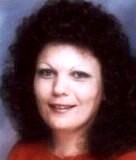
Susan Polk
Murderer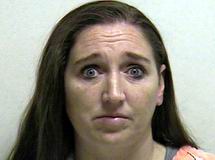 Megan Huntsman
Murderer · USA · 1996
Megan Huntsman was 40 at sentencing. She was a mother of three children who wer…
6 victims
Megan Huntsman
Murderer · USA · 1996
Megan Huntsman was 40 at sentencing. She was a mother of three children who wer…
6 victims
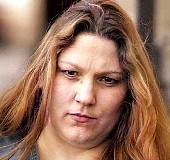 Angela Johnson
Murderer · USA · 1993
Angela Jane Johnson was convicted in federal court of aiding and abetting the m…
5 victims
Angela Johnson
Murderer · USA · 1993
Angela Jane Johnson was convicted in federal court of aiding and abetting the m…
5 victims
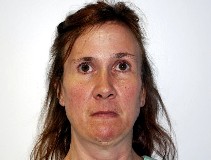 Michele Kalina
Murderer · USA · 1996
Michele Kalina pleaded guilty to murder for one of five infants she initially w…
5 victims
Michele Kalina
Murderer · USA · 1996
Michele Kalina pleaded guilty to murder for one of five infants she initially w…
5 victims
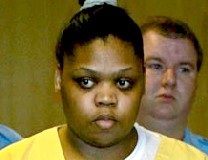 Tiffany Hall
Murderer · USA · 2006
Tiffany Hall was 24 when she was charged in September 2006. She later entered a…
5 victims
Tiffany Hall
Murderer · USA · 2006
Tiffany Hall was 24 when she was charged in September 2006. She later entered a…
5 victims
 Banita Jacks
Murderer · USA · 2007
Banita Jacks was a Washington, DC resident convicted of murdering her four daug…
4 victims
Banita Jacks
Murderer · USA · 2007
Banita Jacks was a Washington, DC resident convicted of murdering her four daug…
4 victims
 Holly Grigsby
Murderer · USA · 2011
Holly Grigsby was sentenced to life in prison without parole on July 15, 2014.…
4 victims
Holly Grigsby
Murderer · USA · 2011
Holly Grigsby was sentenced to life in prison without parole on July 15, 2014.…
4 victims
 Jennifer Womac
Murderer · USA · 2009
Jennifer Lee Womac was 38 and was charged in a patricide murder case in Meigs C…
1 victim
Jennifer Womac
Murderer · USA · 2009
Jennifer Lee Womac was 38 and was charged in a patricide murder case in Meigs C…
1 victim
 Dr. John Robert Hill
Murderer? · USA · 1950
Dr. John Robert Hill was a prominent Houston surgeon. His wife was Joan Robinso…
5 victims
Dr. John Robert Hill
Murderer? · USA · 1950
Dr. John Robert Hill was a prominent Houston surgeon. His wife was Joan Robinso…
5 victims
 Frederick Whatley
Murderer · USA · 1995
Frederick Whatley (Frederick Ramone Whatley) was sentenced to death on January…
1 victim
Frederick Whatley
Murderer · USA · 1995
Frederick Whatley (Frederick Ramone Whatley) was sentenced to death on January…
1 victim
 Dr. Bennett Clark Hyde
Murderer? · USA · 1909
Dr. Bennett Clark Hyde was accused in Kansas City of murdering members of the S…
3 victims
Dr. Bennett Clark Hyde
Murderer? · USA · 1909
Dr. Bennett Clark Hyde was accused in Kansas City of murdering members of the S…
3 victims
 Lisa Jo Chamberlin
Murderer · USA · 2004
Lisa Jo Chamberlin was convicted and sentenced to die by lethal injection for t…
2 victims
Lisa Jo Chamberlin
Murderer · USA · 2004
Lisa Jo Chamberlin was convicted and sentenced to die by lethal injection for t…
2 victims
- Gender
- female
- Country
- USA
- Location
- Orinda, Contra Costa County, California, USA
- Date of birth
- January 25, 1957
- Age at first offence
- 45
- Characteristics
- domestic violence
- Victim profile
- Dr. Frank "Felix" Polk, 70 (her husband)
- Method of murder
- Stabbing with knife
- Date(s) of murder
- October 14, 2002
- Years active
- 2002
- Date of arrest
- Next day
- Status
-
Life imprisonment
Sentenced to prison for a term of 16 years to life on February 23, 2007
Case details
Susan Polk (born Susan Mae Bolling in 1957) was an American woman convicted of second degree (unpremeditated) murder for the 2002 death of her husband, Dr. Frank “Felix” Polk.
Polk met Dr. Polk, a psychotherapist, in 1972 when administrators at her high school recommended she see him to treat her panic attacks. Polk later claimed that Dr. Polk had sex with her when she was 16 and still under his treatment.
Polk and Dr. Polk married in 1982. At the time of their wedding, Polk was 24 and her husband 50. During their marriage, the couple had three sons: Gabriel Polk, Eli Polk, and Adam Polk. Dr. Polk later filed for divorce in 2001; the divorce proceeding was described as complicated and contentious, with each contacting police with allegations of domestic violence. Courts granted Dr. Polk sole custody of the couple’s minor son, Gabriel Polk, and sharply reduced Susan’s alimony. Dr. Polk also won sole possession of their house.
Police records indicated Dr. Polk reported threats from his wife.
The offence
Dr. Polk was found dead on Monday, October 14, 2002. Dr. Polk had 27 wounds on his body, including 15 stab wounds and evidence of blunt force trauma. Polk also was cut and scratched and had “red discoloration around her eyes, bite marks on the hand and a red welt on her shoulder.”
Polk admitted stabbing her husband but testified that she acted in self-defense.
Polk claimed that, after years of beating and sexually abusing her, Dr. Polk brandished a kitchen knife against her, and that she took control of the weapon and stabbed him instead.
Prosecutors sought a conviction of first degree murder, contending that Susan Polk planned the murder for money, and argued there was no evidence of defensive wounds from Dr. Polk’s alleged attack.
At trial, the jury found that the crime was not premeditated and convicted Polk of 2nd Degree Murder.
The prosecution also alleged a special enhancement of using a knife in the act of murder, and Polk was found guilty of that enhancement.
Background
Polk claimed that her husband drugged and raped her when she was a teenager, brainwashed the couple’s children, and threatened to kill her if she tried to leave him.
Polk supported her defense with allegations of marital and professional misconduct. She also claimed to be a psychic with foreknowledge of the September 11 attacks that could have been used to thwart the attacks if “her husband hadn’t prevented her from alerting authorities.” Polk asserted that her husband was an Israeli spy passing her psychic prediction to Mossad.
Polk repeatedly requested a second mistrial, lodging accusations of conspiracy against the prosecutor and the judge.
Investigation and police interview
After Dr. Polk’s death, Gabriel Polk, who had found the body, called 911 and turned his mother in to police.
In a subsequent police interview, Polk professed ignorance of Dr. Polk’s death, evenly recounting her marital grievances with Dr. Polk and claiming to have last seen him early on the prior morning, before he and Gabriel drove Adam to Los Angeles.
When told of Dr. Polk’s death by police, Polk showed no emotion and said, “Oh well, we were going to get a divorce anyhow.”
In her police interview, Polk said she killed her husband in self-defense after an attack near their swimming pool and described seizing a kitchen knife during the altercation.
Police examined Polk for fresh wounds and found none.
Trial
Representation and trial disruptions
Polk was originally released on bail, but bail was revoked after she violated the terms of her bail by contacting and threatening one of her sons.
The trial began on October 17, 2005, but a mistrial was declared because of the slaying of Pamela Vitale, the wife of Polk’s lead attorney, Daniel Horowitz.
On January 20, 2006, a judge removed Polk’s lawyer Daniel Horowitz after he said he had a conflict of interest. Polk had fired three other attorneys who had represented her and demanded that she be permitted to represent herself. She was later allowed to serve as her own attorney.
During trial, prosecutors cross-examined and presented evidence supporting the theory that Polk acted with planning and for financial gain.
Defense evidence and testimony
Polk’s defense included testimony by forensic pathologist Dr. John Cooper. Dr. Cooper testified that Dr. Polk’s death was caused by heart disease and that his stab wounds were not life-threatening and were evidence that Polk delivered them in self-defense.
The prosecution also dismissed Polk’s claim of self-defense, arguing Polk had no defensive wounds from her husband’s alleged attack.
Dr. Cooper failed to appear in court the following day to continue being cross-examined and to present documents he claimed to have received from Polk, sending a written explanation to the judge. He returned with the letters a week later to resume testimony.
Polk also presented testimony from her son Eli, who confirmed that Felix was violent and controlling, and testified in support of her.
Witness testimony by the sons
Each of Susan and Felix’s children testified at the trial.
Gabriel Polk testified that his mother had speculated about means of killing her husband in the weeks before his father’s death. Gabriel also testified that he found his father’s lifeless body on October 14, 2002, called 911, and turned his mother in to police.
Adam Polk testified against his mother and received media coverage when he referred to her on the stand as “cuckoo for Cocoa Puffs.”
Eli Polk testified on Susan’s behalf that Felix was the unstable parent.
Court proceedings and jury selection issues
Polk argued that the jury panel should have been dismissed after the prosecution was unable to explain its peremptory challenge of a female juror.
At the time of the motion, the jury consisted of six women and five men, but 19 of the prosecution’s 22 peremptory challenges had been directed at female jurors. Polk discussed 14 of the 19 dismissed women jurors, contending there was no legitimate basis for their challenge.
The trial court asked the prosecutor to explain reasons for dismissals for these jurors. The prosecutor explained 13 of the 14 challenges and was unable to recall his reasons for dismissing the 14th juror. The court granted the defense one additional peremptory challenge as a remedy.
After the selection of jury, the parties proceeded to select alternates. When the prosecution exercised a peremptory challenge to a female alternate, Polk again objected and the court denied further relief.
Closing statements and self-representation
During closing statements, Polk questioned whether public perception that she was delusional was coloring opinions of her guilt.
The trial court and prosecutor repeatedly admonished Polk.
Polk was documented as bickering with the judge and prosecutor and making frequent objections and allegations of misconduct and bias.
During her trial testimony, Polk repeatedly described psychic claims and secret agent claims including predictions relating to the September 11 attacks.
Voluntary manslaughter instruction request
Polk argued that the trial court erred by refusing to provide a jury instruction on sudden quarrel or heat of passion voluntary manslaughter.
The trial court declined to instruct on voluntary manslaughter as a result of sudden quarrel or heat of passion.
Sentencing
On February 23, 2007, a motion for a new trial and motion to modify verdict was argued by both the defense and prosecution. The motion was denied, and Polk was immediately sentenced to 16 years to life.
Polk received the maximum sentence.
At sentencing, Polk told the court she was prepared to go to prison and intended to be productive for however long she was there, and she stated, “I won't be able to bake cookies, but maybe I'll write a couple of good stories.”
Her mother, Helen Bolling, told the court that Polk deserved compassion “considering she has been in prison since she was 14 years old.”
Judge Laurel Brady said the relationship should not be considered in sentencing because it was not the issue the jury determined at trial.
Polk told the court she was prepared to go to prison and intended to be productive.
Appeals
Polk’s conviction was affirmed on appeal.
In the appeal, she argued that the trial court should have dismissed the jury panel after the prosecution was unable to explain its peremptory challenge of a female juror, erred in failing to give an instruction on heat of passion voluntary manslaughter, and should not have admitted her statements to police obtained in violation of Miranda v. Arizona (1966) 384 U.S. 436 (Miranda). She also argued prejudicial misconduct by the court, prosecutor, and jury.
The appellate court found no prejudicial error and affirmed the conviction.
The appellate court also addressed reimbursement of county defense costs. It concluded the county’s lien did not avoid the need for the trial court to determine Polk’s present ability to reimburse defense costs. The appellate court vacated the order requiring reimbursement and remanded for a hearing to determine present ability to pay all or a portion of $212,033 in reimbursable defense costs.
Outcome and post-sentencing
Polk was transferred to the California Institution for Women (CIW) in Corona (near Chino), CA in December 2012.
Polk faced 16 years to life in prison.
Polk was eligible for parole in 2017.
Other details
Dates and timeline facts with named events
- October 14, 2002 — Dr. Frank “Felix” Polk was found dead; the death involved multiple stab wounds and blunt force trauma.
- February 23, 2007 — A motion for a new trial; motion to modify verdict was argued; the motion was denied; Polk was sentenced to 16 years to life.
- June 19, 2006 — A jury found Polk guilty of second-degree murder.
- December 2010 — The appellate opinion was delivered: In the Court of Appeal of the State of California, First Appellate District, Division One, The People v. Susan Mae Polk (Contra Costa County Super. Ct. No. 031668-7).
- December 2012 — Susan Polk was transferred to the California Institution for Women (CIW) in Corona (near Chino), CA.
Quotes included in the case
Polk said: “Oh well, we were going to get a divorce anyhow.”
Polk told the court: “I won't be able to bake cookies, but maybe I'll write a couple of good stories.”
Helen Bolling told the court that Polk deserved compassion “considering she has been in prison since she was 14 years old.”
Adam Polk referred to his mother on the stand as “cuckoo for Cocoa Puffs.”
Polk said: “There was no passion. There was fear on my part, but not passion. I was not angry. I was not enraged. It was the other way around.”
Juror foreperson Lisa Cristwell said, “We didn't think Susan was credible,” and “We didn't believe it was self-defense in any way.”
Juror Pat Roland said, “Although it was painful at times to go through that.”
Juror Bob Borkenhagen said, “We found him very credible, and he was the first one on the scene.”
Polk’s son Adam later read from a prepared statement: “We all lose here. Felix is no longer in our lives and we miss him terribly.”
Assistant District Attorney Paul Sequeira said: “She's hateful,” and “I have prosecuted many heinous criminals and she's not in that group ... but I've never gone against anybody so hateful.”
Paul Sequeira also said: “She will have to earn her way out and the chances of that are slim,” and “She has no remorse. She is still defiant and I think she will be until she draws her last breath.”
Juror No. 1, Pat Roland, said: “Although it was painful at times to go through that.”
Juror Cristwell said, “I think she spent a lot of time telling us she's not delusional.”
Polk said in relation to her psychic claims: “her husband hadn't prevented her from alerting authorities” and she asserted her husband was “an Israeli spy who was passing her psychic prediction to Mossad.”
Jurors referred to Polk as “delusional,” and one juror referred to her as delusional.
Additional legal process and procedural details
Polk executed a promissory note secured by a lien against the family home agreeing to reimburse the County for costs incurred in her defense.
After the trial, the County sought an order compelling Polk to reimburse defense costs from the proceeds of the sale of her interest in the home. The appellate court vacated that reimbursement order and remanded for a hearing on present ability to pay.

Spotted an error, or have more information about this case?