Larry Gene Heath
Murderer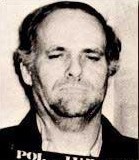 Ervil LeBaron
Murderer · USA · 1972
Ervil Morrell LeBaron (1925 to August 16, 1981) was the leader of a polygamous…
35 victims
Ervil LeBaron
Murderer · USA · 1972
Ervil Morrell LeBaron (1925 to August 16, 1981) was the leader of a polygamous…
35 victims
 Brian Kevin Rosenfeld
Murderer · USA · 1985
Brian Kevin Rosenfeld Brian Kevin Rosenfeld was sentenced to three concurrent l…
23 victims
Brian Kevin Rosenfeld
Murderer · USA · 1985
Brian Kevin Rosenfeld Brian Kevin Rosenfeld was sentenced to three concurrent l…
23 victims
 Marvin Gray
Murderer · USA · 1975
Marvin Gray was convicted killer who claimed responsibility for 23 slayings and…
23 victims
Marvin Gray
Murderer · USA · 1975
Marvin Gray was convicted killer who claimed responsibility for 23 slayings and…
23 victims
 Yahweh ben Yahweh
Murderer · USA · 1980
Yahweh ben Yahweh was born and legally named Hulon Mitchell Jr. (October 27, 19…
23 victims
Yahweh ben Yahweh
Murderer · USA · 1980
Yahweh ben Yahweh was born and legally named Hulon Mitchell Jr. (October 27, 19…
23 victims
 Russell Ellwood
Murderer · USA · 1991
Russell Ellwood was a former taxi driver. Authorities suspected him of killing…
20 victims
Russell Ellwood
Murderer · USA · 1991
Russell Ellwood was a former taxi driver. Authorities suspected him of killing…
20 victims
 Tsutomu Miyazaki
Serial killer · Japan · 1988
Tsutomu Miyazaki was a Japanese serial killer. He murdered four girls aged betw…
4 victims
Tsutomu Miyazaki
Serial killer · Japan · 1988
Tsutomu Miyazaki was a Japanese serial killer. He murdered four girls aged betw…
4 victims
 Christopher Wayne Pritchard
Murderer · USA · 1988
Christopher “Chris” W. Pritchard (born November 25, 1968) was an American man c…
1 victim
Christopher Wayne Pritchard
Murderer · USA · 1988
Christopher “Chris” W. Pritchard (born November 25, 1968) was an American man c…
1 victim
 Alejandro Avila
Murderer · USA · 2002
Alejandro Avila was convicted of kidnapping, murder, and sexual assault in the…
1 victim
Alejandro Avila
Murderer · USA · 2002
Alejandro Avila was convicted of kidnapping, murder, and sexual assault in the…
1 victim
 Joe Clarence Smith
Murderer · USA · 1975
Joe Clarence Smith was convicted and sentenced to death for the 1976 murders of…
2 victims
Joe Clarence Smith
Murderer · USA · 1975
Joe Clarence Smith was convicted and sentenced to death for the 1976 murders of…
2 victims
 Lawrence Libberton
Murderer · USA · 1981
Lawrence Libberton Juan Maya (Hispanic) On November 16, 1981, Juan Maya picked…
1 victim
Lawrence Libberton
Murderer · USA · 1981
Lawrence Libberton Juan Maya (Hispanic) On November 16, 1981, Juan Maya picked…
1 victim
 Olivia Riner
Justice miscarriage · USA · 1991
Olivia Riner was a Swiss au pair accused in the arson death of 3-month-old Kris…
0 victims
Olivia Riner
Justice miscarriage · USA · 1991
Olivia Riner was a Swiss au pair accused in the arson death of 3-month-old Kris…
0 victims
- Gender
- male
- Country
- USA
- Location
- Russell County, Alabama, USA
- Date of birth
- 1951
- Age at first offence
- 30
- Characteristics
- parricide, murder for hire, kidnapping, rape
- Victim profile
- Rebecca Heath, 21 ( his nine months pregnant wife)
- Method of murder
- Shooting
- Date(s) of murder
- August 31, 1981
- Years active
- 1981
- Date of arrest
- September 4, 1981
- Status
-
Executed
Executed by electrocution in Alabama on March 20, 1992
Case overview
Larry Gene Heath was executed by electrocution in Alabama on March 20, 1992. He was convicted of murder during a kidnaping in the first degree and sentenced to death in Alabama.
Heath arranged his wife’s murder for $2,000 so that he could marry another woman. His wife, Rebecca Heath, was nine months pregnant when she was abducted from her home in Phenix City, Alabama. She was shot in the head, and her body was later found in Georgia; the male fetus also died. Heath’s actions were described as a secret engagement, and prosecutors said he persuaded his 21-year-old wife to cosign a $2,000 home-improvement loan that was used to pay for her murder. Heath made no last attempt to appeal his death sentence and received clemency denial from Gov. Guy Hunt.
Timeline
- August 31, 1981 — Heath left the Heath residence in Russell County, Alabama, to meet Charles Owens and Gregory Lumpkin in Georgia just over the Alabama border; he led them back to the Heath residence, gave them the keys to the Heaths’ car and house, and left the premises in his girlfriend’s truck; Owens and Lumpkin kidnaped Rebecca Heath from her home.
- September 4, 1981 — Heath was arrested by Georgia authorities; he waived his Miranda rights and gave a full confession admitting that he had arranged his wife’s kidnaping and murder.
- November 1981 — The grand jury of Troup County, Georgia indicted Heath for “malice” murder under Ga. Code Ann. 16-5-1 (1984).
- February 10, 1982 — Heath pleaded guilty to the Georgia murder charge in exchange for a sentence of life imprisonment.
- May 5, 1982 — The grand jury of Russell County, Alabama returned an indictment against Heath for the capital offense of murder during a kidnaping.
- January 12, 1983 — An Alabama jury convicted Heath of murder during a kidnaping in the first degree; the jury recommended the death penalty.
- February 1983 — A trial was held in Russell County, Alabama; the jury returned a conviction followed by a recommendation of death.
- 1984 — Ex parte Heath, 455 So.2d 905 (Ala. 1984), affirmed Heath’s conviction.
- October 9, 1985 — Certiorari was argued in the U.S. Supreme Court.
- December 3, 1985 — The U.S. Supreme Court decided Heath v. Alabama, 474 U.S. 82 (1985).
- August 1989 — The district court denied Heath’s first petition for a writ of habeas corpus in the Middle District of Alabama without a hearing.
- July 24, 1990 — The district court denied Heath’s petition after denying his request for an evidentiary hearing on his amended petition.
- Aug. 26, 1991 — The Eleventh Circuit case record shows a date for the appeal in Heath v. Jones, No. 90-7671.
- Oct. 25, 1991 — Rehearing and rehearing en banc were denied.
- March 20, 1992 — Heath was executed by electrocution in Alabama.
- March 21, 1992 — The U.S. Supreme Court status narrative shows “he was executed on March 21, 1992,” and the New York Times piece dated March 21, 1992 reported that he was executed early today in Alabama.
Background
In August 1981, Heath spoke with his brother, Jerry Heath, about possibly hiring men to kill his wife. Heath was suspicious that his wife was carrying the child of a former fiance and was allegedly having an ongoing affair. Heath also wanted to marry Denise Lambert and gave Ms. Lambert an engagement ring and ordered invitations printed for their impending wedding despite being married.
The prosecutors described a secret engagement in which Heath persuaded his 21-year-old wife, who was nine months pregnant, to cosign a $2,000 home-improvement loan. Prosecutors said Heath used that loan to pay for the murder.
Heath was described as having claimed to have undergone a religious conversion in prison and friends at Holman Prison called him the “Death Row Apostle.”
The offence
Heath hired two men to kill his wife, Rebecca Heath. The men were identified as Charles Owens and Gregory Lumpkin. The plan involved abducting Rebecca Heath from her home in Phenix City, Alabama and shooting her in the head.
Heath’s plan also included staging the death to appear as an automobile accident. In the Eleventh Circuit narrative, Heath allegedly gave the two men a $500 down payment, keys to his house, and instructions that they were to drive his car with his wife in it into a creek to make the death seem like an automobile accident.
In Georgia, Owens and Lumpkin drove Rebecca Heath to Troup County, Georgia, where they shot her in the head with a pistol. Her body was later found in Georgia; in the U.S. Supreme Court narrative, the Heath car, with Rebecca Heath’s body inside, was later found on the side of a road in Troup County, Georgia, with the cause of death described as a gunshot wound in the head. The male fetus also died.
Investigation
Georgia and Alabama authorities pursued dual investigations and cooperated to some extent. Heath was arrested by Georgia authorities and waived Miranda rights, giving a full confession admitting he had arranged his wife’s kidnaping and murder.
In the Eleventh Circuit narrative, Heath’s confession also implicated others. After his arrest, he confessed and implicated his brother, Jerry Heath, and Owens and Lumpkin. Within the next few weeks, Jerry Heath, Charles Owens, and Gregory Lumpkin were arrested.
The investigation included evidence described in the U.S. Supreme Court narrative and the Eleventh Circuit narrative, including that the cause of death was a gunshot wound in the head; circumstantial evidence including a crushed cigarette on Heath’s kitchen floor and that Heath admitted neither he nor his wife smoked; neighbors noticing Heath speaking with men in a car parked down the street; tire tracks leading up to Heath’s house; a door unlocked; a fan blowing in Mrs. Heath’s bedroom; and that Mrs. Heath had not worn some jewelry that she customarily wore when she left the house.
Arrest
Heath was arrested by Georgia authorities on September 4, 1981. He waived Miranda rights and gave a full confession.
Trial
Georgia proceedings
In November 1981, the grand jury of Troup County, Georgia indicted Heath for “malice” murder under Ga. Code Ann. 16-5-1 (1984).
Prosecutors sought the death penalty, citing as an aggravating circumstance the fact that the murder was “caused and directed” by Heath.
On February 10, 1982, Heath pleaded guilty to the Georgia murder charge in exchange for a sentence of life imprisonment. Heath understood the life sentence could involve his serving as few as seven years.
Alabama proceedings
On May 5, 1982, the grand jury of Russell County, Alabama returned an indictment against Heath for the capital offense of murder during a kidnaping.
Heath entered pleas of autrefois convict and former jeopardy under the Alabama and United States Constitutions, arguing that his Georgia conviction and sentence barred his prosecution in Alabama for the same conduct. He also entered a plea contesting jurisdiction on the ground that the crime had occurred in Georgia.
The trial court rejected Heath’s double jeopardy claims and rejected his jurisdictional plea.
On January 12, 1983, an Alabama jury convicted Heath of murder during a kidnaping in the first degree, a capital offense. After a sentencing hearing, the jury recommended the death penalty. A second sentencing hearing was held before the trial judge pursuant to Alabama law. The judge accepted the jury’s recommendation and found that the sole aggravating factor, that the capital offense was “committed while the defendant was engaged in the commission of a kidnapping,” outweighed the sole mitigating factor, that Heath was convicted of the murder of Rebecca Heath in the Superior Court of Troup County, Georgia, and received a sentence of life imprisonment in that court.
On appeal, the Alabama Court of Criminal Appeals affirmed the conviction.
Heath then filed a petition for writ of certiorari to the Alabama Supreme Court presenting the sole issue of whether the prosecution in Alabama constituted double jeopardy in violation of the 5th Amendment. The Alabama Supreme Court granted the petition and unanimously affirmed the conviction.
Jury and publicity
Heath faced extensive and highly prejudicial pretrial publicity claims in later collateral proceedings, including that local TV and newspapers covered the murder, investigations, and trials, and that many jurors were aware that he had pleaded guilty in Georgia to the same crime. Heath challenged many veniremembers for cause, and in later analysis the appellate opinion addressed denials of challenges for cause for veniremembers who eventually sat on the jury.
Sentencing
In Georgia, Heath received a life sentence after pleading guilty on February 10, 1982.
In Alabama, the jury convicted him of murder during a kidnaping in the first degree and recommended the death penalty. The trial judge accepted the jury’s recommendation and found that the aggravating factor outweighed the mitigating factor. Heath was sentenced to death.
Appeals
Alabama Supreme Court and U.S. Supreme Court
The Alabama Supreme Court rejected Heath’s double jeopardy claims and affirmed his conviction.
Heath sought review in the U.S. Supreme Court. The U.S. Supreme Court held that the dual sovereignty doctrine meant successive prosecutions by two States for the same conduct were not barred by the Double Jeopardy Clause. The Court affirmed the judgment of the Alabama Supreme Court.
U.S. Supreme Court citations and holdings
- The U.S. Supreme Court decision included discussion that “successive prosecutions by two States for the same conduct are not barred by the Double Jeopardy Clause.”
- The Court identified that the dual sovereignty doctrine was founded on the common law conception of crime as an offense against the sovereignty of the government, and it concluded that violating the laws of two different states could be treated as two distinct “offences.”
- Justice O’Connor delivered the opinion of the Court.
- Justices Marshall and Brennan filed dissents.
- Justice Brennan filed a separate statement joined by Justice Marshall.
Federal habeas and Eleventh Circuit
Heath petitioned for post-conviction relief in Alabama state court and for a Federal writ of habeas corpus, both denied.
In the Eleventh Circuit case described as Larry Gene Heath, Petitioner-Appellant, v. Charlie Jones, Warden, Respondent-Appellee (No. 90-7671), Heath appealed the district court’s denial of his habeas corpus petition. The Eleventh Circuit affirmed denial of the writ.
The Eleventh Circuit evaluated ineffective assistance of appellate counsel claims and held that while appellate counsel’s performance was deficient, Heath was unable to show prejudice. It also addressed claims about denial of a fair and impartial jury based on pretrial publicity, and a Fifth Amendment privilege against self-incrimination issue arising during the Georgia trial of Owens and Lumpkin. The court held that any error concerning that Fifth Amendment claim was harmless beyond a reasonable doubt and therefore the appellate counsel’s failure to raise it was not prejudicial. The court also addressed subject matter jurisdiction arguments and upheld that Alabama had jurisdiction to prosecute.
Outcome
Heath’s death sentence was carried out by electrocution.
In the New York Times narrative dated March 21, 1992, Gov. Guy Hunt denied a request for clemency from Heath’s supporters, including a group of ministers. Heath was executed early that day in Alabama in the electric chair.
The U.S. Supreme Court status narrative also included subsequent history stating that the defendant was executed on March 21, 1992.
Other details
Defendants connected to the offence
- Charles Owens and Gregory Lumpkin were described as the men Heath hired to kill his wife.
- Jerry Heath was described in the Eleventh Circuit narrative as Heath’s brother who was involved in the hiring discussions; in the Eleventh Circuit narrative, Jerry Heath initially pled guilty to conspiracy, then withdrew his plea, went to trial, and was acquitted.
- Denise Lambert was described as Heath’s girlfriend and the person Heath wanted to marry; she was described as having received an engagement ring and as giving Heath’s money to the men after the murder was completed. In the Eleventh Circuit narrative footnotes, Denise Lambert pled guilty to the conspiracy count and was sentenced to ten years in prison.
- Sanders Williams is mentioned in the Eleventh Circuit narrative footnote as someone arrested who initially agreed to kill Mrs. Heath, accepted a down payment, but later backed out of the conspiracy.
Other sentences mentioned
In the Eleventh Circuit footnote:
- Owens and Lumpkin were convicted of murder; the prosecutor withdrew his request for the death penalty, and the court sentenced them to life imprisonment.
- Alabama also indicted Owens, Lumpkin, Jerry Heath, and Denise Lambert.
- Jerry Heath and Lambert pled guilty and accepted 10-year sentences for conspiracy.
- Lumpkin was convicted and given a life sentence.
- Owens was sentenced to death, but the conviction was reversed on appeal (Owens v. State, 531 So.2d 22 (Ala. Crim. App. 1987)); Owens then pled guilty and accepted a life sentence.
Supreme Court double jeopardy issue framing
The U.S. Supreme Court decision framed the issue as whether the Double Jeopardy Clause barred Alabama from trying Heath for the capital offense of murder during a kidnaping after Georgia had convicted him of murder based on the same homicide. The Court ruled that the dual sovereignty doctrine permitted successive prosecutions by two States.
Direct quotations preserved
Heath was called the “Death Row Apostle” by friends at Holman Prison because he had claimed to have undergone a religious conversion in prison.
Legal status cross-check
The case record contains two execution dates in different portions of the narrative: the case status field states “Executed by electrocution in Alabama on March 20, 1992,” while the New York Times narrative and U.S. Supreme Court “subsequent history” narrative state “executed on March 21, 1992.”

Spotted an error, or have more information about this case?