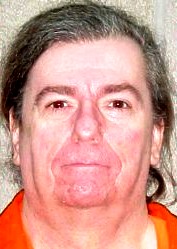
Joe Clarence Smith
Murderer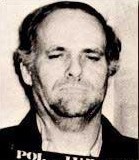 Ervil LeBaron
Murderer · USA · 1972
Ervil Morrell LeBaron (1925 to August 16, 1981) was the leader of a polygamous…
35 victims
Ervil LeBaron
Murderer · USA · 1972
Ervil Morrell LeBaron (1925 to August 16, 1981) was the leader of a polygamous…
35 victims
 Brian Kevin Rosenfeld
Murderer · USA · 1985
Brian Kevin Rosenfeld Brian Kevin Rosenfeld was sentenced to three concurrent l…
23 victims
Brian Kevin Rosenfeld
Murderer · USA · 1985
Brian Kevin Rosenfeld Brian Kevin Rosenfeld was sentenced to three concurrent l…
23 victims
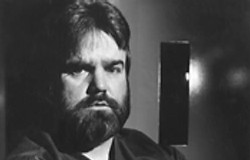 Marvin Gray
Murderer · USA · 1975
Marvin Gray was convicted killer who claimed responsibility for 23 slayings and…
23 victims
Marvin Gray
Murderer · USA · 1975
Marvin Gray was convicted killer who claimed responsibility for 23 slayings and…
23 victims
 Yahweh ben Yahweh
Murderer · USA · 1980
Yahweh ben Yahweh was born and legally named Hulon Mitchell Jr. (October 27, 19…
23 victims
Yahweh ben Yahweh
Murderer · USA · 1980
Yahweh ben Yahweh was born and legally named Hulon Mitchell Jr. (October 27, 19…
23 victims
 Daniel Rakowitz
Homicide · USA · 1989
Daniel Rakowitz was born in 1960 in Rockport, Texas. He moved to New York aroun…
1 victim
Daniel Rakowitz
Homicide · USA · 1989
Daniel Rakowitz was born in 1960 in Rockport, Texas. He moved to New York aroun…
1 victim
 Brenda Andrew
Murderer · USA · 2001
Brenda Evers Andrew was a white female who appeared as 5 ft. 3 in. tall and 110…
1 victim
Brenda Andrew
Murderer · USA · 2001
Brenda Evers Andrew was a white female who appeared as 5 ft. 3 in. tall and 110…
1 victim
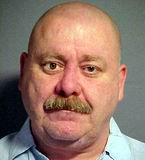 John Duty
Murderer · USA · 2001
John Duty was convicted after a guilty plea in the District Court of Pittsburg…
1 victim
John Duty
Murderer · USA · 2001
John Duty was convicted after a guilty plea in the District Court of Pittsburg…
1 victim
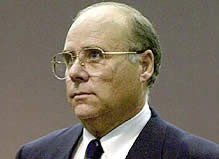 John Edward Robinson
Serial killer · USA · 1984
John Edward Robinson (born December 27, 1943) was an American serial killer. He…
8 victims
John Edward Robinson
Serial killer · USA · 1984
John Edward Robinson (born December 27, 1943) was an American serial killer. He…
8 victims
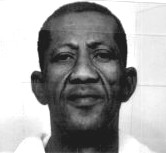 Clydell Coleman
Murderer · USA · 1989
Clydell Coleman was tried and convicted for the murder of Leetisha Joe. Coleman…
1 victim
Clydell Coleman
Murderer · USA · 1989
Clydell Coleman was tried and convicted for the murder of Leetisha Joe. Coleman…
1 victim
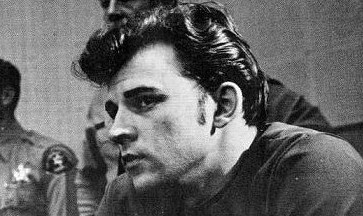 Paul Ferguson
Murderer · USA · 1968
Paul Ferguson was sentenced to life imprisonment in 1969 and was paroled less t…
1 victim
Paul Ferguson
Murderer · USA · 1968
Paul Ferguson was sentenced to life imprisonment in 1969 and was paroled less t…
1 victim
- Gender
- male
- Country
- USA
- Location
- Maricopa County, Arizona, USA
- Date of birth
- J une 15, 1949
- Age at first offence
- 26
- Characteristics
- rape?, hitchhiking
- Victim profile
- Sandy Spencer, 18 / Neva Lee, 14
- Method of murder
- A sphyxiation
- Date(s) of murder
- 1975 / 1976
- Years active
- 1975–1976
- Date of arrest
- —
- Status
-
Sentenced to death
Sentenced to death on August 31, 1977; resentenced to death in 1979 and 2004
Case record: Joe Clarence Smith
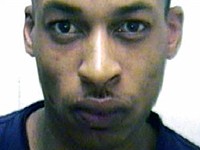
Joe Clarence Smith was convicted and sentenced to death for the 1976 murders of Neva Lee and Sandy Spencer.
The offence
Shortly before midnight on December 30, 1975, 18-year-old Sandy Spencer finished work at a fast food restaurant and began hitchhiking home. Smith picked her up and drove her to a desert location north and west of Phoenix. There, Smith bound Spencer, forced dirt into her mouth and nostrils, and taped her mouth closed. Spencer died of asphyxiation. To satisfy himself that she was actually dead, Smith stabbed her numerous times and embedded a 2-inch long sewing needle in her breast. Spencer’s nude body was found on January 1, 1976.
In late January of 1976, Smith picked up another hitchhiker, 14-year-old Neva Lee. Smith took the girl to another desert location and killed her by forcing dirt into her mouth and nostrils and taping her mouth closed. Lee also died of asphyxiation, was stabbed several times, and had been jabbed in the breasts with needles. Lee’s nude body was discovered on February 2, 1976.
Investigation
On January 1, 1976, officials of the Maricopa County Sheriff’s Department found the nude body of Sandy Spencer in the desert outside Phoenix. One month later in a different desert location, police discovered the nude body of Neva Lee. Both teenage hitchhikers had been suffocated by having dirt forced into their mouths, which were taped shut. The assailant stabbed both women multiple times, punctured them with needles, and bound their wrists with rope. Smith, who was on probation from a rape conviction, became the prime suspect.
Police put Smith under surveillance. When that failed to produce probable cause for an arrest, police had a female officer pose as a hitchhiker to lure Smith into committing false imprisonment or battery. He eventually picked up the officer, took her to his father’s machine shop, and grabbed her by both arms. After a prearranged signal, police entered and arrested Smith for false imprisonment.
During Smith’s imprisonment, police questioned him about the Lee and Spencer murders. At first, he denied his involvement. Months later, at his own initiation, Smith gave investigators a bizarre account of the Lee slaying. He told police that he was present at the crime because a friend, John Jameson, forced him at gunpoint to drive the victim to the desert. Once there, Jameson ordered Lee to have sexual intercourse with Smith in order to frame Smith for her rape. Smith said Jameson then decided to kill Lee. Smith’s account conflicted with some physical evidence found at the scene. Smith later contended that he told police no such story.
Arrest
After police had a female officer pose as a hitchhiker, Smith picked her up, took her to his father’s machine shop, and grabbed her by both arms. After a prearranged signal, police entered and arrested him for false imprisonment.
Trial
Trial for Neva Lee
Smith went on trial for the Lee murder first. Throughout the trial, he maintained his innocence, contending that other people committed the crime and that investigators conspired to frame him. Jameson testified at the trial. He denied being present at the murder, but said that a man known as “Squirrel” bragged about killing two women and showed James on pictures of the dead women. The jury returned a general verdict finding Smith guilty of murder.
Start of trial for the Neva Lee case was May 24, 1977, and the verdict was June 17, 1977.
Guilty plea to Sandy Spencer
Throughout the Spencer slaying proceeding, Smith entered a plea of guilty shortly after Di Anne Jameson—Smith’s girlfriend, John Jameson’s ex-wife, and a key prosecution witness—told the court that she had been improperly contacted by a defense investigator and by Smith’s mother. During the plea colloquy, the prosecutor expressed doubts about Smith’s emotional stability to enter a voluntary plea. Nonetheless, the trial court accepted the plea. Three weeks later, Smith unsuccessfully sought to withdraw the plea, explaining that he had only pleaded guilty out of concern that his parents and Ms. Jameson would be arrested.
Start of trial for the Sandy Spencer case was June 28, 1977. Guilty plea for the Sandy Spencer case was July 7, 1977.
Sentencing
Smith was first sentenced to death on August 31, 1977 for both convictions.
At Smith’s sentencing for both convictions, his trial counsel, Stephen Rempe, offered the deposition testimony of a psychiatrist, Dr. Jacob Hoogerbeets, and the live testimony of a psychologist, Dr. Faye Goldberg. At that time, Arizona’s death penalty statute restricted the presentation of mitigating evidence to a list of statutory mitigating factors. Rempe offered Hoogerbeets’ and Goldberg’s testimony solely to establish one statutory mitigating factor: significant impairment of Smith’s capacity to appreciate the wrongfulness of his conduct or to conform his conduct to the law.
Dr. Hoogerbeets originally had been appointed by the court to evaluate Smith’s competency to stand trial in March 1977. At that time, Hoogerbeets told the court that Smith did not suffer from any mental disability. By July, with no additional interviews of Smith, Hoogerbeets testified in his deposition that Smith was a borderline psychotic who may have had a “compulsion” to commit the crimes.
During the August sentencing, Dr. Goldberg also testified that Smith’s emotional tension built up to such an extent that at the time of crimes he had an overwhelming “compulsion” to kill. The state rebutted this compulsion theory with the testimony of psychiatrist Dr. Michael Cleary, who also had interviewed Smith to determine his competency to stand trial. Dr. Cleary determined that Smith was not impaired in his ability to conform his conduct to the law and suffered from no significant mental defect.
The court found no mitigating circumstances and three aggravating circumstances warranting the death penalty.
Resentencing
Resentencing hearing in 1979
In 1979, the Arizona Supreme Court remanded Smith’s case for resentencing in light of changes to the state’s death penalty statute. Rempe could present any mitigating evidence on behalf of Smith, including additional evidence of mental illness not rising to the level of an impairment of Smith’s capacity to conform his conduct to the law.
At the re-sentencing, Rempe simply resubmitted Dr. Hoogerbeets’ and Dr. Goldberg’s testimony under the same statutory mitigating factor, without recalling them to testify or presenting other evidence of mental or emotional disturbance. Rempe asked the court to help him, a request that was ignored. At re-sentencing, the judge found that Dr. Hoogerbeets’ and Dr. Goldberg’s testimony alone did not support the statutory mitigating factor of significant impairment, and so the court would not consider Dr. Cleary’s testimony.
The court said it was not limiting its consideration of any mitigating circumstance in concluding that no mitigating factors existed which would call for a sentence other than death. Rempe reargued the constitutionality of Arizona’s revised death penalty statute. Rempe repeated a recommendation of a supplemental pre-sentence report suggesting the court appoint another examining psychiatrist. The court denied the request.
The court again found aggravating circumstances and no mitigating circumstances in sentencing Smith to death.
Resentencing for both murders occurred on November 7, 1979.
Resentencing proceeding in 2004
The third sentencing proceeding took place in 2004, when Smith got the death penalty.
Appeals and post-conviction proceedings
Smith appealed through state and federal courts. In 1999, a U.S. appeals court overturned Smith’s death sentence on the grounds that his lawyer had been ineffective during the second sentencing hearing. The decision in that appeal referenced the following procedural posture:
- Smith appealed the denial of his habeas corpus petition seeking review of his conviction and death sentence for the 1976 murders of Neva Lee and Sandy Spencer.
- The appeal involved 34 claims; the district court found all but seven procedurally defaulted or without merit, and the appellate court focused on one claim: ineffective assistance of counsel at re-sentencing.
- The appellate court concluded that Smith’s counsel effectively presented no mitigating evidence on his behalf and reversed the district court’s denial of habeas corpus as to sentencing, remanding for re-sentencing. The appellate court affirmed the district court on the remainder of Smith’s claims.
- The U.S. appeals court decision included a separate opinion structure in which Ferguson wrote the opinion and Fernandez filed a partial concurrence and partial dissent.
The appellate court’s case caption was: “189 F.3d 1004 Joe Clarence Smith , Jr., Petitioner-appellant, v. Terry L. Stewart, Respondent-appellee UNITED STATES COURT OF APPEALS FOR THE NINTH CIRCUIT.”
It stated:
Because we conclude that Smith 's counsel effectively presented no mitigating evidence on his behalf, our confidence in the outcome of his sentencing has been undermined to such an extent that we must reverse the district court.
It then directed relief:
We reverse the district court's denial of habeas corpus and remand with directions that it issue a writ releasing Smith from the sentence of death and directing that he be re-sentenced.
It also reported the disposition:
AFFIRMED in part, REVERSED and REMANDED in part.
Dissent and quotations about execution delay
A later U.S. Supreme Court decision rejected an appeal by Joe Clarence Smith contending that his execution would violate the constitutional ban on cruel and unusual punishment because he had been on death row for more than 30 years. Arizona Attorney General Terry Goddard opposed the appeal, arguing that the fact that Smith first received death sentences for two murders some 30 years ago did not violate the constitutional ban and that the delay stemmed from Smith litigating claims in state and federal courts.
A quotation included in the report attributed to Justice Stephen Breyer stated:
In my view, Smith can reasonably claim that his execution at this late date would be 'unusual,'' I am unaware of other executions that have taken place after so long a delay, particularly when much of the delay at issue seems due to constitutionally defective sentencing proceedings.
Another quotation included in the report attributed to Smith’s attorneys stated:
Nor would Smith's execution after such an outrageous delay additionally serve the societal interest of retribution and deterrence,
The case summary also included that the delay involved Smith’s resentencing after his death sentence was overturned in 1999 and followed by a 2004 sentencing in which Smith received the death penalty again.
State published opinions
Published opinions listed included:
- State v. Smith (J. C.), 123 Ariz. 231, 599 P.2d 187 (1979).
- State v. Smith (J. C), 131 Ariz. 29, 638 P.2d 696 (1981).
Other details
People and relationships mentioned
- John Jameson was a person Smith named in his account of the Lee slaying.
- Di Anne Jameson was identified as Smith’s girlfriend, John Jameson’s ex-wife, and a key prosecution witness.
- Stephen Rempe was Smith’s trial counsel.
- Dr. Jacob Hoogerbeets was a psychiatrist whose deposition testimony Rempe offered.
- Dr. Faye Goldberg was a psychologist whose live testimony Rempe offered.
- Dr. Michael Cleary was the psychiatrist who rebutted the compulsion theory.
- Rev. Larry Maddox was mentioned in connection with information about multiple personalities.
- Debbie Lippiett was mentioned as testifying during the rape trial about wide mood swings.
- Richard Todd was mentioned as a court-appointed investigator who witnessed Smith’s “second personality.”
- Dr. Donald Tatro was mentioned as interviewing Smith later, administering tests, and researching his family background.
Prior convictions and probation
Smith had been on probation from a rape conviction. The aggravating circumstances listed included prior convictions punishable by life imprisonment, a prior conviction involving violence, and that the murders were especially heinous/cruel/depraved. The record listed mitigating circumstances as none.
Written and procedural notes from the federal appeal
The federal appeal’s decision included an exchange. The record included the following verbatim statements in that exchange:
REMPE: I only have really one area of mitigation that I was asking the Court to consider and that was under the old statute where the defendant knew right from wrong but yet it was still a McNaughton [sic] defense. I don't know how that reading, the new statute or reading State v. Watson stating that we can present any mitigating circumstances, I don't know what posture I would have to present that in other than to reurge the Court to consider . . . the deposition of Dr. Hoogerbeets and the testimony of Dr. Goldberg, taking the standard that was enunciated in the code as to a possible mitigating factor, but I really show my ignorance How would that work in State v. Watson? We are to consider all relevant mitigating factors. I don't know what the standard is now. Therefore, I am in essence asking the court what our stand would be.
COURT: I would suggest that you present anything you, in your opinion or imagination, feel is a mitigating circumstance.
REMPE: The only two things, as I had indicated, would be what the State said they already read . . .. I would move both of those items [Hoogerbeets' and Goldberg's testimony] to be introduced in evidence and to be considered by the Court as mitigation and as to any argument, it will be rather brief and I would make it the day of sentencing.
Quotes from the appellate discussion
The record included a quotation attributed to the majority discussion about Smith’s mental condition and treatment:
The failure to present mitigating evidence during the penalty phase of a capital case, where there are no tactical considerations involved, constitutes deficient performance, since competent counsel would have made an effective case formitigation.
It also included verbatim quotations from Dr. Hoogerbeets and Dr. Goldberg in a dissenting opinion excerpt:
`a border-type psychotic person, with an abnormal psycho-sexual development, very strong neurotic traits, which drives him to compulsory aberrant actions. Unfortunately, often highly deviant and violent in nature.'
and
multiple sadistic sex slayer
and the compulsion quote attributed to Dr. Goldberg:
mounts to such an extent that the intellectual processes are suspended and accompanying that may be a loss of memory about the events, partially or completely.
Additional statements attributed to counsel in the sentencing discussion included:
If we are looking to punish Mr. Smith , I can't think of a more heinous type of punishment than to lock someone up at the Arizona State Prison for the rest of his life.
Timeline
- December 30, 1975 (shortly before midnight) — 18-year-old Sandy Spencer finished work at a fast food restaurant and began hitchhiking home; Smith picked her up.
- January 1, 1976 — Nude body of Sandy Spencer was found in the desert outside Phoenix.
- Late January 1976 — Smith picked up another hitchhiker, 14-year-old Neva Lee, and drove her to another desert location.
- February 2, 1976 — Nude body of Neva Lee was discovered.
- May 24, 1977 — Start of trial for the Neva Lee murder case.
- June 17, 1977 — Verdict of guilty for the Neva Lee murder case.
- June 28, 1977 — Start of trial for the Sandy Spencer murder case.
- July 7, 1977 — Guilty plea for the Sandy Spencer murder.
- August 31, 1977 — Sentencing to death for both murders.
- November 7, 1979 — Resentencing to death for both murders.
- January 28, 1999 — United States Court of Appeals for the Ninth Circuit argued the habeas appeal (Pasadena, California).
- August 31, 1999 — United States Court of Appeals for the Ninth Circuit decided the habeas appeal.
- 2004 — Third sentencing proceeding; Smith received the death penalty again.
- Oct 15, 2007 — Reuters reported the U.S. Supreme Court rejected an appeal by Smith regarding his execution after over 30 years on death row.

Spotted an error, or have more information about this case?