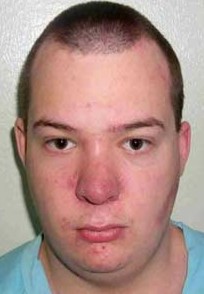
Brandon Hedrick
Murderer Russell Ellwood
Murderer · USA · 1991
Russell Ellwood was a former taxi driver. Authorities suspected him of killing…
20 victims
Russell Ellwood
Murderer · USA · 1991
Russell Ellwood was a former taxi driver. Authorities suspected him of killing…
20 victims
 Robert Martines Perez
Murderer · USA · 1994
Name: Robert Martines Perez · Other name used in proceedings: Robert Martinez P…
15 victims
Robert Martines Perez
Murderer · USA · 1994
Name: Robert Martines Perez · Other name used in proceedings: Robert Martinez P…
15 victims
 Billy Frank Vickers
Murderer · USA · 1993
Billy Frank Vickers Vickers was executed by lethal injection in Texas on Januar…
14 victims
Billy Frank Vickers
Murderer · USA · 1993
Billy Frank Vickers Vickers was executed by lethal injection in Texas on Januar…
14 victims
 Anthony Garcia
Murderer · USA · 2008
Anthony Garcia was a former doctor who was found guilty on all counts including…
4 victims
Anthony Garcia
Murderer · USA · 2008
Anthony Garcia was a former doctor who was found guilty on all counts including…
4 victims
 Willie Francis
Homicide · USA · 1944
Willie Francis (c. 1930 – May 9, 1947) was an African American sentenced to dea…
1 victim
Willie Francis
Homicide · USA · 1944
Willie Francis (c. 1930 – May 9, 1947) was an African American sentenced to dea…
1 victim
 Douglas Crabbe
Mass murderer · Australia · 1983
Douglas John Edwin Crabbe (b. 1948) was sentenced to five consecutive terms of…
5 victims
Douglas Crabbe
Mass murderer · Australia · 1983
Douglas John Edwin Crabbe (b. 1948) was sentenced to five consecutive terms of…
5 victims
 Albert Fentress
Homicide · USA · 1979
Albert Fentress was a former school teacher and later lived in psychiatric hosp…
1 victim
Albert Fentress
Homicide · USA · 1979
Albert Fentress was a former school teacher and later lived in psychiatric hosp…
1 victim
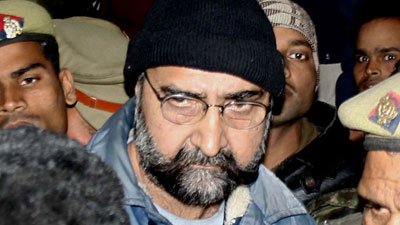 Moninder Singh Pandher
Serial killer ? · India · 2005
Moninder Singh Pandher was a Punjabi businessman arrested in connection with th…
18 victims
Moninder Singh Pandher
Serial killer ? · India · 2005
Moninder Singh Pandher was a Punjabi businessman arrested in connection with th…
18 victims
- Gender
- male
- Country
- USA
- Location
- Lynchburg, Virginia, USA
- Date of birth
- February 23, 1979
- Age at first offence
- 18
- Characteristics
- rape, robbery
- Victim profile
- Lisa Crider (female, 23)
- Method of murder
- Shooting
- Date(s) of murder
- May 10, 1997
- Years active
- 1997
- Date of arrest
- 7 days after
- Status
-
Executed
Executed by electrocution in Virginia on July 20, 2006
Case overview
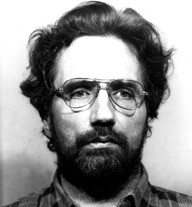
Brandon Wayne Hedrick (February 23, 1979 – July 20, 2006) was a convicted murderer who was executed by electrocution by the U.S. state of Virginia.
Hedrick was convicted of capital murder in the commission of robbery, forcible sodomy, rape, robbery, abduction, and use of a firearm in the commission of murder, and was sentenced to death.
Timeline
- May 11, 1997 — Lisa Yvonne Alexander Crider was abducted, robbed, raped, and shot to death at short range with a shotgun near the James River in Appomattox County.
- May 10, 1997 — Hedrick, Trevor Jones, and William K. Dodson spent the evening at Jones' apartment in Lynchburg and later went to find prostitutes; Hedrick and Jones met two prostitutes near Fifth and Madison Streets in Lynchburg.
- About 1:00 a.m. — Crider was abducted by Hedrick and Trevor Jones; the three left Jones' apartment and traveled in Jones' truck.
- Daybreak — Jones stopped the truck near the James River; Crider was taken to the riverbank; Hedrick shot Crider.
- About 6:30 or 7:00 a.m. on Sunday morning — Hedrick and Jones arrived at Jones' apartment and went to sleep.
- May 11, 1997 (evening) — Crider's body was discovered at the James River with a shotgun wound to the face.
- About one week later — Authorities arrested Hedrick and Jones in Lincoln, Nebraska.
- September 1997 — While transported from Appomattox to the Campbell County Jail, Hedrick tried to take a deputy sheriff's revolver.
- July 22, 1998 — Hedrick was sentenced to death.
- February 26, 1999 — The Supreme Court of Virginia affirmed Hedrick's conviction.
- August 16, 2001 — The Circuit Court submitted Findings of Fact and Conclusions of Law to the Supreme Court of Virginia concluding Hedrick's ineffective assistance of counsel claims lacked merit.
- November 1, 2002 — The Supreme Court of Virginia dismissed Hedrick's state habeas petition.
- January 10, 2003 — The Supreme Court of Virginia denied rehearing.
- March 23, 2004 — The district court dismissed Hedrick's federal petition.
- March 31, 2006 — The U.S. Court of Appeals for the Fourth Circuit affirmed dismissal of Hedrick's federal habeas claims by published opinion.
- July 20, 2006 — Hedrick was executed by electrocution at Greensville Correctional Center in Jarratt, Virginia, and pronounced dead at 9:12 p.m.
Background
At the time of the offenses, Lisa Crider was 23 years old. Crider was the mother of a 5-year-old boy.
The jury recommended a death sentence, finding that Hedrick posed a “continuing serious threat to society” and that his conduct in committing the offenses was “outrageously or wantonly vile, horrible or inhuman in that it involved torture, depravity of mind, aggravated battery to the victim beyond the minimum necessary to accomplish the act of murder.” The Circuit Court agreed and sentenced Hedrick to death.
During sentencing, a court-appointed clinical psychologist testified that Hedrick was significantly immature for his age and had a problem with drugs and alcohol that accelerated in the months leading up to the crimes. The psychologist noted Hedrick’s IQ score of 76, describing it as “far below average,” while also stating it was “not so low as to suggest mental retardation”.
The offence
Victim and setting
Lisa Yvonne Alexander Crider was abducted in an area where prostitutes gathered. The abduction occurred about 1 a.m. while Hedrick and Trevor Jones were in the area.
Drugs and initial contacts
Hedrick and Trevor Jones spent the evening drinking, smoking crack cocaine and marijuana, and employing the services of four prostitutes.
After driving the last two prostitutes back to downtown Lynchburg, the pair saw Crider. Jones knew that Crider’s boyfriend was a seller of crack cocaine. Hedrick and Jones decided to pick up Crider, have sex with her, and rob her of any crack cocaine in her possession.
Crider voluntarily traveled with Hedrick and Jones back to Jones' apartment, where Jones paid Crider $50 to have sex with him.
Robbery and restraints
Hedrick retrieved a shotgun from Jones’s car at Jones’s direction and robbed Crider of the $50 at gunpoint.
Hedrick and Jones handcuffed Crider and duct-taped her eyes and mouth. They led her out to Jones’s truck. Hedrick removed the shirt and duct tape from Crider after they had been riding for some time.
Sexual assault
After Jones stopped the truck because Hedrick wanted to have sex with Crider, Hedrick raped Crider after telling her not to “try anything” because he had a gun.
As they drove in search of a suitable location to kill Crider, Crider asked if there was anything she could do to keep them from killing her.
Hedrick told Crider: “if you suck my dick, I'll think about it,” and Crider performed oral sodomy on Hedrick.
Decision to kill and preparation for shooting
Hedrick and Jones decided to kill Crider, fearing retaliation from Crider’s boyfriend for the rape.
As they continued driving and Crider pleaded for her life, Crider asked: “[I]s there anything I can do to make ya'll not do this?” Hedrick responded: “if you suck my dick, I'll think about it.” Crider then performed oral sex on Hedrick.
They continued driving until daybreak, when Jones stopped the truck near the James River.
Jones led Crider to the riverbank and told Hedrick: “do what you got to do,” and walked back toward the truck.
Jones removed the handcuffs from Crider because he was afraid that his fingerprints were on them. Hedrick and Jones put gloves on their hands to avoid leaving their fingerprints at the crime scene.
Jones bound Crider’s hands together with duct tape and placed duct tape around her mouth and around her eyes. Hedrick was standing watching with the shotgun in his hands. Jones turned Crider and faced her back to the river.
Shooting and disposal
When Jones was within 10 feet from the truck, he heard a gunshot. Hedrick returned to the truck with the shotgun and told Jones that Crider “went into the river.”
Jones took a shell from the shotgun so that it would not be present at the scene.
Hedrick and Jones fled and disposed of the shotgun shell, duct tape, and other evidence en route to Lynchburg.
Crider’s body was later discovered at the James River with a shotgun wound to the face. Her face was no longer recognizable, her head was wrapped in duct tape, and her hands were shackled with duct tape.
Investigation and forensic evidence
Two friends, Sherry Kelly Mays and Warren Johns, found Crider’s body on the evening of May 11, 1997. The body had been placed so it appeared “sitting up with her feet crossed,” and the victim’s hands were bound with duct tape.
Autopsy findings
Dr. David Oxley, a deputy chief medical examiner for the Commonwealth of Virginia, qualified as an expert witness on forensic pathology. He performed an autopsy on Crider’s body and testified that Crider was shot in the face with a shotgun.
Dr. Oxley testified that several of Crider’s teeth were missing and other teeth were fractured. He testified that the top portion of Crider’s head was bound with silver duct tape extending to the bridge of her nose, and that duct tape was also found around her mouth.
He testified that the shotgun wound caused massive injury to Crider’s brain and that shot pellets and wadding were found in the interior of her cranial cavity. He testified that the location of the shotgun wad, deep in the victim’s cranial cavity, indicated that she was killed within a “range of fire of less than ten feet.” He testified that the entrance wound from the shotgun blast measured an inch and a half in greatest diameter.
An x-ray showed the presence of shotgun pellets in Crider’s skull and brain.
A blood sample was extracted, and toxicology revealed an absence of any “drugs of abuse or prescription drugs” in Crider’s blood system.
Blood stain pattern analysis
Robert L. Strubel, a forensic scientist qualified as an expert witness on blood stain pattern analysis, testified that based on analysis of certain photographs, after Crider had been shot in the face her body was moved and placed in the position where Sherry Mays found the body.
DNA evidence
Elizabeth Bush, a forensic scientist qualified as an expert witness on DNA and DNA testing, conducted DNA tests. She testified that the possibility of a person other than Hedrick providing a sperm sample found in the victim’s vagina was one out of 260,000 in the Caucasian population, one out of 1,000,000 in the Hispanic population, and one out of 8,000,000 in the Black population. Hedrick was Caucasian.
Firearms evidence
Richard V. Roberts, qualified as an expert witness on firearms, examined the shotgun Hedrick used to kill Crider, shotgun shells, and waddings, and examined the wadding removed from Crider’s brain.
Based upon his tests and examination, including a pattay of 12-gauge shotgun shells, he concluded that the muzzle of the shotgun was three to seven feet from Crider’s mouth when she was killed.
Arrest and cooperation
Authorities arrested Hedrick and Jones in Lincoln, Nebraska about one week later.
Hedrick confessed to pulling the trigger when arrested. The record stated that Hedrick cooperated and confessed to police, while Jones did not cooperate until confronted with Hedrick’s confession.
The shotgun Hedrick used was found in Jones’ truck, which Jones had driven to Nebraska.
Trial
Charges and convictions
Hedrick was tried on indictments for:
- capital murder of Lisa Yvonne Alexander Crider in the commission of robbery, forcible sodomy, and rape in violation of Code § 18.2-31(4) and (5);
- robbery in violation of Code § 18.2-58;
- rape in violation of Code § 18.2-61;
- forcible sodomy in violation of Code § 18.2-67.1;
- abduction in violation of Code § 18.2-47; and
- use of a firearm in the commission of murder in violation of Code § 18.2-53.1.
The jury found Hedrick guilty of these crimes and fixed his punishment at:
- life imprisonment on the charge of forcible sodomy;
- life imprisonment on the charge of rape;
- life imprisonment on the charge of robbery;
- ten years imprisonment on the charge of abduction; and
- three years imprisonment on the charge of use of a firearm in the commission of a felony.
Capital murder penalty phase
During the penalty phase, the jury fixed Hedrick’s punishment at death, finding that:
- he represented a continuing serious threat to society; and
- the offense was “outrageously or wantonly vile, horrible or inhuman” in that it involved torture, depravity of mind, or aggravated battery to the victim.
The sentencing phase included evidence of Hedrick’s prior criminal conduct, including three robbery convictions in three different jurisdictions. The Commonwealth presented evidence that Hedrick had been armed with a “Rambo type” knife during robberies in Campbell County and Bedford County, and armed with a shotgun during a robbery of a motel clerk in Farmville. During that robbery, Hedrick was described as wearing a hood over his head and a bandanna around his face and pointing the shotgun at the clerk five or six feet away and demanding money.
The Commonwealth also presented evidence that in September 1997, after he had been arrested for the murder of Crider, and while being transported from Appomattox to the Campbell County Jail, Hedrick tried to take a deputy sheriff’s revolver, and that he later had to be restrained while being transported.
The Commonwealth presented evidence that in July 1997 Hedrick attempted to escape from incarceration by climbing a fence.
The Commonwealth presented evidence that Hedrick told a State police officer that he shot Crider and stated that he was “an avid hunter, he liked to hunt . . . and how good a shot he was, how he killed deer in the past using shotguns and rifles at long range.”
A court-appointed clinical psychologist testified regarding Hedrick’s immaturity, drug and alcohol problems, and IQ score of 76.
The jury recommended death, finding continuing serious threat and outrageous or wantonly vile, horrible or inhuman conduct involving aggravated battery and other factors. The trial court sentenced Hedrick to death according to the jury verdicts.
Acceptance of murder enhancements and jury findings
The Supreme Court of Virginia affirmed the convictions and death sentence. It held among other points that:
- admission of an enlarged photograph of the victim’s face was not excludable as unduly inflammatory;
- the finding that Hedrick committed aggravated battery upon the victim supported imposition of the death penalty;
- convictions for robbery, rape, and forcible sodomy were supported by sufficient evidence;
- the death sentence was not the result of passion or prejudice; and
- the death sentence was not disproportionate. It affirmed the judgment.
Sentencing
On July 22, 1998, the Circuit Court sentenced Hedrick to death.
Trevor Jones was sentenced to life in prison.
Appeals
Direct appeal
On February 26, 1999, the Supreme Court of Virginia affirmed Hedrick’s conviction.
State habeas corpus
In 264 Va. 486, 570 S.E.2d 840, the Supreme Court of Virginia addressed Hedrick’s state habeas corpus proceedings. The court held that:
- asserted deficiencies in trial counsel’s performance did not amount to ineffective assistance of counsel;
- evidence did not support a jury instruction on voluntary intoxication;
- venue was proper in the county in which murder occurred;
- habeas counsel was not entitled to inspect files of the Commonwealth’s Attorney; and
- claims in the amended petition were procedurally defaulted. The petition was dismissed.
During the state habeas proceedings, Hedrick forwarded letters to the Supreme Court of Virginia. One letter stated: “Dear Supreme Court of Virginia “My attorneys will not do what I say when I tell them I wish to withdraw my appeals. My attorneys are against the death penalty and I am for the death penalty, so there is a conflict of intrest [sic] there. I beleive [sic] in the Bible, and if someone takes a life then that person should have his life taken as well. I am guilty of the charges in which Im [sic] being obtaind [sic] for. What I did was cruel and selfes [sic], I had no disregard [sic] for human life, there for [sic] I should be punished, for my sake and the sake of my victim. There for [sic] since my attorneys will not abide by my demand, I personaly [sic] write my owne [sic] motion to withdraw my habius corbus pititeon [sic] and to have a[sic] execution date set as soon as possibal [sic]. Thank you for your time in this matter. “Sincerly [sic] yours, “B.W.H. “Brandon Wayne Hedrick”
The Supreme Court later dismissed the petition after ordering an evidentiary hearing and concluding Hedrick desired to continue litigation.
Federal habeas corpus
Brandon Wayne Hedrick filed federal habeas corpus relief. The case reached the U.S. Court of Appeals for the Fourth Circuit, which issued a published opinion.
The Fourth Circuit affirmed the district court’s dismissal of claims, including:
- ineffective assistance of counsel;
- a Brady v. Maryland claim; and
- a claim under Atkins v. Virginia.
The Fourth Circuit’s published decision included discussion of procedural default for the Brady claim and exhaustion and merits analysis for the Atkins claim. It affirmed the district court’s dismissal.
A judge dissented in part regarding the Atkins procedural-default conclusion while concurring in the judgment in the remainder.
Clemency and execution
Method selection and clemency denial
Under Virginia law, condemned prisoners could choose between the electric chair and lethal injection.
Hedrick’s lawyers indicated that he chose the electric chair because he feared complications related to drugs used in lethal injection.
The Governor of Virginia, Tim Kaine, denied Hedrick’s petition for clemency and issued a statement including: “In May of 1998, Brandon Wayne Hedrick was found guilty of capital murder in the commission of robbery, abduction, forcible sodomy, rape, and use of a firearm in the murder of Lisa Crider, a young mother. In a separate sentencing proceeding, the jury recommended that Hedrick be sentenced to death on the capital murder conviction, and this recommendation was adopted by the trial judge. The trial, verdict, and sentence have been reviewed in detail by various state and federal courts, including the Supreme Court of Virginia and the Supreme Court of the United States.”
“Having carefully reviewed the Petition for Clemency and judicial opinions regarding this case, I find no reason to doubt Mr. Hedrick’s guilt or to set aside the sentence that was recommended by the jury and then imposed and affirmed by the courts.”
“Accordingly, I decline to intervene.”
Last meal and last words
Hedrick’s final meal included pizza with cheese, sausage and hamburger; french fries with ketchup; bacon; chocolate cake; and apple pie.
Hedrick’s final words were: “I pray for everybody that believes in Jesus Christ in heaven, and I pray for the people that are unsaved that they will accept Christ because they know not what they do and will accept Christ one day. I’m ready to go and be free.”
Execution details
Hedrick was pronounced dead at 9:12 p.m. on July 20, 2006 at Greensville Correctional Center in Jarratt, Virginia.
A Department of Corrections spokesman described there being “no complications.”
Other details
Notes on victim details and family
Crider left behind a 5-year-old son, Tracy, now 14. Crider’s mother, Dale Alexander of Altavista, said that her daughter “is still with us. . . . I know very well what's happened, I accept that. But I see all kinds of signs, all kinds of message from her.” She also said, “It gives me a lot of peace of mind.”
Post-arrest and additional context mentioned in proceedings
Hedrick’s lawyers contended in appeal and clemency petition that he may have been retarded and that he received incompetent representation from his trial lawyers.
The Fourth Circuit opinion discussed that Hedrick denied sexual contact with Crider after her abduction and claimed the shooting was accidental.
Final procedural status before execution
Hedrick’s execution followed:
- affirmation of his conviction and death sentence by the Supreme Court of Virginia;
- dismissal of his state habeas petition by the Supreme Court of Virginia;
- dismissal of his federal petition by the district court; and
- affirmation of the dismissal by the U.S. Court of Appeals for the Fourth Circuit.
Spotted an error, or have more information about this case?