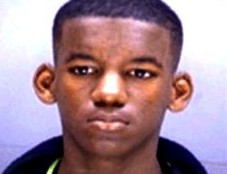
Quincy Javon Allen
Murderer Robert Martines Perez
Murderer · USA · 1994
Name: Robert Martines Perez · Other name used in proceedings: Robert Martinez P…
15 victims
Robert Martines Perez
Murderer · USA · 1994
Name: Robert Martines Perez · Other name used in proceedings: Robert Martinez P…
15 victims
 Billy Frank Vickers
Murderer · USA · 1993
Billy Frank Vickers Vickers was executed by lethal injection in Texas on Januar…
14 victims
Billy Frank Vickers
Murderer · USA · 1993
Billy Frank Vickers Vickers was executed by lethal injection in Texas on Januar…
14 victims
 John Steven Huggins
Murderer · USA · 1997
John Steven Huggins was sentenced to death on February 26, 1999 and was resente…
1 victim
John Steven Huggins
Murderer · USA · 1997
John Steven Huggins was sentenced to death on February 26, 1999 and was resente…
1 victim
 Elmer Crawford
Mass murderer · Australia · 1970
Elmer Crawford was accused of murdering pregnant mother Therese Crawford and he…
4 victims
Elmer Crawford
Mass murderer · Australia · 1970
Elmer Crawford was accused of murdering pregnant mother Therese Crawford and he…
4 victims
 Edith Thompson
Murderer · United Kingdom · 1922
Edith Jessie Thompson (Edith Graydon; 25 December 1893 – 9 January 1923) was a…
1 victim
Edith Thompson
Murderer · United Kingdom · 1922
Edith Jessie Thompson (Edith Graydon; 25 December 1893 – 9 January 1923) was a…
1 victim
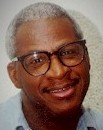 Charles Adrian Foster
Murderer · USA · 1983
Charles Adrian Foster was assessed as brain damaged and learning disabled. He c…
1 victim
Charles Adrian Foster
Murderer · USA · 1983
Charles Adrian Foster was assessed as brain damaged and learning disabled. He c…
1 victim
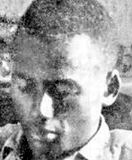 Julian Carlton
Mass murderer · USA · 1914
Julian Carlton was a 30-year-old estate worker and an estate worker originally…
7 victims
Julian Carlton
Mass murderer · USA · 1914
Julian Carlton was a 30-year-old estate worker and an estate worker originally…
7 victims
- Gender
- male
- Country
- USA
- Location
- North Carolina/South Carolina, USA
- Date of birth
- 1980
- Age at first offence
- 22
- Characteristics
- armed robbery, arson, mentally ill
- Victim profile
- Dale Evonne Hall , 45 / Jedediah Harr, 22 / Richard Hawks, 53, and Robert Shane Roush, 29
- Method of murder
- Shooting (sawed-off 12-gauge shotgun)
- Date(s) of murder
- July-August 2002
- Years active
- 2002
- Date of arrest
- August 14, 2002
- Status
-
Sentenced to death
Sentenced to death in South Carolina on February 20, 2004
Overview
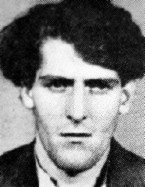
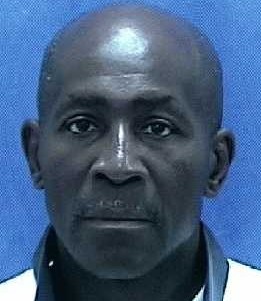
Quincy Javon Allen was sentenced to death in South Carolina on February 20, 2004.
Timeline
- July 7, 2002 — About 4 a.m., Allen twice shot a homeless man, James White, who was sleeping on a bench in Finlay Park.
- July 10, 2002 — Allen killed Dale Evonne Hall, 45. Hall was shot in the head, face, leg and stomach with a sawed-off, 12-gauge shotgun.
- August 8, 2002 — After a confrontation at about 10 p.m. with Texas Roadhouse employee Brian Marquis, Allen fatally shot Marquis’ friend Jedediah Harr, 22, in Harr’s car. At 10:15 p.m., Allen pursued Marquis to a convenience store and later drove to his home, where Allen set fire to the porch.
- August 9, 2002 — About 2 a.m., Allen set fire to the car of another Texas Roadhouse worker on Parklane Road. A few minutes later, Allen randomly selected another car to set afire on Longbrook Road.
- August 12, 2002 — Allen fatally shot Richard Hawks, 53, of Lowgap, North Carolina, and Robert Shane Roush, 29, of Lancaster, Ohio, at a Citgo gasoline station in Dobson, North Carolina.
- August 14, 2002 — Allen was apprehended in Mitchell County, Texas. Allen was sleeping in a vehicle at a rest area.
- February 25, 2004 — Allen pleaded guilty in North Carolina to killing two men on Aug. 12, 2002, in a Dobson, N.C., gas station.
- February 20, 2004 — Allen pleaded guilty to the N.C. killings and was later sentenced to life in prison.
- February 28, 2005 — Allen pleaded guilty to the S.C. killings.
- February 20, 2004 — Quincy Allen was sentenced to death in South Carolina.
The offences
Shooting of James White — Finlay Park
About 4 a.m. on July 7, 2002, Allen twice shot James White, a homeless man sleeping on a bench in Finlay Park.
Allen recorded an audiotape “like a diary entry,” in which he described the attempt in matter-of-fact tones and “mocking the homeless man at one point.”
“I guess he didn’t see my 12-gauge shotgun,” Allen said on the tape.
White testified in court that he was awakened by someone yelling at him.
White told Cooper he was awakened by someone yelling at him.
White said that after being shot in the shoulder, he began yelling and screaming in an attempt to get the shooter to run off.
After being shot in the shoulder, he began yelling and screaming in a successful attempt to get the shooter to run off.
After Allen fled, White said he walked to Palmetto Health Baptist hospital, where he was treated.
Killing of Dale Evonne Hall
On July 10, 2002, Allen killed Dale Evonne Hall, 45.
Afterward, Allen drove to a truck stop, bought a can of gasoline and returned to Oakway Drive off Two Notch Road in Northeast Richland to douse Hall’s body and set it on fire.
Texas Roadhouse confrontation and killing of Jedediah Harr
On August 8, 2002, after a confrontation about 10 p.m.
Tiffany Todd Marquis gave testimony about the sequence in the restaurant and the events that followed.
“He was trying to light my apron on fire,” she said.
She testified about calling Brian Marquis back to the restaurant.
That puzzled her, but other actions by Allen that evening led her to call Brian Marquis back to the restaurant, she said.
She testified that Harr later was shot and killed outside and that she did not see what happened when it occurred.
Tiffany Marquis was inside and didn’t see what happened when Harr later was shot and killed outside.
She said she saw emergency lights and police lights flashing everywhere.
“I look outside, and I see ambulance lights and police officer lights flashing everywhere,” she testified.
“I knew something had happened, but I didn’t know what.”
Deputy Solicitor John Meadors asked her to tell Cooper their child’s name.
“His name is Brian Jedediah Marquis,” she said.
Arsons connected to the Texas Roadhouse incidents
On August 9, 2002, about 2 a.m., Allen set fire to the car of another Texas Roadhouse worker on Parklane Road.
Killing of Richard Hawks and Robert Shane Roush — Dobson, North Carolina
On August 12, 2002, Allen fatally shot Richard Hawks, 53, of Lowgap, North Carolina, and Robert Shane Roush, 29, of Lancaster, Ohio, at a Citgo gasoline station in Dobson, North Carolina.
The circumstances were described as Allen walking in and, “without any confrontation,” shooting and killing the two.
Arrest and apprehension
On August 14, 2002, Allen was apprehended in Mitchell County, Texas.
Allen was brought back to Columbia after Mitchell County Sheriff’s Deputies captured him sleeping in a car on Interstate 20 in Colorado City, Texas, after he had been on the run for six days.
Guilty pleas and sentencing
North Carolina killings
In February 2004, Allen pleaded guilty in North Carolina to killing two men on Aug.
He was sentenced to life in prison as part of a plea bargain.
Allen was described as having pleaded guilty to several crimes that were part of a spree, including the two Richland County killings.
South Carolina killings
In a later proceeding, Allen pleaded guilty to the S.C. killings.
The jury trial was bypassed and Judge G. Thomas Cooper Jr. was to determine whether Allen would spend the rest of his life in prison or die by lethal injection.
Allen bypassed a jury trial by pleading guilty to the North Carolina case and other crimes connected to the spree.
Aggravating circumstance requirement
For Allen to be sentenced to die in South Carolina, prosecutors were described as needing to show there was an aggravating circumstance behind at least one of the killings.
Mental illness arguments in court
Defense attorneys told Cooper the evidence will show that Allen was a byproduct of physical abuse and mental disorders, including schizophrenia.
A defense attorney, Kimberly Stevens, said that over the span of about a year during the late 1990s, Allen had been in and out of psychiatric facilities six times.
Attorneys said Allen was mentally ill and should serve his life sentence in a psychiatric center.
Prosecutors argued that Allen had exaggerated some symptoms of mental illness to escape accountability and that Allen should serve his sentence in a general-population prison.
Outcome
Quincy Allen was sentenced to death in South Carolina on February 20, 2004.
Spotted an error, or have more information about this case?