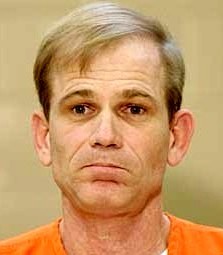
Paul Jennings Hill
Murderer Brian Kevin Rosenfeld
Murderer · USA · 1985
Brian Kevin Rosenfeld Brian Kevin Rosenfeld was sentenced to three concurrent l…
23 victims
Brian Kevin Rosenfeld
Murderer · USA · 1985
Brian Kevin Rosenfeld Brian Kevin Rosenfeld was sentenced to three concurrent l…
23 victims
 Russell Ellwood
Murderer · USA · 1991
Russell Ellwood was a former taxi driver. Authorities suspected him of killing…
20 victims
Russell Ellwood
Murderer · USA · 1991
Russell Ellwood was a former taxi driver. Authorities suspected him of killing…
20 victims
 Robert Martines Perez
Murderer · USA · 1994
Name: Robert Martines Perez · Other name used in proceedings: Robert Martinez P…
15 victims
Robert Martines Perez
Murderer · USA · 1994
Name: Robert Martines Perez · Other name used in proceedings: Robert Martinez P…
15 victims
 Billy Frank Vickers
Murderer · USA · 1993
Billy Frank Vickers Vickers was executed by lethal injection in Texas on Januar…
14 victims
Billy Frank Vickers
Murderer · USA · 1993
Billy Frank Vickers Vickers was executed by lethal injection in Texas on Januar…
14 victims
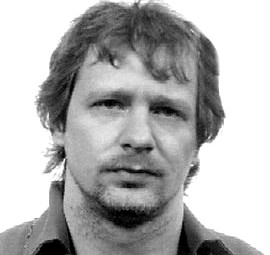 James Games
Murderer · USA · 1983
April 5, 1984 — Games was sentenced to death. · 06-15-99 — On remand, Marion Co…
1 victim
James Games
Murderer · USA · 1983
April 5, 1984 — Games was sentenced to death. · 06-15-99 — On remand, Marion Co…
1 victim
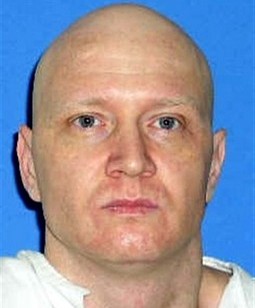 Newton Burton Anderson
Murderer · USA · 1999
Newton Burton Anderson was executed in Texas on February 22, 2007. Anderson was…
2 victims
Newton Burton Anderson
Murderer · USA · 1999
Newton Burton Anderson was executed in Texas on February 22, 2007. Anderson was…
2 victims
 Debbie Fornuto
Murderer · USA · 1972
Deborah Fornuto was the mother of six children whose deaths were initially rule…
7 victims
Debbie Fornuto
Murderer · USA · 1972
Deborah Fornuto was the mother of six children whose deaths were initially rule…
7 victims
 Dylann Roof
Mass murderer · USA · 2015
Dylann Storm Roof (born April 3, 1994) was an American suspected of perpetratin…
9 victims
Dylann Roof
Mass murderer · USA · 2015
Dylann Storm Roof (born April 3, 1994) was an American suspected of perpetratin…
9 victims
- Gender
- male
- Country
- USA
- Location
- Escambia County, Florida, USA
- Date of birth
- February 6, 1954
- Age at first offence
- 40
- Characteristics
- —
- Victim profile
- Dr. John Bayard Britton, 69, and his bodyguard James H. Barrett, 74
- Method of murder
- Shooting
- Date(s) of murder
- July 29, 1994
- Years active
- 1994
- Date of arrest
- Same day
- Status
-
Executed
Executed by lethal injection in Florida on September 3, 2003
Case record: Paul Jennings Hill
Status / outcome
Paul Jennings Hill was executed by lethal injection in Florida on September 3, 2003.
Background
Paul Jennings Hill (February 6, 1954 – September 3, 2003) was a white male. He had blonde or strawberry hair and hazel eyes. He was 6'01'' tall and weighed 192.
Hill was born in Miami, Florida on February 6, 1954, to Oscar Jennings Hill, an airline pilot, and his wife Louise. He was raised in Coral Gables.
Hill was popular in high school. At age 17, he was charged with assault by his father when his father attempted to get treatment for his son’s drug problem. The material reported that Hill’s religious conversion happened two years later in 1973 after walking home from working a construction job. He enrolled in Belhaven College later that year. Hill later graduated from Belhaven College and Reformed Theological Seminary.
Following his ordination in 1984, Hill became a minister affiliated with both the Presbyterian Church in America and the Orthodox Presbyterian Church. The material reported that he was excommunicated in 1993 following nationally televised appearances. It described Hill as claiming to be the new national spokesperson for abortionist killers, describing him as a fanatical pro-life activist, and stating he had connections to the Army of God.
After he was no longer employed as a pastor, Hill supported his family through an auto detailing franchise, described as largely through a network of new car dealerships and used car lots. It reported that dealers used less and less of his services after learning about his anti-abortion agenda.
The material reported that Hill grew up in Coral Gables and attended Granada Presbyterian Church, part of the conservative-leaning Presbyterian Church in America. It stated that his conversion in 1973 occurred while he was washing the filth off himself after working a construction job and was described by a classmate as immediate and complete. It also reported Hill told a classmate that he had earlier used marijuana and LSD and had had a couple of bad trips on LSD.
Other details
Employment, residence, and family
The material reported that Hill moved to Pensacola and operated out of the back of his truck, mixing paints, as part of a business touching up cars and auto paint franchise work.
It reported that Hill purchased a home on Confederate Drive in Pensacola, Escambia County. It reported a purchase price of $76,500 cash.
The material reported that Hill married Karen Demuth in May 1978 in West Memphis, Ark. It described Karen as a certified public accountant (CPA). It stated that they had three children. It described the children’s ages as 9, 6, and 3. The material also reported that Hill had a son named Justin and daughters named Gloria and Joy.
It also reported that Hill’s wife and children were in North Carolina when the shootings occurred and that later Karen and their three children were residing in West Memphis, Ark.
The material reported that Paul Hill had been in a 6x9 cell on death row and that his spiritual advisor witnessed the execution.
Prior criminal matter and age-related detail
The material included a reference to Hill being charged with assault at age 17 and stated that his father had tried to get treatment for Hill’s drug problem.
The offence
Victims
Hill killed Dr. John Bayard Britton and his bodyguard/escort, retired Lt. Col. James Herman Barrett. The material also described Barrett’s wife, June Barrett/June, as being in the car and wounded.
Conduct and weapon
The material described that Hill used a shotgun to kill Britton and Barrett as they drove into a Pensacola abortion clinic in 1994. It stated that Hill fired a shotgun multiple times at Barrett, then reloaded and fired again, killing both Britton and Barrett. It reported that Hill had stepped out of the way as the truck pulled into the parking area.
It reported that June Barrett was wounded and described her as wounded in the forearm and breast, and also feeling blood running down her legs from glass splinter wounds. Another portion reported she was wounded in the car.
The material reported that the murders occurred on July 29, 1994.
Location
The material described the killings as occurring outside a Pensacola abortion clinic referred to as The Ladies Center and/or The Ladies Center on North Ninth Avenue. It also referenced Confederate Drive in connection with Hill’s residence.
Investigation and arrest
The material reported that Hill was arrested that same day, July 29, 1994, while walking away from the Center. It also stated that Hill was arrested shortly thereafter while walking away from the Center.
It reported that police searched Hill and found more bullets on a band around his ankle. It also stated that spent shotgun shells were found at the entrance to the clinic property and a black pump-action shotgun was found behind the trunk of a spreading oak that shaded the property.
Trial
Charges and pleas
The material reported that Hill was charged with two counts of first-degree premeditated murder, one count of attempted first-degree murder, and one count of shooting into an occupied vehicle. It also reported the State charged him with those counts under:
- §782.04 and §775.087 (murder)
- §777.04, §782.04 and §775.087 (attempted first degree murder)
- §790.19 (shooting into occupied vehicle)
It reported that Hill pled not guilty to all counts. It reported that the Public Defender’s Office was appointed as counsel.
Self-representation and counsel
The material stated that after Hill indicated that he wished to represent himself, the trial court conducted a hearing pursuant to Faretta v. California. It reported the trial court determined that Hill knowingly and intelligently waived his right to counsel and granted the Public Defender’s motion to withdraw, while appointing the Public Defender’s Office as standby counsel.
The material stated the State filed a motion in limine to prevent Hill from presenting a defense of necessity/justification. It reported the trial court denied Hill’s request to have an out-of-state attorney argue at the hearing on the State’s motion, but renewed the offer of counsel, and Hill reaffirmed his desire to represent himself.
It reported that Hill repeated his desire to present the defense of justification or necessity, but the trial court did not permit it. It also reported that Hill’s participation throughout the trial was minimal.
Verdict
The material reported that Hill was convicted on all four counts. It stated that the jury recommended a sentence of death on both counts of murder by a vote of 12-0.
Sentencing and aggravating factors
The material reported that the trial court found that two aggravators were established beyond a reasonable doubt for both murders:
- Hill was previously convicted of another capital felony or of a felony involving the use or threat of violence to the person, as evidenced by contemporaneous convictions.
- The murders were committed in a cold, calculated, and premeditated manner without any pretense of moral or legal justification.
It stated that the second aggravator was proven with evidence that Hill had:
- stated previously that abortionists should be executed,
- purchased a shotgun and ammunition two days before the murders and practiced at a firing range on two separate occasions during those two days,
- modified the shotgun,
- arrived at the Center one hour before the victims,
- stood looking over the bodies after he shot them.
With respect to Dr. Britton’s murder, the material reported that the trial court found a third aggravator: especially heinous, atrocious, or cruel, established by the agony Dr. Britton had to endure while he watched Hill reload his gun and approach the Barretts’ vehicle.
In statutory mitigation, the material reported that the trial court found that Hill had no significant history of prior criminal activity.
It reported that, finding that the aggravating circumstances outweighed the mitigating circumstances, the trial court sentenced Hill to death on each of the two murder convictions.
Court refusal of defense
The material reported that the judge did not allow Hill to use an affirmative defense of justification/necessity and refused to allow Hill to argue that his actions were necessary to prevent the greater harm of abortion. It also reported that Hill refused to present any other defense after the judge refused to allow this argument in court.
Sentencing
State sentencing
The material reported that Hill was sentenced to death in the Circuit Court, Escambia County, on December 6, 1994 by lethal injection.
It also reported that the trial court imposed:
- death in Count One (first-degree murder),
- death in Count Two, consecutive to Count One,
- 160.75 months in Count Three,
- 160.75 months in Count Four, with Counts Three and Four running concurrent, and all four sentences running consecutive to the Federal Sentence that was imposed under federal law.
Federal sentencing
The material reported that on December 2, 1994, Hill was convicted in Federal Court and sentenced by the Honorable Roger Vincent. It reported that the Federal Court imposed:
- a life sentence on Counts I and II, served concurrently,
- 120 months on Count III, served concurrently with the terms imposed in Counts I and II,
- a term of 60 months on Count IV, served consecutively to the terms imposed on Counts I, II, and III.
The material reported the federal charges as violations of:
- 18 U.S.C. 248(a)(1), two counts (intentionally injuring and interfering with individuals providing reproductive health services resulted in their death),
- 18 U.S.C. 248(a)(2) (intentionally injuring and interfering with an individual providing reproductive health services),
- 18 U.S.C. 324(c) (possession of a firearm during a crime of violence).
Appeals
Florida Supreme Court
The material reported that on November 27, 1996, the Florida Supreme Court upheld Hill’s death sentences (688 So. 2d 901; November 27, 1996).
It also included that Florida Supreme Court upheld Hill’s death sentences on Nov. 27 (1996 and also referenced as a date in 1996), and separately referenced “Nov. 27: Florida Supreme Court upholds Hill’s death sentences.”
It also reported the case citation Hill v. State, 656 So.2d 1271 (Fla., 1995).
The material also reported a direct appeal and pro se appeal-related procedural history:
- Hill v. State, 656 So.2d 1271 (Fla., 1995) (Direct Appeal).
- Hill v. State, 656 So.2d 1271 (Fla., 1995) (Motion for pro se appeal).
It described the holding in Hill v. State (656 So.2d 1271) as including:
- waiver of right to counsel was valid despite failure to advise defendant of difficulty in presenting necessity defense,
- legal abortions were not “harm” required to invoke necessity defense,
- preventing legal abortions was not “moral justification” for purposes of preventing application of aggravating circumstance that murders were cold, calculated, and premeditated. It reported that the court affirmed and that Anstead, J., concurred in part and dissented in part.
Permission to file pro se
The material reported that Hill sought to represent himself on appeal and to discharge the public defender’s office as appellate counsel. It described that the Supreme Court held that he was not entitled to discharge public defender’s office and represent himself on appeal, but would be allowed to file pro se supplemental brief. It also reported that the court permitted Hill to file a pro se supplemental brief on or before the time within which his attorney’s brief shall be filed.
U.S. Supreme Court
The material reported that on October 6, 1997, the U.S. Supreme Court refused to consider a second appeal filed by a Connecticut attorney over Hill’s objections.
It also reported that after the Florida Supreme Court upheld the sentence, Hill rejected any effort to appeal the verdict and waived further appeals after automatic appeal.
Other procedural events
The material reported:
- On December 6, 1994, Hill was sentenced to death for killing Britton and Barrett.
- On July 9 (year referenced as 2003 in the Governor context), Gov. Jeb Bush signed Hill’s death warrant.
- On August 18 and 19, Judge Bell, Florida Attorney General Charlie Crist, and two state prison officials were sent threatening letters containing live rifle bullets.
It also reported that on October 28, 1999, Circuit Judge Frank Bell granted a motion by Hill to dismiss his attorneys and that there had been no litigation since.
Outcome
The material reported that Hill became the first person in the United States to be executed for killing an abortion provider/abortion clinic doctor.
It also reported that Hill died by lethal injection in Florida State Prison on September 3, 2003.
Execution details
The material reported that executions officials set Paul Hill’s execution by lethal injection for September 3 at Florida State Prison in Starke in northeastern Florida. It described that Hill was pronounced dead from lethal injection at 6:08 p.m.
It reported that prison officials set extra security and that there were about 75 anti-abortion and anti-death penalty protestors outside the prison.
It also reported that Hill spent his last five hours talking with a spiritual advisor outside a holding cell and earlier Wednesday had visits from his wife, children, mother, father and sisters.
Final meal
The material reported Hill’s final meal as: steak, baked potato, broccoli, salad, orange sherbert and sweetened ice tea.
Final words
The material included Hill’s final words twice and also included a statement attributed to Hill. The verbatim final words were:
"The last thing I want to say: If you believe abortion is a lethal force, you should oppose the force and do what you have to do to stop it. May God help you to protect the unborn as you would want to be protected."
Timeline
- April 1971 — Hill was charged with assault at age 17 by his father when his father attempted to get treatment for Hill’s drug problem.
- 1973 — Hill’s religious conversion happened after walking home from working a construction job; he enrolled in Belhaven College later that year.
- 1984 — Hill was ordained and became a minister affiliated with both the Presbyterian Church in America and the Orthodox Presbyterian Church.
- 1993 — Hill was excommunicated following nationally televised appearances.
- March 10, 1993 — Dr. David Gunn was shot and killed outside Pensacola Women’s Medical Services.
- June 17, 1992 / 1994 — The material reported “June 17: Paul Hill arrested outside The Ladies Center after shouting "Mommy, don`t kill me" at women inside.” (This appears in the timeline narrative around the Britton-Barrett period.)
- July 29, 1994 — Hill shot and killed Dr. John Britton and James Barrett outside The Ladies Center; Barrett’s wife, June, was wounded; Hill was arrested that same day.
- Aug. 12, 1994 — A federal grand jury indicted Hill on three counts of violating federal Freedom of Access to Clinic Entrances law and one count of using a firearm in a violent crime in The Ladies Center shootings.
- Dec. 2, 1994 — A U.S. District Judge Roger Vinson sentenced Hill to two life sentences for federal violations.
- Dec. 6, 1994 — Hill was sentenced to death by a state court for killing Britton and Barrett.
- Jan. 12, 1995 — Pensacola City Council approved an 8-foot buffer zone around abortion clinics.
- Nov. 27, 1996 — Florida Supreme Court upheld Hill’s death sentences (688 So. 2d 901; November 27, 1996).
- Oct. 6, 1997 — U.S.
- Oct. 28, 1999 — Circuit Judge Frank Bell granted a motion by Hill to dismiss his attorneys.
- July 9, 2003 — Gov.
- Aug. 15, 2003 — Floridians for Alternatives to the Death Penalty urged Gov. Bush to commute Hill’s death sentence to life in prison to avoid possible retaliation by fringe abortion-opposition groups.
- Aug. 18 and 19, 2003 — Threatening letters containing live rifle bullets were sent to Judge Bell, Florida Attorney General Charlie Crist, and two state prison officials.
- Sept. 3, 2003 — Hill was executed by lethal injection in Florida State Prison in Starke.
Investigation-related individuals and quotes
The material included multiple verbatim statements and quotations from individuals connected to the case.
Statements attributed to Hill during arrest/at the scene
The material reported that, while officers arrested Hill, he offered the assembled crowd the words:
"One thing's for sure, no innocent people will be killed in that clinic today."
The material also reported that after officers arrested Hill minutes later, he told them:
"I know one thing, no innocent babies are going to be killed in that clinic today."
Statements attributed to Hill at execution
Hill’s final statement included:
Statements attributed to Hill in reported trial/execution context
The material reported Hill’s statements about a “reward” in heaven as:
"a great reward in Heaven"
It also reported that Hill expected a “reward” in Heaven and that he said he felt no remorse, though only the quoted phrase “a great reward in Heaven” was included verbatim in the provided material.
Other court-related details
Rejection of necessity/justification defense
The material included an explanation of the court’s rejection of the necessity defense, including verbatim passages:
"Regardless of what name is attached to the defense (and for the sake of simplicity we will refer to it as the necessity defense) one thing is clear: The harm or evil which a defendant, who asserts the necessity defense, seeks to prevent must be a legal harm or evil as opposed to a moral or ethical belief of the individual defendant."
It also included:
"To accept appellant's argument would be tantamount to judicially sanctioning vigilantism. If every person were to act upon his or her personal beliefs in this manner, and we were to sanction the act, the result would be utter chaos."
And:
"In a society of laws and not of individuals, we cannot allow each individual to determine, based upon his or her personal beliefs, whether another person may exercise her constitutional rights and then allow that individual to assert the defense of justification to escape criminal liability."
It further included:
"Thus, such private attempts to circumvent the law with the aim to deprive a pregnant woman of her right to obtain an abortion will not be tolerated by this Court."
Aftermath / broader impacts described in the material
The material included statements and descriptions about post-execution security and a vigil outside the prison. It included a quote attributed to Neal Horsley:
"When they crucified Jesus, the heavens darkened"
It included a quote attributed to Phil Egitto:
"The state killing Paul Hill is wrong, Paul Hill killing is wrong and the abortion doctor killing, it's all wrong. To say any of it is right in the name of the Lord is to not recognize the sanctity of human life."
It also included Associated Press-related quotations and protest descriptions, including a quote attributed to Vicki Saporta:
"We're very concerned"
and:
"We know that certain events can and do trigger increased violence."
The material also reported a quote attributed to Sheila Hopkins:
"We think that unborn children should be protected and it should be through law"
and:
"We definitely reject his statement that it was justifiable homicide."
It reported a quote attributed to Marti McKenzie:
"The bottom line is when you work in the industry, you're aware those people are out there every single day"
Spotted an error, or have more information about this case?