Steven Douglas Hill
Murderer Brian Kevin Rosenfeld
Murderer · USA · 1985
Brian Kevin Rosenfeld Brian Kevin Rosenfeld was sentenced to three concurrent l…
23 victims
Brian Kevin Rosenfeld
Murderer · USA · 1985
Brian Kevin Rosenfeld Brian Kevin Rosenfeld was sentenced to three concurrent l…
23 victims
 Marvin Gray
Murderer · USA · 1975
Marvin Gray was convicted killer who claimed responsibility for 23 slayings and…
23 victims
Marvin Gray
Murderer · USA · 1975
Marvin Gray was convicted killer who claimed responsibility for 23 slayings and…
23 victims
 Yahweh ben Yahweh
Murderer · USA · 1980
Yahweh ben Yahweh was born and legally named Hulon Mitchell Jr. (October 27, 19…
23 victims
Yahweh ben Yahweh
Murderer · USA · 1980
Yahweh ben Yahweh was born and legally named Hulon Mitchell Jr. (October 27, 19…
23 victims
 Russell Ellwood
Murderer · USA · 1991
Russell Ellwood was a former taxi driver. Authorities suspected him of killing…
20 victims
Russell Ellwood
Murderer · USA · 1991
Russell Ellwood was a former taxi driver. Authorities suspected him of killing…
20 victims
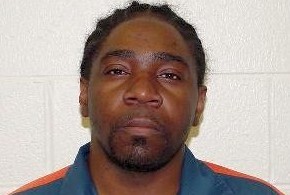 Reco Jones
Mass murderer · USA · 1997
Reco Jones — defendant · Yolanda Bellamy (24-year-old) — ex-girlfriend and vict…
5 victims
Reco Jones
Mass murderer · USA · 1997
Reco Jones — defendant · Yolanda Bellamy (24-year-old) — ex-girlfriend and vict…
5 victims
 Gary Leon Brown
Murderer · USA · 1996
Gary Leon Brown was indicted for the capital offense of the murder of Jack McGr…
1 victim
Gary Leon Brown
Murderer · USA · 1996
Gary Leon Brown was indicted for the capital offense of the murder of Jack McGr…
1 victim
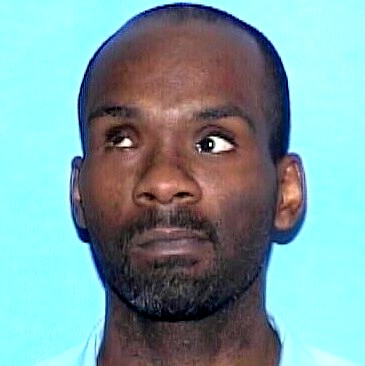 Ernest Jamison
Spree killer · USA · 1995
Defendant: Ernest Jamison Ernest Jamison was convicted on a plea of guilty to f…
3 victims
Ernest Jamison
Spree killer · USA · 1995
Defendant: Ernest Jamison Ernest Jamison was convicted on a plea of guilty to f…
3 victims
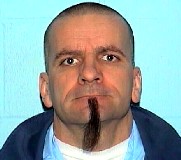 Niels Nielsen
Murderer · USA · 1995
Niels Christian Nielsen was convicted of killing his ex-wife, Sue Marshel, and…
2 victims
Niels Nielsen
Murderer · USA · 1995
Niels Christian Nielsen was convicted of killing his ex-wife, Sue Marshel, and…
2 victims
 Sarah Malcolm
Murderer · United Kingdom · 1733
Sarah Malcolm was a powerfully built 22-year-old Irish laundress employed in th…
3 victims
Sarah Malcolm
Murderer · United Kingdom · 1733
Sarah Malcolm was a powerfully built 22-year-old Irish laundress employed in th…
3 victims
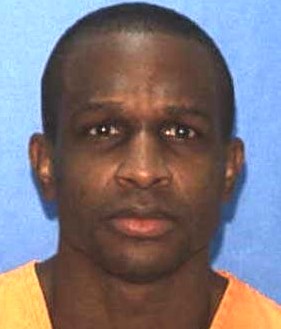 Jason Stephens
Murderer · USA · 1996
Jason Stephens was sentenced to death for the murder of 3-year-old Robert Sparr…
2 victims
Jason Stephens
Murderer · USA · 1996
Jason Stephens was sentenced to death for the murder of 3-year-old Robert Sparr…
2 victims
- Gender
- male
- Country
- USA
- Location
- Pulaski County, Arkansas, USA
- Date of birth
- 1966
- Age at first offence
- 18
- Characteristics
- fugitive, rape
- Victim profile
- Robert Klein (State police investigator)
- Method of murder
- Shooting (20-gauge automatic shotgun)
- Date(s) of murder
- October 15, 1984
- Years active
- 1984
- Date of arrest
- Same day
- Status
-
Executed
Executed by lethal injection in Arkansas on May 7, 1992
Case record: Steven Douglas Hill
Status and execution
Steven Douglas Hill was executed by lethal injection in Arkansas on May 7, 1992. He was pronounced dead at 9:10 P.M., eight minutes after he had been injected with the drugs.
Background
Hill was 25 years old at the time of his execution and was the youngest of 35 inmates on the state's death row. In 1984, Hill was an 18-year-old state prisoner.
The offence
Hill and another prisoner, Michael Anthony Cox, escaped while on a work detail. During the escape, they went to the home of an elderly couple, Merle and Billie Jo Rice, in central Arkansas. They robbed the Rices of money, a 16-gauge shotgun, an automatic carbine, and a 20-gauge automatic shotgun, and tied up the occupants.
Hill threatened to rape Mrs. Rice and told Mr. Rice he was going to kill him, but Cox dissuaded Hill from both actions. Hill and Cox then left the Rice home at approximately 10:30 p.m. in the Rice's pickup truck and proceeded to an unoccupied residence some two miles from the Rice home.
Police surrounded the residence after spotting the Rice's pickup in the driveway. As officer Robert Klein and Lieutenant Conrad Patillo approached the garage behind which Hill was hiding, Klein was shot and killed by a 20-gauge shotgun blast. Patillo was fired upon but not injured.
After several hours, tear gas forced the two men, who had barricaded themselves in the garage, to surrender. Cox was found in the attic of the garage prior to Klein's murder and did not see or participate in the shooting. After surrender, Cox was found in the attic with an automatic carbine that had not been fired.
The 20-gauge automatic shotgun—the murder weapon—and twenty-one shotgun shells were found in a corner of the lower room where Hill had hidden behind a mattress.
Investigation and police interviews
After their surrender, Hill and Cox were taken to police headquarters where they were read their Miranda rights and made videotaped statements. Hill readily admitted using the 20-gauge shotgun to kill Klein.
Charges and pleas
Hill was charged with capital murder, attempted capital murder, escape, burglary, theft, aggravated robbery, and kidnapping. He pled guilty to all charges except capital murder and attempted capital murder.
Trial
Hill was tried by a jury and found guilty of both capital murder and attempted capital murder. After a bifurcated trial, the jury imposed the death sentence on the capital murder charge and fifty years imprisonment on the attempted capital murder charge.
Mitigating circumstances issue
Hill argued that his sentence should be set aside because the jury found no mitigating factors despite Hill being only eighteen at the time of the murder, and the youth of the defendant was set out by statute as a mitigating factor.
The jury verdict form concerning mitigating circumstances gave four choices:
- unanimous agreement that a certain mitigating circumstance existed,
- partial agreement that a certain mitigating circumstance existed,
- unanimous agreement that although there was evidence of a particular mitigating circumstance, it did not exist at the time of the murder,
- unanimous agreement that there was no evidence of any mitigating circumstance.
The jury selected the fourth option, indicating they found no evidence of any mitigating circumstance. The Arkansas Supreme Court stated:
"We do not interpret the jury's action to mean that they did not consider the evidence of mitigation that was offered. Rather we find the jury determined that the appellant's youth was not a mitigating factor, as they were entitled to do, and so indicated that no mitigating circumstances were found."
The Arkansas statute does not define youth in terms of mere chronological age. The court cited:
"Any hard and fast rule as to age would tend to defeat the ends of justice, so the term youth must be considered as relative and this factor weighed in the light of varying conditions and circumstances."
Hill’s appeal argued that the only proper selection was option three, but the court rejected this view, concluding that the jury considered Hill’s age—eighteen and an adult under Arkansas law—and rejected it as a mitigating factor.
Aggravating circumstances issue
Hill claimed the jury was permitted to consider an impermissibly vague aggravating factor. Specifically, Hill alleged that the statutory aggravating factor allowing death if the defendant previously committed a violent felony was impermissibly vague because it did not define "previously committed." Hill argued it was improper to consider violent crimes committed at the Rice residence prior to Klein's murder because they were part of the same criminal episode.
The Arkansas Supreme Court ruled that the purpose of section 3 was "to allow the state to show that the defendant has a character for violent crimes or a history of such crimes." The court continued:
"Since there are other avenues by which the state can prove crimes immediately connected with the principal crime, the only logical conclusion is that section (3) applies to crimes not connected in time or place to the killing for which the defendant has just been convicted. In this case the crimes used to prove an aggravated circumstance involved other victims, in another place and previously in time. Therefore, they were properly used as an aggravating circumstance."
Hill argued that other courts found that crimes at a different time and place should not be considered as part of a single criminal episode under section 3, and referenced Parker v. State. In Parker, the Arkansas Supreme Court held that the attempted murder outside the home could not be considered a previous violent felony for purposes of section 3 because it "was so closely connected in both time and place" to the later murders.
Closing argument and sentencing-phase allegations
Hill challenged a sentencing-phase closing argument by the prosecutor. The prosecutor attempted to rebut a defense contention that Hill was a frightened youth who accidentally shot Klein by arguing that after firing at Klein and Patillo, Hill reloaded his weapon.
The prosecutor asked one of the police officers to assist with the demonstration, but the trial court sustained defense counsel's objection to the officer's assistance. The prosecutor continued with the demonstration and after some difficulty with jamming succeeded in demonstrating that the gun would hold only five shells. He then argued that because the gun held five shells when Hill surrendered and two shots were fired, Hill necessarily must have reloaded his weapon after killing Klein. The demonstration was conducted with the 16-gauge shotgun rather than the 20-gauge shotgun that was the murder weapon. Defense counsel objected at trial and later made a motion for new trial based on the use of the wrong shotgun; the motion was denied after a hearing.
Hill argued the prosecutor’s argument made his sentence unfair and unreliable. The court addressed the standard for improper statements at the sentencing phase by using the "so infected the trial with unfairness as to make the resulting conviction a denial of due process" framework from Darden v. Wainwright.
The Arkansas Supreme Court ruled any misconduct was harmless because the jury failed to check the aggravating circumstance described as:
"In the commission of the capital murder, Steven Douglas Hill knowingly created a great risk of death to a person other than the victim."
Hill also challenged an aggravating circumstance that the jury did check:
"The capital murder was committed for the purpose of avoiding or preventing an arrest or effecting an escape from custody."
The court stated Hill was an escaped convict, hiding behind a garage as officers approached, and that when officers advanced on him he shot at both of them, killing one. Hill’s statement made to the police immediately following his arrest was included in the opinion:
HILL: What it is, I got caught. Because I know if I hadn't have got caught, there'd be more people dead.
GAGE: What do you mean by that STEVE?
HILL: Oh like, when he started coming towards me, I just seen myself locked up, then I shot. . . . . . GAGE: Did you tell your partner that was with you today that you'd just do what you had to do, that you wasn't going back to the penitentiary?
HILL: Both of us made that statement.
The court concluded the demonstration did not deprive Hill of a fair sentencing procedure.
Post-trial and habeas corpus proceedings
On October 13, 1985, after Hill was convicted and sentenced but prior to the filing of briefs in Hill's direct appeal, Cox submitted a written statement in which he stated that he and not Hill had killed Klein. Based upon this affidavit, Hill’s counsel filed a petition with the Arkansas Supreme Court for a writ of error coram nobis asking for a hearing before the trial court. The petition was denied, as was Hill’s request that the court reconsider its decision in his direct appeal.
Hill argued that due process required an evidentiary hearing to determine whether a new trial must be granted. The District Court considered Cox's affidavit and heard Cox testify consistent with his affidavit at the habeas hearing. The District Court found:
"Based on his demeanor [at the habeas hearing], the inconsistencies developed on cross-examination, the video statements of both Cox and Hill, the video presentation of the crime scene, and the trial transcript, I am of the firm opinion and I find as a fact that Cox filed a false statement and that he committed perjury in the habeas hearing by testifying that he and not Hill fired the fatal shot at Klein."
The court also reviewed videotaped statements made by both Hill and Cox immediately following their arrests.
Hill sought relief under arguments that included:
- the jury was permitted to ignore a statutory mitigating circumstance,
- the jury was permitted to consider an impermissibly vague aggravating circumstance,
- the prosecutor made an improper argument during closing argument at the sentencing phase of the trial,
- the District Court erred in not setting aside Hill's conviction and sentence based on an affidavit by Cox,
- the District Court erred in admitting Hill's pretrial confession,
- Hill received ineffective assistance of counsel.
Confession and Miranda issues
Hill argued his due process rights were violated because a statement made by him while in police custody was improperly admitted into evidence. He alleged the rights form he signed was deficient and that his confession was involuntary due to intimidation by threats from several officers.
The court found Hill was told he had the right to remain silent; anything he said would be used against him in court; he could have an attorney present prior to and during questioning; if he could not afford an attorney one would be appointed; he could stop the questioning at any time; and he could waive any or all of these rights and make a statement to the police. Hill answered that he understood each of these rights, initialed each individual answer, and signed the rights form prior to questioning. The rights form complied with Miranda v. Arizona.
On voluntariness, Hill alleged officers threatened him and then played with their guns off-camera to intimidate him. The court stated the officers involved denied the accusations. After a lengthy pretrial hearing on Hill’s motion to suppress, the trial court found the allegations not credible and the confession voluntary, and admitted the confession. The Arkansas Supreme Court upheld admission, and the federal court reviewed the videotaped statement and the pretrial hearing evidence and concluded the confession was voluntary under the totality of the circumstances.
Ineffective assistance of counsel
Hill argued ineffective assistance because counsel failed to:
- object to the prosecutor's demonstration with the shotgun,
- object to the use of the previously committed felonies as evidence of an aggravating circumstance,
- properly make Cox's post-trial affidavit a part of the record for appellate review.
The court rejected each claim, applying Strickland v. Washington. It found that counsel had objected to the demonstration and that the prosecutor’s demonstration issue had been preserved. It concluded Hill was not prejudiced by the failure to object to evidence of prior crimes because those crimes were admissible to prove the aggravating circumstance. It found that counsel’s attempt to get Cox’s affidavit into the record via coram nobis and the lack of success did not constitute ineffective assistance.
Court proceedings and rulings
Hill filed a petition for writ of habeas corpus after exhausting state remedies, and the District Court denied relief. Hill v. Lockhart, 719 F.Supp. 1469 (E.D. Ark. 1989).
The United States Court of Appeals for the Eighth Circuit affirmed. The decision is cited as 927 F.2d 340. The case citation included:
- Steven Douglas Hill, Appellant,
- v. A. L. Lockhart, Director, Arkansas Department of Correction, Appellee,
- No. 89-2558,
- Submitted June 13, 1990,
- Decided Feb. 28, 1991,
- Rehearing and Rehearing En Banc Denied May 30, 1991.
Dissent
McMillian, Circuit Judge, dissented. The dissent argued for reversal and remand for resentencing on the youth mitigating-factor issue. The dissent described Ark. Code Ann. Sec. 5-4-605(4) and discussed the jury’s selection of the mitigating circumstances options, asserting that the jury selection of option 4 indicated the jury found "no evidence of any mitigating factor" despite evidence that Hill was 18 at the time of the offence. The dissent concluded the jury might have misunderstood what it could and could not consider and would have remanded for resentencing.
Related procedural and appeal history referenced
Hill’s direct appeal and state postconviction history referenced:
- Hill v. State, 292 Ark. 144, 728 S.W.2d 510 (cert. denied, 484 U.S. 873),
- Hill v. State, 289 Ark. 387, 713 S.W.2d 233 (cert. denied, 479 U.S. 1101),
- Hill v. Lockhart, 719 F.Supp. 1469 (E.D. Ark. 1989).
Outcome and denial of further relief before execution
After Governor Bill Clinton denied clemency, Hill’s fate remained with the United States Supreme Court, which later today denied an appeal filed by Hill’s lawyer, Mark Cambiano.
The execution occurred after the Supreme Court denial. Hill was pronounced dead at 9:10 P.M. on May 7, 1992, eight minutes after the injection.
Other details
Gov. Bill Clinton interrupted his Presidential campaign to return to Little Rock on Wednesday night and review the case. The Governor’s decision to deny clemency was relayed through a spokesman late today, with no accompanying statement. Clinton scheduled executions for 26 prisoners, with four already put to death.
The statement attributed to Clinton earlier that year was:
"We do support the death penalty for cop killers, multiple murderers and drug kingpins,"
Carrie Rengers of the local chapter of Amnesty International was quoted:
"He's not dying to be President, but he is killing to be President,"
Death penalty opponents claimed Clinton’s stance was dictated by politics, and Amnesty International made the quoted statement above.
The report also referenced that a black, brain-damaged inmate was executed Jan. 24 in Arkansas and that two others—a mass murderer and a man who killed a police officer—were executed in June 1990.
Cox was sentenced to an eighty-six-year term of imprisonment for related crimes. Cox later said it was he—and not Hill—who had pulled the trigger, but state prosecutors, a Federal judge, and the state parole board did not believe Cox and said they believed he had changed his account several times. Cox pled guilty to the same offenses as did Hill in return for the dismissal of the capital murder and attempted capital murder charges.
The opinion included an additional note stating:
- Cox pled guilty to the same offenses as Hill in return for the dismissal of the capital murder and attempted capital murder charges.
- The evidence indicated the 20-gauge shotgun also holds a total of five shells.
Spotted an error, or have more information about this case?