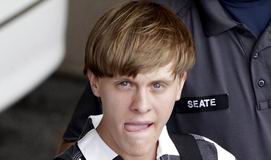
Dylann Roof
Mass murderer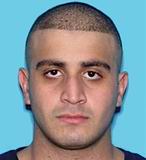 Omar Mateen
Mass murderer · USA · 2016
Omar Mir Seddique Mateen was an American mass murderer who killed 49 people and…
49 victims
Omar Mateen
Mass murderer · USA · 2016
Omar Mir Seddique Mateen was an American mass murderer who killed 49 people and…
49 victims
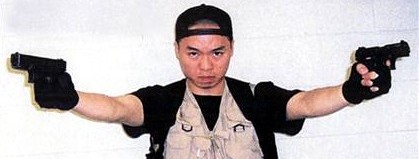 Seung-Hui Cho
Mass murderer · USA · 2007
Seung-Hui Cho was a mass murderer who shot and killed 32 people and wounded man…
32 victims
Seung-Hui Cho
Mass murderer · USA · 2007
Seung-Hui Cho was a mass murderer who shot and killed 32 people and wounded man…
32 victims
 Adam Lanza
Mass murderer · USA · 2012
Adam Lanza, 20, fatally shot twenty children and six adult staff members in a m…
27 victims
Adam Lanza
Mass murderer · USA · 2012
Adam Lanza, 20, fatally shot twenty children and six adult staff members in a m…
27 victims
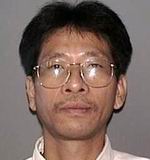 Jiverly Wong
Mass murderer · USA · 2009
December 8, 1967 — Jiverly Antares Wong was born. · late 1980s — Wong first cam…
13 victims
Jiverly Wong
Mass murderer · USA · 2009
December 8, 1967 — Jiverly Antares Wong was born. · late 1980s — Wong first cam…
13 victims
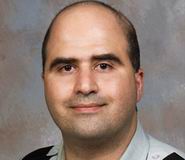 Nidal Hasan
Mass murderer · USA · 2009
Nidal Malik Hasan (born September 8, 1970) was a former United States Army Medi…
13 victims
Nidal Hasan
Mass murderer · USA · 2009
Nidal Malik Hasan (born September 8, 1970) was a former United States Army Medi…
13 victims
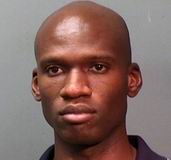 Aaron Alexis
Mass murderer · USA · 2013
Aaron Alexis was a lone gunman who carried out a mass shooting at the headquart…
12 victims
Aaron Alexis
Mass murderer · USA · 2013
Aaron Alexis was a lone gunman who carried out a mass shooting at the headquart…
12 victims
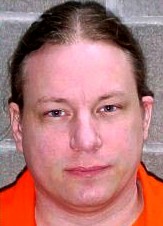 Timothy Stuart Ring
Murderer · USA · 1994
Timothy Stuart Ring was a former Department of Corrections officer who particip…
1 victim
Timothy Stuart Ring
Murderer · USA · 1994
Timothy Stuart Ring was a former Department of Corrections officer who particip…
1 victim
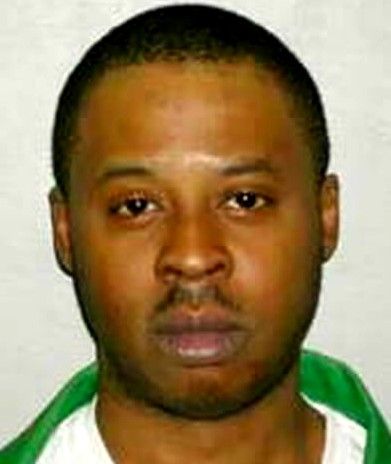 Joseph Gardner
Murderer · USA · 1992
Joseph Martin Luther Gardner was executed by lethal injection in South Carolina…
1 victim
Joseph Gardner
Murderer · USA · 1992
Joseph Martin Luther Gardner was executed by lethal injection in South Carolina…
1 victim
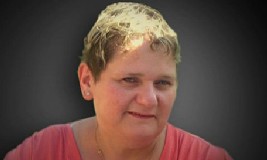 Dominique Cottrez
Infanticide · France · 1989
Dominique Cottrez was a French woman aged 45. She was described as a nursing as…
8 victims
Dominique Cottrez
Infanticide · France · 1989
Dominique Cottrez was a French woman aged 45. She was described as a nursing as…
8 victims
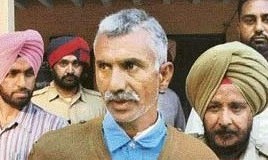 Darbara Singh
Serial killer · India · 2004
Darbara Singh was sentenced to death on January 7, 2008. His death sentence was…
17 victims
Darbara Singh
Serial killer · India · 2004
Darbara Singh was sentenced to death on January 7, 2008. His death sentence was…
17 victims
 Gerard Schaefer
Serial killer · USA · 1969
Gerard John Schaefer was born in Wisconsin on March 25, 1946. He was the oldest…
9 victims
Gerard Schaefer
Serial killer · USA · 1969
Gerard John Schaefer was born in Wisconsin on March 25, 1946. He was the oldest…
9 victims
- Gender
- male
- Country
- USA
- Location
- Charleston, South Carolina, USA
- Date of birth
- April 3, 1994
- Age at first offence
- 21
- Characteristics
- hate crime, white supremacist, history of mental illness, drug addict
- Victim profile
- Clementa C. Pinckney, 41 / Susie Jackson, 87 / Ethel Lee Lance, 70 / Depayne Middleton-Doctor, 49 / Cynthia Marie Graham Hurd, 54 / Tywanza Sanders, 26 / Daniel Simmons, 74 / Sharonda Coleman-Singleton, 45 / Myra Thompson, 59
- Method of murder
- Shooting ( .45-caliber pistol)
- Date(s) of murder
- June 17, 2015
- Years active
- 2015
- Date of arrest
- June 18, 2015
- Status
-
In prison awaiting trial
Case record: Dylann Roof
Overview
Dylann Storm Roof (born April 3, 1994) was an American suspected of perpetrating the June 17, 2015 Charleston church shooting. During a prayer service at Emanuel African Methodist Episcopal Church, Roof was alleged to have killed nine African Americans, including senior pastor and state senator Clementa C. Pinckney, and injured one other person. Roof later confessed that he committed the shooting in hopes of igniting a race war.
Three days after the shooting, a website titled The Last Rhodesian was discovered and later confirmed by officials to be owned by Roof. The website contained photos of Roof posing with symbols of white supremacy and neo-Nazism, along with a manifesto in which he outlined his views towards blacks, among other peoples. He also claimed in the manifesto to have developed his white supremacist views following research on the 2012 shooting of Trayvon Martin and “black-on-white crime”.
Roof had been charged with nine counts of murder, three counts of attempted murder, and possession of a firearm during the commission of a felony. He also faced federal hate crime charges, for which he faced the death penalty. His trial in state court was scheduled to begin on January 17, 2017.
Timeline
- February 9, 2015 — A website registered to a “Dylann Roof” was registered on February 9, 2015.
- February 28, 2015 — Roof was questioned about an incident at the Columbiana Centre in Columbia in which he entered the mall wearing all-black clothing and asked employees unsettling questions.
- March 2, 2015 — Roof was questioned about the February 28 incident at the Columbiana Centre in Columbia; authorities found a bottle of Suboxone and Roof was arrested for misdemeanor charge of drug possession.
- March 13, 2015 — Roof was investigated for loitering in his parked car near a park in downtown Columbia; a search found a forearm grip for an AR-15 semiautomatic rifle and six unloaded magazines.
- April 4, 2015 — A pastor (Clementa C. Pinckney) held rallies after the shooting of Walter Scott by a white police officer in nearby North Charleston.
- April 16, 2015 — A quote in the Daily Stormer-related content stated that the editor “repudiated Roof’s crime and publicly disavowed violence, while endorsing many of Roof’s views.”
- April 26, 2015 — After a second arrest on April 26 for trespassing on the mall grounds, the ban was extended for three additional years; Roof also received an additional three-year ban.
- June 17, 2015 — A mass shooting took place at Emanuel African Methodist Episcopal Church in downtown Charleston, South Carolina; Roof opened fire with a handgun, killing nine people. Roof’s website was last modified at 4:44 p.m. on June 17.
- June 18, 2015 — Roof waived his extradition rights and was flown to Sheriff Al Cannon Detention Center in North Charleston; he appeared in jail with cell-block neighbor Michael Slager.
- June 19, 2015 — Roof was charged with nine counts of murder and one count of possession of a firearm during the commission of a violent crime.
- June 20, 2015 — A website that had been registered to a “Dylann Roof” on February 9, 2015, lastrhodesian.com was discovered; it included photos and a manifesto.
- June 21, 2015 — Emanuel AME Church reopened for Sunday worship service.
- June 22, 2015 — A statehouse press conference occurred in which Governor Nikki Haley called for the flag to be removed by the state legislature.
- June 23, 2015 — Retailers announced plans to stop selling merchandise with the Confederate flag.
- June 25, 2015 — Funerals were held for victims Ethel Lance and Sharonda Coleman-Singleton at Emanuel AME Church.
- June 26, 2015 — Clementa Pinckney’s funeral occurred in the basketball arena of the College of Charleston with President Barack Obama delivering the eulogy.
- July 2, 2015 — By July 2, the last of the victims, Daniel Simmons, was buried.
- July 3, 2015 — An FBI investigation concluded the fires were unrelated, according to Time.
- July 6, 2015 — The South Carolina Senate voted to remove the Confederate flag from display outside the South Carolina State House.
- July 7, 2015 — Roof was indicted on three new charges of attempted murder, one for each person who survived the shooting, alongside indictments described for the state.
- July 9, 2015 — The vote in the House to remove it was passed by a two-thirds majority (94–20) on July 9; Governor Nikki Haley signed the bill on July 9.
- July 10, 2015 — The Confederate flag was taken down for the last time and stored until it could later be shown in a museum.
- September 3, 2015 — State prosecutor Scarlett Wilson said she intended to seek the death penalty for Roof.
- September 16, 2015 — Roof said through his attorney he was willing to plead guilty to the state charges in exchange for a sentence of life in prison without parole.
- October 14, 2015 — Portions of the gag order were lifted, allowing for the release of 9-1-1 call transcripts and other documents, while the order remained in place for graphic crime scene photos and videos.
- January 17, 2016 — Jury selection and trial scheduling were referenced as involving this date for the state trial start.
- January 17, 2017 — The state trial was said to begin on January 17, 2017.
- December 1, 2015 — The federal trial was postponed again to an unknown date.
- February 5, 2016 — Roof was scheduled to reappear in state court on February 5, 2016, at 9:00 a.m.
- February 11, 2016 — Roof was to reappear in federal court on February 11, 2016.
The offence
On the evening of June 17, 2015, a mass shooting took place at Emanuel African Methodist Episcopal Church in downtown Charleston, South Carolina, United States. During a prayer service at the church, nine people were killed by a gunman, including the senior pastor and state senator Clementa C. Pinckney; a tenth victim survived.
Roof, who was described as white and about 21 years old, opened fire with a handgun. The shooter then fled the scene. He was unemployed and living in largely African-American Eastover at the time of the attack.
The Charleston Police Department received calls of a shooting at Emanuel AME Church, and Roof was described as wearing a gray sweatshirt and jeans. He carried eight magazines holding hollow-point bullets. During the hour preceding the attack, 13 people including the shooter participated in the Bible study. According to survivor accounts, the shooter asked for Pinckney and sat down next to him, initially listening to others during the study, and then began to disagree when they discussed Scripture. He stood up and pulled a gun from a fanny pack and aimed it at 87-year-old Susie Jackson. Jackson’s nephew, 26-year-old Tywanza Sanders, tried to talk him down, asked why he was attacking churchgoers, and the shooter responded: “I have to do it. You rape our women and you’re taking over our country. And you have to go.” When Sanders expressed his intention to shoot everyone, Sanders dove in front of Jackson and was shot first. The suspect shot other victims while shouting racial epithets and reportedly said, “Y'all want something to pray about? I'll give you something to pray about.” The shooter reloaded his gun five times.
Sanders’ mother and his five-year-old niece survived by pretending to be dead. Dot Scott, president of the local branch of the NAACP, said she heard from victims’ relatives that the shooter spared one woman (Sanders’ mother) so she could tell other people what happened. She reported that the shooter asked her, “Did I shoot you?” and she replied, “No.” The shooter then said, “Good, 'cause we need someone to survive, because I'm gonna shoot myself, and you'll be the only survivor.”
According to the son of one of the victims who spoke to that survivor, the shooter allegedly turned the gun to his own head and pulled the trigger, but only then discovered he was out of ammunition. Before leaving the church, the shooter reportedly “uttered a racially inflammatory statement” over the victims’ bodies. The entire shooting lasted for approximately six minutes.
Several hours later, a bomb threat was called into the Courtyard by Marriott hotel on Calhoun Street, which complicated the investigation and prompted an evacuation of the immediate area.
Victims and survivors
The dead included six women and three men, all African American. Eight died at the scene, and the ninth, Daniel Simmons, died at MUSC Medical Center. They were killed by multiple gunshots fired at close range. One unidentified person was wounded but survived. Five individuals survived unharmed, including Felicia Sanders, mother of slain victim Tywanza Sanders, and her five-year-old granddaughter, along with Polly Sheppard, a Bible study member. Pinckney’s wife and daughter were also inside the building during the shooting.
The killed victims were identified as:
- Cynthia Marie Graham Hurd (54) — Bible study member and manager for the Charleston County Public Library system; sister of Malcolm Graham.
- Susie Jackson (87) — a Bible study and church choir member.
- Ethel Lee Lance (70) — the church’s sexton.
- Depayne Middleton-Doctor (49) — a pastor who was also employed as a school administrator and admissions coordinator at Southern Wesleyan University.
- Clementa C. Pinckney (41) — the church’s pastor and a South Carolina state senator.
- Tywanza Sanders (26) — a Bible study member; grandnephew of Susie Jackson.
- Daniel Simmons (74) — a pastor who also served at Greater Zion AME Church in Awendaw.
- Sharonda Coleman-Singleton (45) — a pastor; also a speech therapist and track coach at Goose Creek High School.
- Myra Thompson (59) — a Bible study teacher.
Suspect
Dylann Storm Roof was named by the Federal Bureau of Investigation (FBI) as the suspected killer after his father and uncle contacted police to positively identify him upon seeing security photos of him in the news. Roof was born in Columbia, South Carolina, and was living in largely African-American Eastover at the time of the attack.
Roof’s prior police record consisted of two arrests, both in the months preceding the attack. During a March 2 questioning at Columbiana Centre in Columbia, authorities found a bottle containing what was later admitted to be Suboxone. Roof was arrested for a misdemeanor charge of drug possession and was subsequently banned from the Columbiana Centre for a year. After he was arrested again on April 26 for trespassing on the mall grounds, the ban was extended for three additional years.
On March 13, 2015, Roof was investigated for loitering in his parked car near a park in downtown Columbia. He was recognized by an off-duty police officer. A search found a forearm grip for an AR-15 semiautomatic rifle and six unloaded magazines, all capable of holding 40 rounds. Roof said he wanted to purchase an AR-15 but did not have enough money. He was not charged, as it was not illegal in South Carolina to possess a firearm grip.
After the shooting, police treated the attack as a hate crime and officials from the FBI were called to assist in the investigation and manhunt. At 10:44 a.m. on the morning after the attack, Roof was captured in a traffic stop in Shelby, North Carolina, about 245 miles (394 km) from the shooting scene. A .45-caliber pistol was found in the car during the arrest, though it was not immediately clear if it was the same one used in the attack.
Police received a tip-off from Debbie Dills, a woman from Gastonia, North Carolina, who recognized Roof driving a black Hyundai Elantra with South Carolina license plates and a three-flag “Confederate States of America” bumper decoration on U.S. Route 74. Dills recalled: “I got closer and saw that haircut. I was nervous. I had the worst feeling. Is that him or not him?” She called her employer, contacted local police, and tailed the suspect’s car for 35 miles (56 km) until she was certain authorities were moving in for an arrest.
Roof’s older half-sister also reported him to police after seeing his photo on the news. Roof was arrested and interrogated by the FBI. He stated that he had been traveling to Nashville, Tennessee, when he was arrested in Shelby. Police in Shelby deferred his questioning to the FBI.
Investigation
A United States Department of Justice investigation assessed whether the shooting was a hate crime or an act of domestic terrorism, eventually indicting Roof on 33 federal hate crime charges.
FBI analysis of Roof’s seized cellphone and computer found that Roof was in online communication with other white supremacists, according to unnamed officials. While Roof’s contacts did not appear to have encouraged the massacre, the investigation was said to have widened to include other persons of interest.
The shooter’s motivation was described as connected to his reported self-declared motivation. According to a childhood friend, Roof went on a rant about the shooting of Trayvon Martin and the 2015 Baltimore protests sparked by the death of Freddie Gray while Gray was in police custody. He also often claimed that “blacks were taking over the world.” Roof reportedly told friends and neighbors of plans to kill people, including a plot to attack the College of Charleston, but his claims were not taken seriously. One image from Roof’s Facebook page showed him wearing a jacket decorated with two obsolete flags used as emblems among American white supremacist movements, including Rhodesia (present-day Zimbabwe) and apartheid-era South Africa. Another online photo showed Roof sitting on the hood of his car with an ornamental license plate with a Confederate flag on it.
According to one of the friends who briefly hid Roof’s gun away from him, “I don't think the church was his primary target because he told us he was going for the school. But I think he couldn't get into the school because of the security ... so I think he just settled for the church.”
An African-American friend of his said he never witnessed Roof expressing racial prejudice, but said that a week before the shooting, Roof confided he would commit a shooting at the college.
Website and manifesto
On June 20, a website that had been registered to a “Dylann Roof” on February 9, 2015, lastrhodesian.com was discovered. Though the identity of the domain’s owner was intentionally masked the day after it was registered, law enforcement officials confirmed Roof as the owner.
The site included a cache of photos of Roof posing with a handgun and a Confederate Battle Flag, as well as with the Nazi code numbers 88 and 1488, written in sand. Roof was seen spitting on and burning an American flag. The site also included an unsigned, 2,444-word manifesto apparently authored by Roof, broken into sections: “Blacks”, “Jews”, “Hispanics”, “East Asians”, “Patriotism”, and “An Explanation”.
In the manifesto, Roof wrote:
I have no choice. I am not in the position to, alone, go into the ghetto and fight. I chose Charleston because it is most historic city in my state, and at one time had the highest ratio of blacks to Whites in the country. We have no skinheads, no real KKK, no one doing anything but talking on the internet. Well someone has to have the bravery to take it to the real world, and I guess that has to be me.
The manifesto stated the author was “truly awakened” by coverage of the shooting of Trayvon Martin:
I read the Wikipedia article and right away I was unable to understand what the big deal was. It was obvious that Zimmerman was in the right. But more importantly this prompted me to type in the words "black on White crime" into Google, and I have never been the same since that day.
The manifesto continued:
The first website I came to was the Council of Conservative Citizens. There were pages upon pages of these brutal black on White murders. I was in disbelief. At this moment I realized that something was very wrong. How could the news be blowing up the Trayvon Martin case while hundreds of these black on White murders got ignored?
The manifesto also mentioned influence from the Northwest Front, described as a Seattle-based white supremacist organization infamous for its participation in the 1979 Greensboro massacre.
According to web server logs, Roof’s website was last modified at 4:44 p.m. on June 17, when Roof noted:
[A]t the time of writing I am in a great hurry.
The manifesto described the author’s views on race, and it contained content including photos taken on an apparent tour of slavery-related North and South Carolina historical sites such as Sullivan’s Island, four former plantations, two cemeteries, and the Museum and Library of Confederate History in Greenville. Roof was believed to have taken self-portraits using a timer, and his visits were not remembered by staff members working at the sites.
Weapon purchase and FBI lapse
Roof personally purchased the gun used in the shooting from a retail gun store in Charleston, using money given to him on his birthday. FBI Director James Comey said Roof was able to purchase the gun used in the attack only because of lapses in the FBI’s background-check system. It was described that a police report detailing Roof’s admission to a narcotics offense should have prevented him from purchasing the weapon, but an administrative error within the National Instant Criminal Background Check System kept Roof’s admission (though not the arrest itself) from appearing on his mandatory background check.
One week prior to the shooting, two of Roof’s friends tried to hide the gun after Roof claimed he was going to kill people. They returned it to him after the girlfriend of one of the friends, whose trailer they hid the gun in, pointed out he was on probation and needed to have the gun out of his possession.
Prior to the shooting, FBI analysis of Roof’s seized cellphone and computer found he was communicating with other white supremacists, and the investigation widened to include other persons of interest.
Legal proceedings
Pre-trial court proceedings
Roof waived his extradition rights and was flown to Sheriff Al Cannon Detention Center in North Charleston on the evening of June 18. At the jail, his cell-block neighbor was Michael Slager, the former North Charleston police officer charged with first-degree murder in the wake of his shooting of Walter Scott.
Roof confessed to committing the Charleston attack with the intention of starting a race war. He reportedly told investigators he almost did not go through with his mission because members of the church study group had been so nice to him.
On June 19, Roof was charged with nine counts of murder and one count of possession of a firearm during the commission of a violent crime. He first appeared in Charleston County court by video conference at a bond hearing later that day. At the hearing, shooting survivors and relatives of five of the victims spoke to Roof directly, stating that they were “praying for his soul” and forgave him.
The judge, Charleston County chief magistrate James “Skip” Gosnell, Jr., caused controversy at the bond hearing with his statement that, alongside the dead victims and their families, “there are victims on this young man's side of the family […] Nobody would have ever thrown them into the whirlwind of events that they are being thrown into.”
Gosnell set a $1 million bond for the weapons possession charge and no bail on the nine counts of murder. Governor Nikki Haley called for prosecutors to seek the death penalty.
A temporary gag order was issued by a judge on July 14 following the appearance of a letter purportedly written by Roof on an online auction site. Seven groups, including news media outlets, families of the slain victims, and church officials, called for easing some restrictions placed by the gag order, particularly 9-1-1 calls. Portions of the gag order were lifted on October 14, allowing for the release of 9-1-1 call transcripts and other documents, while the order remained in place for graphic crime scene photos and videos, as well as audio for the 9-1-1 calls.
On July 7, Roof was indicted on three new charges of attempted murder, one for each person who survived the shooting.
On July 20, Roof was ordered to provide handwriting samples to investigators. The order explained that after his arrest in Shelby, notes and lists were found written on his hand and at other locations; handwriting samples were needed to determine if the handwriting matched.
On September 3, state prosecutor Scarlett Wilson announced she intended to seek the death penalty for Roof.
On September 16, Roof said through his attorney he was willing to plead guilty to the state charges in exchange for a sentence of life in prison without parole.
Roof reappeared in state court on October 23, 2015, at 2:00 p.m., and was scheduled to reappear on February 5, 2016, at 9:00 a.m., before Nicholson.
Jury selection for the state trial was to start on June 28, 2016. The state trial began on January 17, 2017.
State trial scheduling
Roof’s trial in state court was scheduled by Circuit Court Judge J.C. Nicholson to start on July 11, 2016. However, the state trial was later referenced as beginning on January 17, 2017.
Federal trial proceedings
On July 22, 2015, it was announced that Roof would face a total of 33 federal charges. These included nine counts of using a firearm to commit murder and 24 civil rights violations (12 hate crime charges and 12 counts of violating a person’s freedom of religion), with 18 of the charges carrying the federal death penalty.
Roof reappeared in court on July 31 after a hearing scheduled for July 27 had been delayed. He pleaded not guilty to the federal charges against him at the behest of his lawyer David Bruck. Roof wanted to plead guilty, but Bruck stated he was not willing to advise a guilty plea until the government indicated whether it wanted to seek the death penalty.
Roof’s attorneys filed motions in federal court seeking access to his statements to police, physical evidence, and summaries of people expected to testify.
On October 1, the trial was pushed back to at least January 2016 to allow more time to prepare. On December 1, the trial was postponed again to an unknown date. He reappeared in federal court on February 11, 2016.
Roof and Joey Meek were described as facing federal proceedings in which their lawyers would hold a bar meeting with prosecutors to discuss their cases. Jury selection for the federal matter was referenced to begin on January 17, 2017, and Roof was to reappear in federal court on February 11, 2016.
Proposed federal outcomes
Federal hate crime charges included potential death penalty eligibility, and state prosecutors intended to seek the death penalty.
Aftermath
Memorials and community response
At Morris Brown African Methodist Episcopal Church in Charleston, numerous people of different races and religions attended a ceremony commemorating the victims and proclaimed that the attack would not divide the community. Another ceremony occurred at the TD Arena in the College of Charleston.
On June 21, four days after the shooting, Emanuel AME Church reopened for its Sunday worship service, with Rev. Dr. Norvel Goff Sr. delivering the sermon.
On June 25, 2015, at Emanuel AME Church, funerals were held for victims Ethel Lance and Sharonda Coleman-Singleton, attended by several political figures and civil rights leaders. Clementa Pinckney’s funeral was held in the basketball arena of the College of Charleston on June 26, 2015, with President Barack Obama delivering the eulogy. Pinckney’s body lay in state in the South Carolina statehouse earlier.
Tywanza Sanders, Susie Jackson, and Cynthia Graham Hurd funerals followed, with Hurd’s family announcing they were establishing the Cynthia Graham Hurd Fund for Reading and Literacy to give children easier access to books. By July 2, Daniel Simmons was buried.
There was criticism aimed towards the community’s forgiveness to Roof, and the Black Lives Matter movement protested the shooting. Questions were raised about the security of black churches and their practice of welcoming anyone willing to pray.
In the weeks after the shooting, AME Church leaders distributed a document titled “12 Considerations for Congregational Security” recommending security plans and teams for black churches, improving communications, developing relationships with local law enforcement, and securing and monitoring all entrances and exits.
Some churches considered armed security and metal detectors, but the conversation was described as not having gained traction.
Additional investigations
The FBI investigated possible church arson after several black churches burned down in one week after the shooting. On July 3, Time reported that the investigation concluded the fires were unrelated.
The FBI was also undergoing a 30-day review to examine background-check system lapses that allowed the suspected shooter to legally purchase the gun used in the shooting.
Reactions by officials
Charleston Mayor Joseph P. Riley, Jr. denounced the attack and said: “Of all cities, in Charleston, to have a horrible hateful person go into the church and kill people there to pray and worship with each other is something that is beyond any comprehension and is not explained. We are going to put our arms around that church and that church family.”
South Carolina Governor Nikki Haley said: “While we do not yet know all of the details, we do know that we'll never understand what motivates anyone to enter one of our places of worship and take the life of another. Please join us in lifting up the victims and their families with our love and prayers.”
President Barack Obama said in Charleston on June 18: “Once again, innocent people were killed in part because someone who wanted to inflict harm had no trouble getting their hands on a gun...We as a country will have to reckon with the fact that this type of mass violence does not happen in other advanced countries.”
At a Washington press conference later that day, Obama said: “Michelle and I know several members of Emanuel AME Church. We knew their pastor, Reverend Clementa Pinckney, who, along with eight others, gathered in prayer and fellowship and was murdered last night. And to say our thoughts and prayers are with them and their families, and their community, doesn’t say enough to convey the heartache and the sadness and the anger that we feel.”
On June 19, the United States Department of Justice fast-tracked a Crime Victim Assistance Formula Grant of $29 million to the South Carolina government, with some of the money allocated to survivors.
Federal and hate crime terminology debates
FBI Director James Comey said at a press conference on June 19 that the FBI was investigating the shooting as a “hate crime” but he did not consider it an “act of terrorism,” stating: “Terrorism is act of violence done or threatened in order to try to influence a public body or citizenry, so it's more of a political act, and again, based on what I know, I don't see this as a political act. Doesn't make it any less horrific, but terrorism has a definition under federal law.”
Heidi Beirich was described as saying federal agents did not “have themselves together on this issue.”
On June 24, FBI spokesman Paul Bresson left open the possibility of terrorism charges and said: “Any eventual federal charges will be determined by the facts at the conclusion of the investigation, and are not influenced by how the investigation is initially opened.”
A spokesperson for Attorney General Loretta Lynch said the Department of Justice was investigating the shooting as both “a hate crime and as an act of domestic terrorism.”
Confederate flag controversies and memorial-related debates
On June 18, 2015, many flags were flown at half-staff, but the Confederate battle flag over the South Carolina Confederate Monument near the state house was not lowered because South Carolina law prohibited alteration without the consent of two-thirds of the state legislature. The flagpole lacked a pulley system and could not be flown at half-staff, only removed.
Calls to remove the Confederate flag were renewed by prominent figures, including President Barack Obama, Mitt Romney, and Jeb Bush. On June 20, several thousand people gathered in front of the South Carolina State House in protest.
An online petition at MoveOn.org encouraging flag removal had received over 370,000 signatures by the time referenced. At a June 22, 2015 press conference, Governor Nikki Haley called for removal, saying the flag “an integral part of our past, it does not represent the future” of South Carolina.
On July 6, the South Carolina Senate voted to remove the Confederate flag from display. After 13 hours of debate, the House passed removal by a two-thirds majority (94–20) on July 9. The governor signed the bill on July 9. On July 10, the Confederate flag was taken down for the last time and stored until it could later be shown in a museum.
On June 23, 2015, retailers Wal-Mart, Amazon.com, Sears Holding Corporation (which owns Sears and Kmart), and eBay announced plans to stop selling merchandise with the Confederate flag. Warner Bros. announced halting production of “General Lee” car toys featuring a Confederate flag on the roof. Numerous other organizations, including flag manufacturers, decided to stop profiting from the flag.
Additional discussion included considerations across the U.S. to remove names of historic Confederate figures from schools, colleges, and streets, and campaigns to change names were started in several cities.
Other details
Personal background
Dylann Roof was born in Columbia, South Carolina, to Franklin Bennett (called Bennett) Roof, a carpenter, and Amelia “Amy” Cowles, a bartender. Both parents were divorced but temporarily reconciled at the time of his birth.
When Roof was five, his father married Paige Mann (née Hastings) in November 1999, but they divorced after ten years of marriage. Bennett Roof was allegedly verbally and physically abusive towards Mann.
The family mostly lived in South Carolina, though from about 2005 to 2008 they temporarily moved to the Florida Keys. There was no information about Roof attending local schools there.
According to a 2009 affidavit filed for Mann’s divorce, Roof exhibited signs of obsessive–compulsive disorder, obsessing over germs and insisting on having his hair cut in a certain style. When he was in middle school, he showed interest in smoking marijuana, having once been caught spending money on it.
In nine years, Roof attended at least seven schools in two South Carolina counties, including White Knoll High School in Lexington, in which he repeated the ninth grade, finishing it in another school. He apparently stopped attending classes in 2010; according to his family, he dropped out of school and spent his time alternating between playing video games and taking drugs, such as Suboxone.
Roof was on the rolls of a local Lutheran congregation.
Prior to the attack, Roof lived alternately in Bennett’s and Cowles’ homes in downtown Columbia and Hopkins, respectively, but was mostly raised by his stepmother Mann. In the past several weeks preceding the attack, Roof also occasionally lived in the home of an old friend from middle school and the latter’s mother, two brothers, and girlfriend.
He was working as a landscaper at the behest of his father, but quit the job prior to the shooting.
His maternal uncle, Carson Cowles, said Roof expressed concern about social withdrawal because “he still didn't have a job, a driver's license or anything like that and he just stayed in his room a lot of the time.” Cowles said he tried to mentor Roof, but was rejected and they drifted apart. According to Mann, Roof cut off all contact with her after her divorce from his father.
When Roof’s sister planned to be married, he did not respond to her invitation.
A former high school classmate said that despite Roof’s racist comments, some of his friends in school were black.
One narrative described that he told police during February about possession of illegal narcotics that his parents were pressuring him to get a job.
Police record and firearm-related legal context
A quote attributed to James Comey described administrative issues involving Roof’s March arrest being written as a felony instead of a misdemeanor due to a data entry error made by a jail clerk. The mistake was noticed by the jail two days after the arrest, but the change was not made. The background check query then called the wrong agency due to limited information on law enforcement agencies in Lexington County, and this subsequently allowed Roof to make the purchase. Despite the misdemeanor charge, it was stated that he still would not have been able to purchase the gun under a law barring “unlawful user[s] of or addicted to any controlled substance” from owning firearms.
Associates and other proceedings
At the jail, his cell-block neighbor was Michael Slager. In the federal proceedings, Joey Meek was described as accused of misprision of felony and lying to investigators about Roof’s plans.
One of Roof’s friends who briefly hid Roof’s gun away from him was arrested for lying to federal authorities and failing to report a crime. The friend pleaded not guilty to one count of making false statements to federal investigators and one count of concealing knowledge about a crime. The friend faced a maximum of nine years in prison and a $500,000 fine, with commentary that prosecutors possibly intended to use the prospect of federal charges as leverage for testifying against Roof. The friend was to reappear alongside Roof on February 11, 2016.
Quotes included in the record
Several verbatim statements were included:
- “I have to do it. And you have to go.”
- “Y'all want something to pray about? I'll give you something to pray about.”
- “Did I shoot you?”
- “No.”
- “Good, 'cause we need someone to survive, because I'm gonna shoot myself, and you'll be the only survivor.”
- “there are victims on this young man's side of the family […] Nobody would have ever thrown them into the whirlwind of events that they are being thrown into.”
- “Of all cities, in Charleston, to have a horrible hateful person go into the church and kill people there to pray and worship with each other is something that is beyond any comprehension and is not explained.
- “While we do not yet know all of the details, we do know that we'll never understand what motivates anyone to enter one of our places of worship and take the life of another.
- “Once again, innocent people were killed in part because someone who wanted to inflict harm had no trouble getting their hands on a gun...We as a country will have to reckon with the fact that this type of mass violence does not happen in other advanced countries.”
- “Michelle and I know several members of Emanuel AME Church.
- “I don't think the church was his primary target because he told us he was going for the school.
- “Terrorism is act of violence done or threatened in order to try to influence a public body or citizenry, so it's more of a political act, and again, based on what I know, I don't see this as a political act.
Spotted an error, or have more information about this case?