
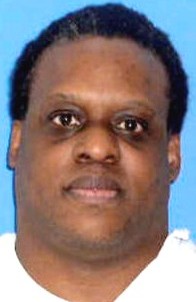
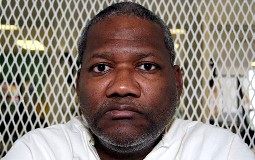
Billy George Hughes
Murderer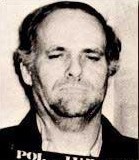 Ervil LeBaron
Murderer · USA · 1972
Ervil Morrell LeBaron (1925 to August 16, 1981) was the leader of a polygamous…
35 victims
Ervil LeBaron
Murderer · USA · 1972
Ervil Morrell LeBaron (1925 to August 16, 1981) was the leader of a polygamous…
35 victims
 Brian Kevin Rosenfeld
Murderer · USA · 1985
Brian Kevin Rosenfeld Brian Kevin Rosenfeld was sentenced to three concurrent l…
23 victims
Brian Kevin Rosenfeld
Murderer · USA · 1985
Brian Kevin Rosenfeld Brian Kevin Rosenfeld was sentenced to three concurrent l…
23 victims
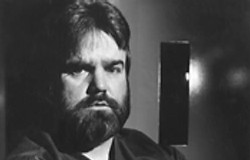 Marvin Gray
Murderer · USA · 1975
Marvin Gray was convicted killer who claimed responsibility for 23 slayings and…
23 victims
Marvin Gray
Murderer · USA · 1975
Marvin Gray was convicted killer who claimed responsibility for 23 slayings and…
23 victims
 Yahweh ben Yahweh
Murderer · USA · 1980
Yahweh ben Yahweh was born and legally named Hulon Mitchell Jr. (October 27, 19…
23 victims
Yahweh ben Yahweh
Murderer · USA · 1980
Yahweh ben Yahweh was born and legally named Hulon Mitchell Jr. (October 27, 19…
23 victims
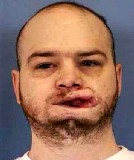 Edwin Hart Turner
Murderer · USA · 1995
Edwin Hart Turner was convicted of capital murder in the deaths of Eddie Brooks…
2 victims
Edwin Hart Turner
Murderer · USA · 1995
Edwin Hart Turner was convicted of capital murder in the deaths of Eddie Brooks…
2 victims
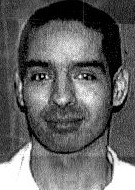 Juan Rodriguez Chavez
Murderer · USA · 1985
Juan Rodriguez Chavez was convicted in Dallas County, Texas, of capital murder…
12 victims
Juan Rodriguez Chavez
Murderer · USA · 1985
Juan Rodriguez Chavez was convicted in Dallas County, Texas, of capital murder…
12 victims
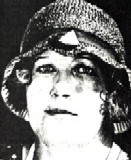 Eva Coo
Murderer · USA · 1934
Eva Coo was an American murderer who was executed by electric chair at Sing Sin…
1 victim
Eva Coo
Murderer · USA · 1934
Eva Coo was an American murderer who was executed by electric chair at Sing Sin…
1 victim
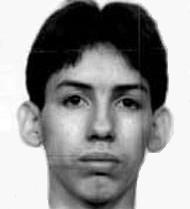 Mauro Barraza
Homicide · USA · 1989
Mauro Barraza murdered and sexually assaulted Vilorie Nelson in her home during…
1 victim
Mauro Barraza
Homicide · USA · 1989
Mauro Barraza murdered and sexually assaulted Vilorie Nelson in her home during…
1 victim
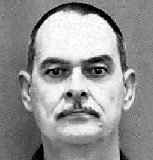 Larry Romine
Murderer · USA · 1981
Larry Romine, 45, was convicted for the shotgun slayings of his parents, Roy Le…
2 victims
Larry Romine
Murderer · USA · 1981
Larry Romine, 45, was convicted for the shotgun slayings of his parents, Roy Le…
2 victims
- Gender
- male
- Country
- USA
- Location
- Austin County, Texas, USA
- Date of birth
- January 28, 1952
- Age at first offence
- 24
- Characteristics
- robbery, alcohol, drug addict
- Victim profile
- Mark Frederick, 25 ( Texas Public Safety Officer )
- Method of murder
- Shooting ( .9mm handgun)
- Date(s) of murder
- April 4, 1976
- Years active
- 1976
- Date of arrest
- 2 days after
- Status
-
Executed
Executed by lethal injection in Texas on January 24, 2000
Case information
Name: Billy George Hughes Victim: Trooper Mark Frederick, a Texas Department of Public Safety trooper Defendant: Billy George Hughes
Background
On the evening of April 4, 1976, Billy George Hughes checked into the Days Inn motel in Brookshire (west of Houston), Texas, using a stolen credit card. When the clerk confronted Hughes in his room about the stolen card, she noticed a gun on his bed. The clerk left Hughes's room to notify the motel security guard.
The offence
Hughes got into his car and sped away on Interstate 10 heading west. Texas Department of Public Safety (DPS) troopers Jack Reichert and Mark Frederick pulled over the 1975 Ford LTD Hughes was driving on Interstate 10 near Sealy, Texas, while responding to a dispatcher's report that a man driving a similar car had attempted to use a stolen credit card at a nearby motel.
After Hughes pulled onto an interstate exit ramp, Trooper Frederick turned on overhead lights and Hughes pulled over to the shoulder of the exit ramp. Trooper Frederick exited the police car and walked up to the driver's side door of Hughes's car. Trooper Reichert got out of the patrol car almost immediately after Frederick did.
Reichert approached the Ford behind Frederick. Reichert heard a muffled shot and observed Frederick grunt and lurch to the side. Hughes sped away immediately. Reichert fired six times at the fleeing vehicle. Reichert called for assistance and tended to Frederick, but Reichert could find no pulse.
Trooper Mark Frederick was later declared dead in the ambulance en route to the Sealy Medical Center.
Investigation
Upon hearing of the shooting, DPS troopers Randall Baisch and Rodney Green discovered Hughes's abandoned car approximately three miles from the scene of the shooting. They observed the car had been struck by several bullets. Inside the car was a holster and a room key from the Days Inn motel in Brookshire. A massive manhunt began for Hughes, involving as many as five hundred law enforcement officers.
Approximately two-and-a-half days after the shooting, Texas Ranger Ray Scholton received a report that a possible suspect had been sighted six miles south of Sealy. Scholton went to the location by helicopter. From the helicopter, Scholton spotted Hughes hiding under a mesquite tree in a pasture. As the helicopter hovered a few feet above the ground, Hughes pointed a gun at the helicopter. Scholton pointed his gun out at Hughes; Hughes dropped his weapon and was taken into custody.
A check of Hughes's car revealed that it had been reported stolen. A search of the car revealed:
- One holster for an automatic handgun on the front seat
- One holster for a revolver in the glove compartment
- In the trunk: a fully loaded .30 caliber carbine; a loaded, sawed-off short barrel twelve-gauge shotgun; a .300 Magnum rifle; extra .38 caliber shotgun ammunition; and a Halloween mask
- A 9 millimeter handgun loaded with thirteen or fourteen rounds on Hughes when he was captured
Autopsy and forensic evidence
Dr. Joseph Jachimczyk performed the autopsy on Trooper Mark Frederick and testified about the bullet path:
- The bullet that killed Frederick struck him on the upper left arm, exited on the inside of the arm, entered his chest on the left, and finally exited from his back upper-right mid-back.
Jachimczyk testified that Trooper Frederick's aorta and heart were struck, resulting in internal hemorrhaging, shock, and then death. Jachimczyk found that Frederick's wounds were consistent with being shot with a 9 millimeter handgun, with Frederick's left side turned down toward the driver, and that the gun fired at Frederick was at least two feet away from him.
Ronald Richardson, supervisor of the firearms section in the DPS Scientific Crime Laboratory, tested the bullet that struck Trooper Frederick and established that it had been fired from the 9 millimeter handgun recovered from Hughes when he was captured.
Defendant’s account and related claims
In his testimony at trial, Hughes related details of a lengthy crime spree that ended with the capital murder of Trooper Mark Frederick. Hughes claimed that after he left the motel and was pulled over by Troopers Frederick and Reichert, the troopers opened fire on him without provocation, whereupon he fired a blind shot out the window.
Crime spree details (as related at trial)
Hughes rented a 1975 Ford LTD in Fair Hope, Alabama, on January 21, 1976, to be returned on January 26, 1976. Hughes drove to Pensacola, Florida, where he passed a worthless one hundred fifty dollar check. He then returned to Fair Hope and retrieved clothing from a cleaners and attempted to fake his death at a local beach by leaving his shirt and pager. He then headed back to Pensacola, buying gas and food with another worthless check. He stayed in Pensacola for a day or two before leaving for Orlando.
In Orlando, Hughes stole checks used to buy jeans, a jacket, a belt, and a hat. He left Orlando for Daytona Beach, where he was robbed after leaving a nightclub. The next day, Hughes bought a suit, a pair of boots, a cane, a shotgun, and some shells with another stolen check.
He headed for Jacksonville, Florida, where he sawed off the barrel of the shotgun as short as possible and concealed it in his trunk. He stayed in Jacksonville for a few days, cashed more stolen checks, and inquired into buying more guns. He then went to Atlanta, Chattanooga, and Nashville.
While in Nashville, Hughes purchased a .45 automatic handgun with another stolen check and stole an Alabama license plate from another car. A few days later, Hughes returned to Chattanooga where he bought ten-dollar traveler's checks, cashed two, reported all ten stolen, and received a one-hundred dollar refund.
He left Chattanooga for a small town northwest, burglarized a car, and stole a 9 millimeter automatic in a holster, a .45 pistol in a holster, a .300 Magnum rifle with a scope, a .30 caliber carbine, .38 caliber shells, and an empty holster. This theft occurred sometime during the second or third week of February.
Hughes continued his trek throughout the southeast during the early spring of 1976. He stopped in Gatlinburg, Tennessee; Washington, D.C.; and Baltimore, Maryland. He then headed into the Carolinas where he repeated his traveler's check scheme. He returned to Nashville, Tennessee, where his car was broken into and two .45’s were stolen.
He left Nashville for Montgomery, Alabama. While in Alabama, Hughes stole Harold Martin's credit card, a diamond ring from Sam Caldwell, and some checks from Caldwell. He used one stolen check to buy a CB radio from Radio Shack.
On March 30, 1976, Hughes left Montgomery for Louisiana, where he used Martin's credit card for food, motels, and gasoline. He left behind papers in Kenner, Louisiana, detailing plans to continue the traveler's check scam, rob a small-town bank, and set up apartments in New Orleans, Daytona Beach, and Atlanta, and rob banks in those cities.
He left Louisiana for Texas, staying in Beaumont, Texas, on the night of April 2, 1976. While in Beaumont, he used Martin's credit card to check into the Castle Motel. He continued heading west until he attempted to use Martin's credit card at the Days Inn in Brookshire on April 4, 1976.
Procedural history
In April 1976, a grand jury in Austin County, Texas, indicted Hughes for the capital murder of Mark A. Frederick, a peace officer acting in the lawful discharge of an official duty. The case was tried on a change of venue in Matagorda County, Texas, and Hughes entered a plea of "not guilty."
On September 16, 1976, a jury found Hughes guilty of capital murder. Following a punishment hearing, Hughes was sentenced to death. Hughes's conviction was automatically appealed to the Texas Court of Criminal Appeals and was affirmed in a published opinion.
On March 18, 1987, the Court of Criminal Appeals granted Hughes's application for state post-conviction relief and reversed his conviction because a prospective juror had been improperly excluded.
In June 1988, Hughes was retried for Mark Frederick's capital murder in the 23rd District Court of Matagorda County, Texas. On June 9, 1988, a jury found Hughes guilty of the charged capital offense.
Hughes's second conviction and sentence were automatically appealed to the Texas Court of Criminal Appeals. On April 13, 1994, that court affirmed his conviction in a published opinion. Hughes's petition for writ of certiorari was denied by the Supreme Court of the United States on May 15, 1995.
On October 14, 1996, Hughes filed an application for state habeas corpus relief. The Court of Criminal Appeals denied Hughes's request for relief on February 26, 1997. Hughes then filed a petition for certiorari in the Supreme Court, which was denied on October 14, 1997.
On June 17, 1997, the trial court scheduled Hughes's execution for September 19, 1997. On September 10, 1997, Hughes filed a petition for writ of habeas corpus and a motion to stay his September 19, 1997, execution in federal district court. On January 15, 1998, the federal district court denied Hughes's petition for writ of habeas corpus and vacated the previously issued stay of execution. The court also denied permission to appeal. Hughes filed a notice of appeal on February 11, 1998.
On October 5, 1999, the United States Court of Appeals for the Fifth Circuit denied permission to appeal. A petition for writ of certiorari was pending in the Supreme Court.
Sentencing
At the punishment hearing after Hughes's September 16, 1976 conviction, Hughes was sentenced to death. Following the retrial conviction in June 1988, Hughes was again sentenced to death after a punishment hearing.
The jury took 47 minutes to sentence Hughes to death. In the second trial, the jury answered the three special issues in the affirmative.
Appeals
The Texas Court of Criminal Appeals reversed Hughes's conviction on March 18, 1987 due to a prospective juror being improperly excluded.
On April 13, 1994, the Texas Court of Criminal Appeals affirmed Hughes's conviction in a published opinion. The Supreme Court denied certiorari on May 15, 1995.
Hughes's state habeas application was denied on February 26, 1997. The Supreme Court denied certiorari on October 14, 1997.
The federal district court denied Hughes's habeas petition and vacated the stay of execution on January 15, 1998, and also denied permission to appeal. The Fifth Circuit denied permission to appeal on October 5, 1999.
In the United States Court of Appeals for the Fifth Circuit, the panel denied a certificate of appealability and stated: "DENIED."
Prior criminal history
Retired Agent Gene Owens of the Federal Bureau of Investigation investigated a series of extortion attempts and bomb threats of three banks in Mobile, Alabama, from October 1973 until early 1975. The suspect later was identified as Hughes. The suspect called local television and radio stations and threatened to blow up two local hospitals unless the three banks paid him $100,000. The suspect also claimed to have kidnapped two small children. Hughes was filmed by a television cameraman at prearranged drop sites.
Hughes was indicted for extortion and pled guilty, receiving probation. During the investigation, Agent Owens learned Hughes previously had threatened to kill a young child and had frequently beat his wife when she complained of his criminal conduct.
Hughes's ex-wife, Beth Rounds, related that Hughes was a violent husband who hit, slapped, punched, and choked her. Rounds and Hughes were members of the Jehovah's Witnesses until Hughes was expelled for incessant lying and bad-check writing. Rounds corroborated Agent Owens's version of Hughes's extortion attempts and described Hughes as a methodical, deliberate person. Rounds further testified that Hughes liked guns and was a good shot and that he once choked her until her mother intervened. Rounds stated that Hughes's criminal acts escalated during the time she knew him and that she felt Hughes would continue to commit violent criminal acts.
Drugs and/or alcohol
Prior to Hughes's first trial, Hughes told examining psychiatrists he had consumed large quantities of beer on the day of the offense, which led to "spotty amnesia" around the time of the offense.
At a second psychiatric interview prior to Hughes's second trial, Hughes denied any amnesia and stated he recalled everything about the offense. His account of being intoxicated prior to the offense was contradicted by testimony from other trial witnesses who observed him at that time.
Other details
Hughes earned two college degrees in religion while on death row.
The Texas Attorney General Media Advisory said that Billy George Hughes was scheduled to be executed. It included a statement that Hughes was scheduled to be executed after 6 p.m. on Monday, January 24.
Hughes was pronounced dead at 6:18 p.m., 8 minutes after a lethal mixture of drugs began flowing into his arms.
Trooper Mark Frederick was 26 and a trooper for 5 years when he stopped Hughes's car on April 4, 1976. At that time, Hughes was 25 and had been wanted for theft by credit card. Trooper Frederick had a wife, Jane, and a small child named Denise, and they were expecting another child.
Frederick's mother, Pat Teer, stated that Hughes still claimed his innocence at the time of execution. Teer stated that Frederick's family could now go on and said that Mark can rest in peace and their nightmares would end because Hughes would not take another life. Teer thanked several people before adding, "Mark, justice has been served. God be with you."
Walker County District Attorney David Weeks, the prosecuting attorney at Hughes's second trial, said Hughes went out lying and that Hughes's story about what happened was not consistent with the facts.
Timeline
- April 4, 1976 — Hughes checked into the Days Inn motel in Brookshire using a stolen credit card, left after being confronted, and shot Trooper Mark Frederick during a traffic stop on Interstate 10 near Sealy; Frederick died from a gunshot wound.
- April 6, 1976 — Hughes was captured during the manhunt after being found hiding under a mesquite tree in a pasture six miles south of Sealy.
- January 21, 1976 — Hughes rented a 1975 Ford LTD in Fair Hope, Alabama, to be returned on January 26, 1976.
- March 30, 1976 — Hughes left Montgomery for Louisiana and used Harold Martin's credit card for food, motels, and gasoline.
- April 2, 1976 — Hughes stayed in Beaumont, Texas, and used Harold Martin's credit card to check into the Castle Motel.
- April 1976 — A grand jury in Austin County, Texas indicted Hughes for the capital murder of Mark A. Frederick.
- September 16, 1976 — A jury found Hughes guilty of capital murder and he was sentenced to death.
- March 18, 1987 — The Texas Court of Criminal Appeals reversed Hughes's conviction because a prospective juror had been improperly excluded.
- June 9, 1988 — A jury found Hughes guilty of the charged capital offense and he was sentenced to death.
- April 13, 1994 — The Texas Court of Criminal Appeals affirmed Hughes's conviction in a published opinion.
- May 15, 1995 — The Supreme Court denied certiorari.
- February 26, 1997 — The Texas Court of Criminal Appeals denied Hughes's state habeas request for relief.
- October 14, 1997 — The Supreme Court denied certiorari.
- January 15, 1998 — The federal district court denied Hughes's petition for writ of habeas corpus and vacated the previously issued stay of execution.
- February 11, 1998 — Hughes filed a notice of appeal.
- October 5, 1999 — The United States Court of Appeals for the Fifth Circuit denied permission to appeal.
- January 24, 2000 — Hughes was executed by lethal injection in Texas.
Status at execution
Hughes was transported to the Walls Unit in Huntsville where the execution would take place. He was lying on his back on the table with his right arm outstretched as the needle was placed. After the warden asked if he had any final words, Hughes said:
"Yes, I do"
"I want to tell you all how much I love you all, how much I appreciate everything. I love you all and my family. I treasure every moment that I have had. I want the guys to know out there not to give up, not to give in, that I hope someday the madness in the system--something will come about, something will be resolved. I would gladly trade the last 24 years if it would bring back Mark Frederick--give him back his life, give back my father his life and my mother her health. All I ask is that I have one day, and all the memories of you and my family and all the things that have happened. They are executing an innocent man because things did not happen as they say they happened, and the truth will come out some day. I am not the same person I was 24 years ago. Who would have thought it would have taken 24 years to get to this moment? Don't give up, don't give in. If I am paying my debt to society, I am due a rebate and a refund. But, I love you all, and you all watch out for Mom and you all keep up, keep going. Thank you, Warden."
After the lethal mixture of drugs began flowing into his arms, he was pronounced dead at 6:18 p.m.
Spotted an error, or have more information about this case?