Robert S. James
Murderer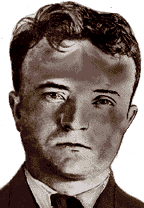 Paul Jaworski
Murderer · USA · 1926
Paul Jaworski was born in Poland as Paul Poluszynski in 1900. He later immigrat…
20 victims
Paul Jaworski
Murderer · USA · 1926
Paul Jaworski was born in Poland as Paul Poluszynski in 1900. He later immigrat…
20 victims
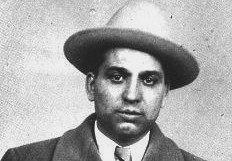 Harry Maione
Murderer · USA · 1937
Harry “Happy” Maione (1908 – February 19, 1942) was a New York mobster who serv…
12 victims
Harry Maione
Murderer · USA · 1937
Harry “Happy” Maione (1908 – February 19, 1942) was a New York mobster who serv…
12 victims
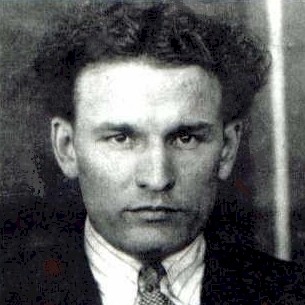 William Kenneth Wagner
Murderer · USA · 1924
William Kenneth (Kinnie) Wagner (born February 18, 1903 in Scott County, VA) wa…
6 victims
William Kenneth Wagner
Murderer · USA · 1924
William Kenneth (Kinnie) Wagner (born February 18, 1903 in Scott County, VA) wa…
6 victims
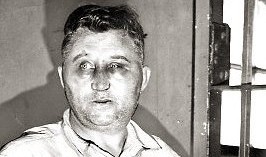 Harry Powers
Murderer · USA · 1931
Harry Powers was executed by hanging on March 18, 1932, at the West Virginia Pe…
5 victims
Harry Powers
Murderer · USA · 1931
Harry Powers was executed by hanging on March 18, 1932, at the West Virginia Pe…
5 victims
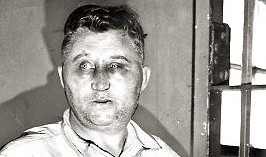 Herman Drenth
Murderer · USA · 1931
Herman Drenth was also known by the aliases Harry F. Powers and Cornelius O. Pi…
5 victims
Herman Drenth
Murderer · USA · 1931
Herman Drenth was also known by the aliases Harry F. Powers and Cornelius O. Pi…
5 victims
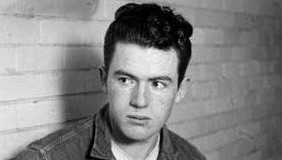 William Edward Hickman
Murderer · USA · 1926
William Edward Hickman was a man who tried to solve his financial problems by k…
5 victims
William Edward Hickman
Murderer · USA · 1926
William Edward Hickman was a man who tried to solve his financial problems by k…
5 victims
 Christine Paolilla
Homicide · USA · 2003
Christine Marie Paolilla was an American woman born on Long Island, New York on…
4 victims
Christine Paolilla
Homicide · USA · 2003
Christine Marie Paolilla was an American woman born on Long Island, New York on…
4 victims
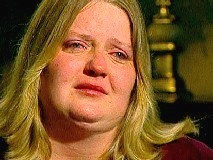 Kimberly Cunningham
Murderer · USA · 2003
Kimberly Cunningham — defendant and killer of Coy Hundley. · Coy Hundley — alle…
1 victim
Kimberly Cunningham
Murderer · USA · 2003
Kimberly Cunningham — defendant and killer of Coy Hundley. · Coy Hundley — alle…
1 victim
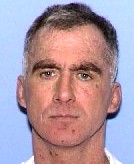 Tracy Lane Beatty
Murderer · USA · 2003
Tracy Lane Beatty was a White male born on 01/23/1961. He was 43 when he was re…
1 victim
Tracy Lane Beatty
Murderer · USA · 2003
Tracy Lane Beatty was a White male born on 01/23/1961. He was 43 when he was re…
1 victim
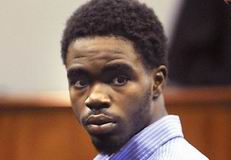 De'Marquise Elkins
Homicide · USA · 2013
De'Marquise Elkins was a Georgia teenager who fatally shot a baby in a stroller…
1 victim
De'Marquise Elkins
Homicide · USA · 2013
De'Marquise Elkins was a Georgia teenager who fatally shot a baby in a stroller…
1 victim
- Gender
- male
- Country
- USA
- Location
- Colorado/California, USA
- Date of birth
- 1895
- Age at first offence
- 37
- Characteristics
- to collect insurance money
- Victim profile
- Winona Wallace (his wife) / Cornelius Wright (his accident-prone nephew) / Mary Busch (his wife)
- Method of murder
- Poisoning (rattlesnake) - Drowning
- Date(s) of murder
- 1932 - 1935
- Years active
- 1932–1935
- Date of arrest
- April 19, 1936
- Status
-
Executed
Executed by hanging at San Quentin State Prison in California on May 9, 1942
Case identification
Robert S. James (also known as Raymond Lisenba and Rattlesnake James) was executed by hanging at San Quentin State Prison in California on May 9, 1942. He was also referred to as Major Raymond Lisemba in connection with the murder investigation.
Background
Raymond Lisenba (1895 – May 1, 1942), also known as Rattlesnake James or Robert S. James, worked as a barber in the area of present-day La Cañada Flintridge, California in the 1930s. His wife in those years was a manicurist named Mary Busch.
In 1935, James purchased a life insurance policy on his wife. A few months later, James purchased rattlesnakes, which were used in an unsuccessful attempt to murder his wife.
Investigators discovered that James had been married previously and that one of his prior wives had died under similar circumstances. On May 1, 1942, Rattlesnake James was executed by hanging at San Quentin State Prison in California.
The rope was the wrong length and it took over ten minutes for Rattlesnake James to die.
The offence
James attempted to kill Mary Busch using rattlesnakes, and after the snake attack did not kill her, he drowned her and attempted to make the death appear accidental.
James employed Charlie Hope to pose as a doctor. When Hope arrived at the house, Hope found James had blindfolded his wife and tied her to the kitchen table. James and Hope poured whisky down Mary Busch’s throat, telling her it would dull the pain, stuck her feet into the box containing the snakes, and left her to die. When James came home from work, Mary Busch was still alive.
Hope later testified that James drowned Mary Busch in the bath, dragged her to a lily pond in the garden, and left her face down in the water to be “accidentally” discovered the next day.
In connection with his motive, James was said to have collected life insurance proceeds and sought financial gain. Police believed at first that Mary Busch got drunk and drowned herself; subsequently James was arrested and charged with Mary’s murder after investigation connected him to the death.
Investigation
Police initially believed Mary Busch had gotten drunk and drowned herself. A subsequent investigation led investigators to charge James with Mary Busch’s murder. At the trial, Hope helped demonstrate how Mary Busch’s feet were introduced into the deadly box.
Investigators had noted a bloody hammer in the back of the wrecked car in a related earlier incident, but apparently took no notice of it.
Arrest
James was arrested for incest on April 19, 1936. He was taken into custody and held incommunicado for about forty-eight hours while officers subjected him to incessant questioning. The questioning occurred in connection with the suspicion surrounding Mary Emma’s death a few months before.
After further questioning, James confessed on May 3, 1936 to the plot to kill his second wife.
Trial
James was convicted of murder in the first degree and sentenced to death.
At trial, the conviction addressed the murder of his wife Mary Busch / Mary Emma Busch. The verdict was reported as: “We find the defendant, Major Raymond Lisenba, also known as Robert James, guilty of murder in the first degree”.
Sentencing
The trial resulted in a death sentence for James.
The decision affirmed:
- the conviction upheld twice by the State Supreme Court and once by the United States Supreme Court (as described in the account of the Los Angeles Times report dated May 2, 1942).
At the trial, James stood to collect more than $21,000 on the death of Mary Busch. He was executed after appeals were unsuccessful.
Appeals
Appeals were taken all the way to the United States Supreme Court.
A United States Supreme Court case was included in the provided materials:
- Lisenba v. People of State of California (314 U.S. 219), decided December 8, 1941, and rehearing was denied February 2, 1942.
In the Supreme Court material, it was stated:
- “The petition for a rehearing herein is denied.”
- “The judgments are affirmed.”
The Supreme Court material described indictments and pleas:
- “one Hope pleaded guilty and was sentenced to life imprisonment.”
- “James pleaded not guilty, was tried, convicted, and sentenced to death.”
Counsel announced plans to file further petitions and seek a stay of execution, including:
- a ground that the Supreme Court voted 4 to 4 on the question of a fair trial for James.
A dissent was included:
- Mr. Justice BLACK, dissenting, with whom Mr. Justice DOUGLAS concurs.
- The dissent stated, “I believe the confession used to convict James was the result of coercion and compulsion, and that the judgment should be reversed for that reason.”
Outcome
James was executed by hanging at San Quentin State Prison in California. The hanging date was given as May 9, 1942 in the status field, while additional narrative also stated that execution occurred on May 1, 1942.
The rope was the wrong length and it took over ten minutes for James to die.
Other details
Insurance and previous marriage-related incidents
James purchased insurance and obtained proceeds after deaths of wives. One account stated that he collected $14,000 on his wife’s life policy and went off to Alabama to marry again—for the fourth time.
Another wife (in the narrative) recovered after a car accident; later she was discovered drowned in a bathtub at a house James had temporarily leased at Colorado Springs. This death was written off as “accidental drowning,” and James collected double indemnity from insurance companies. A bloody hammer was said to have been found in the back of the wrecked car.
James next insured his accident-prone nephew, Cornelius Wright, invited him to visit while on leave from the US Navy, and gave him the use of his car. Wright promptly drove off a cliff, killing himself. A mechanic later told James something was wrong with the steering wheel.
Mary Busch: the insurance, pregnancy, and the ruse
James married Mary Busch in Los Angeles. Mary Busch was a manicurist and described as tall and blond and age 26 in the narrative. In 1935, after he insured her life, the couple discovered she was pregnant.
Mary insisted on an abortion. James persuaded Charlie Hope to pose as a doctor. Hope arrived to find Mary tied to the kitchen table, blindfolded, with her eyes and mouth taped shut.
Incest charge and questioning
Things would have gone unnoticed if James had not been suspected of sleeping with his niece, which under California law at the time was a felony offense. He was arrested and charged with incest on April 19, 1936.
In the Supreme Court material, officers were described as taking James to a furnished house next door to the State’s Attorney’s office where a dictaphone was installed and holding him by force rather than under indictment or warrant. The Supreme Court material also contained the statement:
- “due process of law ... commands that no such practice ... shall send any accused to his death.”
Verbatim quotations included in the provided materials
James was quoted saying: “My poor wife has drowned in the bathtub. She must have been dizzy from the car crash and slipped unconscious beneath the water.”
A quoted statement from Mary Busch in the narrative was: “People who get insured always die of something strange,” and the narrative also included a separate quoted formulation: “People you insure always die of something strange,” as the reason for the divorce.
A quote attributed to James was: “I can Take It” as he heard the verdict.
The Supreme Court dissent quoted: “I believe the confession used to convict James was the result of coercion and compulsion, and that the judgment should be reversed for that reason.”
The dissent also referenced:
- “due process of law ...
“We find the defendant, Major Raymond Lisenba, also known as Robert James, guilty of murder in the first degree”.
“The judgments are affirmed.”
“I believe the confession used to convict James was the result of coercion and compulsion, and that the judgment should be reversed for that reason.”
Spotted an error, or have more information about this case?