
Clawvern Jacobs
Murderer Ervil LeBaron
Murderer · USA · 1972
Ervil Morrell LeBaron (1925 to August 16, 1981) was the leader of a polygamous…
35 victims
Ervil LeBaron
Murderer · USA · 1972
Ervil Morrell LeBaron (1925 to August 16, 1981) was the leader of a polygamous…
35 victims
 Marvin Gray
Murderer · USA · 1975
Marvin Gray was convicted killer who claimed responsibility for 23 slayings and…
23 victims
Marvin Gray
Murderer · USA · 1975
Marvin Gray was convicted killer who claimed responsibility for 23 slayings and…
23 victims
 Yahweh ben Yahweh
Murderer · USA · 1980
Yahweh ben Yahweh was born and legally named Hulon Mitchell Jr. (October 27, 19…
23 victims
Yahweh ben Yahweh
Murderer · USA · 1980
Yahweh ben Yahweh was born and legally named Hulon Mitchell Jr. (October 27, 19…
23 victims
 Charles Manson
Murderer · USA · 1969
Charles Milles Manson (born November 12, 1934) was an American criminal and mus…
9 victims
Charles Manson
Murderer · USA · 1969
Charles Milles Manson (born November 12, 1934) was an American criminal and mus…
9 victims
 Terrie Robinson
Murderer · USA · 2011
Terrie Robinson was a 25-year-old woman who pleaded guilty to the murder of her…
1 victim
Terrie Robinson
Murderer · USA · 2011
Terrie Robinson was a 25-year-old woman who pleaded guilty to the murder of her…
1 victim
 Stella Nickell
Murderer · USA · 1986
Stella Nickell was prosecuted in federal court over deaths linked to product ta…
2 victims
Stella Nickell
Murderer · USA · 1986
Stella Nickell was prosecuted in federal court over deaths linked to product ta…
2 victims
 Elias Chauke
Spree killer · South Africa · 2002
Elias Chauke was accused of a spate of killings and rapes that occurred over tw…
5 victims
Elias Chauke
Spree killer · South Africa · 2002
Elias Chauke was accused of a spate of killings and rapes that occurred over tw…
5 victims
 Charles David Ellison
Murderer · USA · 1999
Charles David Ellison was sentenced to death on February 17, 2004. Charles Elli…
2 victims
Charles David Ellison
Murderer · USA · 1999
Charles David Ellison was sentenced to death on February 17, 2004. Charles Elli…
2 victims
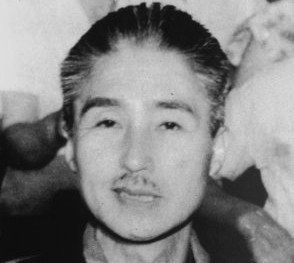 Sadamichi Hirasawa
Mass murderer · Japan · 1948
Sadamichi Hirasawa was a Japanese painter. He was also known as a tempera paint…
12 victims
Sadamichi Hirasawa
Mass murderer · Japan · 1948
Sadamichi Hirasawa was a Japanese painter. He was also known as a tempera paint…
12 victims
- Gender
- male
- Country
- USA
- Location
- Knott County, K entucky, USA
- Date of birth
- 1947
- Age at first offence
- 27
- Characteristics
- kidnapping, robbery, mutilation
- Victim profile
- A woman / Judy Ann Howard
- Method of murder
- St abbing with knife
- Date(s) of murder
- 1974 / 1986
- Years active
- 1974–1986
- Date of arrest
- —
- Status
-
Life imprisonment
Sentenced to death, 1989; commuted to life in prison, 2001
Case record: Clawvern Jacobs
Background
Clawvern Jacobs was the defendant in a capital case before the Supreme Court of Kentucky (case referenced as Jacobs v. Kentucky, 2001 Ky. LEXIS 187).
The offence
The case involved the murder of Judy Ann Howard. During the trial proceedings, the Commonwealth alleged that, at the time he killed Judy Ann Howard, Jacobs was engaging in the commission of rape in the first degree.
Upon remand, the Commonwealth gave notice that it would allege another aggravating circumstance: that Jacobs murdered Howard during the commission of a kidnapping.
In the guilt/innocence phase, the jury returned a verdict finding Jacobs guilty not of attempted first degree rape, but of the lesser-included offense of first degree sexual abuse.
The capital sentencing phase included an instruction that the jury could consider only one aggravating circumstance in determining the appropriate penalty for Jacobs’s murder conviction. That aggravating circumstance stated that Jacobs murdered Judy Ann Howard and that, at the time he murdered Howard, he was engaged in the commission of kidnapping.
Investigation
The record included legal discussion of Kentucky’s death penalty sentencing scheme and how statutory aggravating circumstances constrained a jury’s discretion.
Trial
At Jacobs’s first trial, the only aggravating circumstance alleged by the Commonwealth, submitted in the trial court’s instructions, and found by the jury was that: “at the time he killed Judy Ann Howard, the defendant, Clawvern Jacobs, was engaging in the commission of rape in the first degree.” n35
After remand, the Commonwealth gave notice it would allege an additional aggravating circumstance: that Jacobs murdered Howard during the commission of a kidnapping.
After the guilt/innocence verdict finding Jacobs guilty of the lesser-included offense of first degree sexual abuse, the trial court’s capital sentencing phase instructions allowed the jury to consider only one possible aggravating circumstance.
The sentencing instruction provided:
INSTRUCTION NO. 3 AGGRAVATING CIRCUMSTANCES In fixing a sentence for the defendant [*40] for the offense of Murder, you shall consider the following aggravating circumstances which you may find from the evidence beyond a reasonable doubt to be true: The defendant murdered Judy Ann Howard and that at the time Clawvern Jacobs murdered Judy Ann Howard he was engaged in the commission of kidnapping.
On the verdict form, the jury indicated it found the aggravating circumstance beyond a reasonable doubt and copied verbatim the language of Instruction No. 3.
Sentencing
The jury’s verdict resulted in a death sentence for Jacobs for the murder conviction.
The Supreme Court of Kentucky determined that the General Assembly had not established kidnapping as an aggravating circumstance to the crime of murder. It reversed Jacobs’s sentence of death and remanded for sentencing on non-capital murder.
Appeals
The appeal centered on whether Kentucky’s statutory death penalty sentencing procedures authorized the kidnapping-based aggravating circumstance for a murder conviction.
The Supreme Court of Kentucky analyzed constitutional and statutory “channeling” requirements in death penalty procedures, referencing Gregg v. Georgia and Furman v. Georgia.
The Supreme Court of Kentucky also discussed Harris v. Commonwealth.
It stated that in Harris, the Court held that juries must find beyond a reasonable doubt an aggravating circumstance “authorized by law” before imposing the death penalty, but that juries need not necessarily find one of the aggravating circumstances enumerated in KRS 532.025(2)(a).
The Supreme Court of Kentucky quoted the Harris analysis identifying an “aggravating circumstance otherwise authorized by law” as provided by the penalty section of the kidnapping statute:
Here, the “aggravating [*44] circumstance otherwise authorized by law” is provided by the penalty section of the kidnapping statute, KRS 509.040(2), which makes kidnapping a capital offense when the victim is not released alive.
The Supreme Court of Kentucky concluded Harris did not support the death-eligibility argument for a murder conviction in this case, explaining that the case involved a sentence of death not for a kidnapping conviction.
The Supreme Court of Kentucky also stated it had no business extending aggravating circumstance authorization beyond what the legislature had identified for murder.
It relied on language from Young v. Commonwealth:
“the death penalty cannot be imposed simply because we or the jury believe the actions or motives of a particular defendant are deserving of capital punishment. That is the kind of discretionary, ad hoc application of the death penalty specifically condemned in Furman.”
Outcome
The Supreme Court of Kentucky reversed Jacobs’s sentence of death and remanded the matter to the trial court for sentencing on non-capital murder.
Aftermath
Jacobs’s death sentence was commuted to life in prison in 2001.

Spotted an error, or have more information about this case?