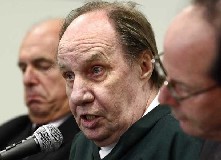
J.J. Jameson
Murderer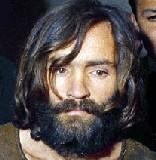 Charles Manson
Murderer · USA · 1969
Charles Milles Manson (born November 12, 1934) was an American criminal and mus…
9 victims
Charles Manson
Murderer · USA · 1969
Charles Milles Manson (born November 12, 1934) was an American criminal and mus…
9 victims
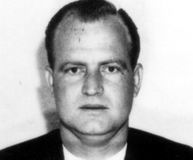 Gary Gene Tison
Murderer · USA · 1967
Gary Gene Tison was serving life sentences at the Arizona state prison. He had…
7 victims
Gary Gene Tison
Murderer · USA · 1967
Gary Gene Tison was serving life sentences at the Arizona state prison. He had…
7 victims
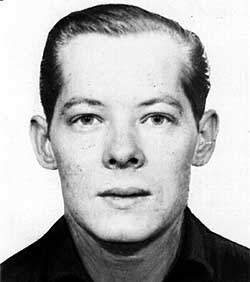 Richard Lee Tingle
Murderer · USA · 1968
Richard Lee Tingle was born out of wedlock in December 1940. He was raised by a…
6 victims
Richard Lee Tingle
Murderer · USA · 1968
Richard Lee Tingle was born out of wedlock in December 1940. He was raised by a…
6 victims
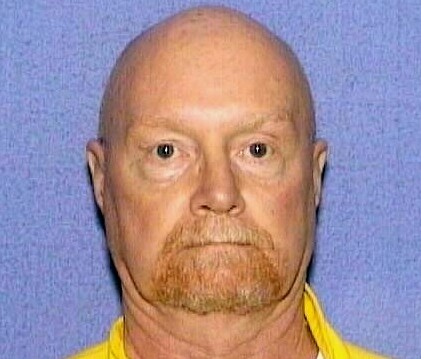 Gary Duane Rardon
Murderer · USA · 1962
Gary Duane Rardon killed a man in 1962 and later served 4 years for manslaughte…
4 victims
Gary Duane Rardon
Murderer · USA · 1962
Gary Duane Rardon killed a man in 1962 and later served 4 years for manslaughte…
4 victims
 Elmer Brunner
Murderer · USA · 1957
Elmer David Brunner died on 3 April 1959. He was executed by electrocution on 3…
1 victim
Elmer Brunner
Murderer · USA · 1957
Elmer David Brunner died on 3 April 1959. He was executed by electrocution on 3…
1 victim
 Morris Solomon
Serial killer · USA · 1986
Morris Solomon was an Oak Park handyman and serial killer. He was convicted of…
7 victims
Morris Solomon
Serial killer · USA · 1986
Morris Solomon was an Oak Park handyman and serial killer. He was convicted of…
7 victims
 Amanda Logue
Murderer · USA · 2010
Amanda Logue (30), known in adult entertainment as “Sunny Dae,” pleaded guilty…
1 victim
Amanda Logue
Murderer · USA · 2010
Amanda Logue (30), known in adult entertainment as “Sunny Dae,” pleaded guilty…
1 victim
 Lynn Turner
Murderer · USA · 1995
Name: Lynn Turner · Also known as / birth name: Julia Lynn Womack Turner · Life…
2 victims
Lynn Turner
Murderer · USA · 1995
Name: Lynn Turner · Also known as / birth name: Julia Lynn Womack Turner · Life…
2 victims
 Louisa Jane Taylor
Murderer · United Kingdom · 1882
Louisa Jane Taylor was widowed in 1882 and had a small pension to survive on. S…
1 victim
Louisa Jane Taylor
Murderer · United Kingdom · 1882
Louisa Jane Taylor was widowed in 1882 and had a small pension to survive on. S…
1 victim
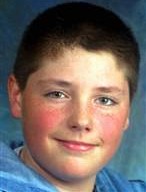 Mitchell Scott Johnson
Mass murderer · USA · 1998
Mitchell Scott Johnson was born August 11, 1984. He lived in Jonesboro with his…
5 victims
Mitchell Scott Johnson
Mass murderer · USA · 1998
Mitchell Scott Johnson was born August 11, 1984. He lived in Jonesboro with his…
5 victims
- Gender
- male
- Country
- USA
- Location
- Massachusetts, USA
- Date of birth
- 1939
- Age at first offence
- 21
- Characteristics
- armed robbery, escape
- Victim profile
- John Pigott, 22 (store clerk) / David S. Robinson (head jailer)
- Method of murder
- Shooting
- Date(s) of murder
- 1960 / 1961
- Years active
- 1960–1961
- Date of arrest
- March 22, 2005
- Status
-
Imprisoned
Sentenced to life in prison in 1962; escaped on December 21, 1985; arrested on March 22, 2005
Case record: J.J. Jameson (Norman A. Porter, Jr.)
Background
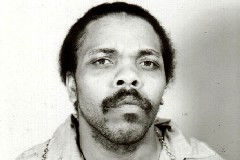
J. J. Jameson was also known as Norman A. Porter, Jr. He presented himself as a poet and activist in Chicago, Illinois from the mid-1980s until March 2005. He performed live as a poet and MC at local poetry jams and open mike nights. His work was marked by an ironic and humorous cast.
In September 1999, Jameson received attention for his poetry chapbook Lady Rutherford's Cauliflower, published by Puddin'head Press, which had been planning to publish a second volume of his work this year. In March 2005, Jameson was named Poet of the Month by C. J. Laity of ChicagoPoetry.com.
He was known to be suffering from head tumors in early 2005. Friends and acquaintances planned to celebrate the twentieth anniversary of his arrival in Chicago with a roast and poetry reading later in 2005.
He sometimes worked as a handyman and was a member of the congregation at the Third Unitarian Church in Chicago. He was also described as chairman of the trustees at the time of his capture. During his time as Jameson, he started a day-care center and did political organizing, and he wrote and published poetry. He founded a prison newspaper and a prison radio station while in prison.
His real name was Norman A. Porter, Jr.
The offence
Porter killed John Pigott, a twenty-two year old part-time clothing store clerk, in the 1960 fatal shooting of John Pigott at the Robert Hall clothing store in Saugus, Massachusetts. Porter used a sawed-off shotgun.
The robbery associated with the 1960 murder involved entry into the Robert Hall Clothing Store in Saugus “masked.” Porter brandished a sawed-off shotgun and Theodore F. Mayor carried a revolver. Customers and employees were herded into a back room. Porter ordered others to place their wallets and other valuables in a coat that was being circulated around. As a part-time clerk was reaching into his pocket for his cash, Porter placed the shotgun's muzzle against the back of the clerk's head and pulled the trigger, killing him “execution style.”
While awaiting trial on the murder charges, Porter was involved in the fatal assault and shooting of David S. Robinson at Middlesex County jail in Cambridge, Massachusetts. Porter escaped during the incident, and Edgar Cook was also involved in the escape. Cook assaulted the Master and Keeper of the Middlesex Jail (who was a Sheriff) and Cook shot and killed him with a gun smuggled into the facility. Porter pleaded guilty to charges of second-degree murder in that case as well.
Porter was described as not being accused of pulling the trigger in Robinson’s killing.
Investigation
Porter remained a fugitive after his 1985 escape. He was described as Massachusetts' most wanted fugitive after the escape and was ahead of mobster boss James “Whitey” Bulger on the Massachusetts State Police Most Wanted list.
Porter was apprehended in Chicago after the Massachusetts investigation was triggered by a fingerprint search. In 2005, fingerprints taken during a 1993 arrest were matched against Porter's fingerprints in an FBI database after a police officer saw his picture as Poet of the Month on ChicagoPoetry.com.
After running Porter's alias, Jameson, through internet searches, investigators discovered that the fugitive was an established poet with ties to a progressive Unitarian church on Chicago's West Side.
Investigators arrived in Chicago and turned up nothing before deciding to go to the Third Unitarian Church.
Arrest
On March 22, 2005 at 11:00, Porter was arrested by the Massachusetts State Police, Illinois State Police and the Massachusetts Department of Correction in Chicago at the Third Unitarian Church. The arrest was described as “without incident.”
Detective Lieutenant Kevin Horton, one of the Massachusetts investigators, said Porter did not put up a fight and that Porter told investigators the same thing he told the Illinois State Police: “I had a good 20 years,” and that Porter acknowledged who he is and “said he was expecting this day to come.”
Illinois State Police Lt. Lincoln Hampton said Porter was “very cooperative” and “Our guys told me he was very cooperative.”
Porter was scheduled to appear in a Chicago courtroom for an extradition hearing. He was expected to be returned to Massachusetts after an extradition hearing. He was also described as being held at the Cook County Jail pending arraignment at the Cook County Circuit Court.
Porter tracked down his longtime attorney, Charles Paidock’s? (Gordon T. Walker is named as longtime attorney), and called him with the statement that he had been caught and that he would waive extradition and be back in Massachusetts by that night. Gordon T. Walker said Porter “sounded a little relieved, actually” and “and resigned.”
A rap sheet released after his arrest stated that Norman Arthur Porter, Jr. was wanted by the Massachusetts Department of Correction Fugitive Section and the Massachusetts State Police, Fugitive Section for Escapee.
Trial
Porter pleaded guilty to second-degree murder in the 1960 fatal shooting of John Pigott in Saugus, Massachusetts, and he pleaded guilty to second-degree murder in the 1961 killing associated with the Middlesex County jail escape involving David S. Robinson.
Porter also pleaded guilty to the 1961 jailer case and was sentenced in connection with both slayings.
In September 2005, friends and families of the victims got to make their cases about his future at a Dedham hearing. The Dedham hearing was described as taking place in September 2005 and being used for a decision about whether Porter would be let out or would die in prison. A quote attributed to filmmaker Susan Gray described the judge’s role as deciding whether [Porter] would be “let out or would die in prison.”
Sentencing
Porter received two consecutive life terms for the 1960 murder of John Pigott and the 1961 murder involving David S. Robinson. The sentencing for those two slayings was described as “two (2) consecutive life sentences (2nd degree).”
In 1975, Governor Michael S. Dukakis commuted one of Porter’s life sentences. A separate account stated that Dukakis tried twice in 1978 to commute the other sentence, but that was unsuccessful.
While in prison, Porter earned an undergraduate degree from Boston University, started a prison newspaper, published poetry, and founded a prison radio station.
Porter was transferred to Norfolk Pre-Release Center, a minimum security and work-release facility located 35 miles southwest of Boston, in September 1985. On December 21, 1985 he escaped from that minimum-security facility after serving 26 years in prison.
In December 1985, the State Police noted Porter escaped from a State Correctional Facility in Norfolk and that he was serving two life sentences for murder at the time of his escape.
On October 14, 2005, Porter was sentenced to three years in prison for his escape. In Massachusetts, conviction on charges of escape from a penal institution carried a sentence of up to ten years imprisonment.
Appeals
The material provided did not describe any appeal outcome.
Outcome
Porter escaped on December 21, 1985 from Norfolk Pre-Release Center and did not return to the facility until he was caught on March 22, 2005.
Since his escape, he had been one of Massachusetts's most wanted fugitives. His fugitive period included living in Chicago under the name Jacob “J.J.” Jameson, including performing as a poet and activism in the local community.
In 2005, Porter was apprehended after fingerprint matches linked his real identity to the alias used in connection with a 1993 arrest for theft that had been dismissed.
Aftermath
A 2008 film, Killer Poet, produced by Northern Light Productions, documented the Norman Porter story.
The 2008 film was described as documenting Porter’s capture in Chicago and a court appearance in Dedham in September 2005, including that friends and families of the victims made their cases about Porter’s future.
The film included extensive footage of Porter's capture and the Dedham hearing. It also included interviews, including an on-tape interview with Porter arranged by filmmaker Susan Gray after prison rules changed to allow recording devices on a case-by-case basis. The filming details included a statement from Susan Gray quoted about arranging interviews and about the judge’s role at the Dedham hearing.
Susan Gray said:
“I’d had one visit with him, and then one year later a second interview, and then we were at the end of making the movie but had never heard from the main character,” says Gray.
Susan Gray further said:
“At the second visit, I think he felt a little betrayed when he heard that I had talked to the victims' families and the cops,” Gray says, but Porter's lawyers convinced him that it would be in his interest to talk to her even if the movie wouldn't be just his story.
Susan Gray said about the hearing:
“That hearing became a judgment on his life,” says Gray. “Both sides were weighing in and the judge was in the role of playing God, deciding whether [Porter] would be let out or would die in prison.”
Susan Gray said about her motivation:
“People ask me, ‘Why Norman Porter? Why look at an escaped convict? Why not look at someone who was falsely convicted?' ”
Susan Gray said about why Porter was used rather than other cases:
“The first reason she cites is that Porter seemed more representative of people who are in jail for murder - "he was a punk kid from Woburn who was stealing cars and robbing."”
Susan Gray said about rehabilitation and the evidence after years in jail:
“And it raises the question: Should he still be in prison?”
Porter was described as living in a maximum-security facility where he spent 23 hours a day in his cell. Susan Gray said Porter “wouldn’t talk about [it]” but that he was “very proud” and that he talked about the books he reads.
Timeline
- 1960-09-29 — Porter robbed a Robert Hall Clothing Store in Saugus, brandishing a sawed-off shotgun; he shot and killed a part-time clerk, John Pigott.
- 1961-05-14 — Porter and Edgar Cook escaped from Middlesex County jail in Cambridge while awaiting trial; they assaulted the Master and Keeper of the Middlesex Jail (who was a Sheriff) and shot him to death with a gun smuggled into the facility.
- 1975 — Governor Michael Dukakis commuted Porter’s first life sentence.
- 1978 — Dukakis tried twice to commute the other life sentence, but was unsuccessful.
- 1985-12-21 — While being held at a prerelease center / Norfolk Pre-Release Center, Porter escaped after signing himself out for a walk; he never returned until he was caught.
- 1993 — Porter was arrested on theft charges in Chicago and was fingerprinted; fingerprints were later matched to Porter's prints in an FBI database.
- 2005-03-22 — Porter was arrested at 11:00 in Chicago at the Third Unitarian Church by the Massachusetts State Police, Illinois State Police and the Massachusetts Department of Correction.
- 2005-10-14 — Porter was sentenced to three years in prison for his escape.
Other details
Porter was described as being 65 at the time of his March 22, 2005 arrest.
He was also described as being “now 65” and as looking like “a sick old man who hasn't eaten a good meal in about 10 years.” His home across the street from the church was described as “a wreck” with “dog feces on the floor and clothes strewn about. ‘It was a mess.’”
Debra Selby, described as living across the street, said Porter “was a beautiful person” and “He helped a lot of people. Whatever you needed, he did. You went to him, you talked to him, and he made it happen.”
Gordon T. Walker of Boston, described as Porter’s longtime attorney, was quoted about Porter calling to say he had been caught and would waive extradition; Walker said Porter “sounded a little relieved, actually” and “and resigned.”
C. J. Laity was quoted describing Porter: “He had us all fooled,” and “I've known him for many, many years. Obviously, I didn't know him as well as I thought.”
Neighbors and community members described Porter’s background and behavior while living as a poet and activist:
- Charles Paidock said he met Porter “more than a decade ago” at a forum on free speech and other social issues; Paidock said Porter had “a grown daughter,” and described him as “a perfect gentleman, quite active in the community.”
- Paidock said: “Earlier this year, Porter's friends planned to celebrate the 20th anniversary of his move to Chicago with a roast and poetry reading.” Friends had planned it, but he was sick and had to be taken to a hospital.
- Marc Kelly Smith said he knew Porter from poetry readings at the Green Mill and said: “He's kind of an eccentric guy... a really out-there cat,” and “He always gave me the impression he was an old anarchist from the '60s.”
- Paidock said: “This is absolutely a complete and total shock,” and “he said.” Paidock also said: “He appeared on the news, and I thought, 'Ah, no, this can't be this man.' ”
- The account described C.J. Laity as running Chicagopoetry.com.
The “Killer Poet” film included named individuals connected to the victims and families:
- Claire Wilcox, described as having been engaged to Jackie Pigott when he was shot during a store robbery in 1960.
- Peter Robinson, described as nephew of David Robinson Sr., the jail master at the East Cambridge jail who was shot in 1961 during a breakout by Porter and another prisoner.
- Rev. Donald Wheat, described as minister emeritus of the Third Unitarian Church in Chicago, where Porter-as-Jameson started a day-care center and served as chairman of the trustees at the time of his capture.
Porter’s poem line on e-poets.net included the following text:
“Thoreau's Grave.”
“His grave is outside a walled prison. His grave, his grave, wrapped around a prison. A quiet desperation he would not have understood,” Porter reads on an audio file on the website.
The rap sheet included aliases and associates:
- The rap sheet described Norman A. Porter, Jr. as “wanted” by specified sections for escapee status.
- The rap sheet identified Theodore F. Mayor as an associate who entered masked and had a revolver alongside Porter.
- The rap sheet identified Edgar Cook as the accomplice who shot and killed the Middlesex jail master.
The rap sheet described that Porter was caught in New York shortly after the 1960 murder while awaiting trial for the murder and robbery at Middlesex County Jail in Cambridge.
The rap sheet described that after the Middlesex jail escape, Cook was located in the Back Bay Section of Boston and chose suicide over recapture.
The rap sheet described Porter being apprehended a week later in Keene, New Hampshire while robbing a grocery store.
Porter was described as having been apprehended without putting up a fight and as acknowledging his identity when arrested.
On capture, C.J. Laity was quoted saying he “didn't know him as well as I thought.”
Porter was described in a narrative as connected to Porter/Jameson identity when fingerprints from the 1993 arrest matched Porter's fingerprints under his real name in the FBI database after the online publicity.
A filmmaker described expanded recording rules at maximum-security facilities and said she obtained “one hour” of recording in the interview.
The material described that, in December 1985, Porter escaped while in the Norfolk prerelease center, and that he had been on Massachusetts's Most Wanted list since then.
The film and narrative described Porter’s supposed contention and a quote attributed to Porter:
“you stand or fall on who you are at that moment”
Another quote attributed to a Chicago friend was included:
“when Norman Porter's life caught up with JJ Jameson's, Norman Porter's had to win”
Spotted an error, or have more information about this case?