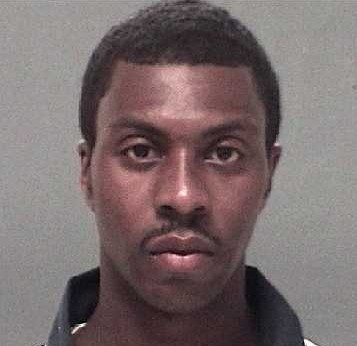
Richard Jameswhite
Serial killer Glen Edward Rogers
Serial killer · USA · 1993
Glen Edward Rogers was a spree killer whose cross-country rampage in 1994-95 le…
70 victims
Glen Edward Rogers
Serial killer · USA · 1993
Glen Edward Rogers was a spree killer whose cross-country rampage in 1994-95 le…
70 victims
 Efren Saldivar
Serial killer · USA · 1989
Efren Saldivar (born 30 September 1969) was an American serial killer who murde…
50 victims
Efren Saldivar
Serial killer · USA · 1989
Efren Saldivar (born 30 September 1969) was an American serial killer who murde…
50 victims
 Gary Ridgway
Serial killer · USA · 1982
Gary Leon Ridgway Ridgway was born 18-February-1949 in Salt Lake City, UT. He w…
49 victims
Gary Ridgway
Serial killer · USA · 1982
Gary Leon Ridgway Ridgway was born 18-February-1949 in Salt Lake City, UT. He w…
49 victims
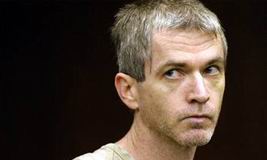 Charles Cullen
Serial killer · USA · 1984
Charles Cullen (born February 22, 1960) was a former nurse and the most prolifi…
45 victims
Charles Cullen
Serial killer · USA · 1984
Charles Cullen (born February 22, 1960) was a former nurse and the most prolifi…
45 victims
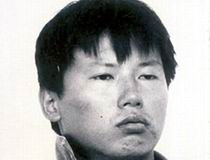 Charles Ng
Serial killer · USA · 1983
Charles Chi-Tat Ng (Chinese: 吳志達/吴志达; born December 24, 1960) was a Chinese-Ame…
25 victims
Charles Ng
Serial killer · USA · 1983
Charles Chi-Tat Ng (Chinese: 吳志達/吴志达; born December 24, 1960) was a Chinese-Ame…
25 victims
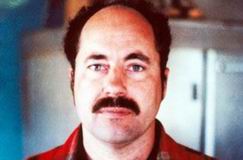 Leonard Lake
Serial killer · USA · 1983
Leonard Lake (October 29, 1945 – June 6, 1985) was an American serial killer. H…
25 victims
Leonard Lake
Serial killer · USA · 1983
Leonard Lake (October 29, 1945 – June 6, 1985) was an American serial killer. H…
25 victims
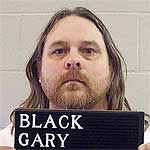 Gary Black
Murderer · USA · 1998
Gary W. Black was convicted of first-degree murder and sentenced to death in 19…
1 victim
Gary Black
Murderer · USA · 1998
Gary W. Black was convicted of first-degree murder and sentenced to death in 19…
1 victim
 Mona Nelson
Murderer · USA · 2010
Mona Nelson was sentenced to life in prison without parole on August 27, 2013.…
1 victim
Mona Nelson
Murderer · USA · 2010
Mona Nelson was sentenced to life in prison without parole on August 27, 2013.…
1 victim
 Eddie Lee Howard
Murderer · USA · 1992
Eddie Lee Howard, Jr. was a forty-one year old male. He was convicted and sente…
1 victim
Eddie Lee Howard
Murderer · USA · 1992
Eddie Lee Howard, Jr. was a forty-one year old male. He was convicted and sente…
1 victim
 Roger Thorson
Murderer · USA · 1987
Roger Eric Thorson was sentenced to death in 1988 in Harrison County for the mu…
1 victim
Roger Thorson
Murderer · USA · 1987
Roger Eric Thorson was sentenced to death in 1988 in Harrison County for the mu…
1 victim
 Yan Yanming
Mass murderer · China · 2004
Yan Yanming (b. 1983 in Ruzhou, Henan, China) was a Chinese mass murderer who k…
9 victims
Yan Yanming
Mass murderer · China · 2004
Yan Yanming (b. 1983 in Ruzhou, Henan, China) was a Chinese mass murderer who k…
9 victims
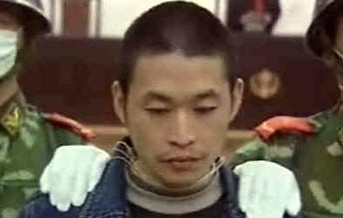 Dong Wenyu
Serial killer · China · 2006
Dong Wenyu Dong Wenyu was sentenced to death in June 2007 and was executed on N…
6 victims
Dong Wenyu
Serial killer · China · 2006
Dong Wenyu Dong Wenyu was sentenced to death in June 2007 and was executed on N…
6 victims
- Gender
- male
- Country
- USA
- Location
- New York/Connecticut/Pennsylvania/Georgia , USA
- Date of birth
- 1973
- Age at first offence
- 19
- Characteristics
- robbery, disputes
- Victim profile
- Men
- Method of murder
- Shooting
- Date(s) of murder
- 1992 - 1994
- Years active
- 1992–1994
- Date of arrest
- April 28, 1994
- Status
-
Life imprisonment
Sentenced to life in prison in Georgia on December 12, 1994
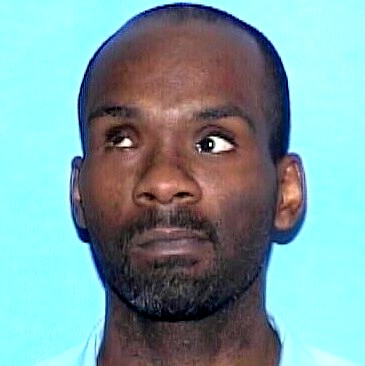
Case record: Richard Jameswhite
Richard Jameswhite was a 19-year-old man wanted in Brooklyn for killings and also sought for other slayings along the East Coast.
Background
Police said Jameswhite had eluded officers for two years. The Chief of New York City Detectives, Joseph R. Borrelli, said people who knew Jameswhite had told police that he believed he was untouchable. Borrelli stated:
"He has told a number of reliable sources that he paid a witch doctor on the island of Jamaica to make him invisible to his enemies and the police," Chief Borrelli said. "As a result, he has no fear of either."
Police said Jameswhite was extremely dangerous and was known to shoot “given the slightest provocation.” Borrelli also said:
"He is extremely dangerous," the Chief said, "and is known to shoot, given the slightest provocation."
The offence
Police said Jameswhite was responsible for five killings in Brooklyn, and that he was also responsible for the wounding of five other people.
Parkside Gang and robberies
Borrelli said Jameswhite became a member of the Parkside Gang, which congregated at the south end of Prospect Park and specialized in stealing from drug dealers. Police believed Jameswhite was one of five people who held up an armored car in Flatbush in April and got away with $101,000. The robbery ended in the death of a Transit Authority worker, Robert Singleton, who was killed by a stray bullet during a gun battle between guards and robbers.
Shooting and killings linked by police
Police said Jameswhite first came to police attention when he was arrested in a Feb. 19, 1991 shooting. Police said the shooting was believed to have been in revenge for the death of his brother, Glester, who was killed on an East Flatbush street a month before.
Police alleged that Jameswhite shot and tried to kill Kevin Smith, 19, because he believed Smith was involved in his brother’s killing. After Jameswhite’s arrest, police said he jumped bail and eluded pursuers.
Police said that on Sept. 3, Jameswhite and other gang members went to an apartment intending to rob drug dealers. Police said that instead they found two teen-age girls whom they raped. Police said that when Jameswhite spotted detectives who were with a rape victim looking for him, he opened fire and then escaped in a car.
Investigators believed Jameswhite killed the following individuals:
- Javier Avila, 22, on March 29, 1992
- Omark Dee, 27, on Aug. 24, 1992
- Fitzroy Reid, 21, on Jan. 6, 1993
- Ryan Cambridge, 18, on May 1
- Dodson Sparman, 21, on May 1
Police said some killings were rooted in revenge and disputes within the gang, while others arose from drug disputes.
Double slaying on Ocean Avenue and St. Paul’s Court
In the double slaying, police said the incident occurred at St. Paul’s Court and Ocean Avenue in Flatbush. Police stated that Jameswhite sat on the handlebars of a bicycle being pedaled by a friend and opened fire with a gun in each hand, killing the two men and wounding two others.
Police said investigators also tried to link Jameswhite with another killing.
Investigation
New York City police said they sent information packets on the gang to law-enforcement officials in Boston, Baltimore, Philadelphia, Rochester, Toronto and Washington, cities where Jameswhite was known to go to lie low.
Arrest
Arrest in Georgia for a traffic dispute killing
Jameswhite was arrested in Georgia for fatally wounding a man in a traffic dispute there. The man he fatally wounded was Anthony Maclin.
The passenger in the car was Devon Brown, 24, known as Ricky Ticky, also of Brooklyn.
Police described the circumstances of the arrest: Jameswhite and a passenger were driving their Honda into a shopping mall in Dekalb County when Anthony Maclin backed into them. Police said there was an argument and then Jameswhite shot Maclin numerous times in the torso. Sgt. Ron Eunice, investigating for the Dekalb County police, said:
"There was an argument, and then he shot him numerous times in the torso,"
Jameswhite was held without bond in a county jail. Police also stated that it was not clear whether he would be tried in Georgia, which has the death penalty, before being extradited to New York.
Apprehension after the shooting and evidence recovered
After the shooting in Georgia, Sergeant Eunice said Jameswhite fled in his blue Honda, which had Pennsylvania license plates. Eunice also said Jameswhite and his passenger abandoned the car a few miles away and tried to escape on foot. After a chase, police said Jameswhite gave himself up to police, and authorities recovered two handguns and a switchblade knife. Authorities said police arrested the passenger a few hours later.
Police said Bullets and shell casings found at the scene of the crime were identified as fired from one of the guns Jameswhite was carrying when he was apprehended.
Trial
Joint trial with Devon Brown
Devon Brown and Richard Jameswhite were tried together for the murder of Anthony Maclin.
The evidence viewed in favor of the verdicts showed that Brown and Jameswhite were involved in a minor car collision with Maclin and his fiancee in the parking lot of a restaurant. Brown, Jameswhite, and Maclin argued over the extent of damage to the vehicles.
Because Brown and Jameswhite were fugitives from another state, Brown repeatedly asked Maclin and his fiancee not to call the police and promised that he and Jameswhite would pay for the damage.
Jameswhite left the scene for a period of time to try to find sufficient funds to satisfy Maclin and his fiancee. Maclin’s fiancee tried on one occasion to leave the scene and call police but Maclin summoned her back. While she was momentarily turned away from the men, she heard a popping sound and turned to see Jameswhite holding Maclin from the side and Brown pointing a pistol at Maclin.
Police said Brown then got into his car, Maclin fell, and Jameswhite shot Maclin. Maclin’s fiancee hid behind a car, Jameswhite got into the car with Brown, and the two men fled. Maclin later died of his wounds.
Police chased the two men to a nearby apartment complex where Jameswhite was apprehended and police recovered two firearms he was carrying. Brown eluded police by removing his shirt and cap and posing as a resident on an apartment balcony. He was arrested the next day following the fiancee’s photo identification of him as one of the men who shot Maclin.
Police officer Gaddis identified Brown as being at the apartment complex during the chase, noting a prominent scar on Brown’s abdomen.
Verdicts and acquittal on a separate charge
On December 5-12, 1994, both defendants were found guilty of malice murder and felony murder. The court directed a verdict of acquittal on Jameswhite’s charge of giving a false name to a law enforcement officer.
Sentencing
On December 12, 1994, both defendants were sentenced to life imprisonment for malice murder.
The felony murder convictions stood vacated by operation of law, OCGA 16-1-7.
Appeals
A case caption was included: JAMESWHITE v. THE STATE., 1515#268 Ga. 354, 1515#490 SE2d 75, Supreme Court of Georgia (September 15, 1997), docket number S97A0646, and case no. S97A0647 referenced for appellant.
Grounds raised on appeal
The record included numbered grounds in the Supreme Court of Georgia discussion.
Sufficiency of evidence
- Brown argued the evidence was insufficient to prove he committed the murder beyond a reasonable doubt, and at trial he argued the evidence did not sufficiently identify him as one of the shooters; the discussion noted that an eyewitness identified him.
- The discussion also addressed Jameswhite’s challenge to sufficiency of the evidence, arguing that ballistics evidence and inconsistencies in testimony showed that only Brown shot Maclin.
- The discussion stated that the eyewitness testimony together with ballistics evidence connecting the handgun Jameswhite was carrying authorized the jury to find him guilty of malice murder beyond a reasonable doubt.
Motions to sever
- Both men unsuccessfully moved to sever their trials.
- The discussion addressed antagonistic defenses and stated that neither man testified and the State did not introduce a statement of either defendant.
- The discussion addressed cross-examination of Maclin’s fiancee and concluded there was no prejudice.
- The discussion stated there was sufficient evidence to convict each man as a party to the crime even if only one had actually shot Maclin.
- The discussion addressed Jameswhite’s claim about evidence admitted against Brown being used against him, including Brown’s flight and firearms and money found on Brown’s person and at his residence after Jameswhite’s arrest, and it discussed cautionary instructions.
Denial of motions to strike jurors for cause
- Jameswhite challenged the court’s refusal to strike potential jurors for cause related to their views about the credibility of police officers.
- The discussion stated that expressed belief in credibility of a witness does not require excusal for cause and that the jurors testified they could decide based on evidence and the court’s charge.
- Jameswhite also moved to strike for cause potential jurors who acknowledged exposure to media accounts at the beginning of the trial. The discussion addressed whether jurors held an opinion “so fixed and definite” and concluded there was no basis to conclude the court abused its discretion.
Ineffective assistance of counsel (new trial motion issues raised by Brown)
- Brown argued his motion for new trial should have been granted because trial counsel was ineffective, including failing to introduce exculpatory scientific evidence, failing to enforce the scope of a stipulation regarding scientific evidence, and inadequately cross-examining Officer Gaddis.
- The discussion laid out the ineffective assistance standards and addressed multiple sub-issues:
- Counsel’s decisions about evidence concerning the shirt and hat found on the apartment balcony, including that no blood was found on the shirt and that a single hair found in the cap was suitable for analysis but did not match hair taken from Brown’s head, and counsel’s testimony about strategy.
- Counsel’s handling of stipulations about scientific tests.
- Counsel’s failure to ask Officer Gaddis whether he could make an in-court identification, with the discussion concluding no prejudice was shown.
Admission of oral scientific test results
- Jameswhite learned shortly before trial about a scientific test performed on the shirt worn by Maclin and showed that one gunshot came from a distance of six to twelve inches and another while the gun barrel was in contact with the shirt.
- Jameswhite objected contending OCGA 17-16-23 (b) had been violated because the test was not mentioned in scientific reports he had received, the test had been performed less than ten days prior to trial, and he had not been supplied with a copy of any report.
- The discussion stated it was undisputed that the test results were not reduced to writing and the medical examiner gave only oral testimony, and that OCGA 17-16-23 (b) pertains only to written scientific reports.
Admission of evidence that defendants were fugitives
- Brown and Jameswhite challenged admission of evidence that they were fugitives from another jurisdiction.
- The discussion stated that information each man was wanted by police in another state was stipulated to show motive for killing instead of awaiting a police investigation into the accident.
- The discussion stated the jury was not told what charges were in the foreign jurisdiction, and that the fugitive information was central to motive.
- The discussion also addressed Jameswhite’s leaving the scene to try to secure funds sufficient to satisfy Maclin and his fiancee and prevent them from calling the police.
Security device during trial
- On the second day of trial, Jameswhite was fitted with a security device capable of administering an electric shock.
- The discussion addressed his claim of error and concluded harm was not shown, including that the device was not visible and nothing supported the contention of detrimental psychological effect.
Closing argument issue about reading transcript
- During closing argument, Jameswhite’s counsel read a recently prepared transcript of a series of questions and answers posed to a witness earlier in the trial, then departed from the transcript and commented on the witness’ testimony.
- The State objected that counsel made it appear that comments were recitation of testimony.
- The court charged jurors they were responsible to remember evidence and ruled counsel could not read from the transcript but could remind jurors of evidence in another manner.
- The discussion concluded Jameswhite had not shown any harm and discussed counsel’s latitude in closing argument.
Outcome
Jameswhite was sentenced to life imprisonment for malice murder on December 12, 1994, and the felony murder convictions were vacated by operation of law.
Timeline
- February 19, 1991 — Police arrested Richard Jameswhite in a shooting that police believed was revenge for Glester Jameswhite’s death.
- March 29, 1992 — Police said Jameswhite killed Javier Avila, 22.
- August 24, 1992 — Police said Jameswhite killed Omark Dee, 27.
- January 6, 1993 — Police said Jameswhite killed Fitzroy Reid, 21.
- May 1, 1993 — Police said Jameswhite killed Ryan Cambridge, 18, and Dodson Sparman, 21, in a double slaying at St.
- September 23, 1993 — The New York Times published an article describing police efforts to track down the gunman nicknamed Babyface and discussing Jameswhite’s alleged role in Brooklyn killings.
- Thursday afternoon (week of arrest; date not stated) — Jameswhite was arrested in Georgia after a shooting in a traffic dispute involving Anthony Maclin.
- May 1, 1994 — The New York Times published a piece stating Jameswhite was arrested in Georgia for fatally wounding Anthony Maclin.
- April 28, 1994 — The crime was committed.
- June 23, 1994 — Brown and Jameswhite were indicted for malice murder and felony murder; Jameswhite was also indicted for giving a false name to a law enforcement officer.
- December 5-12, 1994 — Brown and Jameswhite were tried before a jury; both were found guilty of malice murder and felony murder; the court directed acquittal on Jameswhite’s false-name charge.
- December 12, 1994 — The court sentenced both defendants to life imprisonment for malice murder.
- September 15, 1997 — The Supreme Court of Georgia issued the decision captioned JAMESWHITE v. THE STATE.
Other details
Method and claims about invisibility
Police said Jameswhite believed he had paid a witch doctor on the island of Jamaica to make him invisible to enemies and the police. The record also described that he told acquaintances he had gone to Jamaica where he paid a witch doctor to make him invisible to his enemies and the police.
A quotation was included from The New York Amsterdam News saying:
“even some who consorted with Jameswhite breathed a sigh of relief at news of his arrest because of his unpredictable nature. He was known to shoot at the slightest provocation.”
An included reference stated: Lester Hinds, Jamaican “obeah’ could not protect notorious baby-faced killer forever, Amst. News, 5/7/94, p. 5.
The record further stated that after the shooting in Georgia, police said Jameswhite regularly shipped his clothes to Jamaica to have them treated with “obeah” magic, and he believed this made him impervious to bullets and invisible to the police.
Indictments, motions, and appeal filings
- Brown’s motion for new trial was filed January 9, 1994, and was denied on December 5, 1996.
- Jameswhite’s motion for new trial was filed January 11, 1994, and was denied on December 5, 1996.
- Brown’s notice of appeal was filed on December 23, 1996, the appeal was docketed in this Court on January 16, 1997, and submitted for decision without oral argument on March 10, 1997.
- Jameswhite’s notice of appeal was filed on December 27, 1996, the appeal was docketed with this Court on January 16, 1997, and orally argued April 21, 1997.
Spotted an error, or have more information about this case?