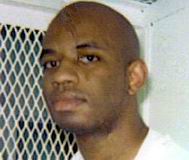
Ray Jasper
Murderer Russell Ellwood
Murderer · USA · 1991
Russell Ellwood was a former taxi driver. Authorities suspected him of killing…
20 victims
Russell Ellwood
Murderer · USA · 1991
Russell Ellwood was a former taxi driver. Authorities suspected him of killing…
20 victims
 Robert Martines Perez
Murderer · USA · 1994
Name: Robert Martines Perez · Other name used in proceedings: Robert Martinez P…
15 victims
Robert Martines Perez
Murderer · USA · 1994
Name: Robert Martines Perez · Other name used in proceedings: Robert Martinez P…
15 victims
 Billy Frank Vickers
Murderer · USA · 1993
Billy Frank Vickers Vickers was executed by lethal injection in Texas on Januar…
14 victims
Billy Frank Vickers
Murderer · USA · 1993
Billy Frank Vickers Vickers was executed by lethal injection in Texas on Januar…
14 victims
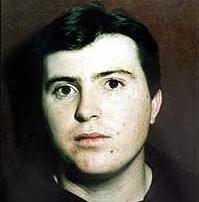 Paul Denyer
Serial killer · Australia · 1993
Paul Charles Denyer (b. 1972) was an Australian serial killer. He was serving l…
3 victims
Paul Denyer
Serial killer · Australia · 1993
Paul Charles Denyer (b. 1972) was an Australian serial killer. He was serving l…
3 victims
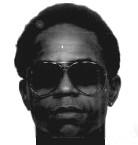 James Russell
Murderer · USA · 1974
James Russell was executed in Texas on September 19, 1991. Russell was charged…
1 victim
James Russell
Murderer · USA · 1974
James Russell was executed in Texas on September 19, 1991. Russell was charged…
1 victim
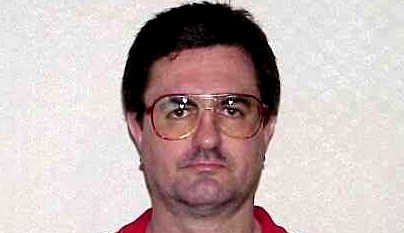 David Lee Sanders
Murderer · USA · 1987
David Lee Sanders (DOB 8-8-60) was sentenced to death on June 5, 1987. Sanders…
2 victims
David Lee Sanders
Murderer · USA · 1987
David Lee Sanders (DOB 8-8-60) was sentenced to death on June 5, 1987. Sanders…
2 victims
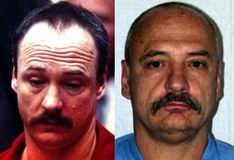 James Marlow
Serial killer · USA · 1986
James Gregory Marlow was convicted in San Bernardino County, California, of mur…
5 victims
James Marlow
Serial killer · USA · 1986
James Gregory Marlow was convicted in San Bernardino County, California, of mur…
5 victims
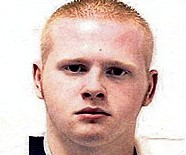 Bradley Mullins
Homicide · USA · 2005
Bradley Mullins was 19 during a trial in Tennessee for conduct involving drag r…
1 victim
Bradley Mullins
Homicide · USA · 2005
Bradley Mullins was 19 during a trial in Tennessee for conduct involving drag r…
1 victim
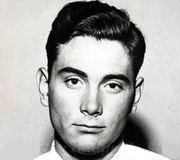 Fred McManus
Spree killer · USA · 1953
Fred McManus was 18 years old and was described as a Marine from Long Island. H…
5 victims
Fred McManus
Spree killer · USA · 1953
Fred McManus was 18 years old and was described as a Marine from Long Island. H…
5 victims
- Gender
- male
- Country
- USA
- Location
- Bexar County, Texas, USA
- Date of birth
- August 25, 1980
- Age at first offence
- 18
- Characteristics
- robbery, rape?, mentally ill
- Victim profile
- David Alejandro, 33 ( music recording studio owner)
- Method of murder
- St abbing with knife
- Date(s) of murder
- November 29, 1998
- Years active
- 1998
- Date of arrest
- Same day
- Status
-
Executed
Executed by lethal injection in Texas on March 19, 2014
Case record: Ray Jasper
Identity and background
Ray Jasper was a Black male born on 08/25/1980. His hair color was Black, his height was 5' 9", his weight was 139, and his eye color was Brown. His education level was 8, and he was 19 at the time of receipt (02/04/2000). Jasper was described as having no prior prison record.
Jasper’s prior occupation was laborer. The record indicated prior prison record: None. The record listed prior occupation Netherlands n/a Laborer and did not provide additional employment details beyond that.
Jasper’s prior criminal history in Texas included incidents beginning at about age fifteen, including theft of a bicycle, drug possession, attempted burglary, and an incident of violence against an off-duty police officer. The prosecution presented witnesses who testified that Jasper had been found in possession of marijuana while on school property, that he was sent to an alternative campus and later expelled, that on March 20, 1997 he was observed driving 62 mph in a 45 mph zone and, when an officer attempted to pull him over for driving without a driver’s license, he led the officer on a high-speed chase reaching speeds exceeding ninety miles per hour, which ended when Jasper crashed his vehicle on a set of railroad tracks, and that on November 23, 1998 an off-duty San Antonio Police robbery detective spotted Jasper who appeared to be serving as a lookout for a burglary; when the officer approached and identified himself as a law enforcement officer, Jasper charged, repeatedly struck and assaulted the officer with such ferocity that the officer felt compelled to throw his handgun away until he could establish control over Jasper. The record also stated Jasper’s fingerprint was found on the exterior of a rear window, inside the backyard, of the residence where Jasper had been spotted by the officer he assaulted.
The record stated David Alejandro was a music composer and singer who gave many other artists a chance when they were just beginning their careers.
Victim and related persons
The victim was David Alejandro, described as a 33-year-old white male who owned and operated a music recording studio in San Antonio and was a business partner of Jasper. Alejandro was the lead singer of a San Antonio Christian-based music group and ran his recording studio.
Christina Breton was identified as Jasper’s girlfriend and testified during the punishment phase. The record stated that Breton had been living with Jasper at his parents’ home since the age of fifteen and that the two had a child together.
Ray Jasper also had co-defendants: Russell, Steve Williams, and Doug Race. The record also stated co-defendants Russell, Steve Williams, and Doug Race and identified the co-defendant names in the execution account as Doug Williams and Steven Russell. The execution account also stated that two other men were convicted in Alejandro’s slaying along with Jasper, and that Doug Williams was convicted and sentenced to life in prison and Steven Russell was serving life after taking a plea deal.
Timeline
- 11/29/1998 — Jasper and two co-defendants were responsible for the death of a 33-year-old white male during a robbery at the victim’s recording studio.
- 11/21/1998 — Jasper purchased large bags from an Academy store.
- A week later (after 11/21/1998) — Jasper and accomplices drove two vans to Alejandro’s studio; Jasper and one accomplice carried concealed knives; they spent about two hours at the studio while Alejandro recorded their music before deciding to kill him.
- 12/02/1998 — Jasper confessed to police that he planned the crime and recruited two accomplices.
- 06/01/1999 — A Bexar County grand jury indicted Jasper for robbery-related capital murder.
- 01/18/2000 — After a trial in the 187th District Court of Bexar County, jurors found Jasper guilty of capital murder.
- 01/20/2000 — After a punishment hearing, the judge in open court sentenced Jasper to death.
- 01/24/2000 — The district court signed an order sentencing Jasper to death.
- 09/04/2001 — Jasper filed his first state application for habeas corpus relief.
- 11/28/2001 — The Court of Criminal Appeals affirmed Jasper’s conviction and sentence on appeal.
- 08/20/2008 — The Court of Criminal Appeals denied Jasper’s application for habeas corpus relief.
- 07/31/2009 — Jasper filed a petition for habeas corpus relief in federal court for the Western District of Texas.
- 01/19/2011 — The federal district court denied Jasper’s petition for habeas corpus relief.
- 04/26/2012 — The Fifth Circuit affirmed the district court’s judgment denying habeas corpus relief.
- 12/10/2012 — The U.S. Supreme Court denied certiorari review.
- 10/17/2013 — The 187th District Court of Bexar County signed an order scheduling Jasper’s execution to take place on March 19, 2014.
- 03/19/2014 — Jasper was executed by lethal injection in Texas; he was pronounced dead at 6:31 p.m. CDT.
The offence
On 11/29/98, Jasper and two co-defendants were responsible for the death of David Alejandro, a 33-year-old white male, during a robbery at Alejandro’s music recording studio in San Antonio. Jasper created his own record label and had his own rap group and went to the recording studio of Alejandro. Jasper walked up behind the victim and grabbed him by the hair and slit his throat. The victim was then stabbed to death.
Jasper covered the victim with a black sheet in order to “not have to look at him.” Jasper then began loading vehicles with equipment inside the studio estimated to be worth between $10,000 and $30,000. Jasper and his co-defendants made several trips taking the property from the studio. Upon returning to the scene of the crime, Jasper was observed to be suspicious and he was eventually apprehended by police.
The Court of Criminal Appeals described the business as requiring various pieces of electronic equipment such as computers, soundboards and microphones. Jasper and some of his friends frequently recorded their rap music at the studio. Jasper decided to steal Alejandro’s equipment to make money from its sale. Jasper decided to kill Alejandro so there would be no witnesses. Jasper enlisted the help of two friends to assist in removing the heavy equipment from the studio.
The Court of Criminal Appeals described the attack as follows: Jasper slashed Alejandro’s throat from ear to ear, but did not kill him. Jasper and one accomplice continued to attack Alejandro until he died as a result of multiple stab wounds to his chest and abdomen. Jasper covered the body with a sheet taken earlier from Jasper’s bed, and the group began loading equipment into two vans. Jasper fled on foot when an off-duty police officer arrived to investigate the scene, but was apprehended days later outside his home.
The Court of Criminal Appeals stated Alejandro suffered twenty-five stab wounds.
Investigation, confession, and evidence
On 12/02/1998, Jasper confessed to police that he had planned the crime and recruited two accomplices. The confession described events in detail that were later corroborated by Jasper’s girlfriend, Christina Breton, police officers, security guards, and physical evidence discovered by investigators.
Breton testified that several days before the commission of the crime, Jasper told her about his plan to steal Alejandro’s equipment and kill him.
The record included evidence introduced during the punishment phase reflecting Jasper’s alleged criminal history and bad acts.
Arrest
The Court of Criminal Appeals stated that Jasper fled on foot when an off-duty police officer arrived to investigate the scene but was apprehended days later outside his home.
Trial
The trial occurred in the 187th District Court of Bexar County.
On 01/18/2000, after the trial, jurors found Jasper guilty of capital murder under Tex. Pen. Code Ann. § 19.03(a). The trial court sentenced Jasper to death pursuant to the jury’s answers to special issues set forth in Tex. Code Crim. Proc. Ann. art. 37.071 §§ 2(b) and 2(e), with art. 37.071 § 2(g). Direct appeal to the Court was automatic under art. 37.071 § 2(h).
Jasper raised five points of error on direct appeal, including a challenge to the sufficiency of evidence supporting the jury’s finding that he would be a continuing threat to society. The Court stated it affirmed.
Verdict and special issue outcome
A Bexar County jury deliberated only 15 minutes before convicting Jasper of Alejandro’s slaying. The Court stated that it held the evidence legally sufficient to support the jury’s affirmative answer to the future dangerousness special issue.
The jury then took less than two hours to decide Jasper should be put to death.
Points of error addressed on direct appeal
Jasper argued:
- He claimed the trial court reversibly erred in failing to rule that he was married to key state witness Christina Breton. The trial court found the testimony failed to establish that an informal marriage existed between Jasper and Breton. Point of error one was overruled.
- He claimed his right to a fair trial by an impartial jury was violated by comments of the trial judge. Point of error two was overruled.
- He challenged the sufficiency of the evidence supporting the continuing threat finding. The Court found the evidence legally sufficient. Point of error three was overruled.
- He claimed the trial court reversibly erred in conducting a portion of trial in his absence during part of voir dire. Point of error five was overruled.
- He claimed the trial court erred in failing to grant his Batson challenge to the State’s striking of one venireperson. Point of error four was overruled.
Batson challenge (point of error four)
The record described the Batson challenge process and stated that the State presented facially race-neutral reasons for exercising its peremptory challenge against the venireperson. The Court held the finding was not clearly erroneous and that point of error four was overruled.
The venireperson responded during voir dire that he could not “play the role of God” or “send nobody [sic], you know, to death.” When asked if he could answer special issues to dictate the death penalty, he replied: “I don't believe I can, but if I have to, I can make a decision.” The Court also referenced written questionnaire answers indicating the venireperson believed the death penalty was misused and used too often, was never justified, and was not an acceptable method for dealing with crime.
Judge’s comments during cross-examination (point of error two)
Jasper challenged two exchanges during trial.
First exchange: Appellant cross-examined a twelve-year-old witness. The Court set out the exchange including:
- Defense counsel: “And when [appellant] stood up, you said that he looked to be like five-eight or five-nine. You were pretty sure that he was not, in fact, six feet tall - Court: He said five-nine, five-ten, but go ahead.”
- Defense counsel: “Five-eight, five-nine, five-ten. But you're pretty sure that he is not six feet tall; is that correct? Witness: He looked like he was pretty tall at the time.”
- Defense counsel: “If that was in fact him. It could have been - Witness: Because my cousin is like around six feet tall, and my brother too, and he looked the same size as my brother.”
- Defense counsel: “Okay. Okay. As you look at this picture here, does that appear to fairly and accurately represent the Defendant? (Exhibit proffered to witness). Witness: Does it look - Court: Come on, Mr. Reece. Knock it off. State: I object. Court: Ladies and gentlemen of the jury, step outside.”
The Court stated that the photograph Jasper had shown to the witness was not one of Jasper, but of another man indicted for participation in the same crime.
Second exchange: During cross-examination of a later witness, the Court set out:
- Defense counsel: “Were your conversations with [the State's attorney], were those statements put into written form, to your knowledge?”
- Witness: “I believe so.”
- Defense counsel: “And do you have a copy of those with you?”
- Witness: “No.”
- Defense counsel: “Judge, I request the State to provide a copy if they have a written statement.”
- Court: “I think he told you that they didn't have one.”
- Defense counsel: “I think she indicated that the State - Court: Ladies and gentlemen of the jury, step outside. If you want to put [the State's attorney] on the stand, we'll be glad to do it. State: So would I. (Jury excused).”
After the jury returned, the judge told them, “there's no statement from this witness that have [sic] been reduced to writing.”
The Court held these comments did not rise to the level of prejudice discussed in Blue v. State.
Informal marriage ruling (point of error one)
Jasper claimed he was married to Christina Breton and sought protection under Texas Rule of Evidence 504 (Husband-Wife Privileges) and Rule 504(b) privilege not to be called as a witness. The Court described the standard for proving an informal marriage under Tex. Fam. Code § 2.401(a)(1)(2) and addressed whether appellant and Breton held themselves out as husband and wife.
The Court stated that the trial court did not believe testimony that Jasper and Breton held themselves out as husband and wife and agreed the testimony failed to establish that an informal marriage existed between Jasper and Breton.
Sentencing
On 01/20/2000, after a punishment hearing, the judge in open court sentenced Jasper to death. On 01/24/2000, the district court signed an order sentencing Jasper to death.
The Court of Criminal Appeals stated that Jasper was convicted of capital murder (Tex. Pen. Code Ann. § 19.03(a)), and pursuant to jury answers to special issues under Tex. Code Crim. Proc. Ann. art. 37.071 §§ 2(b) and 2(e), the trial court sentenced him to death (Art. 37.071 § 2(g)).
During the punishment phase, the State introduced evidence of Jasper’s criminal history and bad acts beginning at age fifteen, including theft of a bicycle, drug possession, attempted burglary, and an incident of violence against an off-duty police officer. The Court described evidence of escalating criminal activity and lack of remorse supporting the continuing threat finding.
During the punishment phase, the Court referenced that Jasper responded to Alejandro’s family by stating he wanted the family to know he did not kill Alejandro because the autopsy wound he claimed inflicted by his hand (slicing the victim’s throat) was not enough to kill him, as contrasted with the twenty-five stab wounds.
Appeals
State habeas corpus and direct appeal
Jasper filed his first state application for habeas corpus relief on 09/04/2001. On 11/28/2001, the Court of Criminal Appeals affirmed Jasper’s conviction and sentence on appeal. On 08/20/2008, the Court of Criminal Appeals denied Jasper’s application for habeas corpus relief.
Federal habeas corpus
On 07/31/2009, Jasper filed a petition for habeas corpus relief in federal court in the Western District of Texas. On 01/19/2011, the federal district court denied Jasper’s petition. On 04/26/2012, the Fifth Circuit affirmed the denial.
On 12/10/2012, the U.S.
Execution scheduling
On 10/17/2013, the 187th District Court of Bexar County signed an order scheduling Jasper’s execution to take place on March 19, 2014. The record included a statement that Jasper was scheduled for execution after 6 p.m. on March 19, 2014.
Jasper’s execution date was March 19, 2014.
Juror questionnaire dispute (as described in the execution account)
Lawyers for Jasper argued unsuccessfully that a review of juror questionnaires that they said only became available recently showed a black potential juror at Jasper’s San Antonio trial in 2000 was questioned and disqualified improperly because of race. The U.S. Supreme Court rejected the argument before Jasper was taken to the death chamber.
The Court of Criminal Appeals’ direct appeal opinion described the issues it addressed and affirmed.
Outcome
Ray Jasper was executed on March 19, 2014 in Texas by lethal injection.
Final statements and timing
Before being put to death, Jasper spoke quietly, asking his family to: “take care of each other, stay strong and faithful to God.”
He thanked his supporters and told his daughter that he loved her, adding that she: “be strong, be positive, have a great life.”
Jasper asked that: “the Lord God almighty in heaven Jesus Christ see my spirit.”
As the drugs took effect, he took a couple of deep breaths, then began snoring — each snore less noticeable until all movement stopped. He was pronounced dead at 6:31 p.m. CDT — 20 minutes after being given the lethal drug. A printed statement from Jasper similar to what he said as his final words was handed out after the execution.
Other details
Case caption and appellate court references
The opinion in the Court of Criminal Appeals of Texas was titled: “No. 73,817 Ray Jasper, Appellant v. The State of Texas.” It stated Meyers, J., delivered the opinion of the Court joined by Keller, P.J., Price, Johnson, Holcomb, and Cochran J.J., with Womack and Keasler, J.J. concurring. It also stated Hervey, J., not participating.
The opinion stated the Court affirmed.
Juror-excusal discussion detail (point of error five)
The Court discussed a caretaker excuse with the following exchange:
- Venireperson: “I'm a caretaker for him and he's starting surgery. He has to go for two weeks every day [sic]. This is an excuse for him, doctor's excuse . (Emphasis added).”
- Court: “What number are you?”
- Venireperson: “40.”
- Court: “I'm excusing 40. She's a caretaker. Gloria Martinez is her name.”
The record stated it was not completely clear whether the caretaker was the prospective juror or appearing on behalf of the patient.
Scheduled execution reference
The record included a Texas Attorney General Media Advisory stating Ray Jasper was scheduled for execution March 14, 2014, and an Austin notice that Jasper was scheduled for execution after 6 p.m. on March 19, 2014 pursuant to an order from the 187th District Court of Bexar County.
Spotted an error, or have more information about this case?