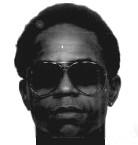
James Russell
Murderer Ervil LeBaron
Murderer · USA · 1972
Ervil Morrell LeBaron (1925 to August 16, 1981) was the leader of a polygamous…
35 victims
Ervil LeBaron
Murderer · USA · 1972
Ervil Morrell LeBaron (1925 to August 16, 1981) was the leader of a polygamous…
35 victims
 Marvin Gray
Murderer · USA · 1975
Marvin Gray was convicted killer who claimed responsibility for 23 slayings and…
23 victims
Marvin Gray
Murderer · USA · 1975
Marvin Gray was convicted killer who claimed responsibility for 23 slayings and…
23 victims
 Yahweh ben Yahweh
Murderer · USA · 1980
Yahweh ben Yahweh was born and legally named Hulon Mitchell Jr. (October 27, 19…
23 victims
Yahweh ben Yahweh
Murderer · USA · 1980
Yahweh ben Yahweh was born and legally named Hulon Mitchell Jr. (October 27, 19…
23 victims
 Charles Manson
Murderer · USA · 1969
Charles Milles Manson (born November 12, 1934) was an American criminal and mus…
9 victims
Charles Manson
Murderer · USA · 1969
Charles Milles Manson (born November 12, 1934) was an American criminal and mus…
9 victims
 Silvo Plut
Serial killer · Slovenia / Serbia · 1990
Silvo Plut was a Slovenian serial killer. He was born 29 May 1968 in Novo mesto…
3 victims
Silvo Plut
Serial killer · Slovenia / Serbia · 1990
Silvo Plut was a Slovenian serial killer. He was born 29 May 1968 in Novo mesto…
3 victims
 Mona Nelson
Murderer · USA · 2010
Mona Nelson was sentenced to life in prison without parole on August 27, 2013.…
1 victim
Mona Nelson
Murderer · USA · 2010
Mona Nelson was sentenced to life in prison without parole on August 27, 2013.…
1 victim
 Michael Lambrix
Murderer · USA · 1983
Michael Lambrix was indicted in the Twentieth Judicial Circuit, Glades County,…
2 victims
Michael Lambrix
Murderer · USA · 1983
Michael Lambrix was indicted in the Twentieth Judicial Circuit, Glades County,…
2 victims
 Herman Drenth
Murderer · USA · 1931
Herman Drenth was also known by the aliases Harry F. Powers and Cornelius O. Pi…
5 victims
Herman Drenth
Murderer · USA · 1931
Herman Drenth was also known by the aliases Harry F. Powers and Cornelius O. Pi…
5 victims
 Denard Manns
Murderer · USA · 1998
1998-11-18 — Denard Manns entered the home of Michelle Robson in Killeen and se…
1 victim
Denard Manns
Murderer · USA · 1998
1998-11-18 — Denard Manns entered the home of Michelle Robson in Killeen and se…
1 victim
- Gender
- male
- Country
- USA
- Location
- Harris County, Texas, USA
- Date of birth
- March 5, 1949
- Age at first offence
- 25
- Characteristics
- kidnapping, rape
- Victim profile
- Thomas Stearns, 24 ( witness against Russell in robbery case )
- Method of murder
- Shooting
- Date(s) of murder
- March 19, 1974
- Years active
- 1974
- Date of arrest
- —
- Status
-
Executed
Executed by lethal injection on September 19, 1991
Case record
James Russell was executed in Texas on September 19, 1991.
Russell was charged with kidnapping and murdering Thomas Stearns. The robbery case involved a scheduled witness, and Stearns was kidnapped by Russell and his accomplice Lloyd “Sonny” Harris one day before the trial began. Stearns was found 22 days after his abduction in a deserted field in Arcola, about 20 miles south of Houston.
The case described evidence that Russell grossly abused Stearns before killing him. It also described that Stearns was locked in a car trunk, sexually assaulted him and urinated in his mouth. Stearns was executed with a gunshot to his head at point-blank range with a .38 caliber automatic pistol.
Stearns was described as a University of Houston student trying to work his way through college. Stearns left behind a wife and an 18-month-old daughter.
Russell was described as having been executed on September 19, 1991 for the 1974 abduction and murder of Thomas Stearns in Houston. Russell was nicknamed “Sugarman” and was described as charming and charismatic, though it was said that he also had a dark side.
Brian W. Wice, a criminal defense attorney in Houston, said:
“If you looked in Webster’s Dictionary under sociopath, it had his picture,”
Randy Schaffer, a defense attorney in the robbery case tried after the murder, said:
“They locked Stearns in a car trunk, sexually assaulted him and urinated in his mouth. He was executed with a gunshot to his head at point-blank range with a .38 caliber automatic pistol.”
Earnest Taylor, former director of the Fort Bend County major crimes task force, said:
“Russell began breaking into machines and stealing quarters until his rap sheet grew to robbery, rape and finally murder,”
Earnest Taylor also said:
“He started out wrong in the early years,”
Earnest Taylor added:
“She (his grandmother) loved that boy with all her heart and did everything she could do for that boy including getting him out of trouble. She taught him there was no consequence for his behavior and finally he killed Tom Stearns and she couldn’t get him out of that one.”
Earnest Taylor said:
“James Russell was a victim of love,”
Earnest Taylor later said:
“She went to her grave believing he was framed on this murder case.”
James Russell’s trial and post-conviction history included federal habeas proceedings in the United States Court of Appeals for the Fifth Circuit. The case name was James Russell, Petitioner-Appellant, v. James A. Collins, Director, Texas Department of Criminal Justice, Institutional Division, Respondent-Appellee. The docket number was No. 91-2987.
Timeline
- 1974 — Thomas Stearns was kidnapped and murdered by James Russell.
- 1977 — A jury convicted Russell of capital murder and sentenced him to death.
- September 9, 1991 — Russell filed a second petition in the state trial and appellate courts.
- September 16, 1991 — The 268th Judicial Court for Fort Bend County, Texas, issued findings of fact and conclusions of law and an order denying the motion to stay execution.
- September 17, 1991 — The Texas Court of Criminal Appeals denied his appeal.
- September 17, 1991 — The petition was filed before the United States District Court for the Southern District of Texas.
- September 18, 1991 — The district court denied relief.
- September 18, 1991 — The United States Court of Appeals for the Fifth Circuit decided the appeal (Sept. 18, 1991).
- September 19, 1991 — Russell was executed by lethal injection in Texas.
Investigation
The murder investigation went on for three years.
Trial
Stearns was described as scheduled to testify as a witness against Russell in the robbery case, and he was kidnapped by Russell and his accomplice Lloyd “Sonny” Harris a day before the trial began.
The state’s case in the murder trial relied largely on the testimony of accomplices, particularly Sonny Harris and Ann Smallwood.
Russell defended on the basis of alibi. There was evidence that Russell grossly abused Stearns before killing him.
The jury took less than three hours to find Russell guilty of capital murder. The jury sentenced him to death, and sentencing occurred in 23 minutes.
A defense attorney, Brian Wice, said Russell told him:
“He (Russell) said he didn’t do it and that he hung out with some bad people and that’s why he was being executed,”
Sentencing
Russell was sentenced to death in 1977.
The federal appellate discussion referenced that the jury verdict of guilt was not left in doubt by the evidence establishing Russell’s guilt of the murder.
Appeals
Russell appealed through multiple federal and state post-conviction proceedings, including motions related to his second petition for a writ of habeas corpus.
The United States Court of Appeals for the Fifth Circuit described procedural history including a first habeas appeal, Russell v. Lynaugh, 892 F.2d 1205 (5th Cir. 1989). It also noted that the United States Supreme Court denied his petition for a writ of certiorari in Russell v. Collins, --- U.S. ----, 111 S.Ct. 2909, 115 L.Ed.2d 1073 (1991), reh’g denied Russell v. Collins, --- U.S. ----, 112 S.Ct. 27, 115 L.Ed.2d 1109.
In the second petition, Russell raised multiple claims including ineffective assistance of counsel, the impermissible refusal to produce tape recordings of Harris’ and Smallwood’s interviews with police, an Adams claim related to venireman Hoover, and jury prejudice described as “race-baiting” and prosecutorial misconduct including victim character and impact evidence in the guilt phase.
The state moved to dismiss the claims in Russell’s second petition as an abuse of the writ under rule 9(b) of the Rules Governing Section 2254 Cases. The appellate decision stated that the state had the burden to plead abuse and described the standard for cause and prejudice.
The appellate decision stated that it found no claim in the petition that could not have been raised at the time of Russell’s first application for the writ and that Russell did not proffer cause for failing to raise claims earlier. It also stated that the court found no basis for innocence in the record and treated the “manifest injustice” exception as inapplicable.
The appellate decision also addressed Russell’s claims about venireman Hoover, stating that Rule 9(b) barred review in the same form and that the earlier panel’s denial served to prevent re-raising the claim.
In the appellate decision, the court described the basis for the “race-baiting” allegation as including:
- the exclusion by peremptory challenge of all of the black veniremen from the jury;
- the prosecutor’s argument that the civil rights of the victims should be given more weight, and the civil rights of the defendants be given less weight in criminal cases;
- the prosecutor’s argument asking the jury to imagine the fear of the victim (who was white) as the prisoner of three black strangers, one of whom had a gun.
The appellate decision stated:
“Although, of course, we abjure any attempt at racial appeal by the prosecution, we think that the petitioner has exaggerated the racial significance of the prosecutor’s conduct in this case.”
It continued:
“Although the prosecutor’s remark concerning the race of Russell and his accomplices was regrettable, it was only an isolated reference to the race of the defendant and his accomplices in an argument that touched upon many, many points.”
The appellate decision concluded:
“We therefore reject any notion that the record here reflects conduct on the part of the prosecutor that can be characterized as ‘race-baiting.’”
The appellate decision also described victim impact statements as permissible in the sentencing phase, but noted that the remarks here were in the guilt/innocence phase and referenced Payne v. Tennessee, --- U.S. ----, 111 S.Ct. 2597, 115 L.Ed.2d 720 (1991). It also referenced a concurring opinion of Justice Souter.
The appellate decision stated:
- the motion to proceed in forma pauperis on appeal was GRANTED;
- the application for a certificate of probable cause was DENIED;
- the motion of the petitioner for stay of execution was DENIED;
- the appeal was DISMISSED.
Outcome
Russell was executed by lethal injection in Texas on September 19, 1991.
It was stated that his final statement lasted 3 minutes. He thanked everybody that fought against his sentence. He spoke to his family and said he would carry their love with him.
It was also stated that he had been in and out of prison since he was 18, that the case stayed in the court system for about 16 years, and that his grandmother died a few months after Russell’s sentence was carried out.
Other details
Russell was assigned offender number #579. Russell was described as 42 at the time of execution. The last statement was described as lasting 3 minutes. The last minutes of the execution were described as including talking about all the people he had met in his life.
Wice, a witness of the execution, said:
“He didn’t spend a second talking about the victim or their family,”
Lloyd “Sonny” Harris was Russell’s accomplice. Ann Smallwood was described as another accomplice whose testimony was relied on.
The appellate decision described that Russell was indicted for kidnapping and murdering Thomas Stearns, and that Stearns was the manager of a store that Russell allegedly robbed. It stated that Russell was accused of killing him in order to avoid prosecution for the robbery.
The appellate decision referenced claims including ineffective assistance of counsel based on counsel’s failure adequately to cross-examine key state witnesses, object to the prosecutor’s improper racially-based argument, and seek impeachment of a state witness through introduction of polygraph evidence.
The appellate decision stated that Russell contended the state impermissibly refused (and continued to refuse) to produce tape recordings of Harris’ and Smallwood’s interviews with police.
The appellate decision also described the procedural background including a venireman named Hoover challenged for views on the death penalty and wrongly excused under Wainwright v. Witt, 469 U.S. 412, 105 S.Ct. 844, 83 L.Ed.2d 841 (1985) and Adams v. Texas, 448 U.S. 38, 100 S.Ct. 2521, 65 L.Ed.2d 581 (1980).
The appellate decision referenced that a stay of execution was denied and the appeal was dismissed by the court.
The appellate panel included CLARK, Chief Judge, GARWOOD and JOLLY, Circuit Judges, and the opinion was PER CURIAM.

Spotted an error, or have more information about this case?