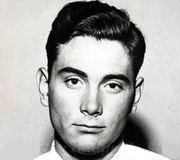
Fred McManus
Spree killer Charles Starkweather
Spree killer · USA · 1957
Charles Raymond Starkweather was born in Lincoln, Nebraska, on November 24, 193…
11 victims
Charles Starkweather
Spree killer · USA · 1957
Charles Raymond Starkweather was born in Lincoln, Nebraska, on November 24, 193…
11 victims
 Dennis Whitney
Spree killer · USA · 1960
Dennis Whitney was convicted and sentenced in Florida after a course of killing…
7 victims
Dennis Whitney
Spree killer · USA · 1960
Dennis Whitney was convicted and sentenced in Florida after a course of killing…
7 victims
 Joseph Taborsky
Spree killer · USA · 1951
Joseph “Mad Dog” Taborsky (March 23, 1924 – May 17, 1960) was a murderer who wa…
7 victims
Joseph Taborsky
Spree killer · USA · 1951
Joseph “Mad Dog” Taborsky (March 23, 1924 – May 17, 1960) was a murderer who wa…
7 victims
 William Cook
Spree killer · USA · 1951
William Cook, also known as “Billy Boy” or “Cockeyed Cook,” committed a spree o…
6 victims
William Cook
Spree killer · USA · 1951
William Cook, also known as “Billy Boy” or “Cockeyed Cook,” committed a spree o…
6 victims
 Monroe Hickson
Spree killer · USA · 1946
Monroe Hickson was a native of South Carolina. He was nicknamed "Blue Boy". He…
4 victims
Monroe Hickson
Spree killer · USA · 1946
Monroe Hickson was a native of South Carolina. He was nicknamed "Blue Boy". He…
4 victims
 Paul John Knowles
Spree killer · USA · 1974
Paul John Knowles (April 17, 1946 – November 18, 1974) was an American spree ki…
35 victims
Paul John Knowles
Spree killer · USA · 1974
Paul John Knowles (April 17, 1946 – November 18, 1974) was an American spree ki…
35 victims
 Robert Rowell
Murderer · USA · 1993
Robert Dale Rowell was a white male. He was 50 years old at the time of executi…
3 victims
Robert Rowell
Murderer · USA · 1993
Robert Dale Rowell was a white male. He was 50 years old at the time of executi…
3 victims
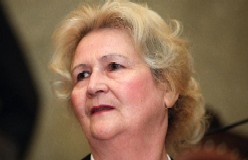 Elfriede Blauensteiner
Serial killer · Austria · 1981
Elfriede Blauensteiner (born 22 January 1931 in Vienna; died 18 November 2003)…
5 victims
Elfriede Blauensteiner
Serial killer · Austria · 1981
Elfriede Blauensteiner (born 22 January 1931 in Vienna; died 18 November 2003)…
5 victims
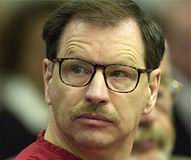 Gary Ridgway
Serial killer · USA · 1982
Gary Leon Ridgway Ridgway was born 18-February-1949 in Salt Lake City, UT. He w…
49 victims
Gary Ridgway
Serial killer · USA · 1982
Gary Leon Ridgway Ridgway was born 18-February-1949 in Salt Lake City, UT. He w…
49 victims
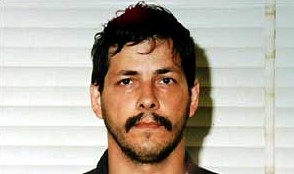 Marc Dutroux
Serial killer · Belgium · 1995
Marc Dutroux (born 6 November 1956 in Brussels) was a Belgian serial killer and…
5 victims
Marc Dutroux
Serial killer · Belgium · 1995
Marc Dutroux (born 6 November 1956 in Brussels) was a Belgian serial killer and…
5 victims
 Jason Bautista
Murderer · USA · 2003
Jason Bautista killed his mother, Jane Bautista. Jane Bautista was 41 years old…
1 victim
Jason Bautista
Murderer · USA · 2003
Jason Bautista killed his mother, Jane Bautista. Jane Bautista was 41 years old…
1 victim
 Robert Driscoll
Homicide · USA · 1983
July 3, 1983 — Robert Driscoll and his cellmate, James Jenkins, drank homemade…
1 victim
Robert Driscoll
Homicide · USA · 1983
July 3, 1983 — Robert Driscoll and his cellmate, James Jenkins, drank homemade…
1 victim
- Gender
- male
- Country
- USA
- Location
- New York/Illinois/Iowa/Minnesota, USA
- Date of birth
- 1935
- Age at first offence
- 18
- Characteristics
- juvenile (17), spree killer, crime spree
- Victim profile
- William Braverman, 19 / George Bloomberg, 56, and his wife Florence / Harriet Horseman, 48, and Agnes Beaston, 43
- Method of murder
- Shooting
- Date(s) of murder
- March 27-31, 1953
- Years active
- 1953
- Date of arrest
- —
- Status
-
Life imprisonment
Sentenced to life in prison in New York in 1953
Case record: Fred McManus
Background
Fred McManus was 18 years old and was described as a Marine from Long Island. He was from Valley Stream, N.Y., and was described as “just about the nicest boy in the suburban village of Valley Stream, N.Y.” He was described as “a handsome lad, tall, well built, with a quick, pleasant smile.” He was described as coming from “a good home—the McManus family lives in a big, white, well-kept house,” and his father, Mose McManus, was described as “a well-paid brewery executive.” Fred was described as being quiet, notably polite, and rather shy with girls. He was described as loving animals and raising hamsters with “tender care.” He was described as “a good swimmer,” and as playing on the high-school junior varsity football team. He was described as liking children and being in constant demand as a baby sitter.
The family disappointed his father after Fred finished high school last summer because Fred insisted on enlisting in the Marines instead of going to college. He was described as returning home on a ten-day leave from Camp Lejeune, N.C. Before the homicide rampage, Fred’s father was described as crying desperately that the killings were untrue, saying “He could not remember ever hearing of a Diane Weggeland” and saying, “I can't believe it,” and “This boy is not my son. My boy wouldn't do such a thing.”
In March 1953, Fred left after only two days and drove into Rochester, New York with his girlfriend, 16-year-old Diane Weggland.
People
- Fred McManus — defendant; 18-year-old Marine from Long Island.
- Diane Weggland — girlfriend of Fred McManus; 16-year-old; Summerville, New York; judged innocent in the bloodshed.
- William Braverman — victim; 19-year-old college student.
- George Bloomberg — victim; 56-year-old Keeneyville, Illinois general store operator.
- Florence Bloomberg — victim; wife of George Bloomberg.
- Harriet Horseman — victim; waitress; described as 48 years old.
- Agnes Beaston — victim; owner’s wife; described as 43-year-old.
- Mose McManus — Fred McManus’s father; brewery executive.
The offence
Fred McManus drove into Rochester, New York with Diane Weggland and committed a weekend murder spree that “would claim five lives in March of 1953.” The spree began March 27.
In Rochester, Fred McManus kidnapped 19-year-old William Braverman, a college student, and shot him to death on a road south of town, leaving his corpse in a ditch, loosely covered with dirt.
Rolling into Keeneyville, Illinois, on March 28, Fred McManus bungled the robbery of a local market, gunning down owners George and Florence Bloomberg in the process.
A day later, in Dubuque, Iowa, Fred McManus robbed another couple and spared their lives as he fled from the scene in their car.
Stopping at Spring Valley, Minnesota, on March 30, he held up a restaurant, killing waitress Harriet Horseman and 43-year-old Agnes Beaston, the owner’s wife.
Doubling back toward Dubuque, the young lovers were stopped by police outside town on March 31.
Fred used an insanity defense at trial in Rochester.
Investigation and arrest
After the stopping by police outside town, Fred waived extradition to New York.
Fred confessed to the Braverman murder on April 6.
The narrative included several statements made by Fred during arrest and while jailed:
“It don't bother me if I don't know the people,” he said. “There is no such thing as conscience. It's just a feeling of fear that people have.”
“I was in love and I needed money,” he said.
“I was in love and needed money,” he said.
“I thought, the penalty for murder is death in the electric chair,” he replied.
Fred was described as talking in jail and describing “each bloody step in his senseless rampage.”
Trial
Fred McManus used an insanity defense at trial in Rochester that fall. Prosecutors won a murder conviction. Testimony about Fred McManus’s “fragile disposition seemed to weigh on jurors.” The jurors recommended mercy.
Jurors convicted Fred McManus on September 24.
Sentencing
Fred McManus was sentenced to life imprisonment two days later, in 1953.
The account also described that by August his original guilty plea had been altered to one of not guilty by reason of insanity, but “jurors saw through the ruse,” and that he “was sentenced to life imprisonment two days later.”
A later narrative stated that he “cheated the electric chair” and that “He was sentenced to life in prison - which turned out to be 20 years.” The same narrative also stated he “was released in 1973, still just 39 years old.”
Appeals
No appeal content was included in the provided record.
Outcome
Fred McManus was convicted and sentenced to life in prison in New York in 1953.
Diane Weggland was judged innocent in the bloodshed. The narrative described that “authorities would accept his assessment, leaving Fred to take the rap alone.” It also described that she was judged innocent “in the bloodshed.”
Aftermath
A narrative stated that Fred McManus was released in 1973, “still just 39 years old.” It also stated that he “slipped unnoticed back into society,” was “never arrested again,” and “cleared parole in 1981.”
The narrative stated that Illinois and Minnesota chose not to prosecute.
A narrative included discussion of other cases, including Charles Starkweather. It stated that Starkweather “remains a seminal image of teen angst,” and that “Although largely forgotten, the polite kid from Valley Stream earned a place beside Starkweather in the pantheon of young pathological murderers.”
Timeline
- March 27, 1953 — Fred McManus drove into Rochester, New York, with his girlfriend 16-year-old Diane Weggland; the murder spree began.
- March 28, 1953 — In Keeneyville, Illinois, Fred McManus bungled the robbery of a local market and gunned down owners George and Florence Bloomberg.
- March 29, 1953 — In Dubuque, Iowa, Fred McManus robbed another couple, sparing their lives as he fled in their car.
- March 30, 1953 — In Spring Valley, Minnesota, Fred McManus held up a restaurant, killing waitress Harriet Horseman and 43-year-old Agnes Beaston.
- March 31, 1953 — Police outside town stopped Fred McManus and Diane Weggland.
- April 6, 1953 — Fred McManus confessed to the Braverman murder.
- September 24, 1953 — Fred McManus was convicted.
- Two days later in 1953 — Fred McManus was sentenced to life imprisonment in New York.
Other details
Fred McManus was described as “the 18-year-old Marine from Long Island.” He was described as being viewed as “a decent marksman” in the Marines. The narrative described a sequence before the killings involving their travel and research of marital laws, including that Minnesota was described as allowing a 16-year-old to wed without parental consent, and that “They hit the highway.” The narrative included that Fred reached into his duffle and pulled out “a Colt .45 revolver” and told Weggeland, “You can get anywhere with this.” It also stated that he left Weggeland at the YMCA and then hitched rides, selecting victim William Braverman. It stated that he robbed Braverman of “$8 and a wrist watch,” and when Braverman balked at handing over his car, Fred shot him through the heart and dumped the body “in a gravel pit,” then picked up Weggeland and headed west on Route 20.
The narrative included further details about killings and robbery amounts:
- It stated that in Illinois, the Marine replied to George Bloomberg’s words with “a fatal pistol volley,” and that “Bloomberg’s wife screamed,” after which Fred said: “I shot her,” and “I can't stand screaming.”
- It stated that in Spring Valley, Minnesota, “he was more efficient,” shooting “a waitress, Mrs. Harriet Horsman, 48,” and “scooped $49 from the till,” then killing Agnes Beaston after she screamed.
- It stated that the couple went to Minneapolis to get married, and they were turned down by a “license clerk” after they “naively gave the license clerk their correct ages.” It stated Diane said: “But,” said Diane primly, “as far as we are concerned, we are legally married.”
The narrative included that in jail Fred referred to Diane as “my wife.” When asked why he committed the murders, Fred replied: “I was in love and I needed money.” It also included that Diane said: “I'm as guilty as he is,” sobbed Diane. “I want the same punishment he gets.”
The narrative stated that when Fred and Diane were flown back to New York, “they put their heads together, kissed, and beamed for the photographers; on the five-hour flight to Rochester, they played canasta and laughed like honeymooners.”
It also stated that Mose McManus followed by train and that Fred “had coldly turned his back on the weeping father,” and included Fred’s words: “I know what is going to happen,” he said. “The electric chair. I want to die.”
Spotted an error, or have more information about this case?