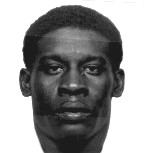
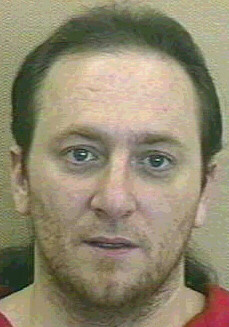
Billy Wayne White
Murderer Ervil LeBaron
Murderer · USA · 1972
Ervil Morrell LeBaron (1925 to August 16, 1981) was the leader of a polygamous…
35 victims
Ervil LeBaron
Murderer · USA · 1972
Ervil Morrell LeBaron (1925 to August 16, 1981) was the leader of a polygamous…
35 victims
 Brian Kevin Rosenfeld
Murderer · USA · 1985
Brian Kevin Rosenfeld Brian Kevin Rosenfeld was sentenced to three concurrent l…
23 victims
Brian Kevin Rosenfeld
Murderer · USA · 1985
Brian Kevin Rosenfeld Brian Kevin Rosenfeld was sentenced to three concurrent l…
23 victims
 Marvin Gray
Murderer · USA · 1975
Marvin Gray was convicted killer who claimed responsibility for 23 slayings and…
23 victims
Marvin Gray
Murderer · USA · 1975
Marvin Gray was convicted killer who claimed responsibility for 23 slayings and…
23 victims
 Yahweh ben Yahweh
Murderer · USA · 1980
Yahweh ben Yahweh was born and legally named Hulon Mitchell Jr. (October 27, 19…
23 victims
Yahweh ben Yahweh
Murderer · USA · 1980
Yahweh ben Yahweh was born and legally named Hulon Mitchell Jr. (October 27, 19…
23 victims
 Dennis Suttles
Murderer · USA · 1996
Dennis Wade Suttles was convicted of premeditated first degree murder and sente…
1 victim
Dennis Suttles
Murderer · USA · 1996
Dennis Wade Suttles was convicted of premeditated first degree murder and sente…
1 victim
 Miles Giffard
Murderer · United Kingdom · 1952
Miles William Giffard (1927 - 24 February 1953) twice played cricket for the Co…
2 victims
Miles Giffard
Murderer · United Kingdom · 1952
Miles William Giffard (1927 - 24 February 1953) twice played cricket for the Co…
2 victims
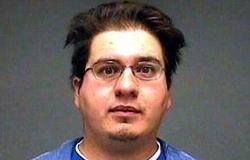 Efren Saldivar
Serial killer · USA · 1989
Efren Saldivar (born 30 September 1969) was an American serial killer who murde…
50 victims
Efren Saldivar
Serial killer · USA · 1989
Efren Saldivar (born 30 September 1969) was an American serial killer who murde…
50 victims
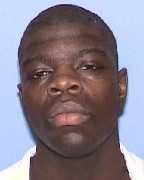 Derrick Charles
Murderer · USA · 2002
Derrick Dewayne Charles was charged with capital murder and pled guilty before…
3 victims
Derrick Charles
Murderer · USA · 2002
Derrick Dewayne Charles was charged with capital murder and pled guilty before…
3 victims
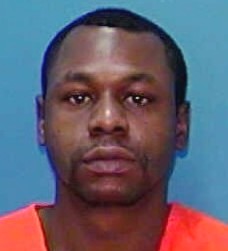 Jermaine Foster
Murderer · USA · 1992
Jermaine Foster was tried together with codefendants Booker, Henderson, and Cat…
2 victims
Jermaine Foster
Murderer · USA · 1992
Jermaine Foster was tried together with codefendants Booker, Henderson, and Cat…
2 victims
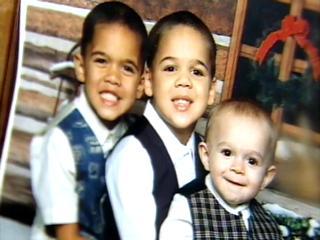 Tonya Hawks
Murderer · USA · 2006
Tonya Hawks was the mother of three sons. She worked at the Behr Thermal Plant…
3 victims
Tonya Hawks
Murderer · USA · 2006
Tonya Hawks was the mother of three sons. She worked at the Behr Thermal Plant…
3 victims
- Gender
- male
- Country
- USA
- Location
- Harris County, Texas, USA
- Date of birth
- October 13, 1957
- Age at first offence
- 19
- Characteristics
- robbery, drug addict, drugs, mentally ill, abuse
- Victim profile
- Martha Spinks, 65 (furniture store owner)
- Method of murder
- Shooting (handgun)
- Date(s) of murder
- August 23, 1976
- Years active
- 1976
- Date of arrest
- Same day
- Status
-
Executed
Executed by lethal injection on April 23, 1992 in Texas
Case overview
Billy Wayne White was sentenced to death for the capital murder of Martha Laura Spinks and was executed by lethal injection in Texas on April 23, 1992. White carried out the robbery at the Right Price Furniture and Appliance store in Houston, Texas on August 23, 1976, shot Martha Spinks at point blank range during the robbery, and took her jewelry after ordering Alge Spinks to open the safe.
Background
White had an education level of 10th grade. White had a history of extensive drug use, including habitual heroin use throughout his life, which caused his veins to deteriorate. During the trial, observers questioned whether White understood what was happening and raised issues about his mental competence. White consistently fell asleep during trial, prompting his lawyer to elbow him in the ribs to keep him awake; he earned the nickname “Sleeping Billy.”
During habeas corpus, Mandy Welch, Houston director of the Texas Resource Center, described White as “an awfully kind and gentle person” and said he “had qualities you don’t see in people very often.” Welch said that White was found to be retarded and believed his falling asleep was a symptom of that retardation, while others described it as a reaction to stress. Shirley Cornelius, Harris County assistant district attorney, disagreed with Welch. Cornelius pointed out that White had his IQ tested periodically from 1966 to 1992 and his scores ranged from a low of 66 to a high of 80. Cornelius also described that White was evaluated the day before his execution by a clinical psychologist, and that the evaluation showed “no signs of mental impairment or mental retardation.” Cornelius felt White fit in the category of violent aggressor, but she did not think he was “really a killer at heart,” pointing to the absence of murders or attempted murders in his history.
White filed appeals and habeas petitions that were denied, including a federal petition and motions for a stay of execution and a certificate of probable cause.
The offence
On August 23, 1976, at approximately 6:00 p.m., White robbed the Right Price Furniture and Appliance store in Houston, Texas. The owners of the store, Martha and Alge Spinks, were getting ready to close for the day when White entered. After looking over the merchandise, White indicated that he wanted to buy two lamps. Spinks asked his wife to write up the sales slip and the three of them proceeded to the office at the rear of the store.
As they entered the office, White pulled a gun and demanded that they give him their money. Alge Spinks gave White his wallet and the store’s receipts for the day. Without warning, White reached back and shot Martha Spinks in the face at point blank range. Martha Spinks did not see or hear her husband’s wife do anything before White shot her. After firing the fatal shot, White wheeled back around and shot again, hitting a desk. White ordered Spinks to open the safe and had him lie on the floor. White then went through the safe and asked Spinks about his watch and whether his wife had any jewelry. Spinks said he did not know where his watch was and that his wife’s watches and rings were on her arms.
White put the gun on the floor with his foot on the barrel and told Spinks to “be still,” then lifted Martha Spinks’ arm to remove her jewelry. Spinks took this opportunity to grab the gun from under White’s foot. During the scuffle, Spinks fired the gun twice, hitting White in the groin and emptying the gun. Spinks got up, ran from the building, and hid behind his car. Spinks shouted to Mack Alford, who worked across the street from the Spinks’ store, asking him to call the police. Alford heard gunfire and then saw White run from the alley between the Spinks’ furniture store and the neighboring liquor store. White ran hopping on one leg. Alford flagged down a passing police car after hearing the shouts for help.
Officers Neito and Sanford responded to a police radio pickup bulletin based on Alford’s description of the suspect. When they were less than a minute’s drive from the scene, an individual matching the broadcasted description and identified at trial as White walked into the intersection in front of their vehicle and was stopped. The gun in White’s possession at that time was later found to have fired the bullet recovered from the office desk at the furniture store. The police recovered $269.62 from White, an amount nearly identical to the day’s receipts turned over to him by Spinks.
Investigation and arrest
After hearing gunfire and seeing White run from the alley, Mack Alford called the police. Officers Neito and Sanford arrived in response to the radio call and stopped White shortly thereafter based on the broadcasted description.
Trial
In October 1977, a Harris County, Texas jury found White guilty of the capital murder of Martha Laura Spinks. During the punishment phase, the jury answered affirmatively the two special issues submitted pursuant to Texas Code of Criminal Procedure, art. 37.071, and White was sentenced to death.
The Court of Criminal Appeals affirmed White’s conviction and sentence on September 23, 1981 (White v. State, 629 S.W.2d 701 (Tex.Crim.App.1981)). The United States Supreme Court denied certiorari on April 19, 1982 (White v. Texas, 456 U.S. 938, 102 S.Ct. 1995, 72 L.Ed.2d 457 (1982)).
During the trial, many observers had doubts as to whether White understood what was happening and questioned his mental competence. White consistently fell asleep during trial, leading his lawyer to elbow him in the ribs to keep him awake, earning the nickname “Sleeping Billy.”
At the time of the offense, White was two months away from his twentieth birthday.
The jury answered the following special issues affirmatively:
- “Was the conduct of the Defendant that caused the death of the deceased committed deliberately and with the reasonable expectation that the death of the deceased would result?”
- “Is there a probability that the defendant would commit criminal acts of violence that would constitute a continuing threat to society?”
The text of the relevant Texas Code of Criminal Procedure provision was addressed as art. 37.071(b), (1981).
Sentencing
White was sentenced to death in October 1977 following the jury’s affirmative answers to the two special issues submitted under Texas Code of Criminal Procedure, art. 37.071. The trial court set White’s execution for April 23, 1992.
Appeals and post-conviction proceedings
White filed his first petition for habeas relief in state court on October 30, 1984. Following an evidentiary hearing, the trial court entered findings of fact and conclusions of law rejecting all relief on December 31, 1985. The Texas Court of Criminal Appeals denied White’s habeas application in February 1990. White’s second state habeas application was filed in April 1990. In January 1992, the presiding judge in the convicting court entered findings of fact and conclusions of law rejecting all claims. The Court of Criminal Appeals in February 1992 also rejected relief and denied White’s second state habeas application based on the trial court’s findings and conclusions.
White filed his first federal habeas petition on April 5, 1992. The federal district court filed a written opinion and order rejecting all of White’s habeas claims and denying all relief on April 15. The district court denied White’s motion to stay his execution and denied a certificate of probable cause. White then filed a notice of appeal to the court of appeals and on April 17 filed an application for certificate of probable cause and for a stay of execution.
The court of appeals case was: Billy Wayne White, Petitioner-Appellant, v. James A. Collins, Director, Texas Department of Criminal Justice, Institutional Division, Respondent-Appellee. Docket number: 92-2291. Federal Circuits: 5th Cir. Date of decision included April 21, 1992. The panel consisted of JOLLY, DAVIS and SMITH, Circuit Judges, with W. EUGENE DAVIS, Circuit Judge, writing the opinion.
White’s arguments in seeking a certificate of probable cause and stay of execution included claims relying on Penry and related precedent regarding whether the Texas special issues prevented the jury from considering and giving mitigating effect to his youth and provocation by the victim. The court stated that White contended the special issues impermissibly prevented the jury from considering and giving mitigating effect to his youth and provocation by the victim.
The court discussed that Texas capital sentencing authorized a third special issue if raised by the evidence: whether the conduct of the defendant in killing the deceased was unreasonable in response to the provocation by the deceased. The court stated that White did not request the court to propound the third issue to the jury. White argued that because the third statutory punishment issue was not submitted, the jury was unable to give effect to the fact that the victim allegedly provoked him by spraying him with mace. The court described that the state trial court found White was procedurally barred from challenging the trial court’s failure to include the third special issue due to his failure to request it or object to the punishment charge. The court stated that because the state court rejected the claim on procedural grounds, federal habeas review was foreclosed unless cause and prejudice or a fundamental miscarriage of justice was demonstrated. The court said White did not allege cause or demonstrate prejudice.
The court discussed evidence about mace at trial, including the testimony of Officer Lynn that he was at the scene a few minutes after the shooting and saw a small canister of what could have been mace in the hand of the deceased. The court stated there was no evidence that the victim sprayed White with mace or that White saw the canister in the victim’s hand. The court stated that Alge Spinks testified he didn’t see or hear his wife do anything before White shot her and that Spinks didn’t see a canister of mace in his wife’s hand, wasn’t blinded during the robbery, and didn’t smell anything unusual. The court also discussed that White argued tears in his eyes during the police vehicle were caused by mace, but there was no evidence White was crying as he ran or at the time of his apprehension. The court stated that the evidence showed White was shot in the crotch during the scuffle with Spinks. The court concluded that if the jury believed White shot Mrs. Spinks as a reflex after she sprayed him with mace, the jury was able to give effect to mitigating value related to provocation, including by finding White would be nonviolent absent provocation and potentially supporting a negative answer on future dangerousness, and by considering deliberateness or intent to kill depending on reflex or accidental discharge theories presented at the guilt-innocence phase.
For the youth issue, the court stated that at the time of the offense White was two months away from his twentieth birthday and that the first and second statutory punishment issues provided a constitutionally adequate vehicle by which the jury could give mitigating effect to his youthful age. The court concluded that White had not made a substantial showing of denial of a federal right and denied his application for certificate of probable cause. The court also concluded White failed to make a showing of likelihood of substantial chance of success on the merits and denied his application for a stay of execution.
The court denied both White’s motions for CPC and for stay of execution because White had made no substantial showing of denial of a federal right and had not demonstrated a likelihood of success on the merits.
Execution
White’s execution was carried out on April 23, 1992 in Texas. He was strapped down at 12:02 a.m. for the final punishment, but prison officials had difficulty finding a vein for the lethal injection due to his habitual heroin use and deteriorated veins. After 47 minutes of trying, officials found a suitable vein in his hand.
According to Texas Prison Systems Director Andy Collins, White “was very compliant, very courteous, very cooperative.” Collins continued that “In fact, he attempted to assist us. The procedure just takes a fairly lengthy time when you have somebody who has used narcotics for an extended period of time.” Mandy Welch expressed chagrin at the long wait, saying: “It is an inhumane process for us as a civilized country to be doing.”
White was finally injected with the lethal dose at 12:49 a.m., and the official time of death was announced as 12:58 a.m.
Outcome
White was executed by lethal injection in Texas on April 23, 1992.
Other details
The case included procedural references to Fed.R.App.P. 22(b) and standards for granting a certificate of probable cause and stay of execution, including the court’s discussion that “the severity of the penalty does not in itself suffice to warrant the automatic issuing of a certificate.” The court cited Barefoot v. Estelle and relevant precedent.
The appellate opinion included footnotes discussing the jury’s special issues and a reference to Texas Code of Criminal Procedure art. 37.071, including its amendment after the time of White’s trial.

Spotted an error, or have more information about this case?