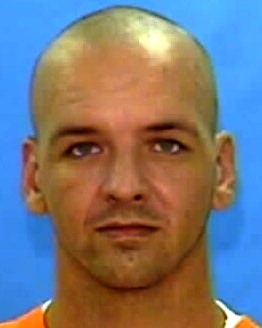
Brandy Bain Jennings
Murderer Brian Kevin Rosenfeld
Murderer · USA · 1985
Brian Kevin Rosenfeld Brian Kevin Rosenfeld was sentenced to three concurrent l…
23 victims
Brian Kevin Rosenfeld
Murderer · USA · 1985
Brian Kevin Rosenfeld Brian Kevin Rosenfeld was sentenced to three concurrent l…
23 victims
 Russell Ellwood
Murderer · USA · 1991
Russell Ellwood was a former taxi driver. Authorities suspected him of killing…
20 victims
Russell Ellwood
Murderer · USA · 1991
Russell Ellwood was a former taxi driver. Authorities suspected him of killing…
20 victims
 Robert Martines Perez
Murderer · USA · 1994
Name: Robert Martines Perez · Other name used in proceedings: Robert Martinez P…
15 victims
Robert Martines Perez
Murderer · USA · 1994
Name: Robert Martines Perez · Other name used in proceedings: Robert Martinez P…
15 victims
 Billy Frank Vickers
Murderer · USA · 1993
Billy Frank Vickers Vickers was executed by lethal injection in Texas on Januar…
14 victims
Billy Frank Vickers
Murderer · USA · 1993
Billy Frank Vickers Vickers was executed by lethal injection in Texas on Januar…
14 victims
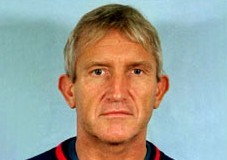 Kenneth Noye
Homicide - Murderer · United Kingdom · 1983
Kenneth Noye was a British criminal. Noye was involved in laundering the procee…
2 victims
Kenneth Noye
Homicide - Murderer · United Kingdom · 1983
Kenneth Noye was a British criminal. Noye was involved in laundering the procee…
2 victims
 Freddie Lee Webb
Murderer · USA · 1985
Freddie Lee Webb was executed by lethal injection in Texas on March 31, 1994. W…
1 victim
Freddie Lee Webb
Murderer · USA · 1985
Freddie Lee Webb was executed by lethal injection in Texas on March 31, 1994. W…
1 victim
 Joe Leonard Lambright
Murderer · USA · 1980
Joe Leonard Lambright was a defendant in a joint trial with Robert Douglas Smit…
1 victim
Joe Leonard Lambright
Murderer · USA · 1980
Joe Leonard Lambright was a defendant in a joint trial with Robert Douglas Smit…
1 victim
 Wolfgang Schmidt
Serial killer · Germany · 1989
Wolfgang "Beate" Schmidt was also known as The Beelitz murderer and The Pink Gi…
6 victims
Wolfgang Schmidt
Serial killer · Germany · 1989
Wolfgang "Beate" Schmidt was also known as The Beelitz murderer and The Pink Gi…
6 victims
- Gender
- male
- Country
- USA
- Location
- Collier County, Florida, USA
- Date of birth
- J une 30, 1969
- Age at first offence
- 26
- Characteristics
- robbery, dr ugs, drug addict
- Victim profile
- Dorothy Siddle, Vicki Smith, and Jason Wiggins (restaurant employees)
- Method of murder
- St abbing with knife
- Date(s) of murder
- November 15, 1995
- Years active
- 1995
- Date of arrest
- 3 weeks after
- Status
-
Sentenced to death
Sentenced to death on December 2, 1996
Case information
Brandy Bain Jennings was sentenced to death on December 2, 1996. He was convicted in the Twentieth Judicial Circuit, Collier County, in Case # 95-2284. The sentencing judge was The Honorable William L. Blackwell.
He was born on 06/30/69. At the time of the murders, Jennings was twenty-six.
A direct appeal was filed on 12/17/96. A Petition for Writ of Certiorari was filed on 04/26/99 and denied on 06/24/99.
A 3.850 motion was filed with the circuit court on 03/20/00 and was amended on 06/23/00; it was described as pending.
Timeline
- 11/15/95 — Vicki Smith, Jason Wiggins, and Dorothy Siddle were killed during the commission of a robbery at the Cracker Barrel Restaurant in Naples, Florida.
- 10/31/96 — Jennings was found guilty on all counts.
- 11/01/96 — The jury recommended death by a vote of 10 to 2 for Counts I, II, III.
- 12/02/96 — Jennings was sentenced: death for Counts I, II, and III; and 15 years’ imprisonment for Count IV (Robbery With a Deadly Weapon).
- 12/17/96 — A direct appeal was filed.
- 09/10/98 — The Florida Supreme Court affirmed Jennings’ conviction and sentence of death.
- 04/26/99 — A Petition for Writ of Certiorari was filed.
- 06/24/99 — The Petition for Writ of Certiorari was denied.
- 03/20/00 — A 3.850 motion was filed.
- 06/23/00 — The 3.850 motion was amended.
The offence
Vicki Smith, Jason Wiggins, and Dorothy Siddle were employees at the Cracker Barrel Restaurant in Naples, Florida. They were killed on the morning of November 15, 1995 during the commission of a robbery.
Police found the victims on the floor of the freezer. All three victims had their throats slit.
Siddle was found with her hands bound with electrical tape behind her back. Wiggins and Smith still had electrical tape hanging from their left wrists, but the tape appeared to have come free from their right hands.
The office safe was found open and was surrounded by cash and plastic containers. Behind the restaurant, scattered bills, a knife, a knife case, a pair of bloodstained gloves, an air pistol, and shoe prints led away from the restaurant.
Bloody shoe prints led from the freezer, through the kitchen, and ended up in the office.
At trial, Jennings and codefendant Jason Graves were charged as follows:
- Count I: First-Degree Murder
- Count II: First-Degree Murder
- Count III: First-Degree Murder
- Count IV: Robbery With a Deadly Weapon
Investigation
Physical evidence and forensic testimony
The medical examiner testified that the victims died from “sharp force injuries” to the neck caused by “a sharp-bladed instrument with a very strong blade,” like the Buck knife found at the crime scene.
A forensic serologist testified that traces of blood were found on the Buck knife, the Buck knife case, the area around the sink, and one of the gloves recovered from the crime scene, but in an amount insufficient for further analysis.
An impressions expert testified that Jennings’ tennis shoes recovered from the canal matched the bloody shoe prints inside the restaurant as well as some of the shoe prints from the outside tracks leading away from the restaurant.
Statements and accounts
Brandy Jennings and Jason Graves had previously worked at Cracker Barrel and knew the victims.
Approximately three weeks after the murders, Jennings and Graves were apprehended and jailed in Las Vegas, Nevada for the robbery and murders.
Jennings initially blamed Graves for the murders, but admitted his participation in the planning and in the perpetration of the robbery itself.
Jennings admitted wearing gloves during the commission of the robbery.
Jennings acknowledged that he used his Buck knife to cut the electrical tape after binding the victims’ hands, but claimed he must have put the knife down after using it because he did not recall seeing it after that point.
Jennings stated that he saw the dead victims on the floor of the freezer and that his foot slipped in the blood, but he did not recall falling, getting his clothing and hands bloody, or subsequently washing the blood off of his hands in the kitchen sink.
Jennings told police that it was Graves’ air pistol and Jennings directed police to the canal where evidence of the crime had been discarded.
Items recovered from the canal included: gloves, clothes, shoes, socks, packaging from a pellet air gun, a money bag marked “Cracker Barrel”, money bands, a clear garbage bag, and rocks which were weighing down the bundle of evidence.
Jennings gave an incriminating statement during a taped interview: “I think I could have been the killer. In my mind I think I could have killed them, but in my heart I don’t think I could have.”
Jennings made comments to several people about his dislike of victim Siddle. He also previously made comments about robbery and witness elimination. He stated that robbery was an easy way to get money and the best way to get away with it was not to leave witnesses.
In an untaped interview the next day, Jennings stated:
Arrest and custody
Jennings and Jason Graves were apprehended and jailed in Las Vegas, Nevada approximately three weeks after the murders.
Jennings made lengthy statements to Florida law enforcement personnel while in custody in Las Vegas.
Trial
Indictment and verdict
Jennings was indicted with four counts:
- Count I: First-Degree Murder
- Count II: First-Degree Murder
- Count III: First-Degree Murder
On 10/31/96, Jennings was found guilty on all counts.
The jury recommended death by a vote of 10 to 2 for Counts I, II, III on 11/01/96.
Evidence presented to the jury
The State presented testimony about prior statements made by Jennings regarding robbery and witness elimination in general.
Angela Chainey testified that about two years before the crimes Jennings said that if he ever needed any money he could always rob someplace or somebody. When Chainey responded, “That’s stupid. You could get caught,” Jennings replied, while making a motion across his throat, “Not if you don’t leave any witnesses.”
Chainey testified that Jennings had made statements similar to that several times.
The State also presented testimony about Jennings’ dislike of victim Siddle.
Bob Evans testified that Jennings perceived Siddle to be holding him back at work and that just after Jennings quit, he said about Siddle, “I hate her. I even hate the sound of her voice.”
Donna Howell testified that Jennings had animosity and dislike toward Siddle and that Jennings once said about Siddle, “I can’t stand the bitch. I can’t stand the sound of her voice.”
In the penalty phase, the defense presented mitigation evidence, including character testimony from Mary Hamler.
Mary Hamler testified on direct examination that she had lived with Jennings for two and one-half years, that Jennings had gotten along well with her children during that time, and that he cried when they (Jennings and Hamler) broke up.
On cross-examination, the State elicited testimony that there was another side to Jennings’ character. Hamler testified that Jennings once said that if he ever committed a robbery, he would not be stupid enough to stick around, but would go north.
Hamler testified that Jennings was angry at Cracker Barrel in general, and Siddle in particular, for “jerking him around” and holding him back at work. Hamler also testified that Jennings once said of Siddle that “one day she would get hers.”
The defense presented further character evidence from several of Jennings’ friends that he was good with children, got along with everybody, and was basically a nonviolent, big-brother type who was happy-go-lucky, fun-loving, playful, laid back, and likeable.
Jennings’ mother testified that her son never met his father and that she raised Jennings herself. She claimed that Jennings had been a straight-A student, but quit school to take care of her when she became sick.
During the evidentiary portion of the penalty phase, the trial court judicially noticed and instructed the jury that the codefendant could only receive a life sentence for these crimes.
Codefendant information
Jennings’ accomplice, Charles J. Graves, was convicted of three counts of First-Degree Murder and one count of Robbery With a Deadly Weapon. Graves was serving three life sentences for the convictions of First-Degree Murder and 15 years for the conviction of Robbery.
Sentencing
On 12/02/96, Jennings was sentenced as follows:
- Count I: First-Degree Murder — Death
- Count II: First-Degree Murder — Death
- Count III: First-Degree Murder — Death
- Count IV: Robbery With a Deadly Weapon — 15 years
Aggravating and mitigating factors found by the trial court
The trial court found three aggravators:
- The murders were committed during a robbery.
- The murders were committed to avoid arrest.
- The murders were cold, calculated, and premeditated (CCP).
The trial court found one statutory mitigator:
- Jennings had no significant history of prior criminal activity (some weight).
The trial court explicitly found that two urged statutory mitigators did not exist:
- Jennings was an accomplice in a capital felony committed by another and his participation was relatively minor.
- Jennings acted under extreme duress or under the substantial domination of another person.
The trial court found eight nonstatutory mitigators:
- Jennings had a deprived childhood (some weight).
- The accomplice Graves was not sentenced to death (some weight).
- Jennings cooperated with police (substantial weight).
- He had a good employment history (little weight).
- He had a loving relationship with his mother (little weight).
- He had positive personality traits enabling the formation of strong, caring relationships (some weight).
- He had the capacity to care for and be mutually loved by children (some weight).
- He exhibited exemplary courtroom behavior (little weight).
Appeals
Direct appeal
Jennings’ direct appeal argued:
- Whether the trial court erred in failing to grant Jennings’ motion to suppress the statements made to Florida law enforcement officers while in custody in Las Vegas.
- Whether the trial court erred in finding the flight to avoid arrest aggravator.
The Florida Supreme Court affirmed the conviction and sentence of death on 09/10/98.
The Florida Supreme Court held that the trial court properly denied the motion to suppress. The court stated that:
- Police ceased questioning Jennings when he invoked his right to counsel.
- Jennings reinitiated contact with police after an interceding conversation with his mother, in which his mother advised him to talk to the police.
- Jennings was again advised of Miranda rights before the taped interview and he waived those rights.
- Jennings was also advised again before any subsequent untaped statement, and he executed a written waiver.
The court affirmed the avoid arrest aggravator and the CCP aggravator.
In discussing the avoid arrest aggravator, the trial court had ruled: “The evidence was undisputed that this defendant and the co-defendant (whose trial preceded the trial of this case and who was convicted of the same crimes as this defendant) were former employees of the Crackerbarrel [sic] Restaurant. As such, they were well known to the three victims. Found in the defendant's truck when the defendants were arrested in Las Vegas, Nevada, were two pullover masks, similar to ski masks. These were not used in these crimes, nor were they discarded with the other items of apparel in the canal. The defendants disdained the use of masks in these crimes. The use of gloves by the defendants shows further support for the conclusion that these murders were committed by the defendant for the purpose of avoiding or preventing a lawful arrest. Approximately two years before these crimes, this defendant, in discussing a hypothetical robbery, said, and indicated, by moving his fingers across his throat, that if he robbed someone he could not be caught because he would not leave any witnesses. While the murder of Dorothy Siddle was undoubtedly motivated in part by defendant's dislike for her, the evidence, including the murders of the other two victims, makes it manifest that the dominant motive for these murders was the elimination of witnesses in order to avoid prosecution. This aggravating circumstance was proven beyond a reasonable doubt.”
In discussing the CCP aggravator, the trial court had explained: “In the space of approximately ten minutes, the defendants gained entry into the Cracker Barrel Restaurant, forced Dorothy Siddle to open the safe, put all three victims on the floor, taped their hands behind them, marched them into the freezer, cleaned out the safe, cut the throats of the three victims, and fled out the back door when they heard another employee buzzing the front door for entry to work. This approximate time span was established by the testimony of an employee of the security company whose computer monitors the opening of the doors at the Cracker Barrel Restaurant and the arriving employee who buzzed the front door. The murder weapon, a large Buck folding knife, was this defendant's. While he says the co-defendant must have killed the victims, it is this defendant who told a witness two years earlier that if he committed a robbery he wouldn't be caught because he would leave no witnesses. This defendant's dislike for victim, Dorothy Siddle, was known to several witnesses who testified to his bitterness towards her. These three murders and the robbery, occurring with the rapidity described above, manifest a plan that was carried out with ruthless efficiency. Additionally, this defendant took the time to walk from the freezer where the victims were slain to the lavatory where, from blood on the lavatory, it is obvious he washed himself and the murder weapon. Traces of blood were still on the knife when it was found although not of sufficient quantity to specifically identify the traces. His bloody footprints trace his movement and activity. The defendant admitted that he and the co-defendant had attempted to commit the robbery on several prior occasions shortly before November 15, 1996 [sic], the date of these crimes, and during these aborted attempts they had actually prevailed on victim, Dorothy Siddle, to call a towing service for defendant's truck. . . .
Disparate sentence argument
Jennings argued his death sentences were impermissibly disparate from codefendant Graves’ life sentences.
The court rejected the argument, including by recounting the trial court’s analysis of relative culpability, quoting: “The co-defendant, Charles Jason Graves, was tried on these same charges two weeks prior to this defendant, before the undersigned judge. The state had entered an agreement in open court to waive the death penalty for Graves in exchange for his waiver of a motion for a continuance to allow more time to adequately prepare for a trial where the death penalty was contemplated. Graves was eighteen years old at the time of the crimes. While Graves admitted to possessing what could be best described as a crude, homemade knife at the crime scene (it was in evidence in both trials as were virtually all the evidentiary exhibits) the medical examiner involved in the autopsies of the victims, Dr. Borges, testified in this case that Graves’ crude knife was incapable of the kinds of wounds inflicted on the victims; and further that the large Buck knife admittedly belonging to this defendant was consistent with the mortal wounds to the victims -- particularly the two victims whose spines bore slashing injuries from the murder weapon. . . . [T]he evidence is overwhelming that this defendant wielded the knife in murdering the victims. There was only one set of bloody footprints leading from the freezer and these belonged to this defendant as evidenced by his own admissions and the testimony of a forensic expert (Mr. Grimes); the photographic comparisons and actual floor mat removed from the crime scene by investigators are inconsistent with any other possibility. As previously observed, this defendant also admitted to the killings by saying in his mind he knew he killed the victims even if his heart could not accept it. This evidence was all before the jury in the guilt phase and the penalty phase. This court judicially noticed and instructed the jury during the evidentiary portion of the penalty phase that the co-defendant could only receive a life sentence for these crimes. The state's waiver of the death penalty as to Graves, whether for the stated reason of avoiding a continuance, or because the evidence in both these cases was such that the death penalty was more problematic in the co-defendant's case, nevertheless is found by this court to be a mitigating factor. This thorough analysis by the trial court indicates that not only was the issue of the codefendant's life sentence presented to the jury as a mitigating factor, but also that the trial court carefully considered relative culpability. As established in the record, Graves was only eighteen, whereas Jennings was twenty-six, at the time of the murders. The trial judge, who presided at both trials, concluded independently that Jennings was the actual killer and thus more culpable than Graves. Moreover, despite finding that Jennings was more culpable and the actual killer, the trial court did consider and instruct the jury on the fact that the codefendant received a life sentence as a result of the State’s waiver of the death penalty as a mitigating factor. Contrary to Jennings' argument, the fact that the State argued in Graves' trial that Graves was the "leader" in the robbery is not necessarily inconsistent with the argument (and the trial court's finding) that Jennings was the actual murderer. As further found by the trial court below: The prosecution took the same position in both trials---that this defendant wielded the knife and actually killed the three victims while Graves remained outside the freezer door with the pellet pistol which closely resembled a Colt .45 semi-automatic pistol assisting in the confinement of the victims to the freezer----because two of the victims were found with their hands partially freed from the electrical tape with which their hands were bound behind their backs. The evidence is consistent with the position taken by the state. We find no abuse of discretion in the trial court's ruling on this issue. The fact that the eighteen-year-old codefendant received life does not prevent the imposition of the death penalty on Jennings, whom the trial court found to be the actual killer and to be more culpable.”
Outcome on appeal
The Florida Supreme Court ordered: “It is so ordered.”
The court affirmed Jennings’ convictions and sentences.
Motion to suppress
Jennings sought suppression of statements made to Florida law enforcement personnel while in custody in Las Vegas. He urged the statements were obtained in violation of constitutional rights against self-incrimination.
Detective Rose testified that Jennings was initially advised of Miranda rights and signed a waiver, but that Jennings invoked his right to counsel during questioning. Detective Rose testified that questioning ceased.
Investigator Cunningham testified that upon arriving in Las Vegas the next day, he did not attempt to talk to Jennings because he was advised Jennings did not want to talk.
Investigator Cunningham testified that the next day he and Detective Rose went to the jail to talk to Graves and then saw Jennings at the booking desk as they were exiting. Investigator Cunningham testified that Jennings spoke first by asking whether his mother had contacted them, and when told she had not, Jennings said he had talked to his mother, who advised him to talk to the police, and he wanted to do so.
Investigator Cunningham testified that he advised Jennings of Miranda rights and held an unrecorded initial conversation, after which Jennings consented to a taped interview.
During the taped interview preparation, Jennings stated: “Well, if you want me to save you the trouble, I understand all my rights fully.”
A Miranda waiver was orally executed; the taped interview ensued.
Jennings asserted Detective Rose’s response to his request for counsel was inadequate, including that Detective Rose offered to get him a Las Vegas telephone book.
The Florida Supreme Court concluded it was not necessary to reach whether that response was adequate as a constitutional principle. The court held that Jennings initiated further communication himself and voluntarily, knowingly, and intelligently waived Miranda rights before making the statements.
A quoted exchange from Detective Rose during cross-examination at the suppression hearing included: Q. What did [Jennings] tell you? A. He said that he wanted a lawyer or something to that effect. Q. What was your response to that? A. I asked him if that’s what he wanted. Q. And did you go any further? A. Not really. Q. Any questioning? A. Not from me, no.
And: Q. Specifically, did you hand him a phone book and say, "Here is a phone book. Call any lawyer in Las Vegas"? A. No. I did offer him one though.
And: Q. So is your testimony that when he asked for a lawyer, you gave him a phone book, a Las Vegas phone book and said he could contact any lawyer he wanted to? A. I never gave him a phone book, no.
Aftermath and other details
Counsel on appeal and trial
The appeal information included:
- Blackwell Trial Attorney: Thomas B. Osteen – Assistant Public Defender
- Direct Appeal: Robert F. Moeller – Assistant Public Defender Attorney
- Collateral Appeals: Kenneth Malnik & Paul Kalil – CCRC-S
The court materials listed:
- James Marion Moorman, Public Defender, and Robert F. Moeller, Assistant Public Defender, Tenth Judicial Circuit, Bartow, Florida, for Appellant.
- Robert A. Butterworth, Attorney General, and Carol M. Dittmar, Assistant Attorney General, Tampa, Florida, for Appellee.
The Florida Supreme Court opinion included:
- BRANDY BAIN JENNINGS, Appellant, vs. STATE OF FLORIDA, Appellee.
- No. 89,550.
- PER CURIAM.
- Date: [September 10, 1998].
Footnotes and evidentiary descriptions included in the record
The record included descriptions of trial testimony:
- A “Buck knife” was described as a particular brand of very sharp, sturdy knife with an approximately four and one-half inch black plastic handle.
- A Daisy air pistol was described as like a pellet gun, but looks almost identical to a Colt .45 semi-automatic pistol.
- The evidence from the canal included clothes, gloves, socks, and shoes that Jennings said were worn during the crime; a homemade razor/scraper-blade knife and sheath that Jennings said belonged to Graves; packaging from a Daisy pellet gun and CO2 cartridges; unused CO2 cartridges and pellets; money bags (one marked “Cracker Barrel”), bank envelopes, money bands, Cracker Barrel deposit slips, and some cash and coins; personal checks, travelers' checks, and money orders made out to Cracker Barrel; a clear plastic garbage bag; and rocks to weigh down the bundle of evidence.
- The record referenced Miranda v. Arizona, 384 U.S. 436 (1966).
- The record included other procedural footnotes, including that Jennings’ challenge to his robbery sentence was not addressed because it was not preserved below.
Spotted an error, or have more information about this case?