Thomas Jennings
Murderer John S. Williams
Murderer · USA · 1910
John S. Williams was convicted of murder and sentenced to life imprisonment on…
18 victims
John S. Williams
Murderer · USA · 1910
John S. Williams was convicted of murder and sentenced to life imprisonment on…
18 victims
 Edward Adams
Murderer · USA · 1920
Edward J. "Eddie" Adams was born in 1887 on a farm in Hutchinson, Kansas as W.J…
7 victims
Edward Adams
Murderer · USA · 1920
Edward J. "Eddie" Adams was born in 1887 on a farm in Hutchinson, Kansas as W.J…
7 victims
 Floyd Allen
Murderer · USA · 1912
Floyd Allen (July 5, 1856 – March 28, 1913) was an American landowner and patri…
5 victims
Floyd Allen
Murderer · USA · 1912
Floyd Allen (July 5, 1856 – March 28, 1913) was an American landowner and patri…
5 victims
 Carl Otto Wanderer
Murderer · USA · 1920
Carl Otto Wanderer (1887–1921) was described as a murderer known for what becam…
2 victims
Carl Otto Wanderer
Murderer · USA · 1920
Carl Otto Wanderer (1887–1921) was described as a murderer known for what becam…
2 victims
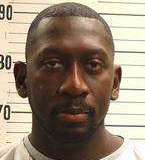 Kennath Henderson
Murderer · USA · 1997
April 26, 1997 — Kennath Henderson was planning an escape from the Fayette Coun…
1 victim
Kennath Henderson
Murderer · USA · 1997
April 26, 1997 — Kennath Henderson was planning an escape from the Fayette Coun…
1 victim
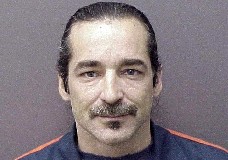 John Jerry Jancar
Homicide · USA · 1983
John Jerry Jancar was a 17-year-old high school student when he was convicted i…
2 victims
John Jerry Jancar
Homicide · USA · 1983
John Jerry Jancar was a 17-year-old high school student when he was convicted i…
2 victims
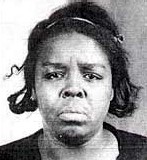 Helen Ray Fowler
Murderer · USA · 1943
Helen Ray Fowler was a 37-year-old woman who lived in the village of Niagara Fa…
1 victim
Helen Ray Fowler
Murderer · USA · 1943
Helen Ray Fowler was a 37-year-old woman who lived in the village of Niagara Fa…
1 victim
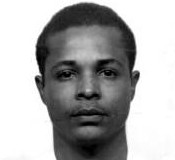 James Ronald Meanes
Murderer · USA · 1981
James Ronald Meanes (African-American) was executed for his involvement in a mi…
1 victim
James Ronald Meanes
Murderer · USA · 1981
James Ronald Meanes (African-American) was executed for his involvement in a mi…
1 victim
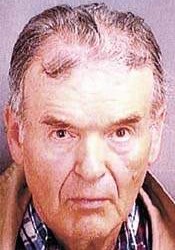 Sergei Babarin
Homicide · USA · 1999
1995 — Sergei Babarin was arrested in Salt Lake City after an incident in a dep…
2 victims
Sergei Babarin
Homicide · USA · 1999
1995 — Sergei Babarin was arrested in Salt Lake City after an incident in a dep…
2 victims
- Gender
- male
- Country
- USA
- Location
- Chicago, Illinois, USA
- Date of birth
- ???
- Characteristics
- robbery, to inherit
- Victim profile
- Clarence B. Hiller
- Method of murder
- Shooting
- Date(s) of murder
- September 19, 1910
- Years active
- 1910
- Date of arrest
- Same day
- Status
-
Executed
Executed by hanging in Illinois on February 16, 1912
Case identification
Thomas Jennings
STATUS
Thomas Jennings was executed by hanging in Illinois on February 16, 1912.
Background
Identifying criminals using fingerprint impressions found at crime scenes and comparing them to known fingerprint files collected as a result of previous criminal activity had been used by police services around the world for over 100 years. The case of People v. Jennings was described as a landmark “science of fingerprints” case in the courts in 1911 in Chicago, U.S.A.
It resulted in the conviction of a man named Thomas Jennings for murder, with the most significant evidence being fingerprints. To ensure that fingerprint evidence would be admitted, the prosecution called several recognized fingerprint experts as witnesses. Edward Foster, described as the man responsible for the establishment of Canada’s national fingerprint bureau, testified. With the help of his testimony, Jennings was convicted and sentenced to hang on December 22, 1911.
The case discussed the scientific basis for allowing fingerprint evidence, including the research and comprehensive book Finger Prints published in 1892 by Sir Francis Galton. Galton’s contribution was described as a method of distinguishing fingerprints with similar patterns by comparing ridge detail, later known as fingerprint minutia (points of comparison or identification). Galton’s reasoning included that ridge details were not repeated in a print from two different fingers, even in twins, and that identification should be made by comparing ridge detail.
The discussion also included the idea that Galton confirmed a person’s fingerprints would identify him for life and that he became sufficiently confident in the method to say it would form the basis for a reliable system of identification. A statistical model proposed by Galton was described as overlooking the direction of ridge flow in grid areas and taking into account only whether a minutiae point was present in a given square, and it was described as lacking other aspects such as ridge shapes and features like prominent sweat pores, scars, creases, wrinkles, and incipient ridges.
The defense lawyers for Jennings appealed his conviction to the Supreme Court of Illinois, arguing that fingerprint evidence should not be accepted. The landmark ruling was quoted as stating that “there is a scientific basis for the system of fingerprint identification, and...the courts are justified in admitting this class of evidence.” It was also quoted as being thorough and comprehensive, including “a complete outline of the history and practice of fingerprint identification.” The case was described as giving fingerprinting “another boost toward its universal acceptance around the world...” and as helping lead to fingerprint comparisons being completed by law enforcement personnel to identify criminals.
The case material also asserted that fingerprint evidence had been accepted by the courts with very few challenges over the next 100 years.
The offence
People involved and victims
Clarence B. Hiller was shot twice and died moments later. The Hiller household also included Mrs. Hiller and four children, including 15-year-old Clarice Hiller and 13-year-old Florence.
The household described included another child, Jessie, who was awakened during the events. Florence later testified about what she experienced during the intrusion.
Night of the incident and intruder actions
On the night of September 19, 1910, Clarence B. Hiller, his wife, and four children were fast asleep. Mrs. Hiller awoke and noticed the gas light that they always kept on at night was not on. She alerted Mr. Hiller, who went to investigate.
At the head of the stairway he encountered an intruder and a struggle ensued. Both fell to the foot of the stairway and Mr. Hiller was shot twice. Mrs. Hiller screamed and the intruder fled.
At the scene, three undischarged cartridges and two lead slugs were found. Particles of sand were found in one of the children's rooms. The point of entry was determined to be through a window in the kitchen. The railing near this window had recently been painted, and it was there that the imprint of four fingers of someone’s left hand was found embedded in the fresh paint.
Jennings was described as having previously attempted to break into a home about a mile away from the McNabb and Hiller homes, but he was discovered by the homeowner who managed to tear away a pocket from his jacket. After that failure, he tried a third time. The events included intrusions at both the McNabb and Hiller homes.
Ten minutes after Jennings fled the McNabb home, 15-year-old Clarice Hiller awoke to find a man standing in the doorway of her room. The man was holding a lighted match that revealed his torso, but his face was in the shadows. Clarence Hiller’s practice was described as checking on his children at night.
Clarice said later that she wasn’t afraid of the man she mistook for her father. The shadowy figure left her room when Clarice sat up in bed and then entered the room of 13-year-old Florence. Florence awoke to find someone sitting on her bed. In her stupor, she assumed it was her brother, Gerald. Florence asked, “Is that you Gerald?” and received no reply. She asked, “Who is this?” and a man’s voice— not her father’s—answered, “It is me.”
Florence testified that she tried to scream but was unable to do so. She also told the court that the man pushed up her nightgown and ran his hands over her body. The intruder also placed his “prickly cheek upon her face and moved about in various ways upon the bed,” court records showed.
Mrs. Hiller awoke and noticed that a gaslight in the hallway that was always left burning had been extinguished. She woke up Clarence, who got out of bed to investigate it. In the hallway, he ran into Jennings, who was just leaving Florence’s room. The two men scuffled at the top of the stairs and fell down the staircase.
At the bottom of the stairs, Jennings took out his revolver and shot Clarence Hiller twice. After the gunshots and screams drew neighbors, neighbors were described as John Pickens, his son Oliver, and a beat cop named Floyd Beardsley as the first responders. They found Clarence Hiller dead or dying, his white nightshirt saturated with blood.
Physical evidence
Officer Beardsley was described as finding three unfired cartridges and two slugs that had passed clear through Clarence’s body. Clarence had been shot through the heart and lungs.
Jennings left other trace evidence at the scene. When Mrs. Pickens was upstairs to get a blanket to cover the corpse, she noticed some sand and gravel near Florence’s bed and alerted police. Similar dirt was found later in Jennings’s shoes.
Jennings left four fingerprints on a freshly painted porch railing. The paint was still tacky and the outline of the ridges of his fingerprints were clearly visible. The railing was removed to the Chicago crime lab where the criminalists photographed the fingerprints.
Investigation
The fingerprints lifted from the Hiller household were compared to Jennings’s fingerprint card on file. Jennings had been fingerprinted previously in Joliet and subsequently fingerprinted upon his arrest by Chicago police.
Four fingerprint experts examined the various fingerprints and stated under oath that they all matched. At Jennings’s trial, the jury heard a lengthy discussion of the science of fingerprinting and believed the evidence and convicted Jennings of murder.
Arrest
At about 2:38 a.m., Thomas Jennings was spotted by police and questioned about what he was doing out so late. The officers noticed he was injured and, when asked about this, he gave conflicting statements. They searched him and discovered he was carrying a loaded revolver. He was immediately arrested and taken to a doctor.
Jennings was described as having been just released on parole in August 1910 after serving a sentence for burglary. Police and off-duty officers were described as taking him into custody after noticing his suspicious behavior, bloody clothes, and firearm as he ran into a group of off-duty police waiting for the interurban train to take them home.
Trial
Expert witnesses
Four experts testified at Jennings’s trial that the fingerprints from the crime scene were a conclusive match to Jennings’s own prints.
One of these witnesses was Edward Foster, described as the man responsible for the establishment of Canada’s national fingerprint bureau.
It was also stated that three of the four expert witnesses that testified at this trial were trained by Scotland Yard experts at the 1904 St. Louis World's Fair.
Alibi and testimony
At his trial, Jennings offered a weak, easily rebutted fake alibi. Because of his claims to have been elsewhere during the commission of the robbery spree that ended in murder, the McNabbs were allowed to testify that it was Jennings who invaded their home shortly before the killing. Jessie, asleep in bed with her mother, was awakened and saw the intruder at the McNabb home.
Jennings was convicted of murder.
Verdict and sentence
Based on the evidence presented, Jennings was convicted of murder on February 1, 1911. He was sentenced to death.
Appeals
After his trial, Jennings appealed his case to the Supreme Court of Illinois. The appeal was based primarily on the admissibility of fingerprint evidence, with the argument that there was no statute allowing such evidence and further that no precedent existed in an American court.
The Court recognized that “standard authorities on scientific subjects discuss the use of fingerprints as a system of identification, concluding that experience has shown it to be reliable”.
The Court further stated that “these authorities state that this system of identification is of very ancient origin, having been used in Egypt when the impression of the monarch's thumb was used as his sign manual, that it has been used in the courts of India for many years and more recently in the courts of several European countries; that in recent years its use has become very general by the police departments of the large cities of this country and Europe; that the great success of the system in England, where it has been used since 1891 in thousands of cases without error, caused the sending of an investigating commission from the United States, on whose favorable report a bureau was established by the United States government in the war and other departments”.
The Court also stated that “there is a scientific basis for the system of fingerprint identification, and that the courts are justified in admitting this class of evidence; that this method of identification is in such general and common use that the courts cannot refuse to take judicial cognizance of it”.
The Court presented a lengthy discussion on the admission of evidence. It also held that “If inferences as to the identity of persons based on the voice, the appearance or age are admissible, why does not this record justify the admission of this finger-print testimony under common law rules of evidence?” and that “The general rule is, that whatever tends to prove any material fact is relevant and competent.” The Supreme Court of Illinois affirmed the lower court decision for the murder conviction.
The Supreme Court upheld the conviction in December 1911.
Outcome
Jennings was executed on February 16, 1912.
Timeline
- August 1910 — Jennings was released on parole after serving a sentence for burglary.
- September 18, 1910 — Jennings retrieved a revolver he had pawned to a saloon-keeper.
- September 19, 1910 — Intrusions occurred at the McNabb and Hiller homes; Clarence B.
- 2:38 a.m. (September 19, 1910) — Jennings was spotted by police, questioned, searched, found carrying a loaded revolver, and arrested.
- February 1, 1911 — Jennings was convicted of murder.
- December 1911 — The Supreme Court upheld the conviction.
- February 16, 1912 — Jennings was executed by hanging in Illinois.
Other details
Locations and property described
The Hiller family lived in a single-family home on West 104th Street in Chicago near interurban railway tracks. On the west side of their home was a vacant lot, and immediately after that was a home occupied by the McNabb family.
The entry to the Hiller home was determined to be through a window in the kitchen. The railing near this window had recently been painted.
Weapons and injuries
Jennings was carrying a loaded revolver when police searched him. The scuffle occurred at the top of the stairs and both fell down the staircase. At the bottom of the stairs, Jennings shot Clarence Hiller twice.
Multiple “experts” and admissions context
The material included a discussion of fingerprint science and of the role of expert testimony to ensure fingerprint evidence would be admitted. Galton’s work was described as providing systematic support for fingerprint identification and a method distinguishing fingerprints by ridge details.
Quotes preserved from the case narrative
Clarence Hiller’s witness testimony quote included: “Is that you Gerald?” Clarence Hiller’s witness testimony quote included: “Who is this?” Clarence Hiller’s witness testimony quote included: “It is me.” Florence’s description quote included: “prickly cheek upon her face and moved about in various ways upon the bed,” court records show. The Supreme Court’s quoted statements included:
- “standard authorities on scientific subjects discuss the use of fingerprints as a system of identification, concluding that experience has shown it to be reliable”
- “these authorities state that this system of identification is of very ancient origin, having been used in Egypt when the impression of the monarch's thumb was used as his sign manual, that it has been used in the courts of India for many years and more recently in the courts of several European countries; that in recent years its use has become very general by the police departments of the large cities of this country and Europe; that the great success of the system in England, where it has been used since 1891 in thousands of cases without error, caused the sending of an investigating commission from the United States, on whose favorable report a bureau was established by the United States government in the war and other departments”
- “there is a scientific basis for the system of fingerprint identification, and that the courts are justified in admitting this class of evidence; that this method of identification is in such general and common use that the courts cannot refuse to take judicial cognizance of it”
- “If inferences as to the identity of persons based on the voice, the appearance or age are admissible, why does not this record justify the admission of this finger-print testimony under common law rules of evidence?”
- “The general rule is, that whatever tends to prove any material fact is relevant and competent.”
Statements about fingerprint science included in the narrative
The case narrative included the following Galton quotation block: “Galton's more interesting contribution was his method of distinguishing fingerprints that contained similar patterns. The general fingerprint patterns of twins, for example, were often the same. But Galton had noticed that fingerprint ridges did not proceed across the fingertips in unbroken lines. They often stopped abruptly, split, contained enclosures, or connected with other ridges. The arrangement of these ridge details were never repeated in a print from two different fingers, not even in twins. Identification of one fingerprint with another, Galton realized, should always be made by comparing their ridge detail or fingerprint minutia (known later as points of comparison or identification). He used this comparison of ridge detail to confirm Herschel's observations of fingerprint permanence.” The narrative included the following Galton confidence quote: “became sufficiently confident in the method to say that it would indeed form the basis for a reliable system of identification.” The narrative included the following quote about Galton’s model: “Galton's model overlooked any consideration of the direction of ridge flow in any of the 35 grid areas and took into account only whether or not a minutiae point was present in any given square. Obviously, Galton's model completely ignored not only ridge flow, but also the shapes of the ridges, the presence of prominent sweat pores, scars, creases or wrinkles, incipient ridges etc...Thus, Galton's model was sorely lacking in many respects.” The narrative included the following statement about “systematic proof”: “the systematic proof of its scientific basis”

Spotted an error, or have more information about this case?