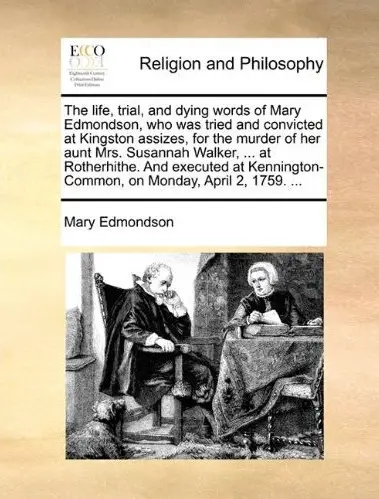
Mary Edmondson
Murderer Ann Beddingfield
Murderer · United Kingdom · 1762
Ann Beddingfield was convicted of petty treason for the murder of her husband,…
1 victim
Ann Beddingfield
Murderer · United Kingdom · 1762
Ann Beddingfield was convicted of petty treason for the murder of her husband,…
1 victim
 Elizabeth Brownrigg
Murderer · United Kingdom · 1767
Elizabeth Brownrigg was an eighteenth century murderer. Her victim, Mary Cliffo…
1 victim
Elizabeth Brownrigg
Murderer · United Kingdom · 1767
Elizabeth Brownrigg was an eighteenth century murderer. Her victim, Mary Cliffo…
1 victim
 Mary Blandy
Murderer · United Kingdom · 1751
Mary Blandy (1719–November 30, 1752) was executed by hanging outside Oxford Cas…
1 victim
Mary Blandy
Murderer · United Kingdom · 1751
Mary Blandy (1719–November 30, 1752) was executed by hanging outside Oxford Cas…
1 victim
 Margaret Waters
Murderer · United Kingdom · 1866
Margaret Waters was an English murderess who was hanged by executioner William…
19 victims
Margaret Waters
Murderer · United Kingdom · 1866
Margaret Waters was an English murderess who was hanged by executioner William…
19 victims
 Catherine Wilson
Murderer · United Kingdom · 1854
Catherine Wilson was a British nurse who poisoned victims after befriending the…
7 victims
Catherine Wilson
Murderer · United Kingdom · 1854
Catherine Wilson was a British nurse who poisoned victims after befriending the…
7 victims
 Elizabeth Duncan
Murderer · USA · 1958
Elizabeth Ann Duncan hired two men to kill her pregnant daughter-in-law, Olga K…
1 victim
Elizabeth Duncan
Murderer · USA · 1958
Elizabeth Ann Duncan hired two men to kill her pregnant daughter-in-law, Olga K…
1 victim
 Joseph Starvaggi
Murderer · USA · 1976
Joseph Blaine Starvaggi was executed by lethal injection in Texas on September…
1 victim
Joseph Starvaggi
Murderer · USA · 1976
Joseph Blaine Starvaggi was executed by lethal injection in Texas on September…
1 victim
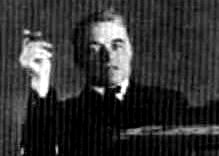 Andrew Kehoe
Mass murderer · USA · 1927
Andrew P. Kehoe committed suicide the same day by killing himself in the explos…
44 victims
Andrew Kehoe
Mass murderer · USA · 1927
Andrew P. Kehoe committed suicide the same day by killing himself in the explos…
44 victims
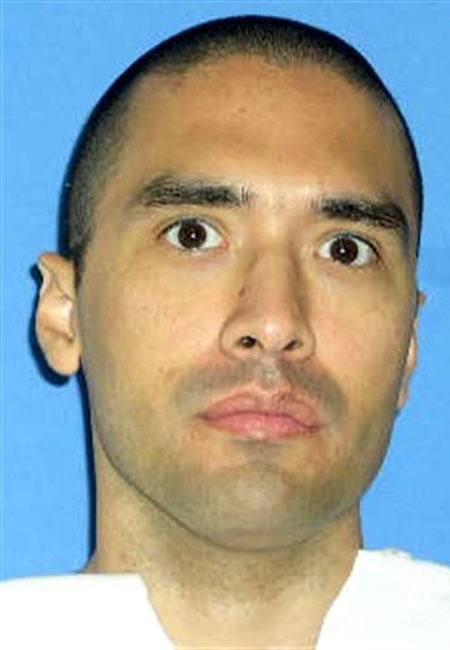 Rolando Ruiz
Murderer · USA · 1992
Rolando Ruiz was convicted of capital murder and was sentenced to death in Bexa…
1 victim
Rolando Ruiz
Murderer · USA · 1992
Rolando Ruiz was convicted of capital murder and was sentenced to death in Bexa…
1 victim
- Gender
- female
- Country
- United Kingdom
- Location
- Rotherham, South Yorkshire, England, United Kingdom
- Date of birth
- 1733
- Age at first offence
- 26
- Characteristics
- —
- Victim profile
- Her widowed aunt, Susanna Walker
- Method of murder
- Cutting her throat
- Date(s) of murder
- February 23, 1759
- Years active
- 1759
- Date of arrest
- Same day
- Status
-
Executed
Executed by hanging at Kennington-common on April 2, 1759
Identification
Mary Edmondson
Background
Mary Edmondson was the daughter of a farmer who lived near Leeds, Yorkshire. She had gone to live with her widowed aunt, Mrs Walker, of Rotherhithe. Mary lived with her aunt for two years, comporting herself in the most decent manner and regularly attending the duties of religion.
The offence
Mrs Walker, Mary Edmondson’s aunt, was murdered. Neighbours discovered Mrs Walker lying on her right side with her throat cut, with her head near a table covered with linen.
Investigation
A woman named Toucher had spent the evening with Mrs Walker. Mary Edmondson lit her across the street on her way home. Shortly after Mary’s return, a woman who cried oysters through the street observed that the door was open and heard Mary cry out: “Help! Murder! They have killed my aunt!”
Mary ran to the house of Mrs Odell, wringing her hands and bewailing the misfortune. Some gentlemen who had been spending the evening at a public-house went to inquire into the affair. One of the gentlemen, named Holloway, said: “This is very strange; I know not what to make of it: let us examine the girl.”
Mary’s account was that four men had entered at the back door, one of whom put his arms round her aunt’s neck, and another, described as a tall man dressed in black, swore that he would kill her if she spoke a single word. Holloway observed that Mary’s arm was cut and asked how it had happened. Mary replied that one of the men, in attempting to get out, had jammed it with the door. Holloway judged from appearances that no men had been in the house, said he did not believe her, and supposed she was the murderer of her aunt.
On charge of murder, Mary fell into a fit. She was removed to a neighbour’s house and was bled by a surgeon, and continued there until the following day.
Investigating Mary’s statement that the men had entered to steal valuables, Mrs Walker’s executors caused the house to be diligently searched. They found a variety of things that Mary said were stolen were not missing, and they could not discover that anything was lost. Mrs Walker’s watch and some other articles which Mary said had been carried off by the murderers were found under the floor of the necessary-house.
Arrest / Committal
A coroner’s inquest sat on the body and brought in a verdict of wilful murder. Mary was committed to prison on the coroner’s warrant. She was committed to the New Jail, Southwark.
Trial
Mary Edmondson was tried at Kingston at the next assizes for Surrey. She was convicted on evidence which, though acknowledged to be circumstantial, was such as, in the general opinion, admitted little doubt of her guilt.
Mary made a defence, but it was described as having not enough probability to have any weight.
Sentencing
Mary was condemned on Saturday and was to be executed on the Monday following.
Appeals
No appeals were described.
Execution and final statements
Mary Edmondson wrote to her parents from prison at Kingston, most solemnly avowing her innocence. She begged that the minister of the parish would preach a sermon on the occasion of her death.
She asserted her innocence on the Sunday when she was visited by a clergyman and several other people. Her behaviour was described as devout and apparently sincere. On the Monday morning she was taken out of prison, got into a post-chaise with the keeper, and arrived at the Peacock, in Kennington Lane, about nine o’clock. She drank a glass of wine, was then put into a cart, and was conveyed to the place of execution.
Mary was executed on Kennington Common. An address she made to the surrounding multitude was recorded verbatim:
“It is now too late to trifle either with God or man. I solemnly declare that I am innocent of the crime laid to my charge. I am very easy in my mind, as I suffer with as much pleasure as if I was going to sleep. I freely forgive my prosecutors, and earnestly beg your prayers for my departing soul.”
Her continued assertions of innocence were noted at the execution.
Aftermath
After execution, Mary’s body was conveyed to St Thomas’s Hospital, Southwark, and dissected “agreeably to the laws respecting murderers.”
Spotted an error, or have more information about this case?