The Fryer brothers
Mass murderers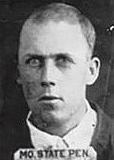 Harry & Jennings Young
Mass murderers · USA · 1932
Harry Young and Jennings Young took part in the “Young Brothers Massacre,” also…
6 victims
Harry & Jennings Young
Mass murderers · USA · 1932
Harry Young and Jennings Young took part in the “Young Brothers Massacre,” also…
6 victims
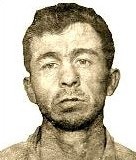 Donald Henry Gaskins
Serial killer · USA · 1969
Donald Henry Gaskins, also known as Donald “Pee Wee” Gaskins, was a serial kill…
200 victims
Donald Henry Gaskins
Serial killer · USA · 1969
Donald Henry Gaskins, also known as Donald “Pee Wee” Gaskins, was a serial kill…
200 victims
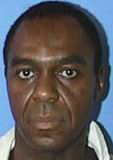 Carl Eugene Watts
Serial killer · USA · 1974
Carl Eugene Watts (born November 7, 1953; died September 21, 2007), also known…
100 victims
Carl Eugene Watts
Serial killer · USA · 1974
Carl Eugene Watts (born November 7, 1953; died September 21, 2007), also known…
100 victims
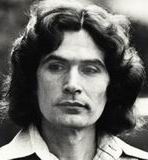 Rodney Alcala
Serial killer · USA · 1977
Rodney James Alcala (born August 23, 1943) was also known as Rodrigo Jacques Al…
100 victims
Rodney Alcala
Serial killer · USA · 1977
Rodney James Alcala (born August 23, 1943) was also known as Rodrigo Jacques Al…
100 victims
 Donald Harvey
Serial killer · USA · 1970
Donald Harvey was known as an American serial killer and a self-professed “Ange…
87 victims
Donald Harvey
Serial killer · USA · 1970
Donald Harvey was known as an American serial killer and a self-professed “Ange…
87 victims
 John Edward Swindler
Murderer · USA · 1976
John Edward Swindler was executed by electrocution in Arkansas on June 18, 1990…
3 victims
John Edward Swindler
Murderer · USA · 1976
John Edward Swindler was executed by electrocution in Arkansas on June 18, 1990…
3 victims
 Otoya Yamaguchi
Murderer · Japan · 1960
Otoya Yamaguchi (山口 二矢, Yamaguchi Otoya, February 22, 1943 - November 2, 1960)…
1 victim
Otoya Yamaguchi
Murderer · Japan · 1960
Otoya Yamaguchi (山口 二矢, Yamaguchi Otoya, February 22, 1943 - November 2, 1960)…
1 victim
 Gerald Patrick Lewis
Serial killer · USA · 1987
Gerald Patrick Lewis was sentenced to death in Alabama and Georgia. He died in…
6 victims
Gerald Patrick Lewis
Serial killer · USA · 1987
Gerald Patrick Lewis was sentenced to death in Alabama and Georgia. He died in…
6 victims
 Carol Carr
Homicide · USA · 2002
Carol Carr was an American woman from the state of Georgia. She killed both of…
2 victims
Carol Carr
Homicide · USA · 2002
Carol Carr was an American woman from the state of Georgia. She killed both of…
2 victims
 Willie Crain
Murderer · USA · 1998
Willie Crain was tried in the Thirteenth Judicial Circuit, Hillsborough County,…
1 victim
Willie Crain
Murderer · USA · 1998
Willie Crain was tried in the Thirteenth Judicial Circuit, Hillsborough County,…
1 victim
 David James Gates
Homicide · New Zealand · 1999
David James Gates was charged in connection with the murder of Gavin Edward Das…
1 victim
David James Gates
Homicide · New Zealand · 1999
David James Gates was charged in connection with the murder of Gavin Edward Das…
1 victim
- Gender
- male
- Country
- USA
- Location
- Gitchie Manitou State Preserve, Lyon County, Iowa , USA
- Date of birth
- Allen Fryer (1944), David Fryer (1949), James Fryer (1952)
- Age at first offence
- 29
- Characteristics
- murder for hire, domestic violence, rapist, rape
- Victim profile
- Roger Essem (male, 17), Stewart Baade (male, 18), Dana Baade (male, 14), Michael Hadrath (male, 15)
- Method of murder
- Shooting
- Date(s) of murder
- November 17, 1973
- Years active
- 1973
- Date of arrest
- November 29, 1973
- Status
-
Life imprisonment
All three of the Fryer brothers were sentenced to life without the possibility of parole in Lyon County on 17 November 1973.
Background
Four Sioux Falls, South Dakota teen-agers, Roger Essem, Stewart Baade, Dana Baade and Michael Hadrath, were shot to death at Gitchie Manitou State Preserve, where they were having a party. Three brothers, David, Allen and James Fryer, were convicted.
The offence
On the evening of November 17, 1973, five teenagers from Sioux Falls, South Dakota were attacked by a group of three brothers. Four of the teenagers were killed, and one was raped.
Victims:
- Roger Essem (male, 17)
- Stewart Baade (male, 18)
- Dana Baade (male, 14)
- Michael Hadrath (male, 15)
- Sandra Cheskey (female, 13, survived)
Perpetrators:
- Allen Fryer (male, 29)
- David Fryer (male, 24)
- James Fryer (male, 21)
Circumstances:
- The Fryer brothers were in the park trying to poach deer and happened upon the victims because they heard them singing while sitting around a campfire.
- David Fryer was sent to spy on the group, and reported back to his brothers that the teenagers had marijuana.
- The brothers conferred and decided to take the victims' marijuana by impersonating narcotics officers.
- Testimony at the trial indicated that the Fryers apparently thought narcotics agents were "allowed" to indiscriminately kill drug users.
- After getting shotguns from their truck, Allen, James and David Fryer positioned themselves on a ridge overlooking the victims and opened fire.
- Roger Essem was killed immediately and Stewart Baade fell wounded.
After the shootings:
- Two of the remaining teenagers took cover in the trees.
- The Fryers ordered the teenagers to come out of the trees, so Michael Hadrath and Sandra Cheskey emerged together and asked the Fryers who they thought they were.
- Allen Fryer then shot Hadrath in the arm and said that they were police officers.
- Hadrath and Cheskey fell to the ground, but were forced to get up by Allen Fryer who said they were "playing dead".
- Allen and David Fryer moved Dana Baade, Michael Hadrath, and Sandra Cheskey along a trail away from the campfire.
- Sandra Cheskey was tied up and placed in the victims van.
- During this time, Stewart Baade was also brought back to the van from where he had been wounded initially.
- Allen Fryer then drove away in the van with Sandra Cheskey, leaving Stewart Baade, Dana Baade, and Michael Hadrath behind, standing near the road with James and David Fryer.
- After the van had left, James and David Fryer pulled up their pickup and got out and killed the three teenagers with their shotguns.
Additional movements and rape:
- The bodies were discovered the next day by a couple from Sioux Falls who drove to the park while trying out their new car.
- Roger Essems' body wasn't discovered until the next day because it was left lying by the campfire, the site of the first encounter.
- Allen Fryer continued to tell Sandra Cheskey that he was a police officer while they drove around and that he was "The Boss" and the other two would do as he instructed them to.
- After a short time, James and David Fryer met them on the road in the pickup.
- Allen and Sandy got into the truck, and the group drove to a farm.
- At this point James Fryer raped Sandra Cheskey.
- The next day Allen filled the vehicles' tank with gasoline from a large red fuel tank then drove Cheskey home, still under the pretense of being a police officer, saying that Sandra was "too young to get busted".
Investigation
The next day after the murders, bodies were discovered by a couple from Sioux Falls while trying out their new car.
A statement made by defendant November 30, 1973 to the police department in Sioux Falls, South Dakota was admitted at the hearing. It described what happened after Miss Cheskey left and included the following:
"Jim (his brother James Fryer) started the van. I got in the other side and he turned — backed up, turned it to the west which faced the boys and he stepped out and he shot Dana Baade first and then Stewart Baade and I shot Stewart Baade in the back once. I think he was already dead beause Jim was shooting Double O buck and then he shot this Hadrath. He walked up and just kept shooting."
Arrest
On November 29, 1973, Sandra Cheskey was accompanied by Craig Vincent (The Lyon County, IA Sheriff) as they drove around the countryside looking for the farm house where Sandy was held captive and subsequently raped.
Near Hartford, SD she recognized the farmhouse by the large red fuel tank that stood next to the garage.
A farm owned by Allen Fryers' employer, a local farmer.
Allen Fryer then drove by in the same blue pickup that was used the night of the murders by the Fryer brothers. Sandy told Sheriff Vincent "That's him. That's the boss". Law enforcement quickly pulled the truck over and arrested Allen Fryer. David and James Fryer were also arrested shortly thereafter.
Prior escape and later arrest:
- James Fryer escaped from the Lyon County Jail, stole a vehicle, and fled the state.
- He was arrested in Wyoming and brought back to face federal charges.
Trial
Allen Fryer:
- The trial of Allen Fryer was held at the Lyon County Courthouse in Rock Rapids, Iowa.
- Sandra Cheskey's testimony was instrumental, as it comprised the bulk of evidence against the Fryer brothers.
- There were some issues at the trial involving confusion by Cheskey, most of which can be attributed to her age at the time (13).
David Fryer plea:
- David Fryer pled guilty to 3 charges of murder and one charge of manslaughter.
Degree of guilt hearing and findings regarding Stewart Baade:
- After pleading guilty to the murder of Stewart Baade a hearing was held pursuant to § 690.4, The Code, to determine defendant's degree of guilt.
- By his plea of guilty, defendant conceded he killed Stewart Baade with malice aforethought.
- In determining defendant was guilty of first degree murder the trial court found the killing was "willful, deliberate and premeditated."
In camera hearing and statements:
- Defendant moved the State be required to turn over for defendant's examination "the statements that she had made and given to the prosecution."
- Following submission of appeal, the case was remanded for a limited purpose of conducting an in camera hearing required by State v. Mayhew and State v. Deanda.
- The in camera hearing was held by the trial court December 30, 1974.
- Exhibit A was the same statement which had been produced at the degree of guilt hearing.
- Exhibit B consisted of two pages of Miss Cheskey's own handwritten corrections made following her perusal of exhibit A.
- Exhibit C is a 21 page, unsworn, unsigned, typewritten statement by Miss Cheskey in question and answer form, taken by a shorthand reporter November 17, 1973 at the Sioux Falls, South Dakota police department.
- Exhibit D is a video tape taken of an interview of Miss Cheskey at the scene of the crime, taken within three days following the murders; words on the tape are incomprehensible and Exhibit D has no value.
- Exhibit E is a two page, handwritten statement of unknown date.
- Exhibit F is another handwritten statement of Miss Cheskey.
- The court held that the prosecutor was right in believing Miss Cheskey's earlier statements were "incorporated" into exhibit A, and held that the earlier exhibits were not produced at trial, which was treated as error cured by the in camera hearing; it also held that the failure to produce earlier exhibits did not require a reversal of defendant's degree of guilt.
Conviction basis and premeditation:
- Defendant entered a guilty plea to an open charge of murder and appealed the trial court's determination he was guilty of first degree murder; the court affirmed.
- The appellate court addressed the claim that the evidence was insufficient for premeditation and deliberation and held the finding was not unsound.
- The appellate court stated that in finding premeditation and deliberation the trier of facts may consider the fact a defendant selected a deadly weapon and used it in a deadly manner.
- The appellate court addressed the pretense of narcotics officers and held it was more logical to believe the pretense arose at least as soon as early in the encounter and was consistent with premeditation and deliberation.
Sentencing
- All three of the Fryer brothers were sentenced to life without the possibility of parole.
- They were serving their sentences at the Iowa State Penitentiary in Fort Madison, Iowa.
- Their county of commitment is listed as Dickinson County by the Iowa Department of Corrections.
Appeals
Iowa Supreme Court:
- The Supreme Court of Iowa heard the appeal of David Lyle Fryer.
- The Supreme Court affirmed.
- The appellate opinion addressed:
- the in camera hearing issue related to Miss Cheskey's statements,
- the trial court's findings on premeditation and deliberation,
- and other issues on appeal, including arguments about jury instructions and evidentiary rulings.
Federal habeas corpus appeal by Allen Fryer:
- On August 13, 1974, Allen Fryer was convicted of four counts of first degree murder, largely on the testimony of the fifth teenager and sole survivor, Sandra Cheskey.
- On May 11, 1983, Fryer filed a petition for a writ of habeas corpus in the Southern District of Iowa.
- The District Court denied Fryer's petition; Fryer appealed.
- The United States Court of Appeals, Eighth Circuit affirmed the denial of the petition.
Federal habeas corpus issues addressed:
- Sufficient evidence to convict of four counts of first-degree murder.
- Alleged suppression under Brady relating to a statement given by Sandra Cheskey to the police on the evening of November 29, 1973.
- Voluntariness of Fryer's November 30, 1973 statement.
- Adequacy of the voluntariness hearing procedure.
- Challenges to jury instructions and claims of procedural waiver.
- Claims about prosecutorial questioning of a ballistics expert and failure to testify.
- Ineffective assistance of counsel claims.
Voluntariness details from the federal appeal
The appellate opinion described Fryer's interrogation and statement:
- Fryer was arrested in the late afternoon or early evening of November 29, 1973 after Sandra Cheskey had identified him in Sioux Falls, South Dakota.
- He was read his rights and taken to the Sioux Falls Police Station.
- Upon arrival at the station at about 7:00 p.m., Fryer was given a form with his rights written on it; his rights were explained.
- Fryer said he understood his rights, signed an acknowledgment and waiver of his rights, and was interrogated for three-and-one-half hours, with coffee breaks every 30-45 minutes, by two police officers.
- Fryer was permitted to smoke and go to the restroom.
- During this first interrogation, Fryer denied all knowledge of the Gitchie Manitou killings.
- At 10:30 p.m., Fryer was again advised of his rights; he acknowledged understanding and signed a form indicating he wished to waive them.
- The appellate opinion included a verbatim colloquy about rights and waivers:
Q Have you been advised of your right to remain silent?
A Yes.
Q The fact that you don't have to say anything if you don't want to?
Q Have you been advised that anything you say can and will be used against you in a court of law?
Q Have you been advised that you have a right to consult with a lawyer?
Q Before you answer any questions?
Q Or before you make any statements?
Q And you understand that you can have a lawyer present during this questioning?
Q Do you realize that if you answer questions or make any statements without consulting a lawyer or without having a lawyer present during this questioning you will still have the right to stop answering the questions or make any statements until you consult with a lawyer?
Q You have answered yes to all of these questions that I have asked you. Do you understand these questions that I have asked you?
Q Do you at this time want to give us a statement about what happened?
A I want to tell you the whole works.
- Fryer then made a statement in which he apparently admitted being present during the shooting, but denied firing any shots himself.
- Shortly after making this statement, Fryer agreed to retrace with three police officers the route he had traveled on the night of the murders.
- Following the ride, the officers and Fryer returned to the station, where coffee, donuts, and rolls were served; Fryer ate a donut.
- After the officers learned that David Fryer had made a statement that contradicted Allen Fryer's statement, a police officer confronted Allen Fryer with the contradictions and told Fryer what he thought had happened.
- Fryer told the officer that the officer was right.
- Fryer was again read his rights and acknowledged understanding them.
- He then gave another statement.
- At about 5:30 a.m., Fryer went to sleep.
- Sometime after noon the next day, Fryer's statement was transcribed, he spent approximately 30 minutes reviewing it, pointed out two changes, initialed the changes, and signed the statement.
Outcome
- The United States Court of Appeals, Eighth Circuit affirmed the District Court's denial of Fryer's habeas corpus petition.
- The Supreme Court of Iowa affirmed the trial court's first degree murder determination after the degree of guilt issues and other arguments were considered.
Aftermath
- The Fryer brothers continued to serve their sentences at the Iowa State Penitentiary in Fort Madison, Iowa.
- Facts about prior convictions and tools used were described in court materials.
Other details
Prior convictions:
- In 1968, Allen and David Fryer were convicted of transporting stolen vehicles from Luverne, Minnesota to Valley Springs, South Dakota.
- The vehicles in question were a 1968 El Camino and a 1966 Dodge Polara.
Shotguns:
- One or more of the shotguns used in the Gitchie Manitou murders were stolen by David Fryer.
Farm ownership and work:
- The farm where Sandra Cheskey was raped was owned by Allen Fryer's employer.
- Fryer was working as a farmhand at the time of the murders.
Vehicles used:
- It appeared from court documents that the Fryers had a pickup and a van, which they used at various points throughout the night.
- The van was described as in poor working condition, and was the van driven to the park by the victims.
Jury instruction quotations and issues: Instruction on inferences and intent (instruction 9 and 11) were quoted in the federal appellate discussion:
- Instruction No. 9:
Among the essential elements of murder in the first degree are deliberation, premeditation, and a specific intent to kill. If a person with opportunity to deliberate makes a wrongful assault with a deadly weapon upon another and death ensues, the inference is warranted that he did so with malice, deliberation, premeditation and a specific intent to kill. This inference is not conclusive, but may be considered by you with all of the evidence in the case, or lack of evidence, in determining whether or not the killing charged, if done by the defendant, was done with deliberation, premeditation and a specific intent to kill.
- Instruction No. 11:
Malice aforethought is an essential element of the crime of murder. If a person makes a wrongful assault upon another with a deadly weapon and death ensues, the inference is warranted that such killing was with malice aforethought. This inference is not conclusive, but may be considered by you with all of the evidence in the case, or lack of evidence, in determining whether or not the killing charged, if done by the defendant, was done with malice aforethought.
Ballistics expert testimony:
- The prosecutor and ballistics expert colloquy during redirect examination was included:
Q Mr. Barton, just one thing. Would you tell us whether or not you could tell whether there had been shells picked up and removed from this area?
A I would have no way of knowing that.
Q And could you state whether or not you know whether the defendant picked up and removed any shells from this area?
A I would have again no way of knowing this.
Q Who would know?
A The defendant, I would assume.
- The appellate discussion noted that Fryer claimed this questioning improperly drew attention to Fryer's failure to testify.
Cheskey statement used in Brady discussion:
- The federal appellate opinion quoted Cheskey's statement in relevant part:
"The man who I identified tonight in the pickup, was the one they called the 'Boss.' He was the one who shot Mike and Stu that night. He is the one that took me from the park...."
Closing argument claim:
- Fryer's claim that the prosecutor told the jury something about a two-day headstart to get out of town was addressed in the appellate opinion through deposition and other testimony and a finding that no improper statement was made during closing arguments.
Spotted an error, or have more information about this case?