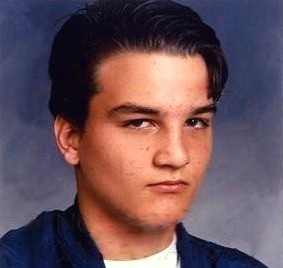
Eric Borel
Spree killer Christian Dornier
Spree killer · France · 1989
Christian Dornier Christian Dornier was found insane on November 10, 1989 and w…
14 victims
Christian Dornier
Spree killer · France · 1989
Christian Dornier Christian Dornier was found insane on November 10, 1989 and w…
14 victims
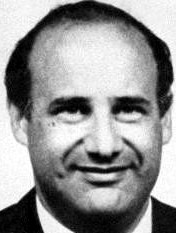 Jean-Claude Romand
Spree killer · France · 1993
Jean-Claude Romand (born February 11, 1954) was a French impostor and murderer…
5 victims
Jean-Claude Romand
Spree killer · France · 1993
Jean-Claude Romand (born February 11, 1954) was a French impostor and murderer…
5 victims
 Sid Ahmed Rezala
Spree killer · France · 1999
Sid Ahmed Rezala Rezala committed suicide apparently by inhaling the dense blac…
3 victims
Sid Ahmed Rezala
Spree killer · France · 1999
Sid Ahmed Rezala Rezala committed suicide apparently by inhaling the dense blac…
3 victims
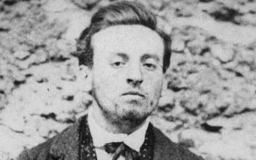 Jean-Baptiste Troppmann
Spree killer · France · 1869
Jean-Baptiste Troppmann was born in Alsace in 1848 and was executed at the age…
8 victims
Jean-Baptiste Troppmann
Spree killer · France · 1869
Jean-Baptiste Troppmann was born in Alsace in 1848 and was executed at the age…
8 victims
 Guy Martel
Spree killer · France
Guy Martel killed seven people and wounded five others in a shooting spree thro…
7 victims
Guy Martel
Spree killer · France
Guy Martel killed seven people and wounded five others in a shooting spree thro…
7 victims
 Mohammed Merah
Spree killer · France · 2012
Mohammed Merah was a French-Algerian Islamist terrorist who had previously been…
7 victims
Mohammed Merah
Spree killer · France · 2012
Mohammed Merah was a French-Algerian Islamist terrorist who had previously been…
7 victims
 Walter Leroy Moody
Murderer · USA · 1989
Walter Leroy Moody was sentenced to death in Alabama in 1997. Walter Leroy Mood…
2 victims
Walter Leroy Moody
Murderer · USA · 1989
Walter Leroy Moody was sentenced to death in Alabama in 1997. Walter Leroy Mood…
2 victims
 John Sweeney
Murderer · United Kingdom · 1990
John Sweeney was a jobbing carpenter. He worked under assumed names on construc…
2 victims
John Sweeney
Murderer · United Kingdom · 1990
John Sweeney was a jobbing carpenter. He worked under assumed names on construc…
2 victims
 Granville Riddle
Murderer · USA · 1988
April 1985 — Granville Riddle committed the burglary and vandalism of the Oakda…
1 victim
Granville Riddle
Murderer · USA · 1988
April 1985 — Granville Riddle committed the burglary and vandalism of the Oakda…
1 victim
 Bobbie Sue Terrell
Murderer · USA · 1984
Bobbie Sue Dudley Terrell was a Pinellas County nurse and worked as the night s…
12 victims
Bobbie Sue Terrell
Murderer · USA · 1984
Bobbie Sue Dudley Terrell was a Pinellas County nurse and worked as the night s…
12 victims
- Gender
- male
- Country
- France
- Location
- Solliès-Pont/Cuers, Provence-Alpes-Côte d'Azu r, France
- Date of birth
- December 11, 1978
- Age at first offence
- 17
- Characteristics
- juvenile (16), parricide, serial rapist
- Victim profile
- Yves Bichet (his stepfather) / Marie-Jeanne Parenti (his mother) / Jean-Yves Bichet, 11 (his half brother) / Alan Guillemette, 17 / Marius Boudon, 59 / Andrée Coletta, 65 / Rodolphe Incorvala, 59 / Jeanne Laugiero, 68 / Mohammed Maarad, 41 / Pierre Marigliano, 68 / Pascal Mostacchi, 15 / Denise Otto, 77 / Mario Pagani, 81 / André Touret, 62 / Ginette Vialette, 48
- Method of murder
- Hitting with a hammer / Shooting
- Date(s) of murder
- September 23-24, 1995
- Years active
- 1995
- Date of arrest
- —
- Status
-
Died in custody
Committed suicide by shooting himself the same day
Background
Eric Borel (11 December 1978 – 24 September 1995) was a French student. At the age of 16, he murdered his family in Solliès-Pont in the arrondissement of Toulon on September 23, 1995, and then walked several miles to the village of Cuers where he continued his rampage the next day, shooting dead twelve other people and injuring four more, while pacing through the streets for half an hour. The shooting ended when police arrived at the scene, whereupon Borel committed suicide.
Eric Borel was the son of Marie-Jeanne Parenti and Jacques “Jacky” Borel, who were both working in the military at the time of his birth. Their liaison was rather short, and after their paths departed, Eric was sent to Jacky’s parents in Limoges, where he stayed until he was five. When his mother began to cohabit with Yves Bichet, she again took care of her son, much to his dislike, and took him to their home in Solliès-Pont.
Borel’s mother was described as authoritarian and outwardly religious and an activist in the Secours catholique. She mistreated and beat him, believing him to be a “child of sin.” It was said that he never developed a close relation to Yves Bichet, with whom he was said to have frequent rows. It was also said that Yves Bichet beat him on occasions. Franck and Jean-Luc Bichet stated that their father had always been nice to Eric, including building him a shack for his chickens and other animals he took home.
When Borel broke his arm at the age of eight, he preferred to run away and hide rather than go home, until he was found shivering from pain. He grew up as a quiet and taciturn boy who kept to himself and tended the chickens in the backyard during his free time rather than going out.
Borel grew up with increasing admiration for the military. He told lies about heroic deeds of his father during the Indochina War and adoring his stepbrother Franck Bichet, who served in the army. He had an affection to weapons and used to shoot sparrows with an air gun.
Other details
Borel attended the lycée professionnel Georges-Cisson in Toulon, where he studied electromechanics and did well academically. He was described as a disciplined and quiet student, but in his last year at school he showed some radical change in behaviour: skipping classes without permission or explanation and becoming unaffable.
He said he could not bear it anymore at home, having enough of housework and being called names. He often stated his wish to join the military, like his father and grandfather.
It was said that he told one of his classmates the week prior to the shooting that he would commit suicide, but not before killing two or three people.
Borel had a friend, 17-year-old Alan Guillemette, a classmate who was outgoing and popular among peers. The two hung out after school.
Many reports erroneously stated his room was fully of Nazi insignia, sparking rumors that he sympathised with fascist ideologies. It was said that besides a picture of Adolf Hitler cut out from a newspaper, graffiti displaying a swastika on his door, and a few books regarding World War II, there was also a documentary about David Koresh and the Waco siege. No evidence was found after his death that he was interested in any kind of politics.
A girl from Cuers spread the story that Eric had told her about his relationship to his half-sister called Caroline, who was supposed to be his pregnant girlfriend. The half-sister in question did not exist, and it was also said not to be true that his father had died from cancer shortly before his rampage.
Multiple contemporary articles described him differently, including descriptions of Hitler and neo-Nazi themes in his room. One report said police said he was a neo-Nazi fanatic, with a Nazi swastika pinned on his bedroom door and pictures of Adolf Hitler and neo-Nazi literature. It also described him as nearly always dressed in black with a strong interest in firearms, the military and paramilitary, and said he had hoped to join the army.
A quotation attributed to a school colleague was included:
“I am going to kill myself. I am sick and tired of it all.”
The offence
Familicide
The series of attacks started on September 23, 1995, at about 6:00 p.m. CET. Borel killed his stepfather, Yves Bichet, in the kitchen by shooting him four times with a .22-caliber rifle, and then smashing his head with a hammer.
Police assumed that a quarrel had taken place beforehand when Borel tried to run away from home. After killing Bichet, Borel assaulted his half-brother, 11-year-old Jean-Yves Bichet, who was watching TV. He first shot him with the rifle and then bludgeoned his head with the hammer.
After wiping up the blood trails, Borel waited for his mother to come home. When his mother, Marie-Jeanne Parenti, arrived at home from church at about 8:30 p.m., Borel immediately killed her with a single shot to the head.
It was stated that no blunt force was used on Mrs. Parenti, although some reports suggested he beat her as well with either the hammer or a baseball bat.
After his mother lay dead, Borel began to clean the house from blood, covered the bodies with sheets, and closed all shutters, as well as the steel gate.
He carried a bag packed with food, money, a raincoat, a map of Limoges, and a pistol shooting rubber bullets that was erroneously identified as a .22-caliber pistol in some reports. He was also armed with his father’s rifle and had ammunition in his pockets. He made his way towards Cuers at first by car, but eventually he crashed it into a wall and continued the path by foot.
It was stated that he presumably spent the night between vines.
The bodies of the murdered family were found at approximately 1 a.m. by Yves Bichet’s son Jean-Luc, a student living in Antibes who only occasionally visited his father on weekends. Jean-Luc called police. Yves Bichet was first considered a suspect in the murders when giving contradictory information. Borel’s absence remained undetected until about three hours later.
Shooting spree
On the following day, at 7:15 a.m., Borel arrived at the home of his friend Alan Guillemette and asked Alan’s mother to wake him after the door was opened. The two had a lengthy discussion in the garden. It was stated that Eric wanted something from Alan, but when Alan declined and turned to go back into the house, Borel shot him in the back, mortally wounding him.
From 7:30 a.m. onwards, Borel started shooting people at random. It was stated that no one grew suspicious of his rifle until it was too late because it was hunting season and thus rifles outside were not unexpected.
He shot at Ginette Vialette through an open window, mortally wounding her. He also killed Denise Otto while she was bringing the trash out, and he hit Denise’s husband, Jean, in the shoulder.
He injured an elderly woman walking in the streets with her husband. He also shot and wounded two brothers who were crossing his path.
The shots he fired at Rodolphe Incorvala, once again through an open window, were eventually lethal. It was stated that he later died in a hospital.
Borel crossed the street and shot and killed shopkeeper Mario Pagani, who was out buying a newspaper, with shots in the abdomen and head. He also shot and killed Moroccan Mohammed Maarad in front of the “Café du Commerce.”
Marius Boudon and André Touret were killed while they were drawing money from an ATM. Andrée Coletta was killed while she was taking her poodle for a walk. Finally, Borel shot Pascal Moustaki to death at Place Peyssoneau.
It was stated that by 8:00 a.m., police arrived at the scene. Realizing he was encircled, Borel committed suicide under a cypress tree in front of a school by shooting himself in the head.
Observers of the rampage stated he had been poised and calm all the while, taking care at aiming and shooting, hitting most of his victims in the head, and returning when he did not hit properly the first time. It was stated that in total, Borel fired about 40 shots.
In total death and later deaths It was stated that on October 23, 1995, Jeanne Laugiero, 68, died in hospital from injuries sustained in the shooting, raising the death toll to 14 victims. It was stated that the last death in the killing spree was 68-year-old Pierre Marigliano, who succumbed to his wounds on March 2, 1996, bringing the death toll to 15.
A quotation attributed to an eyewitness was included:
“The killer had a peaceful look, calmly reloading his rifle. He headed toward city hall while continuing to fire and then he turned around to finish off the man whom he had wounded in the leg.”
A resident quotation was also included:
“The people are devastated, totally traumatized. The village is in shock,”
A witness quotation was included:
“He was like he was hunting birds,” said Guy Sintes, the owner of a cafe on the square in Cuers, a sunny village near the Mediterranean port of Toulon.
Another witness quotation was included:
“The people are devastated, totally traumatized. The village is in shock,” said Cuers Mayor Guy Gigou.
“He was very calm, very poised. He put the gun to his shoulder, held his gun steady, adjusted his aim and fired,” Sintes said.
“He was shooting at anything that moved. He was firing everywhere,” a woman living in Cuers told France-Info radio.
“I saw him go past my shop with his rifle, at around 8 this morning. He
Spotted an error, or have more information about this case?