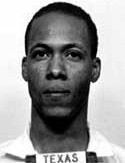
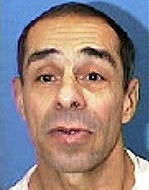
Tommy Ray Jackson
Murderer Brian Kevin Rosenfeld
Murderer · USA · 1985
Brian Kevin Rosenfeld Brian Kevin Rosenfeld was sentenced to three concurrent l…
23 victims
Brian Kevin Rosenfeld
Murderer · USA · 1985
Brian Kevin Rosenfeld Brian Kevin Rosenfeld was sentenced to three concurrent l…
23 victims
 Marvin Gray
Murderer · USA · 1975
Marvin Gray was convicted killer who claimed responsibility for 23 slayings and…
23 victims
Marvin Gray
Murderer · USA · 1975
Marvin Gray was convicted killer who claimed responsibility for 23 slayings and…
23 victims
 Yahweh ben Yahweh
Murderer · USA · 1980
Yahweh ben Yahweh was born and legally named Hulon Mitchell Jr. (October 27, 19…
23 victims
Yahweh ben Yahweh
Murderer · USA · 1980
Yahweh ben Yahweh was born and legally named Hulon Mitchell Jr. (October 27, 19…
23 victims
 Russell Ellwood
Murderer · USA · 1991
Russell Ellwood was a former taxi driver. Authorities suspected him of killing…
20 victims
Russell Ellwood
Murderer · USA · 1991
Russell Ellwood was a former taxi driver. Authorities suspected him of killing…
20 victims
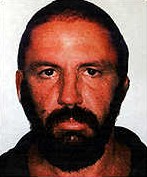 Robert Paul Long
Mass murderer · Australia · 2000
Robert Paul Long was an itinerant fruit-picker who lived in Australia and was d…
15 victims
Robert Paul Long
Mass murderer · Australia · 2000
Robert Paul Long was an itinerant fruit-picker who lived in Australia and was d…
15 victims
 Hampus Hellekant
Murderer · Sweden · 1999
Karl Helge Hampus Hellekant was later known as Karl Svensson. He was born Janua…
1 victim
Hampus Hellekant
Murderer · Sweden · 1999
Karl Helge Hampus Hellekant was later known as Karl Svensson. He was born Janua…
1 victim
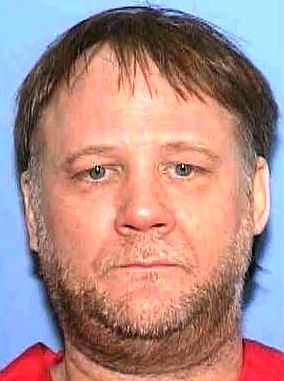 Earl Wesley Berry
Murderer · USA · 1987
Earl Wesley Berry was convicted of capital murder and sentenced to death for th…
1 victim
Earl Wesley Berry
Murderer · USA · 1987
Earl Wesley Berry was convicted of capital murder and sentenced to death for th…
1 victim
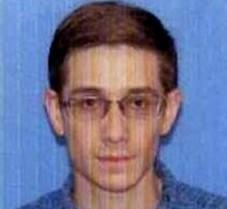 Matthew Murray
Spree killer · USA · 2007
Matthew J. Murray was an American gunman who on December 9, 2007 killed four pe…
4 victims
Matthew Murray
Spree killer · USA · 2007
Matthew J. Murray was an American gunman who on December 9, 2007 killed four pe…
4 victims
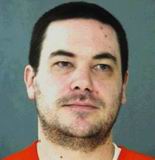 Robert Jackson
Murderer · USA · 1992
Robert W. Jackson, III — defendant; male; white · Elizabeth Girardi — victim ·…
1 victim
Robert Jackson
Murderer · USA · 1992
Robert W. Jackson, III — defendant; male; white · Elizabeth Girardi — victim ·…
1 victim
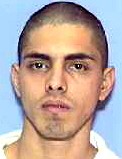 John Richard Baltazar
Murderer · USA · 1997
John Richard Baltazar was executed in Texas. · September 27, 1997 — John Baltaz…
1 victim
John Richard Baltazar
Murderer · USA · 1997
John Richard Baltazar was executed in Texas. · September 27, 1997 — John Baltaz…
1 victim
- Gender
- male
- Country
- USA
- Location
- Williamson County, Texas, USA
- Date of birth
- November 15, 1956
- Age at first offence
- 27
- Characteristics
- kidnapping, rape, robbery
- Victim profile
- Rosalind Robison, 24 (University of Texas student)
- Method of murder
- Shooting (.25-caliber pistol)
- Date(s) of murder
- November 17, 1983
- Years active
- 1983
- Date of arrest
- 4 days after
- Status
-
Executed
Executed by lethal injection in Texas on May 4, 2000
Case identification
Defendant: Tommy Ray Jackson
Victim: Rosalind Robison, a 24-year-old University of Texas student
Accomplice: James Otis Clary
Status and outcome
Tommy Ray Jackson was convicted of capital murder and sentenced to death after a separate punishment hearing. His conviction and sentence were affirmed on appeal. His requests for habeas corpus relief were denied through multiple proceedings, and his petition for writ of certiorari was denied. Jackson was executed by lethal injection in Texas on May 4, 2000.
Timeline
- November 17, 1983 — Tommy Ray Jackson and James Otis Clary met in connection with plans to steal a car; Jackson and Clary kidnapped Rosalind Robison from the parking lot of the Petroleum Engineering Building on the U.T. campus in Austin, drove away in her car, withdrew cash with her ATM card, and raped Rosalind in the back seat of the car. They traveled to Williamson County and, at a remote area, led Rosalind with her hands bound near a gravel pit where Jackson shot her at point blank range in the back of the head.
- December 3, 1984 — A jury found Jackson guilty of the capital offense.
- December 4, 1984 — A jury answered affirmatively two special sentencing issues and sentenced Jackson to death.
- February 3, 1988 — Jackson’s conviction and sentence were affirmed by the Texas Court of Criminal Appeals.
- June 3, 1988 — The United States Supreme Court denied Jackson’s petition for writ of certiorari.
- October 17, 1988 — Jackson filed an application for habeas corpus relief in the trial court.
- November 17, 1994 — The trial court issued findings of fact and conclusions of law recommending that relief be denied.
- August 31, 1995 — The trial court issued supplemental findings and conclusions recommending that relief be denied.
- October 2, 1996 — The Texas Court of Criminal Appeals denied relief based on the trial court’s findings and conclusions.
- October 17, 1996 — Jackson filed a petition for writ of habeas corpus in the United States District Court for the Western District of Texas, Austin Division.
- August 10, 1998 — The district court denied habeas relief.
- October 8, 1998 — The district court granted permission to appeal.
- October 29, 1999 — The United States Court of Appeals for the Fifth Circuit affirmed the district court’s denial of habeas corpus relief.
- March 20, 2000 — Jackson’s petition for writ of certiorari was denied by the Supreme Court.
- May 4, 2000 — Jackson was executed by lethal injection in Texas.
Background
Jackson and James Otis Clary met at a halfway house, where they discussed stealing a car to be used in future robberies. After leaving the halfway house on November 17, 1983, Jackson and Clary spent much of the day at various locations in East Austin searching for a car to steal, then focused attention on the parking lot next to the Petroleum Engineering Building on the University of Texas campus in Austin.
The offence
Kidnapping and robbery
Between 11 p.m. and midnight on November 17, 1983, Jackson and Clary kidnapped Rosalind Robison, a University of Texas student, from the parking lot next to the Petroleum Engineering Building on the U.T. campus in Austin. Jackson and Clary drove away in her white Oldsmobile Delta 88. After discovering Rosalind had no money, they went to the nearest ATM and obtained cash with Rosalind’s ATM card.
Sexual assault
While traveling north on IH-35, Jackson raped Rosalind in the back seat of the car.
Murder at close range
After exiting IH-35 in Williamson County and stopping in a remote area, Clary had sexual intercourse with the victim. Clary stated that because he used Jackson’s name in the presence of Rosalind, she was executed. Clary and Jackson took Rosalind from the car with her hands bound and led her near a gravel pit where Jackson shot her at point blank range in the back of the head. After Jackson tried to hide the body by covering it with loose gravel, Jackson and Clary left the scene in Rosalind’s car. Rosalind’s body was discovered in a gravel pile one month later.
Weapon rental
Rickey Johnson testified that sometime prior to Thanksgiving in November of 1983, Jackson was looking for a gun and that Rickey rented Jackson a gun for twenty dollars. Rickey’s brother, James Johnson, returned the gun to Rickey after Thanksgiving. After Jackson’s arrest, Rickey found out that the Austin police were looking for the gun and initially tried to hinder the police probe by hiding the gun in a local storm drain. Rickey ultimately led homicide investigators to the weapon in order for them to retrieve it from the sewer. Ronald D. Richardson, a DPS firearms expert, performed a ballistic examination on the bullet removed from Rosalind’s body and testified that it was fired from the handgun Jackson had rented from Rickey Johnson.
Investigation
After Rosalind failed to return home, her roommate reported her missing. Four days after the murder, police pulled over Rosalind’s car, and Jackson was behind the wheel. Jackson was arrested outside a grocery store in Austin while driving Rosalind’s car. When Jackson was arrested, police found Rosalind’s ATM card in the car.
A checkbook containing Rosalind’s ATM card was found when officers arrested Jackson. Republic Bank of Austin confirmed Rosalind held an account and had been issued an ATM card, and bank records showed a $50 withdrawal on November 17 at 11:39 p.m. at an ATM in Austin.
Pubic hairs removed from the back seat of Rosalind Robison’s car matched Jackson’s pubic hair. Fingerprints found on Rosalind’s personal effects recovered from the trunk of the car were also identified as Jackson’s.
Ballistic evidence established the bullet removed from Rosalind’s body was fired from the handgun Jackson had rented from Rickey Johnson.
Arrest
Jackson was arrested four days after the murder while driving Rosalind’s car. When Jackson was arrested by officers of the Austin Police Department, Rosalind’s ATM card was found in the car.
Trial
Charges and plea
On February 10, 1984, Jackson was indicted in the 277th District Court of Williamson County, Texas, for the capital murder of Rosalind Robison while in the course of committing and attempting to commit the offenses of robbery, kidnapping, and aggravated sexual assault, occurring on November 17, 1983. Jackson pleaded not guilty and was tried before a jury.
Guilt phase
On December 3, 1984, the jury found Jackson guilty of the capital offense. The jury unanimously found beyond a reasonable doubt that:
- Jackson acted deliberately in causing Robison’s death with the reasonable expectation that Robison’s death would result, and
- there was a probability that Jackson would commit criminal acts of violence constituting a continuing threat to society.
Punishment phase
On December 4, 1984, following a separate punishment hearing, the jury answered affirmatively the two special sentencing issues submitted and sentenced Jackson to death.
Sentencing
Jackson was sentenced to death on December 4, 1984 after the jury answered affirmatively the two special sentencing issues.
Appeals
Direct appeal
Jackson’s conviction and sentence were automatically appealed to the Texas Court of Criminal Appeals. The Texas Court of Criminal Appeals affirmed the judgment on February 3, 1988.
Jackson petitioned the United States Supreme Court for writ of certiorari, and the Supreme Court denied the petition on June 3, 1988.
State habeas proceedings
Jackson filed an application for habeas corpus relief in the trial court on October 17, 1988. The trial court held an evidentiary hearing and issued findings of fact and conclusions of law on November 17, 1994, followed by supplemental findings and conclusions on August 31, 1995, recommending that relief be denied. The Texas Court of Criminal Appeals denied relief on October 2, 1996 based on the trial court’s findings and conclusions.
Federal habeas proceedings
Jackson filed a petition for writ of habeas corpus in the United States District Court for the Western District of Texas, Austin Division, on October 17, 1996. The district court denied habeas relief on August 10, 1998 but granted permission to appeal on October 8, 1998. The United States Court of Appeals for the Fifth Circuit affirmed the district court’s denial of habeas corpus relief on October 29, 1999.
In his federal appeal, Jackson contended that his constitutional rights were violated by a Brady violation, the impermissible comments of the prosecution, and the admission of evidence of an unadjudicated offense. The Fifth Circuit affirmed the district court’s denial of habeas relief.
Jackson’s petition for writ of certiorari was denied by the Supreme Court on March 20, 2000.
Other details
Accomplice plea and testimony
Accomplice James Otis Clary pled guilty and testified against Jackson. Clary was sentenced to life imprisonment. Clary’s testimony included an account of the events, including that Clary recalled being told to pull over and take positions in the car, recalled Jackson raping Robison, and described the decision to kill Robison because Clary used Jackson’s name in Robison’s presence.
Witness descriptions and physical evidence details
Maria Salazar, Rosalind Robison’s roommate, informed the jury that on the evening Rosalind disappeared she was wearing a gold Seiko watch with a small white face and a little safety link chain. Salazar confirmed that Rosalind kept in the trunk of her automobile a tool kit, blanket, and orange towel in case of a road emergency.
Pam McKinney, a female acquaintance of both Jackson and Clary, testified that neither Jackson nor Clary owned a car, but that on Friday morning prior to Jackson’s arrest, Jackson and Clary showed up at McKinney’s home in a white Oldsmobile. McKinney testified that Jackson drove her to various locations in Austin, and during that time she noticed a lady’s purse in the front passenger area. McKinney testified that Jackson was in possession of a lady’s gold Seiko watch and attempted to give it to his sister, Linda Lindly. McKinney also testified that she witnessed Jackson the next morning wash his face with an orange towel taken from the vehicle, and that she later turned the towel over to police investigators.
Linda Lindly, Pam McKinney’s sister, testified that on November 18, 1983, Jackson took her to a local clinic, and that while in the vehicle she spotted a brown purse on the front floor board. Lindly testified that Jackson told her the purse belonged to the friend’s wife who had loaned him the car. Lindly testified that on the weekend following Rosalind Robison’s disappearance, Jackson was spending money buying “beer, liquor, food, weed and whatever we asked for.” Lindly partially confirmed McKinney’s testimony and testified that Jackson requested that she keep a gold Seiko watch with a safety chain, which Lindly refused. Lindly also testified that she witnessed Clary in possession of a small caliber handgun identical to the murder weapon.
Anita Hall, the passenger in the vehicle at the time of Jackson’s arrest, testified that when she first met Jackson he had no car, but that three days later he was driving the white Oldsmobile.
Bandana and bound hands
Evidence indicated that Rosalind’s hands were bound behind her back with a blue and white bandana.
Burial and body discovery
The body was discovered in a gravel pile one month later.
Evidence concerning a video camera
Bank records confirmed that Robison made a $50 withdrawal, and it was noted that an ATM camera existed but was not reset after a power outage earlier that day, and the jury was denied video-taped evidence of the portion of the incident.
Prior criminal history
Jackson had a 1997 conviction for federal bank robbery with a 10-year sentence. Jackson had an 1982 conviction for burglary of auto with a 4-year sentence.
In addition, evidence was presented at penalty phase regarding another burglary involving Wilbur Woods in Luling, Texas. Ivory Tealer testified that he and Jackson and another individual used a shotgun to burglarize Wilbur Woods’s house three years prior to Jackson’s murder trial. Tealer testified that during the burglary the men confronted Woods, one held a gun on Woods while another ransacked the house, eventually shoving Woods’s 10-year-old son with a shotgun and holding it to the back of his head. The family was forced into a closet while the men robbed the house. A former bank president and other witnesses testified to details of an armed robbery of the bank by two men, and one witness stated that it was Tommy Ray Jackson who pulled a pistol on him. Jackson was also convicted of burglary of a vehicle in Guadalupe County. Jackson was convicted of theft by check on a prior occasion.
Drugs and alcohol
There was no evidence of drug or alcohol use connected with the instant offense.
Last statement of Tommy Ray Jackson (verbatim)
Yes sir, I would like to address the Robinson family. There is nothing I can say here or anything I could probably do. Now you are all probably mad at me and I would probably be in the same situation you all in if anybody I thought killed anybody in my family ahh. If I knew who killed Rosalyn I would let you know, but, I am going to say this: I am going to heaven with God as my witness. Ros was a personal friend of mine. She was a beautiful person, very educated, her. I'm very tight with the Robinson family. She was proud that she had a father that was a doctor. My family is not here present and that is by my wish and my wish only. Now the tables is turned. You are all here, the Robinson family is her to see me executed. That is something that I would not want for my family. In no form or fashion would I have ever want to see Rosalyn dead. I left the scene of where the incident happened. I guarantee you if I would have been there you would not be standing where you are if I would have been there. You all have some very serious look on your face and something very serious fixin' to happen now. I will say this on my own behalf but then again I know it is not going to make any difference but what you fixing to witness is not a nice thing. It's not nice. It's not nice. The media. I would just like to address to the media with everybody's permission. I would like to say before I go that it has been said that I have shown no remorse, but if you look at my record and my background, ask anybody that know me that in order for me to show any kind of remorse for killing that ever been done, this one time I can't show no remorse for something that I did not do and if I did I would be faking. I would totally be faking and believe me there is nothing fake about me. Nothing fake. I've done wrong, sure, I've paid the time. This is one time that I know I cannot show no remorse for something that I did not do. I am at peace, please believe me. Wherefore, I figure that what I'm dying for now is what I have done in my past. This is what I am dying for. Not for killing Rosalyn. I don't know what ya'll call her but I call her Ros, I call her Ros. That's it.
Statements attributed to others (verbatim)
Williamson County District Attorney Ken Anderson said:
"He literally put the girl on her knees, bound her hands behind her, put the bullet through her head and goes to a party," said Williamson County District Attorney Ken Anderson.
Williamson County District Attorney Ken Anderson also said:
"He's the most coldblooded, most evil, most psychopathic killer I've ever seen."
"He literally put the girl on her knees, bound her hands behind her, put the bullet through her head and goes to a party," Williamson County District Attorney Ken Anderson, who helped prosecute Jackson, said this week. "He's the most coldblooded, most evil, most psychopathic killer I've ever seen."
Additional dispute and procedural points in appellate narrative
In the federal appeal, Jackson argued that the prosecution made improper comments during sentencing, including comments related to his refusal to testify, vouching for Clary’s credibility, and invoking the status of the government as a basis for answering affirmatively to special issue questions, and Jackson also raised claims regarding Brady disclosure and admission of evidence of an unadjudicated offense. The Fifth Circuit affirmed denial of habeas relief.
Assistant Attorney General handling
Assistant Attorney General Katherine Hayes in the Capital Litigation Division handled this matter as described in the communications included in the case materials.
Inmate correspondence details (verbatim)
Jackson included a pen-pal request describing his personal preferences and background:
- “Please read carefully. I'll say in advance "Thank you".”
- “The year is 1984 in the county of Williamson in the State of Texas (death row capital of the world).”
- “I was then and there subjected to a capital murder trial by two (2) lawyers Jim Bob Brookshire and Don Higginbottom (both for the death penalty) were the individuals who represented me.”
- “When the jury was picked I was to have my fate decided by a meteorologist, plumber, truck driver, housewife, store clerk, just to mention some of the 12 perspective jurors.”
- “Notice when faced with a capital case there is a life or death situation.”
- “Please beware hte humanity thing to do would be to have people qualified to deal with a life or death situation.”
- “Life and death is very, very serious business, why would someone put in the hand of an unqualified person someone life or death decision ?”
- “When a hurricane is about to hit an area the mayor or the governor will call out the fire department, police, road construction crew (just to name a few) to handle the situation because they are faced with human lives.”
- “Now why couldn't I have had some people that was qualified to make a decision upon my life.”
- “faced with a death penalty is a very, very serious scenario.”
- “By having people more qualified to be on a jury when there is a life or death situation would most like have a more positive ending on the verdict that will be rendered.”
- “What I would like to see is something like or close to having a total of 12 jurors from a law school.”
- “Lets say they are in the 4th or graduate level of the law degree.”
- “Now these individuals would be more qualified to know and be able to recite the law as the trial goes forth.”
- “Unlike housewife, plumbers cooks, construction workers.”
- “From reading the above I would like to say I was a victim of court abuse on the highest levels.”
- “There were numerous amounts of people lying, not knowing what they were talking about.”
- “Even officers of the law (what law) that admitted at a later hearing the did not say on the witness stand as the same as they wrote in their report.”
- “Not to mention in the Georgetown Sun newspaper in December 1984 the District Attorney Edward Walsh admitted to the journalist Ms. Sevay "After hearing Tommy Jacksons co-defendant take on the witness stand testifying against Jackson I have doubts as to whether I gave the death penalty to the right man.”
- “Jackson did not take the stand.”
- “James Otis Clary made a plea bargain for a life sentence and testified against the defendent Tommy Ray Jackson.”
- “Inmate Jackson sits on death row for a crime he did not commit.”
- “James Clary sits on Jester IV unit for a crime he did commit.”
- “Inmate Jackson still fighting for justice and to hopefully one day be released back into society to become once again a productive citizen.”
- “Thank you for your time.”
- “Sincerely, Tommy Ray Jackson”
- “Tommy Ray Jackson's Pen-Pal Request : 43 year old, 5 feet 9 inches tall, weigh 163 pounds.”
- “Very good sense of humor, love sports such as; football, basketball, volleyball, tennis, handball, racketball.”
- “Callege educated: Associate Arts Degree in Behavior Psychology.”
- “My pastimes are reading, writing, listening to Jazz music.”
- “I consider myself able to get along with 99% of the world population.”
- “I'm a very patient person.”
- “I totally dislike profanity, child abuse, negativity, and disrespect.”
- “I guarantee to answer any and all letter responding to my single request guarantee to be totally honest at all times.”
- “Also will be willing to discuss any and all subjects your heart desires.”
- “Please write to me soon . . . But very soon.”
- “Honestly Yours.”
Spotted an error, or have more information about this case?