
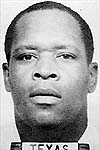
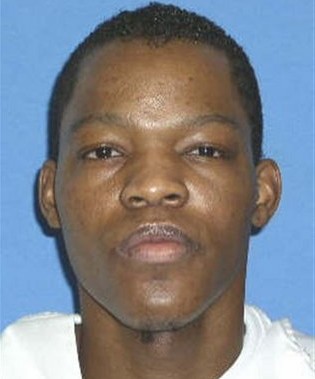
David Dewayne Johnson
Murderer Brian Kevin Rosenfeld
Murderer · USA · 1985
Brian Kevin Rosenfeld Brian Kevin Rosenfeld was sentenced to three concurrent l…
23 victims
Brian Kevin Rosenfeld
Murderer · USA · 1985
Brian Kevin Rosenfeld Brian Kevin Rosenfeld was sentenced to three concurrent l…
23 victims
 Yahweh ben Yahweh
Murderer · USA · 1980
Yahweh ben Yahweh was born and legally named Hulon Mitchell Jr. (October 27, 19…
23 victims
Yahweh ben Yahweh
Murderer · USA · 1980
Yahweh ben Yahweh was born and legally named Hulon Mitchell Jr. (October 27, 19…
23 victims
 Russell Ellwood
Murderer · USA · 1991
Russell Ellwood was a former taxi driver. Authorities suspected him of killing…
20 victims
Russell Ellwood
Murderer · USA · 1991
Russell Ellwood was a former taxi driver. Authorities suspected him of killing…
20 victims
 Robert Martines Perez
Murderer · USA · 1994
Name: Robert Martines Perez · Other name used in proceedings: Robert Martinez P…
15 victims
Robert Martines Perez
Murderer · USA · 1994
Name: Robert Martines Perez · Other name used in proceedings: Robert Martinez P…
15 victims
 Roxanne Severcool
Homicide · USA · 1980
Defendant: Roxanne Severcool (juvenile offender) · Co-defendant: Robert Fadden…
3 victims
Roxanne Severcool
Homicide · USA · 1980
Defendant: Roxanne Severcool (juvenile offender) · Co-defendant: Robert Fadden…
3 victims
 Melissa Marvin
Homicide · USA · 1999
Melissa Lynn Marvin was a 29-year-old waitress and amateur surfer at the time o…
4 victims
Melissa Marvin
Homicide · USA · 1999
Melissa Lynn Marvin was a 29-year-old waitress and amateur surfer at the time o…
4 victims
 Dano Sonnex
Murderer · United Kingdom · 2008
Dano Sonnex was convicted of murder and sentenced to life in prison with a mini…
2 victims
Dano Sonnex
Murderer · United Kingdom · 2008
Dano Sonnex was convicted of murder and sentenced to life in prison with a mini…
2 victims
 Danny Wolfe
Murderer · USA · 1997
Danny Wolfe was tried in the State of Missouri v. Danny R. Wolfe. On February 1…
2 victims
Danny Wolfe
Murderer · USA · 1997
Danny Wolfe was tried in the State of Missouri v. Danny R. Wolfe. On February 1…
2 victims
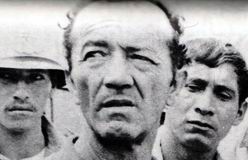 Daniel Camargo Barbosa
Serial killer · Colombia / Ecuador · 1974
Daniel Camargo Barbosa was a psychopathic serial killer from Colombia. It was b…
72 victims
Daniel Camargo Barbosa
Serial killer · Colombia / Ecuador · 1974
Daniel Camargo Barbosa was a psychopathic serial killer from Colombia. It was b…
72 victims
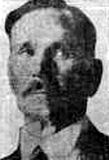 John S. Williams
Murderer · USA · 1910
John S. Williams was convicted of murder and sentenced to life imprisonment on…
18 victims
John S. Williams
Murderer · USA · 1910
John S. Williams was convicted of murder and sentenced to life imprisonment on…
18 victims
- Gender
- male
- Country
- USA
- Location
- Pulaski County, Arkansas, USA
- Date of birth
- January 10, 1963
- Age at first offence
- 26
- Characteristics
- robbery, abuse, domestic violence
- Victim profile
- Leon Brown, 67 (night watchman)
- Method of murder
- Beating with a 2x4
- Date(s) of murder
- September 2, 1989
- Years active
- 1989
- Date of arrest
- Same day
- Status
-
Executed
Executed by lethal injection in Arkansas on December 19, 2000
Case overview
David Dewayne Johnson was convicted of capital murder and was sentenced to death by lethal injection. He was executed in Arkansas on December 19, 2000.
Leon Brown was a 67-year-old night watchman at the Little Rock Crate and Basket Company. Johnson entered a warehouse and convinced Brown that he needed to use a telephone to get his car out of a ditch nearby. Brown was later found beaten to death in a pool of blood, and the case involved a warehouse robbery with stolen items found in Johnson’s possession.
Timeline
- September 2, 1989 — Leon Brown was on duty as a night watchman at the Little Rock Crate and Basket Company when he was killed; Johnson entered the warehouse and convinced Brown to use a telephone to get his car out of a ditch nearby.
- September 3, 1989 — George Wood came to the Little Rock Crate and Basket Company to check on Brown; Brown’s body was discovered in the lunchroom area.
- March 27, 2000 — The United States Court of Appeals for the Eighth Circuit decided Johnson’s appeal in David Dewayne Johnson, Appellant, v. Larry Norris, Director, Arkansas Department of Correction, Appellee (207 F.3d 515), affirming the denial of his petition for a writ of habeas corpus.
- December 19, 2000 — Johnson was executed by lethal injection in Arkansas at 9:11 p.m.
Background
Johnson was identified in connection with a warehouse and night watchman homicide at Little Rock Crate and Basket Company in Little Rock, Arkansas.
Dudley Swann, the principal stockholder in Little Rock Crate and Basket, identified Johnson as the driver of a white Oldsmobile (a white Oldsmobile automobile stuck in a drainage ditch beside the private street). Swann had previously asked Johnson to leave and come back the next day to get his car because he did not want the driver on the premises after dark.
The United States Court of Appeals for the Eighth Circuit decision described the petitioner as David Johnson, and stated that after a jury trial in 1990, the petitioner was convicted of capital murder, sentenced to death by lethal injection, and that his conviction and sentence were affirmed on direct appeal to the Arkansas Supreme Court.
The offence
Johnson entered the warehouse and convinced Leon Brown, the night watchman, that he needed to use the telephone to get a car out of a ditch nearby.
Leon Brown was beaten to death with a 2" x 4" board. His body was found lying face-down in a large pool of blood in the lunchroom area. The court described that three blows to his head were made with such force that his skull was crushed, part of it was dislodged and rammed into his brain, and his brain was crushed. An image of the extent of the damage to the victim’s skull led detectives to initially think the victim had been shot in the head.
The case also included a theft: vending machines were turned over and broken into; the windows into the office area were forced open and offices were entered; papers were strewn about, desk drawers were opened, and the pay telephone was torn off the wall. Missing items included a typewriter, a Sharp brand calculator, two cameras, tools, three pistols, a fountain pen, a briefcase, a television set, three Motorola brand handheld radios, and a battery charger.
Witnesses described Leon Brown’s shift and last sighting. Brown was last seen talking to Johnson at 6 p.m. the night he was killed. The company time clock indicated Brown never made his 7 p.m. rounds. Brown had a number of friends at the company and enjoyed going in early to visit them.
Investigation
Investigators found physical evidence linking Johnson to the crime scene. Johnson’s fingerprints were found at the scene.
A police officer assigned to watch the white Delta 88 Oldsmobile automobile that remained stuck in the ditch was officer Todd Vint. At about 11 o’clock on the morning of September 3, a blue and white pickup stopped beside the white Oldsmobile, and three people got out and tried to get the Oldsmobile out of the ditch: Terrie Dickerson; her father, Elmer Richardson; and Johnson.
Police work developed additional facts proven at trial:
- Steve Rowell told police that Johnson worked at Lucky’s Seafood in Little Rock and was supposed to report for work at either 4:00 or 5:00 p.m. on September 2 but did not do so.
- Shortly after 7:00 p.m. on September 2, Johnson called Rowell and told him he could not come to work because he was in jail. Rowell reported that Johnson was not in jail and that at that time police were not looking for him.
- Robert Sanders told police he saw a low-slung black car parked in front of Little Rock Crate and Basket Company a little after 9:00 on the night of September 2.
- Terrie Dickerson told police that on the morning of September 2, before the murder, Johnson came to her house and told her his car was out of gasoline; he asked to borrow her car. She stated that he owned a low-slung black Oldsmobile Cutlass and that she loaned him her white Oldsmobile Delta 88. She reported he left in her car, came back around 2:30 p.m., and left again around 2:45 p.m. She stated she did not see him again until about 9:00 p.m. on September 2, when he returned on foot and told her the police had been chasing him and that he had gotten her car stuck in a ditch. She also stated that the police were not chasing him. She reported that Johnson later came back in his low-slung black car, and brought into her house three Motorola brand handheld radios and a Sharp brand calculator.
- Terrie Dickerson reported that she went with Johnson when he drove his black car to Priscilla Marshall’s house. She reported that at that time she saw some guns and tools in his car, and that he took the guns and tools into Priscilla’s house.
- Terrie and Johnson went to the home of Terrie’s father, Elmer Richardson, the next morning, September 3, and asked him to drive them to Little Rock Crate and Basket Company so they could get Terrie’s white Oldsmobile out of the ditch; they were then spotted by Officer Vint and Johnson was identified by Dudley Swann and arrested by the police.
- The radios and calculator were recovered from Terrie’s house and identified as part of the property taken from the Little Rock Crate and Basket Company.
- Priscilla Marshall told police that Johnson came to her house on the morning of September 3, told her that his girlfriend was moving to North Little Rock, and said he needed to store some guns and tools. From her house police later recovered the battery charger, a .38 caliber pistol, a Magnavox brand television set, cameras, tools, a fountain pen, and Leon Brown’s .41 caliber Smith and Wesson revolver. Each item was identified as property taken from Little Rock Crate and Basket.
- Connie Manuel testified that Johnson came to her house at about 10:00 p.m. on September 2, left, and came back between midnight and 1:00 a.m. on September 3. Manuel testified that Johnson washed his clothes and took a bath and spent the rest of the night with her. Manuel’s mother, Luella Shavis, gave the washed clothes, including Johnson’s tennis shoes, to the police.
- A police officer, Jack Matlock, found one of Johnson’s palm prints on the coin box that had been ripped out of the soft drink vending machine in the lunchroom area and removed one of Johnson’s fingerprints from the inside of an office window. Both prints were positively identified as Johnson’s.
- Johnson’s tennis shoes, recovered from Luella Shavis, had human blood on them, but it was not in sufficient quantity to type.
- Hair samples found on the 2" x 4" board were compatible with Leon Brown’s hair.
- The paper disc from the watchman’s clock reflected that Leon Brown did not make his round through the building at 7:00 p.m. on September 2.
In the portion of the legal record reflected in the Eighth Circuit opinion, Johnson did not testify at trial.
Arrest
Johnson was arrested after Terrie Dickerson and Johnson went with Elmer Richardson on September 3 to Little Rock Crate and Basket Company to get the white Oldsmobile out of the ditch; Officer Vint spotted them and Johnson was identified by Dudley Swann.
Trial
Johnson stood trial for capital murder.
At trial:
- One defense witness, Ella Mae Richardson, testified at the guilt phase that Johnson phoned her at 5:00 or 5:30 p.m. on September 2.
- Public defender Llewellyn J. Marczuk testified that detective Mark Stafford told him that Johnson might not have committed the crime alone; the detective denied making the statement.
- The other defense witness took the Fifth Amendment.
After hearing the testimony, the jury unanimously found Johnson guilty of capital murder.
Punishment phase findings
The punishment phase of the trial was held after the guilt phase. The jury found:
- One aggravating circumstance: the murder was committed for pecuniary gain.
- One mitigating circumstance: the appellant was a model prisoner and could conform to prison life and be a productive member of the prison society.
The jury weighed the aggravating circumstance and mitigating circumstance and unanimously determined beyond a reasonable doubt that the aggravating circumstance outweighed the mitigating circumstance. The jury sentenced Johnson to death by lethal injection.
The court noted that written findings were required under Ark. Code Ann. § 5-4-603(a) and that the record contained only part of the required written findings; the jury foreman read the findings aloud and each juror stated aloud that the foreman had correctly stated his or her individual finding.
In the summary given within the appellate opinion, the court stated that the proof was overwhelming that Johnson savagely murdered Leon Brown for pecuniary gain.
Appeals
Johnson appealed his conviction and sentence.
The United States Court of Appeals for the Eighth Circuit addressed three issues certified for appeal in David Dewayne Johnson, Appellant, v. Larry Norris, Director, Arkansas Department of Correction, Appellee (207 F.3d 515):
- Whether evidence concerning trial counsel’s bipolar disorder should have been considered only in evaluating credibility, or instead as evidence of per se ineffective assistance of counsel rendering the trial fundamentally unfair.
- Whether Johnson was denied his Sixth Amendment right to counsel due to an actual conflict of interest arising from trial counsel’s representation of Johnson and a defense witness.
- Whether trial counsel was ineffective during jury selection.
The Eighth Circuit affirmed the denial of Johnson’s petition for a writ of habeas corpus on all three issues.
Bipolar disorder and ineffective assistance
The Eighth Circuit described that the petitioner’s issues related to his trial counsel, Robert Smith, and that Smith surrendered his law license in 1993. The Eighth Circuit noted that between 1994 and 1996 Smith was convicted of various felony counts of property theft, and that he was currently serving a fifteen-year sentence in the Arkansas Department of Correction.
The Eighth Circuit stated that in 1996 Smith revealed that he had been diagnosed with bipolar disorder. It described arguments that bipolar disorder should be treated as structural error requiring a per se presumption of prejudice, rather than applying the Strickland prejudice requirement.
The Eighth Circuit stated it declined to adopt the proposed per se rule and instead applied Strickland, holding that bipolar disorder did not fall under the type of structural error recognized as requiring per se presumption of prejudice. The Eighth Circuit reasoned that any errors arising from mental illness should be apparent from the face of the trial record or susceptible of proof, and thus reviewable, requiring the petitioner to prove deficient performance and prejudice.
The Eighth Circuit held that without a per se presumption, evidence of Smith’s bipolar disorder did not help Johnson establish Strickland prejudice and that Johnson failed to point to a single example showing a reasonable probability the outcome would have been different or that the jury would have found the balance of aggravating and mitigating circumstances did not warrant death.
Conflict of interest and witness Derrick Gilbert
The Eighth Circuit addressed the claim that Johnson was denied his Sixth Amendment right to counsel because of an actual conflict arising from Smith’s joint representation of Johnson and a defense witness, Derrick Gilbert.
The Eighth Circuit described that the defense had intended to use Derrick Gilbert as a witness. Gilbert was going to testify that another individual, Ford, had told Gilbert that Ford had sold certain items of stolen property to Johnson, explaining why stolen items were found in Johnson’s possession. The Eighth Circuit noted that Gilbert never testified.
The prosecution had interviewed Gilbert before trial. When Smith attempted to call Gilbert, the court inquired what Gilbert’s testimony would be. Smith responded that Gilbert would testify that Ford had told him that he had sold the stolen goods to Johnson. The court noted it would be inadmissible hearsay, and Smith made no further argument to get the testimony admitted.
As the court was about to swear Gilbert in, the Eighth Circuit recorded the following exchange verbatim:
MRS. LaRUE (prosecuting attorney): I think at this time Mr. Gilbert is going to need an attorney. Mr. Fraiser and I went out and he informed us that if he testified today to what Mr. Smith has just said that he would be committing perjury.
MR. SMITH: Your Honor, I also have a problem with this in that I do represent Mr. Gilbert in Fifth Division.
THE COURT: Mr. Gilbert, why don't you go on and get out of here before you get yourself in trouble. They're not going to call you. Trial Tr. at 760.
The Eighth Circuit stated that a conflict claim does not require proof of prejudice under the Strickland test if the petitioner demonstrates that an actual conflict adversely affected counsel’s performance, citing Cuyler v. Sullivan. The Eighth Circuit also stated the petitioner must prove both that the attorney acted under an actual conflict, and that the conflict actually affected the adequacy of representation.
The Eighth Circuit concluded Johnson could not show the conflict actually affected the adequacy of representation, noting that the district court found that fear of prejudicing Gilbert’s interests played no part in Smith’s inaction, and that this finding was supported by evaluation of Smith’s credibility and was not clearly erroneous.
Jury selection
The Eighth Circuit addressed the final certified issue: whether trial counsel was ineffective during jury selection by focusing on jurors’ religious denominations and beliefs and failing to eliminate jurors who had recently served on a panel in another capital case imposing the death penalty.
The Eighth Circuit described Johnson’s arguments that Smith’s voir dire showed no direction or purpose; that expert testimony suggested Smith’s strategy was to seat an all-Catholic jury; and that four jurors (one alternate) had imposed the death sentence the previous week.
The Eighth Circuit stated it assumed for present purposes that any “Catholic strategy” was seriously unprofessional, but concluded that no prejudice could be shown because there was no way of knowing who would have gotten on the jury if counsel had adopted a different strategy, and there was no reasonable likelihood the outcome would have been different.
The Eighth Circuit similarly found no reasonable likelihood of a different result based on allowing three jurors who had served on a jury that returned a death sentence the previous week, because there was no showing the jurors were unfair to Johnson.
Eighth Circuit conclusion on appeal
The Eighth Circuit concluded that the petitioner failed to show any reasonable likelihood that the outcome would have been different even if his lawyer had conducted himself perfectly, and it affirmed the denial of the petition.
It stated:
“We nevertheless are convinced that the governing law requires that this conviction and sentence be upheld”
“We deal in specific facts, not abstractions, and petitioner has failed to show any reasonable likelihood that the outcome of this case would have been different even if his lawyer had conducted himself perfectly”, the opinion said.
Sentencing
Johnson was sentenced to death by lethal injection. The punishment phase findings included:
- aggravating circumstance: murder for pecuniary gain
- mitigating circumstance: model prisoner and ability to conform to prison life and be productive in prison society The jury determined the aggravating circumstance outweighed the mitigating circumstance beyond a reasonable doubt.
Outcome
Johnson’s habeas corpus petition was denied, and the Eighth Circuit affirmed the denial on March 27, 2000.
Johnson executed on December 19, 2000. The record reflected that he made no final statement.
Aftermath
Gov. Mike Huckabee denied Johnson’s request for mercy.
The record included:
- Johnson’s execution time was 9:11 p.m.
- Johnson kept his eyes closed and gave a near-imperceptible shake of his head when asked if he had any last words.
- Brown had two sons, both of whom lived out of state, and neither attended the execution.
The record stated Johnson was the 23rd person executed by the state of Arkansas since Furman v. Georgia after new capital punishment laws were passed in Arkansas and became effective on March 23, 1973.
A quoted statement by Governor Huckabee was included:
“After careful consideration and an exhaustive review of the files, Mr. Johnson's request has been denied,” the governor said.
Other details
Leon Brown’s age appeared as 67 in multiple parts of the record.
The facility at Little Rock Crate and Basket Company was described with its location at 1623 East Fourteenth Street in Little Rock. The office area included five offices with concrete block construction and steel doors with dead bolt locks, and windows opened into a lunchroom area.
The Eighth Circuit opinion recorded legal references including:
- Johnson v. State, 308 Ark. 7, 823 S.W.2d 800 (1992)
- Johnson v. Arkansas, 505 U.S. 1225 (1992)
- Johnson v. State, 321 Ark. 117, 900 S.W.2d 940 (1995)
The Eighth Circuit described Johnson v. State and direct appeal history generally, and noted that the court affirmed the judgment of conviction and the sentence imposed, even though the appellant did not contest sufficiency of the evidence.
The record listed the capital murder case summary context as a warehouse robbery leading to the murder of Leon Brown, with Johnson linked by fingerprints at the scene and stolen property found in Johnson’s home.
Spotted an error, or have more information about this case?