
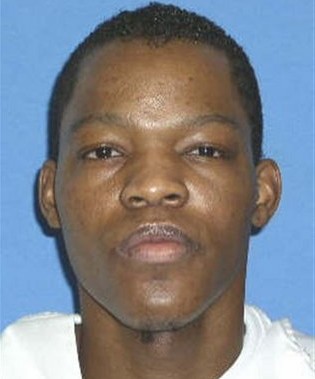
Dorsie Lee Johnson
Murderer Brian Kevin Rosenfeld
Murderer · USA · 1985
Brian Kevin Rosenfeld Brian Kevin Rosenfeld was sentenced to three concurrent l…
23 victims
Brian Kevin Rosenfeld
Murderer · USA · 1985
Brian Kevin Rosenfeld Brian Kevin Rosenfeld was sentenced to three concurrent l…
23 victims
 Yahweh ben Yahweh
Murderer · USA · 1980
Yahweh ben Yahweh was born and legally named Hulon Mitchell Jr. (October 27, 19…
23 victims
Yahweh ben Yahweh
Murderer · USA · 1980
Yahweh ben Yahweh was born and legally named Hulon Mitchell Jr. (October 27, 19…
23 victims
 Russell Ellwood
Murderer · USA · 1991
Russell Ellwood was a former taxi driver. Authorities suspected him of killing…
20 victims
Russell Ellwood
Murderer · USA · 1991
Russell Ellwood was a former taxi driver. Authorities suspected him of killing…
20 victims
 Dr. Harold Shipman
Serial killer · United Kingdom · 1974
Harold Fredrick Shipman was an English doctor who was convicted as a serial kil…
15 victims
Dr. Harold Shipman
Serial killer · United Kingdom · 1974
Harold Fredrick Shipman was an English doctor who was convicted as a serial kil…
15 victims
 John Hicks
Murderer · USA · 1985
John Hicks was executed by the state of Ohio on November 29, 2005, by lethal in…
2 victims
John Hicks
Murderer · USA · 1985
John Hicks was executed by the state of Ohio on November 29, 2005, by lethal in…
2 victims
 Reco Jones
Mass murderer · USA · 1997
Reco Jones — defendant · Yolanda Bellamy (24-year-old) — ex-girlfriend and vict…
5 victims
Reco Jones
Mass murderer · USA · 1997
Reco Jones — defendant · Yolanda Bellamy (24-year-old) — ex-girlfriend and vict…
5 victims
 Jacqueline Gibons
Murderer · USA · 1982
Jacqueline Gibons (only child; adoptive daughter of Benjamin and Sybil Gibons;…
2 victims
Jacqueline Gibons
Murderer · USA · 1982
Jacqueline Gibons (only child; adoptive daughter of Benjamin and Sybil Gibons;…
2 victims
 Troy Merck
Murderer · USA · 1991
Troy Merck, Jr. was convicted of first-degree murder and was sentenced to death…
1 victim
Troy Merck
Murderer · USA · 1991
Troy Merck, Jr. was convicted of first-degree murder and was sentenced to death…
1 victim
- Gender
- male
- Country
- USA
- Location
- Scurry County, Texas, USA
- Date of birth
- 1966
- Age at first offence
- 20
- Characteristics
- robbery
- Victim profile
- Jack Huddleston, 53 (convenience store clerk)
- Method of murder
- Shooting (.25-caliber pistol)
- Date(s) of murder
- March 23, 1986
- Years active
- 1986
- Date of arrest
- April 1986
- Status
-
Executed
Executed by lethal injection in Texas on June 4, 1997
Case record: Dorsie Lee Johnson
Background
Dorsie Lee Johnson, Jr. was convicted in the death of Jack Huddleston, 53, a convenience store clerk in Snyder.
Johnson was also linked to a robbery in Colorado City involving store clerk Don Burrus, who survived two gunshot wounds to the head and later died.
The offence
On March 23, 1986, Dorsie Lee Johnson, Jr. and Amanda Miles decided to rob Allsup's convenience store in Snyder, Texas. They agreed that there should be no witnesses to the crime, then went to the store to survey its layout, including the number of employees working there that evening. They found that the only employee present during the predawn hours was a clerk, Jack Huddleston.
Johnson and Miles returned to Allsup's a short time later. Johnson, with a handgun in his pocket, reentered the store with Miles. After waiting for other customers to leave, Johnson asked Huddleston whether the store had any orange juice in one gallon plastic jugs because there were none on the shelves. Huddleston went to the store's cooler. Johnson followed Huddleston there, told Huddleston the store was being robbed, and ordered him to lie on the floor. After Huddleston complied and placed his hands behind his head, Johnson shot him in the back of the neck, killing him.
When Johnson emerged from the cooler, Miles had emptied the cash registers of about $160. Johnson and Miles each grabbed a carton of cigarettes and fled. Huddleston was shot once in the head with a .25-caliber pistol after being told to lie down on the floor during a robbery that netted $161.92. Prosecutors also described the robbery as netting $160 and two six-packs of beer.
Investigation
In April 1986, a few weeks after the crime, Johnson was arrested for a subsequent robbery and attempted murder of a store clerk in Colorado City, Texas.
Johnson confessed to the murder of Jack Huddleston and the robbery of Allsup's. The homicide qualified as a capital offense under Texas law because Johnson intentionally or knowingly caused Huddleston's death and the murder was carried out in the course of committing a robbery. Tex. Penal Code Ann. §§ 19.02(a)(1), 19.03(a)(2) (Vernon 1989).
Johnson was linked to the Snyder killing after a similar holdup in Colorado City only two weeks later.
Colorado City Police Chief Patrick Taylor said that Don Burrus, the 61-year-old Colorado City store clerk, survived two gunshot wounds to the head but never fully recovered, and he was placed in a nursing home where he later died.
Burrus was able to give police a partial description of his assailants, and Johnson and George Edward Miles were picked up less than an hour later. Following questioning, Snyder police charged Johnson and Miles' sister, AmandaLynn Miles, with killing Huddleston.
Arrest and related proceedings
Johnson and Miles’ sister, AmandaLynn Miles, were charged with killing Huddleston. AmandaLynn Miles pleaded guilty in exchange for a life prison term, and her brother is still in prison for the Colorado City crime.
Johnson was also returned from Death Row in 1990 to accept a 60-year prison term for the attempted murder of Burrus.
George Edward Miles was mentioned as being picked up with Johnson. Amanda Miles was mentioned as Johnson’s companion in deciding to rob Allsup's.
Trial
Johnson was tried and convicted of capital murder. The homicide qualified as a capital offense under Texas law because it occurred in the course of committing a robbery.
The jury found Johnson guilty of capital murder and a separate punishment phase followed, where Johnson’s sentence was determined.
Punishment phase and jury findings
After the jury determined that Johnson was guilty of capital murder, the trial court conducted a separate punishment phase. The trial court instructed the jury that it was to answer two special issues:
- “[(1)] Was the conduct of the Defendant, Dorsie Lee Johnson, Jr., that caused the death of the deceased, committed deliberately and with the reasonable expectation that the death of the deceased or another would result? . . . . . ”
- “[(2)] Is there a probability that the Defendant, Dorsie Lee Johnson, Jr., would commit criminal acts of violence that would constitute a continuing threat to society?”
The trial court also instructed the jury as to the consequences of its answers:
“You are further instructed that if the jury returns affirmative or yes' answer [sic] to all the Issues submitted, this Court shall sentence the Defendant to death. If the jury returns a negative or no' answer to any Issue submitted, the Court shall sentence the Defendant to life in prison.”
The jury was instructed not to consider or discuss the possibility of parole.
The trial court instructed the jury concerning its consideration of mitigating evidence: “In determining each of these Issues, you may take into consideration all the evidence submitted to youin the trial of this case, whether aggravating or mitigating in nature, that is, all the evidence in the first part of the trial when you were called upon to determine the guilt or innocence of the Defendant and all the evidence, if any, in the second part of the trial wherein you are called upon to determine the answers to the Special Issues.”
Although Johnson’s counsel filed various objections to the jury charge, there was no request for a more expansive instruction concerning any particular mitigating circumstance, including Johnson’s youth.
A unanimous jury found that the answer to both special issues was yes, and the trial court sentenced Johnson to death, as required by law.
Evidence presented during punishment phase
During the punishment phase, the State presented numerous witnesses who testified to Johnson’s violent tendencies. The most serious evidence related to the April convenience store robbery in Colorado City, where witnesses testified that Johnson shot that store clerk in the face, resulting in permanent disfigurement and brain damage.
Witnesses also testified that Johnson had fired two shots at a man outside a restaurant in Snyder only six days after the murder of Huddleston. A sheriff's deputy who worked in the jail where Johnson was being held testified that Johnson had threatened to "get" the deputy when he got out of jail.
Johnson’s acts of violence were also described as involving people he knew. Beverly Johnson testified that in early 1986 Johnson hit her, threw a large rock at her head, and pointed a gun at her on several occasions. Paula Williams reported that after Johnson became angry with her one afternoon in 1986, he threatened her with an axe.
There was additional evidence of incidents in Johnson’s earlier life. One of Johnson’s classmates testified that Johnson cut him with a piece of glass while they were in the seventh grade. Another classmate testified that Johnson also cut him with glass just a year later, and there was additional evidence that Johnson stabbed a third classmate with a pencil.
The State established that the crimes in 1986 were not Johnson’s first experience with the criminal justice system. Johnson had been convicted in 1985 of a store burglary in Waco, Texas. Johnson twice violated the terms of probation for that offense by smoking marijuana, and Johnson was still on probation when he committed the Huddleston murder.
The defense presented Johnson’s father, Dorsie Johnson, Sr., as its only witness. The elder Johnson attributed his son's criminal activities to his drug use and his youth. When asked by defense counsel whether his son at the age of 19 was “a real mature person,” Dorsie Johnson, Sr. answered: “No, no. Age of nineteen? No, sir. That, also, I find to be a foolish age. That's a foolish age. They tend to want to be macho, built up, trying to step into manhood. You're not mature lized for it.”
At the close of his testimony, Dorsie Johnson, Sr. summarized the role he thought youth had played: “[A]ll I can say is I still think that a kid eighteen or nineteen years old has an undeveloped mind, undeveloped sense of assembling not -- I don't say what is right or wrong, but the evaluation of it, how much, you know, that might be -- well, he just don't -- he just don't evaluate what is worth -- what's worth and what's isn't like he should like a thirty or thirty five year old man would. He would take under consideration a lot of things that a younger person that age wouldn't.”
The elder Johnson testified that Johnson had been a regular churchgoer and that his problems were attributable in large part to the death of his mother following a stroke in 1984 and the murder of his sister in 1985. The elder Johnson also testified to Johnson’s remorse over the killing of Huddleston.
Jury voir dire and closing argument
During voir dire, more than 90 prospective jurors were questioned over the course of 15 days. Johnson’s counsel asked whether prospective jurors believed people were capable of change and whether they had ever done things as youths that they would not do now. Specific juror discussion included a colloquy with Juror Raborn:
“Q. Okay. Do you feel that -- let me ask you this. Do you feel a person who is -- or a young person will do things that they will not do in later years, thirty or forty --
A. I believe that.
Q. Do you believe that people can change?
A. Yes, I believe they can. I've known some that have.
Q. Do you think that the way a person acts in the present or the past or how he has acted in the past is an absolute indicator of what he will do in the future, thirty or forty years down the road?
A. No, not on down the line. Like I say, you can change.”
Johnson’s counsel also returned to this theme in closing argument: “The question -- the real question, I think, is whether you believe that there is a possibility that he can change. You will remember that that was one thing every one of you told me you agreed -- every one of you agreed with me that people can change. If you agree that people can change, then that means that Dorsie can change and that takes question two [regarding future dangerousness] out of the realm of probability and into possibility, you see, because if he can change, then it is no longer probable that he will do these things, but only possible that he can and will do these things, you see. “If people couldn't change, if you could say I know people cannot change, then you could say probably. But every one of you knows in your heart and in your mind that people can and people do change and Dorsie Johnson can change and, therefore, the answer to question two should be no.”
Appeals
The Texas Court of Criminal Appeals affirmed the conviction and sentence after rejecting Johnson’s seven allegations of error.
Johnson filed a motion for rehearing in the Texas Court of Criminal Appeals arguing that the special issues did not allow for adequate consideration of his youth. The court addressed the argument on the merits and rejected it. The court reasoned: “If a juror believed that [petitioner's] violent actions were a result of his youth, that same jurorwould naturally believe that [petitioner] would cease to behave violently as he grew older.”
The court concluded: “the jury was able to express a reasoned moral response to [petitioner's] mitigating evidence within the scope of the art. 37.071 instructions given to them by the trial court.”
Johnson filed a petition for certiorari, which the Supreme Court of the United States granted. The Supreme Court case involved No. 92-5653: Dorsie Lee Johnson, Jr., petitioner v. Texas.
In the Supreme Court proceedings, Johnson asked the United States Supreme Court to grant a writ of certiorari staying his execution. The United States Supreme Court had already ruled against him once when it upheld the trial court's conviction. Johnson’s last stay of execution came in October when another Death Row inmate challenged the 1995 state law speeding up the appellate process; the law was subsequently upheld.
Supreme Court opinion (constitutional issue)
The United States Supreme Court held that the Texas capital sentencing statute did not violate Eighth Amendment rights of petitioner Dorsie Lee Johnson, Jr. The Court concluded that the trial court was not constitutionally required to instruct the jury to consider mitigating aspects of Johnson’s youth independent of the statute’s special issue framework. The jury was able to adequately consider all mitigating evidence, including evidence of Johnson’s youth, through an assessment of Johnson’s future dangerousness.
The Court affirmed the judgment of the Texas Court of Criminal Appeals.
Sentencing and execution
Johnson was sentenced to death after a unanimous jury answered yes to both special issues. His execution was scheduled in Texas for June 4, 1997. Johnson was executed by lethal injection in Texas on June 4, 1997.
Johnson gave a last statement: “I would like to tell my family that I love them and always be strong and keep their heads up and keep faith in Jesus. That’s it.”
Other details
Johnson was described as 30 at the time of being set for execution, and as 19 years of age at the time of the March 23, 1986 robbery. He was reported as 5 feet 2 inches.
Mitchell County was referenced in coverage about the execution.
The execution was postponed four times before June 4, 1997.
132nd District Judge Ernie Armstrong presided in the county where Johnson was convicted in November 1986, and Armstrong was the district attorney at the time of Johnson’s conviction. After Johnson’s execution was stayed in 1993, Armstrong said: “If ever there was a case that the death penalty was proper, this was it. This was an execution-style murder.”
Judgment and conviction were discussed as involving an “execution-style murder.”
Johnson’s confession to the killing and robbery was described as taking place after he was arrested in April 1986 for the Colorado City crime.
Johnson was described as a changed man since becoming religious in prison and as having reportedly become a member of the Morrish Science Temple.
A chaplain named Brazzil was described as having been with every man executed by Texas since September 1995.
David Nunnellee was identified as a Texas Department of Criminal Justice spokesman for matters including Johnson’s last meal and visit schedule.
Johnson’s execution was described as being the third of 10 Texas Death Row inmates executed that week, and the 19th this year.
Spotted an error, or have more information about this case?