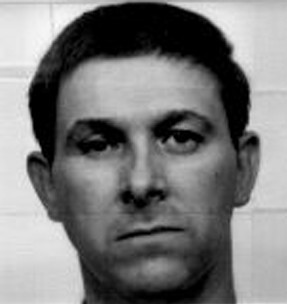
Elliot Rod Johnson
Murderer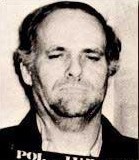 Ervil LeBaron
Murderer · USA · 1972
Ervil Morrell LeBaron (1925 to August 16, 1981) was the leader of a polygamous…
35 victims
Ervil LeBaron
Murderer · USA · 1972
Ervil Morrell LeBaron (1925 to August 16, 1981) was the leader of a polygamous…
35 victims
 Brian Kevin Rosenfeld
Murderer · USA · 1985
Brian Kevin Rosenfeld Brian Kevin Rosenfeld was sentenced to three concurrent l…
23 victims
Brian Kevin Rosenfeld
Murderer · USA · 1985
Brian Kevin Rosenfeld Brian Kevin Rosenfeld was sentenced to three concurrent l…
23 victims
 Marvin Gray
Murderer · USA · 1975
Marvin Gray was convicted killer who claimed responsibility for 23 slayings and…
23 victims
Marvin Gray
Murderer · USA · 1975
Marvin Gray was convicted killer who claimed responsibility for 23 slayings and…
23 victims
 Yahweh ben Yahweh
Murderer · USA · 1980
Yahweh ben Yahweh was born and legally named Hulon Mitchell Jr. (October 27, 19…
23 victims
Yahweh ben Yahweh
Murderer · USA · 1980
Yahweh ben Yahweh was born and legally named Hulon Mitchell Jr. (October 27, 19…
23 victims
 Russell Ellwood
Murderer · USA · 1991
Russell Ellwood was a former taxi driver. Authorities suspected him of killing…
20 victims
Russell Ellwood
Murderer · USA · 1991
Russell Ellwood was a former taxi driver. Authorities suspected him of killing…
20 victims
 Sidney Porterfield
Murderer · USA · 1985
Sidney Porterfield was convicted in 1986 and sentenced to death for the killing…
1 victim
Sidney Porterfield
Murderer · USA · 1985
Sidney Porterfield was convicted in 1986 and sentenced to death for the killing…
1 victim
 Heinrich Pommerencke
Serial killer · Germany · 1959
Heinrich Pommerencke grew up in the German village of Bentwich and lived as a l…
4 victims
Heinrich Pommerencke
Serial killer · Germany · 1959
Heinrich Pommerencke grew up in the German village of Bentwich and lived as a l…
4 victims
 Raymond Deleon Martinez
Spree killer · USA · 1983
Raymond Deleon Martinez was convicted and sentenced to death for the 1983 murde…
5 victims
Raymond Deleon Martinez
Spree killer · USA · 1983
Raymond Deleon Martinez was convicted and sentenced to death for the 1983 murde…
5 victims
- Gender
- male
- Country
- USA
- Location
- Jefferson County, Texas, USA
- Date of birth
- 1948
- Age at first offence
- 34
- Characteristics
- jewelry store robbery
- Victim profile
- Joseph Granado, 67 ( jeweler )
- Method of murder
- Shooting
- Date(s) of murder
- April 8, 1982
- Years active
- 1982
- Date of arrest
- —
- Status
-
Executed
Executed by lethal injection in Texas on June 24, 1987
Case details
Elliot Rod Johnson was convicted of capital murder for the killing of Joe Angel Granado while in the course of committing or attempting to commit the offense of armed robbery. At the punishment phase of the trial, the death sentence was imposed.
The offence
Joe Angel Granado, 67, was shot at close range when Elliot Rod Johnson and three accomplices robbed Granado's jewelry store.
Johnson was convicted of capital murder for the killing of Joe Angel Granado while in the course of committing or attempting to commit the offense of armed robbery.
Background
Elliot Rod Johnson was a 26-year-old resident of Port Arthur, Tex.
Trial
The Texas capital sentencing scheme submitted a special issue to the jury during the punishment phase: whether the conduct of the defendant that caused the death of the deceased was committed deliberately and with the reasonable expectation that the death of the deceased or another would result. The jury answered this issue in the affirmative.
Investigation
No investigation details were provided.
Appeals
Elliot Rod Johnson appealed the district court’s denial of federal habeas corpus relief.
Habeas corpus and stay proceedings
Johnson filed an application in the United States Court of Appeals for the Fifth Circuit for an original writ of habeas corpus, a stay of execution, and leave to proceed in forma pauperis. The Fifth Circuit pretermitted a ruling on the application for habeas corpus but granted the stay and certificate of probable cause to appeal. O.L. McCotter, Director of the Texas Department of Corrections, and Jerry Peterson, Warden, Ellis Unit, Texas Department of Corrections were ordered to stay the execution of Elliot Rod Johnson, then scheduled for dawn on July 23, 1986, pending further order of the Fifth Circuit. The Fifth Circuit pretermitted all other issues that may be raised on appeal.
Later, in a separate appeal, the Fifth Circuit affirmed the district court’s denial of federal habeas corpus relief and dissolved the stay of execution.
Supreme Court petition
A petition for a writ of certiorari to the Supreme Court of the United States was denied on October 7, 1985. Johnson v. Texas, --- U.S. ----, 106 S.Ct. 184, 88 L.Ed.2d 152 (1985).
Claimed discriminatory imposition
Johnson contended that the death penalty was discriminatorily imposed in Texas against black defendants convicted of killing a person of a different race. The Fifth Circuit granted a certificate of probable cause to appeal and stayed execution in part due to uncertainty about the effect of the Supreme Court’s grant of certiorari in McCleskey v. Kemp, 753 F.2d 877 (11th Cir.1985) (en banc), cert. granted, --- U.S. ----, 106 S.Ct. 3331, 92 L.Ed.2d 737 (1986). The Fifth Circuit later determined that the grant of certiorari in McCleskey was not a sufficient ground to grant a defendant a stay of execution, citing Wicker v. McCotter, 798 F.2d 155 (5th Cir.1986). The Fifth Circuit stated it was bound by the law of the Circuit and denied Johnson’s application for a stay of execution pending the Supreme Court’s decision in McCleskey.
Enmund claim about intent and accomplice liability
Johnson argued that trial court instructions in the guilt and sentencing phases allowed the jury to sentence him to death without first finding that Johnson himself killed, attempted to kill, or intended to kill anyone.
The Fifth Circuit referenced Enmund v. Florida, 458 U.S. 782, 102 S.Ct. 3368, 73 L.Ed.2d 1140 (1982), which held that the Eighth Amendment forbids imposition of the death penalty on one who "aids and abets a felony in the course of which a murder is committed by others but who does not himself kill, attempt to kill, or intend that a killing take place or that lethal force will be employed."
The trial judge charged the jury in the guilt phase of Johnson’s trial that a person commits murder if he intentionally or knowingly causes the death of an individual and that he commits capital murder if he commits murder and he intentionally commits the murder in the course of committing or attempting to commit robbery. The trial judge also instructed the jury:
If, in the attempt to carry out a conspiracy to commit one felony, another felony is committed by one of the conspirators, then all conspirators are guilty of the felony actually committed, although having no intent to commit it, if the offense was committed in furtherance of the unlawful purpose and was one that should have been anticipated as a result of the carrying out of the conspiracy. (Emphasis supplied)
Johnson objected to this instruction at trial. The Fifth Circuit stated that it was unclear whether the contradiction constituted an Enmund error or whether it was corrected in the penalty portion of the trial through the jury interrogatory requirements of the Texas capital sentencing scheme. On that basis, the Fifth Circuit granted Johnson a certificate of probable cause to appeal and stayed the execution.
In the later appeal, the Fifth Circuit stated the Enmund issue was controlled by its decision in Skillern v. Estelle, 720 F.2d 839 (5th Cir.1983), and that Skillern involved the identical special issue at the sentencing phase of a Texas capital murder trial, with the court finding no Enmund violation.
The Fifth Circuit denied Johnson’s application for relief on the Enmund-related ground. The judgment appealed from was affirmed; the stay of execution previously issued by the Fifth Circuit was dissolved; and the application for a further stay of execution pending the Supreme Court’s decision in McCleskey was denied.
Outcome
Johnson’s conviction and death sentence were affirmed by the Texas Court of Criminal Appeals. Johnson v. State, 691 S.W.2d 619 (Tex.Crim.App.1984).
A stay of execution was initially granted by a federal district court. The Fifth Circuit later granted a stay and certificate of probable cause to appeal in part, then later affirmed the denial of habeas corpus relief, dissolved its stay, and denied a further stay.
Johnson was executed by lethal injection in Texas on June 24, 1987.
Timeline
- April 8, 1982 — Joe Angel Granado was shot at close range during the robbery of his jewelry store by Elliot Rod Johnson and three accomplices.
- 1983 — Elliot Rod Johnson was convicted in connection with the April 8, 1982 slaying of Joe Angel Granado.
- October 7, 1985 — The Supreme Court denied a petition for a writ of certiorari in Johnson v. Texas, --- U.S. ----, 106 S.Ct. 184, 88 L.Ed.2d 152 (1985).
- December 3, 1985 — Johnson filed an application for stay of execution and writ of habeas corpus in the district court; a stay of execution was granted.
- May 23, 1986 — The district court issued a memorandum opinion denying habeas relief and dissolving the stay in Johnson v. McCotter, 635 F.Supp. 685 (E.D. Tex.).
- July 18, 1986 — The Fifth Circuit granted a stay and certificate of probable cause to appeal and ordered the respondents to stay the execution, then scheduled for dawn on July 23, 1986.
- November 12, 1986 — The Fifth Circuit affirmed the denial of habeas corpus relief and dissolved the stay of execution; a further stay pending the Supreme Court’s decision in McCleskey was denied.
- June 24, 1987 — Elliot Rod Johnson was executed by lethal injection in Texas.
Other details
The Fifth Circuit’s stay and certificate of probable cause proceedings were in No. 86-2404. The respondents were O.L. McCotter, Director, Texas Department of Corrections, and Jerry Peterson, Warden, Ellis Unit, Texas Department of Corrections.
Spotted an error, or have more information about this case?