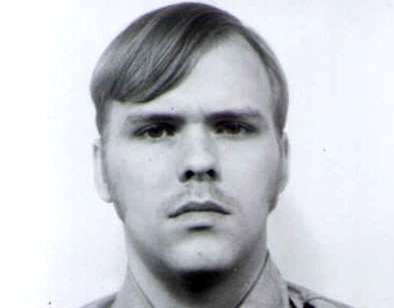
Steven Judy
Serial killer Donald Henry Gaskins
Serial killer · USA · 1969
Donald Henry Gaskins, also known as Donald “Pee Wee” Gaskins, was a serial kill…
200 victims
Donald Henry Gaskins
Serial killer · USA · 1969
Donald Henry Gaskins, also known as Donald “Pee Wee” Gaskins, was a serial kill…
200 victims
 Carl Eugene Watts
Serial killer · USA · 1974
Carl Eugene Watts (born November 7, 1953; died September 21, 2007), also known…
100 victims
Carl Eugene Watts
Serial killer · USA · 1974
Carl Eugene Watts (born November 7, 1953; died September 21, 2007), also known…
100 victims
 Rodney Alcala
Serial killer · USA · 1977
Rodney James Alcala (born August 23, 1943) was also known as Rodrigo Jacques Al…
100 victims
Rodney Alcala
Serial killer · USA · 1977
Rodney James Alcala (born August 23, 1943) was also known as Rodrigo Jacques Al…
100 victims
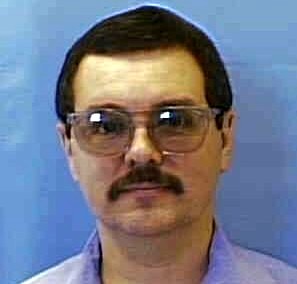 Donald Harvey
Serial killer · USA · 1970
Donald Harvey was known as an American serial killer and a self-professed “Ange…
87 victims
Donald Harvey
Serial killer · USA · 1970
Donald Harvey was known as an American serial killer and a self-professed “Ange…
87 victims
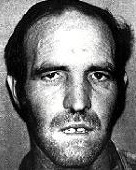 Ottis Toole
Serial killer · USA · 1961
Ottis Elwood Toole (sometimes misspelled as “Otis”) was an American serial kill…
65 victims
Ottis Toole
Serial killer · USA · 1961
Ottis Elwood Toole (sometimes misspelled as “Otis”) was an American serial kill…
65 victims
 Donald Leroy Evans
Serial killer · USA · 1975
Donald Leroy Evans (born July 5, 1957) was an American serial killer who murder…
60 victims
Donald Leroy Evans
Serial killer · USA · 1975
Donald Leroy Evans (born July 5, 1957) was an American serial killer who murder…
60 victims
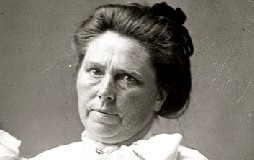 Belle Gunness
Serial killer · USA · 1880
Belle Gunness was Norwegian-born. She was born as Brynhild Paulsdatter Størseth…
42 victims
Belle Gunness
Serial killer · USA · 1880
Belle Gunness was Norwegian-born. She was born as Brynhild Paulsdatter Størseth…
42 victims
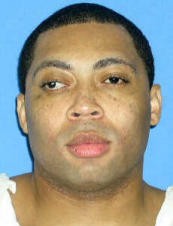 Daroyce Mosley
Mass murderer · USA · 1994
DaRoyce Lamont Mosley was convicted of capital murder for the death of Patricia…
4 victims
Daroyce Mosley
Mass murderer · USA · 1994
DaRoyce Lamont Mosley was convicted of capital murder for the death of Patricia…
4 victims
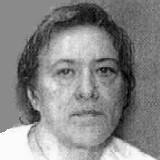 Suzanne Basso
Murderer · USA · 1998
Suzanne Basso was a white female who was described as having grey hair and blac…
1 victim
Suzanne Basso
Murderer · USA · 1998
Suzanne Basso was a white female who was described as having grey hair and blac…
1 victim
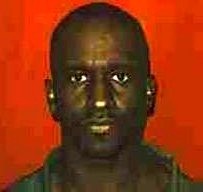 Calvin Shuler
Murderer · USA · 1997
Calvin Alphonso Shuler was sentenced to death for killing guard James “J.B.” Br…
1 victim
Calvin Shuler
Murderer · USA · 1997
Calvin Alphonso Shuler was sentenced to death for killing guard James “J.B.” Br…
1 victim
- Gender
- male
- Country
- USA
- Location
- Indiana/Texas/L o uisiana/California , USA
- Date of birth
- 1956
- Age at first offence
- 14
- Characteristics
- rape, child molester, torture
- Victim profile
- 8 women and 3 children
- Method of murder
- Strangulation / Drowning
- Date(s) of murder
- 1970's
- Years active
- 1970
- Date of arrest
- May 1979
- Status
-
Executed
Executed by electrocution in Indiana on March 9, 1981
Case overview
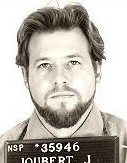
Steven Judy was executed by electrocution in Indiana on March 9, 1981. He was born 05-24-1956. He was a White male. His case was in Morgan County Superior Court Special Judge Jeffrey V.
The offence
On April 28, 1979, Terry Lee Chasteen drove her three children to a baby-sitter’s house before reporting to work in the produce department at a Marsh grocery store. While driving on Interstate 465 early that morning, Chasteen noticed the driver of a construction truck motioning toward her car. Chasteen pulled over, and Steven Judy also pulled to the side of the road. Judy told her it looked as if a rear tire on the car were loose. He offered to tighten it, and Chasteen got a lug wrench out of the trunk. They returned to their vehicles. Chasteen later got back out and approached Judy, saying something was wrong with the emergency brake. Judy walked to the front of the car and opened the hood. Instead of fixing anything, Judy removed a coil wire from the engine so the car would not start.
Judy offered Chasteen and her children a ride. Misty, aged 5, Mark, aged 4, and Stephen, nearly 3, crawled into the truck. Their mother sat by the door. Within an hour, Chasteen was raped and dead, and her children were drowned. All four were killed that morning by Steven Judy, who was 24 years old in connection with the April 1979 killings.
Judy’s offences also included a prior rape when he was 13. He posed as a Boy Scout and forced his way into a woman’s home in Indianapolis. He raped the woman, then stabbed her with a pocket knife until the blade broke. He used a hatchet to fracture her skull and cut off a finger on her left hand as she tried to block his blows. For that attack, Judy spent 6 months at a center for delinquent juveniles.
At trial, Judy’s conduct was described as driving the victims to a secluded area along White Lick Creek southwest of Mooresville where he raped and strangled Mrs. Chasteen and drowned her children in the creek. Testimony indicated he disabled Chasteen’s car by disconnecting ignition wires so the car would not start, and then lured her into his pickup truck.
Investigation
The bodies were discovered by mushroom hunters along White Lick Creek. When the first officers arrived, they discovered one body: Terry Lee Chasteen. They walked downstream and found the remaining bodies: Misty Ann Zollars, Steven Michael Chasteen, and Mark Louis Chasteen.
At the time of discovery, Robert Williams was a retired officer of the Morgan County Sheriff’s Department, and then-Sheriff Dick Allen was also among the first on the scene. Williams’s daughters were 2 and 6 at the time.
Arrest and detention
From his arrest until after his sentencing, Judy was among the sheriff’s downstairs prisoners at the Morgan County Jail. Sheriff Allen lived upstairs at the old Morgan County Jail.
Trial
Charges and verdict
Steven Judy was convicted before the Superior Court, Morgan County, J. V., Bowles, Special Judge, of four counts of murder and was sentenced to death.
He was convicted of murdering Terry Chasteen and her three children: Misty Zollers (age five years), Stephen Chasteen (age four years), and Mark Chasteen (age two years).
Evidence described at trial
Hunters discovered Terry Chasteen’s body at approximately 9:30 a.m. in White Lick Creek, near State Road 67 and Mooresville in Morgan County. A police search of the creek led to discovery of the other three bodies.
Terry Chasteen was found naked, with her hands and feet bound with strips of material torn from her clothing, and her head covered with her slacks. She had been gagged and strangled with other strips of cloth. The evidence established that Terry Chasteen had been raped and died of strangulation, while the children died of asphyxia due to drowning.
Physical evidence included a semen stain on a coat found at the scene of the crimes. Analysis indicated compatibility with Judy’s blood type and an “H endogen” in a sample of Judy’s blood. Testimony said that once the geographic location of the discovery of the substance was known, only a very small percentage of the male population was capable of producing semen with the identification qualities mentioned.
Two threads of material found in Judy’s truck substantially matched threads of one article of Terry Chasteen’s clothing.
Witnesses described seeing segments of the incident. On the day of the killings and the preceding day, Steven Judy had in his control a red and gray truck which witnesses placed at or near the location of Terry Chasteen’s car on Interstate 465. One witness testified that he saw a blond-haired man, identified as Judy, standing near a car parked on the interstate with the hood open. Another witness testified that he was driving southwest on State Road 67 and saw a red and gray truck carrying a man, a woman, and some children proceeding in the same direction; the truck was moving at a fast pace and sometimes erratically, and the woman in the truck waved to him when the two vehicles stopped at a traffic light. Judy’s truck was also seen parked near the scene of the killings by White Lick Creek around 7:00 to 7:30 a.m. A witness recognized the truck from having seen it at a construction site. Another witness testified that he saw a man near the scene carrying a child under one arm and carrying a bundle shaped like a child under his other arm, with a third child walking in front. At approximately 7:30 a.m., a man was seen running away from the creek toward the parked truck. Near that same time, another person saw a blond-haired man backing his truck onto the travelled portion of the highway from the same location, and testified that the driver of the truck was alone.
The evidence further established that Judy returned the truck to witness Robert Carr in Indianapolis between 8:00 and 9:00 a.m. on the day of the killings.
Alibi and defense
Judy initially denied any involvement and asserted he was with his girlfriend at the time and could not remember what had happened. Judy’s girlfriend first corroborated this story but subsequently contradicted Judy’s alibi.
Judy presented an insanity defense. He testified about passing Terry Chasteen’s car on Interstate 465 in Marion County. He said he motioned for her to pull over to the shoulder of the road, indicating something was wrong with the rear of her car. He testified the two vehicles pulled over and stopped, and he removed the coil wire, rendering her car inoperable. He said he offered her and the children a ride, and she accepted. Judy testified he drove the victims to the location of the killings, pulled his truck off the road, directed the victims on foot toward the creek, and sent the children down the path ahead of Terry and him. Judy testified he raped Terry Chasteen, bound her hands and feet, and gagged her. When Terry cried out, he said the children ran back up the path to them. He testified that he strangled Terry Chasteen and threw her body into the creek when she cried out. He testified he then threw each child as far as he could into the water, returned to his truck after attempting to eradicate his footprints, drove away, stopped and bought a soft drink, threw the coil wire away, and then returned the truck to Robert Carr at Carr’s residence. The trial court record described Judy’s version as substantially corroborating the evidence presented by the State despite discrepancies concerning minor details.
The defense included testimony from Dr. Cathy Spath Widom, a psychologist, who said Judy had chronic emotional problems, described him as having an antisocial personality disorder, and believed he was legally insane. She referred to extensive records covering fourteen years. She testified about a rape at age thirteen, stabbing the victim eighteen times, and hitting her with a hatchet, and that as a result Judy had been admitted to Central State Hospital for evaluation. She testified that while Judy was involved in Central State’s treatment program he became the foster child of a family in Indianapolis, and he was discharged from Central State Hospital in 1972 at age sixteen with a recommendation that he be returned to the juvenile center for placement at the Indiana Boys School. She testified the hospital evaluation stated Judy appeared to recover and further hospitalization was not warranted.
Judy testified to committing offences since he was ten years old and asserted involvement in approximately two hundred shoplifting incidents, a like number of burglaries, twenty to fifty robberies, approximately twenty-four car thefts, and twelve to sixteen rapes. He estimated being examined by approximately thirty psychiatrists during those years. He testified that from 1975 to the time of these offences, he had been out of jail for a total of approximately four months, and during those periods lived with or had intercourse with fifteen women. He said three women who had lived with him testified he had never threatened or physically harmed them, and he was living with one of those women during the week prior to the murders. Other women testified about attacks including accosting victims in cars and kidnapping, threatening, and beating them. One witness testified to being a victim of one of Judy’s armed robberies. Witnesses believed Judy was in control of himself during the incidents and could have stopped doing what he was doing, while one witness stated Judy “acted crazy” when he was beating her about the face.
Previously conducted psychiatric evaluations classified Judy as having a personality disorder and found no indication of mental illness. Two court-appointed psychiatrists, Dr. John Kooiker and Dr. Larry Davis, testified they examined Judy and opined he had an antisocial personality disorder and was legally sane at the time of the crimes. The trial record described that every psychiatrist who had examined Judy opined he had normal or above-average intelligence and was legally sane.
The jury rejected Judy’s insanity defense and convicted him on all charges.
Sentencing
After the jury found Judy guilty on all four counts of murder, the bifurcated sentencing portion of the trial began. Judy ordered his attorneys not to present evidence of mitigating circumstances to the jury. He stated to the jury in open court at the sentencing hearing that he would advise them to give him the death sentence because he had no doubt he would kill again if he had an opportunity and some of the people he might kill in the future might be members of the jury. He directed a similar comment to the trial judge. During final argument in the sentencing hearing, Judy ordered his attorneys not to argue against the death penalty. They complied with that request, except for a suggestion to the trial judge that the constitutionality of the death penalty statute ought to be considered before such a penalty was imposed.
The jury sentenced Judy to death, and the trial court imposed the death penalty.
On February 25, 1980, Judy was sentenced to death upon conviction of four counts of murder. The trial judge signed the death warrant and ordered the sentence to be carried out.
Appeals and waiver
Judy’s court-appointed counsel filed a “Verified Petition for Determination of the Status of This Appeal.” The appellate proceedings addressed Judy’s request to terminate the appeal and waive review.
Judy notified his counsel and the court on October 8 that he desired to terminate the appeal prior to the completion and filing of his brief and requested counsel cease all efforts toward proceeding with his appeal. Counsel described an “intolerable dilemma” regarding duties if the appeal was not pursued.
The Indiana Supreme Court concluded that Ind.Code s 35-50-2-9(h) precluded waiver of review of the sentencing in a death penalty case, but did not preclude waiver of review of a murder conviction. The Supreme Court set a hearing for October 27 for Judy to appear personally so the court could determine whether he wished to waive his appeal of the conviction and whether that waiver was voluntarily and knowingly made.
The Supreme Court found that Judy made a knowing, voluntary, and intelligent waiver of his right to appeal his four murder convictions. The Supreme Court stated it would not evaluate the murder convictions further and would proceed to review the death sentence imposed by the trial court.
The Supreme Court held that the state constitutional provision that Penal Code is to be founded on principles of reformation and not on vindictive justice did not prohibit imposition of capital punishment; statutes relating to the death sentence were constitutional; and the jury could consider the fact that one murder was committed while perpetrating a rape and that Judy murdered the victim’s children as aggravating circumstances in deciding to recommend death. The Supreme Court also found no mitigating circumstances existed which outweighed the aggravating circumstances and that imposition of death sentence was reasonable and appropriate. The Supreme Court affirmed the trial court’s imposition of the death penalty and remanded the case for setting a date for the death sentence to be carried out.
Direct quotations from the appeals record
Judy’s response in the waiver context included:
"I no longer wish any more representation by counsel, any counsel. All right? You know, I feel that it's my right that I can proceed with the appeal."
Judy also said:
"What I understand that statute (s 35-50-2-9) to mean is that the Indiana Supreme Court has to review the case. It's not saying that a brief has to be filed on it or any motions filed or anything. Alright, that's final, there. The Indiana Supreme Court can review the case, if they wish."
Judy further stated:
"I understand all that. It's, you know, the why, you know, of not going on with this appeal, it's within myself, you know. And there's really no you know, I accepted what the court found. You know, I thought I was treated fair, more than fair. I was provided with good counsel and I lost. There's no sense going on with this."
Other appeals-related facts and statements
Judy’s response to legal procedures at the waiver hearing was compared to Gilmore’s in Utah. The Supreme Court described that the prosecution presented overwhelming evidence of Judy’s guilt, and the trial court’s procedures for the death sentence were followed. The Supreme Court described a remand for the purpose of setting a date for the death sentence to be carried out.
Execution
Date and method
Execution-day events and last words
A time-stamped statement attributed to Tom Hanlon, administrative assistant with the Department of Correction, included:
"The execution of Steven T. Judy, 24, as ordered by the Morgan County Superior Court, was carried out this morning at the Indiana State Prison, Michigan City, Indiana. The official pronouncement of death was made by the doctors in attendance at 12:12 a.m. CST."
Hanlon stated that Judy showered, received new institutional clothing, and was prepared for execution. Hanlon said Judy ate supper and that his request for beer with his last meal was denied. Hanlon said that at 12:05 a.m. CST, DOC personnel entered Judy’s cell and asked if he had any comments or requests, and that Judy said:
"I don't hold no grudges. This is my doing. I'm, sorry it happened,"
Hanlon said Judy was escorted from the holding cell to the execution room and placed in the electric chair. Hanlon described a first official announcement at 12:20 a.m. and described that after an initial 10-second high-voltage charge Judy received a 20-second charge of 500 volts. Asked who actually threw the switch, Hanlon said:
"I can only refer you to the Indiana statute which says, 'either the warden or his assistant,'"
A physician declared Judy dead after a waiting period described as 4 1/2 minutes after the execution began. Harris said Judy’s body stiffened, smoke came out of his head, and he shook violently. Harris described that four guards stood on each side; electrodes were attached; a metal saucer was placed on Judy’s head; a black cloth covered his face; and Judy was about 15 feet away beyond a glass panel.
Letter handed to his lawyer
Judy handed a letter to his lawyer. The first page included:
"I'm sorry, Steve, but I've decided to handle it this way because I care too much for my foster mom and family. I hope you can understand. Thank you for all you've done for me."
Judy signed his name, and the remaining pages were blank.
Prison, witnesses, and statements after execution
Steven Judy’s foster father Robert Carr and his attorney Steven Harris were the only witnesses to the execution besides Department of Correction personnel. Carr said Judy made a surprise telephone call to a former girlfriend and that the girlfriend’s name was Jeannie. Carr said Judy received about 20 telegrams on his last day on Death Row urging him to change his mind and ask for a stay of execution, and that Judy remained adamant until the end.
Carr said he watched the execution through a glass window and believed Judy was unable to see him through the glass before the mask was placed over Judy’s eyes. Carr stated:
"I kind of looked for him to maybe throw a hand signal or something, but he didn't,"
Carr said Judy received a shot at 15 until 12 and that Judy’s decision was involved:
"It was like a tranquilizer because all of his muscles were tightening up,"
Carr said Judy was not nervous and his nerves were tightening in the last half-hour. Carr said Judy broke down and cried on at least on occasion the day before the execution.
Harris said he took a seat in a viewing room and after the execution he saw Judy being led to the electric chair. Harris said that Judy was offered a 10-milligram injection of valium, that his lawyer urged Judy to refuse it, and that Judy wanted the shot and quickly relaxed. Harris said they said goodbye in a small, barred cell furnished with a toilet and sink that didn’t work and that Judy shook hands and said:
"Thanks, this is the right thing, don't feel bad about it,"
Harris also said one of the last things Judy said to him was:
"You know, this is the best thing,"
The governor’s statement distributed at a press conference included:
"Now that this difficult ordeal is over, I am at peace with myself because I know I have met my responsibilities under the law and because I believe justice has prevailed."
One attorney’s quoted comment about the case included a statement attributed to Henry Schwartzchild about protesters:
"The governor, the attorney general, the clemency commission, the judges and the prosecutors involved all have the invisible mark of Cain upon their foreheads. "
Schwartzchild also said:
"Judy's consent to his own execution cannot wipe that stain away, for who would think that our political and legal leaders should follow the wishes of a sick and destructive killer? Like Adolf Eichmann, they say they merely did their duty and like Pilate they say, 'The law took its course and the blood is not on our hands.' It has been a contemptible spectacle."
Schwartzchild further said:
"The State of Indiana tonight is winning a very sorry victory over us,"
Post-execution
Hanlon said Judy’s body was released to the LaPorte County deputy coroner. Funeral and burial arrangements were to be made by the foster family.
Judy’s defense attorney Steve Harris said Judy’s was the first and last capital punishment case for him, and Harris said:
"It's by choice," and "I'll never do another one."
Other details
Age and prior confinement and mental health history
Judy was described as 24 years old at the time of the execution; and the trial record described him as convicted of four counts of murder arising out of the April 28, 1979 slayings.
For the prior attack at age thirteen, Judy spent 6 months at a center for delinquent juveniles. From there, he was admitted to Central State Hospital and diagnosed as a sexual psychopath. He stayed there from October 1970 until January 1973, when he was released to the custody of foster parents Bob and Mary Carr. The Carrs said they did not know the violent details of Judy’s past.
The Carrs said they bailed him out of jail after an armed robbery arrest a week before he killed Chasteen and her children. Judy admitted the killings, and his lawyer argued that he was insane.
Psychiatrists testified in the trial. Dr. Cathy Spath Widom testified for the defense that Judy was legally insane. John Kooiker and Dr. Larry Davis, testified that Judy had an antisocial personality disorder and was legally sane. The record described every psychiatrist as finding him of normal or above-average intelligence and legally sane.
People and roles named in relation to the case
- Terry Lee Chasteen (victim)
- Misty Ann Zollars (victim)
- Stephen Chasteen (victim)
- Mark Chasteen (victim)
- Robert Williams (retired officer of the Morgan County Sheriff’s Department; found one body and discovered the additional bodies downstream)
- Dick Allen (then-Sheriff)
- Tom Gray (Morgan County prosecutor; described as taking evidence before a grand jury and pursuing indictments and death penalty mandate)
- Steve Oliver (intern in the Morgan County prosecutor’s office in April 1979)
- Steve Harris (defense attorney; public defender / court-appointed counsel)
- Kenneth M. Stroud (appellate counsel appointed)
- John Sappington (jury foreman; retired postal clerk)
- Paula Sites (staff attorney with the Indiana Public Defender Council)
- Kathleen Gilbert (associate professor at Indiana University who studied capital punishment and grief issues)
- James Lowery (fellow Death Row inmate; Judy gave him a wrist watch)
- Tom Hanlon (administrative assistant with the Department of Correction; described execution-day announcement and statements)
- Gov. Robert Orr (quoted in relation to a statement distributed at the press conference)
- Henry Schwartzchild (represented the American Civil Liberties Union; described remarks to protesters)
- Dr. Cathy Spath Widom (defense psychologist)
- Dr. John Kooiker and Dr. Larry Davis (court-appointed psychiatrists)
- Judges and justices: Jeffrey V. (as named in the case record), Bowles (Special Judge in the appellate summary), Pivarnik (Indiana Supreme Court justice), GIVAN, C. J. (concurring), HUNTER, J. (concurring), PRENTICE, J. (concurring in result), DeBRULER, J. (dissenting)
Quotation: threat to jurors
The jury foreman’s account included:
"He looked at me, and he said, 'I know where you live, and I know you have a daughter.' He threatened all of us, and the judge too, if we didn't give him the death penalty."
Quotation: Judy’s request to a judge
Judy was quoted telling Judge Jeffrey Boles:
"I honestly want you to give me the death penalty because one day I may get out," and: "If you don't want another death hanging over your head, I think that's the only thing you can do."
Quotation: threat involving choking prosecutor
Harris described Judy said he was going to jump over the table and choke Tom Gray, and Harris said:
"I told him that no, he shouldn't do that, that someone might shoot him, and that it might be me."
Quotation: Judy’s statement about waiving appeal
Judy was quoted about waiving representation and proceeding:
Execution-day additional remarks
Judy’s request and advice included remarks attributed to Harris:
"If you ever have another client who wants the death penalty, tell them not to do it."
Case citation included in the record
The record included the citation: Judy v. State, 416 N.E.2d 95 (Ind. January 30, 1981) (Direct Appeal).
Spotted an error, or have more information about this case?