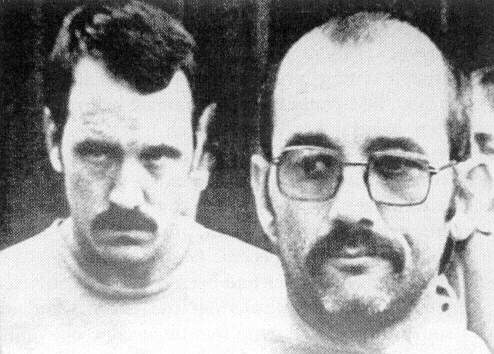
Patrick Kearney
Serial killer Donald Henry Gaskins
Serial killer · USA · 1969
Donald Henry Gaskins, also known as Donald “Pee Wee” Gaskins, was a serial kill…
200 victims
Donald Henry Gaskins
Serial killer · USA · 1969
Donald Henry Gaskins, also known as Donald “Pee Wee” Gaskins, was a serial kill…
200 victims
 Carl Eugene Watts
Serial killer · USA · 1974
Carl Eugene Watts (born November 7, 1953; died September 21, 2007), also known…
100 victims
Carl Eugene Watts
Serial killer · USA · 1974
Carl Eugene Watts (born November 7, 1953; died September 21, 2007), also known…
100 victims
 Rodney Alcala
Serial killer · USA · 1977
Rodney James Alcala (born August 23, 1943) was also known as Rodrigo Jacques Al…
100 victims
Rodney Alcala
Serial killer · USA · 1977
Rodney James Alcala (born August 23, 1943) was also known as Rodrigo Jacques Al…
100 victims
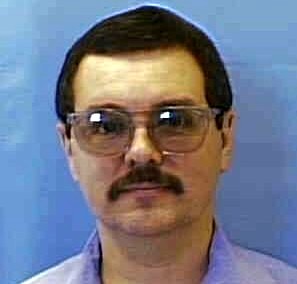 Donald Harvey
Serial killer · USA · 1970
Donald Harvey was known as an American serial killer and a self-professed “Ange…
87 victims
Donald Harvey
Serial killer · USA · 1970
Donald Harvey was known as an American serial killer and a self-professed “Ange…
87 victims
 Donald Leroy Evans
Serial killer · USA · 1975
Donald Leroy Evans (born July 5, 1957) was an American serial killer who murder…
60 victims
Donald Leroy Evans
Serial killer · USA · 1975
Donald Leroy Evans (born July 5, 1957) was an American serial killer who murder…
60 victims
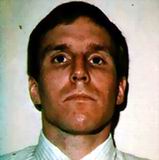 Michael Swango
Serial killer · USA · 1981
Michael Swango (Joseph Michael Swango) was a physician and American serial kill…
60 victims
Michael Swango
Serial killer · USA · 1981
Michael Swango (Joseph Michael Swango) was a physician and American serial kill…
60 victims
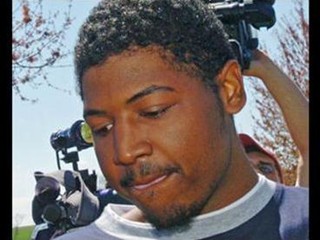 Jesse Wise
Mass murderer · USA · 2006
Jesse Dee Wise, also known as “Jay,” lived with his grandparents at the home wh…
6 victims
Jesse Wise
Mass murderer · USA · 2006
Jesse Dee Wise, also known as “Jay,” lived with his grandparents at the home wh…
6 victims
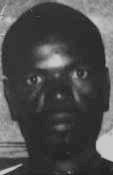 Bongani Vilakati
Mass murderer · South Africa · 2000
Bongani Vilakati was implicated in killings that involved multiple victims disc…
6 victims
Bongani Vilakati
Mass murderer · South Africa · 2000
Bongani Vilakati was implicated in killings that involved multiple victims disc…
6 victims
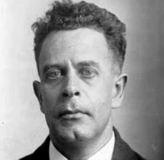 Henry Judd Gray
Murderer · USA · 1927
Henry Judd Gray Henry Judd Gray was executed by electrocution in New York on Ja…
1 victim
Henry Judd Gray
Murderer · USA · 1927
Henry Judd Gray Henry Judd Gray was executed by electrocution in New York on Ja…
1 victim
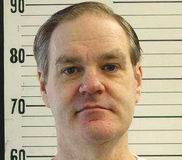 William Richard Stevens
Murderer · USA · 1977
William Richard Stevens offered to pay Corey Milliken to murder Stevens’s wife,…
3 victims
William Richard Stevens
Murderer · USA · 1977
William Richard Stevens offered to pay Corey Milliken to murder Stevens’s wife,…
3 victims
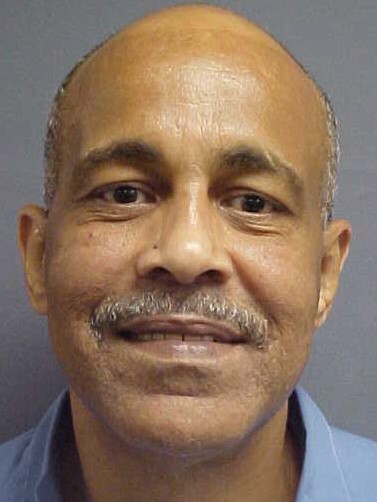 Kenneth Turrentine
Mass murderer · USA · 1994
Kenneth Turrentine was convicted in Oklahoma of four counts of first degree mur…
4 victims
Kenneth Turrentine
Mass murderer · USA · 1994
Kenneth Turrentine was convicted in Oklahoma of four counts of first degree mur…
4 victims
- Gender
- male
- Country
- USA
- Location
- California, USA
- Date of birth
- 1940
- Age at first offence
- 35
- Characteristics
- rape, mutilation
- Victim profile
- Homosexual men
- Method of murder
- Shooting
- Date(s) of murder
- 1975 - 1977
- Years active
- 1975–1977
- Date of arrest
- J uly 5, 1977
- Status
-
Life imprisonment
Sentenced to life in prison December 21, 1977
Case record
Background
Patrick Kearney was an electronics engineer from Los Angeles who was involved in the murders of homosexual men in California between 1975 and 1977. The killings occurred along highways between Los Angeles and the Mexican border. Kearney was described as looking nothing like the stereotypical Serial Killer with his glasses and harmless demeanor.
Kearney was sometimes referred to as The Freeway Killer, a nickname he shared with two other separate serial killers, William Bonin and Randy Steven Kraft.
Kearney was born in 1940 and was the youngest of three sons. He was raised in a reasonably stable family. In his early life he was a thin and sickly child who became a target for bullies at school. In his teens he became withdrawn and fantasized about killing people. He was originally from Texas.
Kearney worked as an engineer for Hughes Aircraft.
He claimed to have killed his first victim around 1965, a hitch-hiker he picked up and murdered in Orange, California.
Kearney moved to California after a brief marriage ended in divorce. Eventually, he worked as an engineer for Hughes Aircraft.
Kearney’s partner and live-in lover was David Hill, whom Hill had become acquainted with in Texas. Hill divorced his wife in 1966 and moved to California with Kearney a year later. They were living together in Culver City, a Los Angeles suburb, when the long string of murders began.
The pair frequently argued, and Kearney would go out for long drives on his own. It was then that he would pick up young male hitch-hikers or young men from gay bars and kill them.
The offence
Homosexual men were being murdered in bunches from 1975 to 1977 and were dumped along highways between Los Angeles and the Mexican border.
Police discovered that the identified victims had homosexual backgrounds. Each victim was found nude, shot in the head with a similar weapon. Several were dismembered or otherwise mutilated, and their remains were tied up in identical plastic garbage bags.
The murders were known as the “trash bag” murders and were thought to include fifteen victims in five different counties since 1973.
Kearney was primarily a necrophile. He shot his victims without warning and then took the bodies off to dismember and mutilate. Kearney eventually dumped victims along the freeway or in the desert, usually wrapped in garbage bags.
Kearney’s final victim was John LaMay, who was killed on March 13, 1977. LaMay came to Kearney’s house looking for Hill, who was not home, and Kearney invited him to watch television. Without provocation, Kearney then shot LaMay in the back of the head and later dumped the remains in the desert.
Kearney also admitted to another eleven murders that he was never prosecuted for, and his grand total was 32 killings. Prosecutors charged Kearney with another eighteen counts of murder in February 1978, and nine of those charges disposed of the first dozen victims in Kearney’s confessions. The others included two children, ages five and eight, along with four victims whose bodies were never recovered.
Kearney had signed confessions to twenty-eight murders, with twelve of the cases confirmed by police. Authorities knew there were many more and offered Kearney a deal in which he would receive no death sentence in exchange for the complete list of victims. Kearney confessed and pleaded guilty to killing three men and was later sentenced to life in prison. He later confessed and pleaded guilty to eighteen more killings, directing the law to victims that were previously undiscovered.
If Kearney’s initial confessions were truthful, at least seven victims remained unidentified.
Investigation
The California “trash bag” case officially began on April 13, 1975, when the mutilated remains of Albert Rivera, age 21, were discovered near San Juan Capistrano.
By November of that year, six bodies had been found in Los Angeles, Orange, Riverside and San Diego Counties.
The discovery of two more victims in March 1977 raised the body count to eight, and by that time police had their pattern.
Police entered the case after the discovery involving John LaMay. John LaMay’s remains were found beside a highway south of Corona. Friends of LaMay identified “Dave” as David Hill and supplied homicide detectives with an address.
On July 1, Kearney and Hill entered the Riverside County sheriff’s office and pointed to their posters on the wall. Kearney and Hill smilingly announced: “That’s us.”
At week's end, police had recovered twelve bodies and said Kearney and Hill might be responsible in all for 28 or more killings.
Lieut. Edward Douglas of the Los Angeles sheriff’s department said: “I don't know if we'll ever know the total, because some bodies may be beyond recovery.”
An affidavit filed in the case states that a bloody hack saw was found at the Kearney-Hill apartment in Redondo Beach. The apartment also yielded hair samples and bloodstains that matched those of the victim LaMay. The affidavit stated that LaMay’s body was discovered in a plastic bag taken from the Hughes Aircraft Co.
Police said the two men preyed on boys and young men, some of them apparently male prostitutes, who frequented homosexual cruising areas like Selma Avenue in Hollywood and MacArthur Park in Los Angeles.
Lieut. Douglas said: “We have no indication of what the motive was.”
Investigators discovered that one victim—John LaMay, 17—had been seen in the company of two homosexuals: Patrick Kearney, 37, and his roommate, David Hill, 34, who was unemployed.
Arrest
On May 18, they were found.
Kearney and Hill co-operated when questioned, but they fled as soon as detectives left.
After a few weeks on the run, they gave themselves up on July 1 by walking into a sheriff’s office in Riverside, California, and pointing to their photographs on a nearby wanted poster.
Hill said: “We're them.”
On July 14, 1977, Patrick Kearney was formally indicted on two counts of murder, including that of John LaMay.
David Hill was released the same day, and his charges were dismissed because Kearney shouldered full responsibility in the slayings.
Kearney told police that he killed because “it excited him and gave him a feeling of dominance.”
Trial
On December 21, 1977, Kearney pleaded guilty on three counts of first-degree murder and received a sentence of life imprisonment.
Prosecutors launched the new year by charging Kearney with another eighteen counts of murder in February 1978.
On February 21, Kearney pleaded guilty on all counts and received another life sentence.
Sentencing
Kearney was sentenced to life in prison December 21, 1977.
Kearney also received another life sentence on February 21 after pleading guilty on all counts.
Appeals
No appeal outcome was provided.
Outcome
Patrick Kearney pleaded guilty to killing three men and was sentenced to life in prison. He later confessed and pleaded guilty to eighteen more killings, directing the law to victims previously undiscovered.
Kearney admitted to another eleven murders that he was never prosecuted for, bringing his grand total to 32 killings.
David Hill’s charges were dismissed on July 14, 1977, and Hill was released.
Aftermath
Police are certain that Kearney was responsible for the other seven murders he had admitted, but they did not have the physical evidence to charge him. Police were satisfied that he would be in prison for the rest of his life.
Police were certain that at least seven victims remained unidentified if Kearney’s original confessions were truthful.
References within the case material included:
- “Angel of Darkness (1992)” by Dennis McDougal, Warner Books ISBN 07088 53420
- Wikipedia.org
- “Behavior: Twenty-Eight, and Counting ...” Time.com Monday, Jul. 18, 1977
Quotes included in the material included the following:
- Lieut. Edward Douglas of the Los Angeles sheriff’s department: “I don't know if we'll ever know the total, because some bodies may be beyond recovery.”
- Lieut. Douglas: “We have no indication of what the motive was.”
- Hill: “We're them.”
- Kearney: “it excited him and gave him a feeling of dominance.”
Additional quoted material on the period included:
- Robert Gould, professor of psychiatry at New York Medical College, estimated: “When it's a homosexual who kills ten people or twelve, or whatever, the headline is HOMOSEXUAL KILLS. It sticks in your mind. You never get the headline HETEROSEXUAL KILLS”.
- Judd Marmor, past president of the American Psychiatric Association: “I don't think there is anything inherent in homosexuality that makes them disturbed people.”
- Psychiatrist Gould: “I think you will find more disturbed homosexuals. The extra fillip of pathology in the homosexual is due to cultural opposition and discrimination.”
- Berkeley Psychologist Michael Evans: “Homosexuals are an easy population to get access to in some anonymous way.”
- Chicago Police Sgt. Richard Sandberg: “The gays are easy prey”.
Timeline
- April 13, 1975 — The mutilated remains of Albert Rivera, age 21, were discovered near San Juan Capistrano.
- September 1968 — The first victim, known only as “George,” was buried behind Kearney’s Culver City duplex.
- March 13, 1977 — John LaMay was last seen by his parents when he left home to visit “Dave.”
- Five days later — Police entered the case after LaMay’s dismembered remains were found beside a highway south of Corona.
- July 1, 1977 — Kearney and Hill gave themselves up by entering the Riverside County sheriff's office and announcing: “That's us.”
- July 14, 1977 — Patrick Kearney was formally indicted on two counts of murder, including that of John LaMay; David Hill was released as his charges were dismissed.
- July 15, 1977 — Kearney signed confessions to twenty-eight murders, with twelve of the cases confirmed by police.
- May 18 — They were found.
- December 21, 1977 — Kearney pleaded guilty on three counts of first-degree murder and received a sentence of life imprisonment.
- February 1978 — Prosecutors charged Kearney with another eighteen counts of murder.
- February 21, 1978 — Kearney pleaded guilty on all counts and received another life sentence.
- July 1977 — Detectives unearthed the skeleton of “George” after Kearney’s directions.
Other details
- Kearney and Hill were wanted together by police; Hill was never charged with any crime related to the murders.
- Police believed the case could be the largest mass murder in American history.
- The investigation centered on Patrick Wayne Kearney and acquaintance David Hill.
- Kearney quit his job and took off with Hill for El Paso, Texas, where they went into hiding.
- David Hill was a high school dropout from Lubbock, Texas.
- David Hill joined the army in 1960 and was soon discharged on diagnosis of an unspecified personality disorder.
- Hill married his high school sweetheart, but the romance was short-lived.
- Kearney and Hill met in 1962; Hill and Kearney’s attraction was mutual.
- Kearney and Hill remained at large until July 1.
Spotted an error, or have more information about this case?