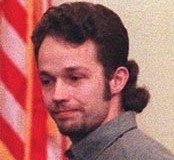
Chevie Kehoe
Murderer Russell Ellwood
Murderer · USA · 1991
Russell Ellwood was a former taxi driver. Authorities suspected him of killing…
20 victims
Russell Ellwood
Murderer · USA · 1991
Russell Ellwood was a former taxi driver. Authorities suspected him of killing…
20 victims
 Robert Martines Perez
Murderer · USA · 1994
Name: Robert Martines Perez · Other name used in proceedings: Robert Martinez P…
15 victims
Robert Martines Perez
Murderer · USA · 1994
Name: Robert Martines Perez · Other name used in proceedings: Robert Martinez P…
15 victims
 Billy Frank Vickers
Murderer · USA · 1993
Billy Frank Vickers Vickers was executed by lethal injection in Texas on Januar…
14 victims
Billy Frank Vickers
Murderer · USA · 1993
Billy Frank Vickers Vickers was executed by lethal injection in Texas on Januar…
14 victims
 Chelsea Huggett
Murderer · USA · 2013
Chelsea Huggett was the mother of 2-year-old Aliyah Marie Branum. She was arres…
1 victim
Chelsea Huggett
Murderer · USA · 2013
Chelsea Huggett was the mother of 2-year-old Aliyah Marie Branum. She was arres…
1 victim
 Jerald Harjo
Murderer · USA · 1988
Jerald Wayne Harjo was convicted of first degree murder in Seminole County, Okl…
1 victim
Jerald Harjo
Murderer · USA · 1988
Jerald Wayne Harjo was convicted of first degree murder in Seminole County, Okl…
1 victim
 William Henry Furman
Murderer · USA · 1967
William Henry Furman William Henry Furman was sentenced to death on September 2…
1 victim
William Henry Furman
Murderer · USA · 1967
William Henry Furman William Henry Furman was sentenced to death on September 2…
1 victim
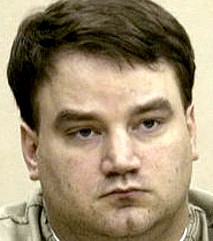 Charles McCoy
Murderer · USA · 2003
Charles McCoy Jr. was an admitted highway shooter in Ohio. His defense attorney…
1 victim
Charles McCoy
Murderer · USA · 2003
Charles McCoy Jr. was an admitted highway shooter in Ohio. His defense attorney…
1 victim
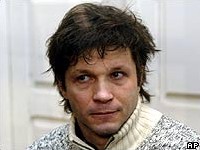 Bertrand Cantat
Homicide · Lit h uania · 2003
Bertrand Lucien Bruno Cantat (born 5 March 1964) was a French singer and songwr…
1 victim
Bertrand Cantat
Homicide · Lit h uania · 2003
Bertrand Lucien Bruno Cantat (born 5 March 1964) was a French singer and songwr…
1 victim
 Karen McCarron
Murderer · USA · 2006
Karen McCarron was convicted in Illinois of killing her three-year-old daughter…
1 victim
Karen McCarron
Murderer · USA · 2006
Karen McCarron was convicted in Illinois of killing her three-year-old daughter…
1 victim
- Gender
- male
- Country
- USA
- Location
- Tilly, Pope County, Arkansas, USA
- Date of birth
- January 19, 1973
- Age at first offence
- 23
- Characteristics
- anarchist, domestic violence, drugs, rape, rapist, torture, white supremacist
- Victim profile
- Gun dealer William Mueller, his wife Nancy and her 8-year-old daughter Sarah Powell
- Method of murder
- Suffocating with plastic bags
- Date(s) of murder
- January 13, 1996
- Years active
- 1996
- Date of arrest
- June 17, 1997
- Status
-
Life imprisonment
Sentenced to life in prison without parole on June 25, 1999
Case record: Chevie Kehoe
Background
Chevie Kehoe was born on January 19, 1973, and was identified as the oldest of eight sons born to Kirby and Gloria Kehoe. He was named after his father’s favorite brand of automobile, Chevrolet.
Chevie Kehoe was raised with anti-government and white supremacist beliefs. He and his younger brother Cheyne were withdrawn from school so their parents could homeschool them. Cheyne and Gloria Kehoe later served as prosecution witnesses and testified against Chevie Kehoe at trial.
Chevie Kehoe developed a plan to bring down the United States government through a self-styled “American People’s Republic” militia. He married Karena Gumm and had a daughter. In 1993, he also married Angie Settle and espoused that polygamy was an acceptable way to further the Aryan race.
Chevie Kehoe was described as a self-proclaimed white supremacist.
The offence
Chevie Kehoe was convicted of the kidnapping, torture and murder of the William Mueller family. Chevie Kehoe was also convicted in connection with three murders of gun dealer William Mueller, his wife Nancy, and their 8-year-old daughter Sarah Powell in January 1996.
In connection with the plan to set up a new nation in the Pacific Northwest, Chevie Kehoe was convicted of three counts of murder. He was also convicted of one count each of conspiracy and racketeering.
Chevie Kehoe was convicted in what prosecutors portrayed as a plot in which people of Asian, black, Hispanic and Jewish descent would be banned. Prosecutors also portrayed him as responsible for other illegal activities, including the bombing of City Hall at Spokane, Wash.
Investigation
A nationwide manhunt was launched after the Wilmington, Ohio shootout that involved Cheyne Kehoe and Chevie Kehoe.
For the Mueller murders, investigators found that the victims’ bodies were discovered about six months after they were tossed into a bayou near Russellville, Ark., and that flecks of auto body paint were found on duct tape used on the victims. The flecks later scientifically matched paint found on a freshly repainted pickup truck used by Chevie and his brother Cheyne.
Court documents on file in three states—Ohio, Washington and Arkansas—claimed that Kehoe was connected to multiple acts of violence and other crimes. Officials stated that a judge’s gag order restricted discussion of the Kehoe case.
Arrest
Cheyne Kehoe eventually turned himself in and told authorities where they could find Chevie Kehoe.
FBI agents arrested Chevie Kehoe as he walked into a feed store in Gunlock, Utah, after Cheyne provided a map.
Kirby Kehoe was later arrested in Springdale, Wash., on March 18, 1998, by agents who seized hand grenades, machineguns, and ammunition.
Trial
Plea in Wilmington, Ohio case
On February 20, 1998, Chevie Kehoe pled guilty to state charges stemming from a February 15, 1997 shootout in Wilmington, Ohio. The shootout involved an Ohio State Highway Patrol trooper and a Clinton County sheriff’s deputy during a traffic stop resulting from expired tags on his 1977 blue Chevrolet Suburban. The video from the patrolman’s dashboard camera was aired in 1997 on Fox’s “World’s Scariest Police Shootouts”.
The plea agreement was described as being in the works since January, when Cheyne Kehoe was on trial on charges related to the Wilmington, Ohio case.
The terms called for Chevie Kehoe to plead guilty to:
- the attempted murder of Wilmington Police Officer Rick Wood, including gun specifications;
- felonious assault of a passerby slightly injured in the gunbattle;
- carrying a concealed weapon.
In exchange, the government dropped eight remaining charges involving the Wilmington shooting.
When asked to state his plea to one of the charges, Chevie Kehoe replied: “Guilty, to avoid the possible consequences of a trial by jury.”
Kort Gatterdam, an assistant public defender representing Chevie Kehoe, unsuccessfully argued to get the trial moved to another jurisdiction, or at least delayed, because of publicity.
County Prosecutor William Peelle said he would recommend Chevie Kehoe serve only 20 years.
Chevie Kehoe addressed reporters after a hearing and responded to a question about Cheyne’s allegations involving an unnamed federal building:
- Chevie Kehoe said: “I love my brother greatly and I forgive him,” and “But it’s sad when a family has to be torn apart by lies.”
When asked about Cheyne’s allegations, Chevie Kehoe responded: “Totally untrue.”
Chevie Kehoe also had written a letter filled with anti-establishment views and references to the shootout with police. He wrote: “I would rather die on my feet than live on my knees.”
Federal racketeering trial on Arkansas murders
In 2005, Chevie Kehoe was convicted of the murders of gun dealer Robert Mueller and his family, receiving three sentences of life imprisonment without parole.
On June 26, 1999, the Associated Press described Chevie Kehoe and Danny Lee as having been convicted the prior month of three counts of murder for slaying Tilly, Ark. gun dealer William Mueller, his wife Nancy, and their 8-year-old daughter Sarah Powell in January 1996. The Associated Press also described Chevie Kehoe and Danny Lee as being convicted of conspiracy and racketeering.
The jury rejected the death-penalty option for Chevie Kehoe while recommending it for Danny Lee, who had a court hearing scheduled.
The Associated Press reported that prosecutors portrayed Chevie Kehoe as the leader, but the jury spared him from the death penalty and recommended death for Danny Lee.
Sentencing
On June 25, 1999, Chevie Kehoe was sentenced to life in prison without parole.
On June 26, 1999, the Associated Press reported that U.S. District Judge G. Thomas Eisele pronounced the sentence on Chevie Kehoe. When the judge asked Chevie Kehoe if he had anything to say, Chevie Kehoe responded: “I would just like to continue to maintain my innocence in this situation.”
Chevie Kehoe received three sentences of life imprisonment without parole.
In related proceedings, Cheyne Kehoe was sentenced to 24 years in prison after being found guilty of attempted murder and felonious assault on charges he shot at police in Wilmington.
Appeals
An independent radio documentary entitled “Convicting Chevie Kehoe” was released in 2005 and suggested he had been wrongfully convicted on the murder charges.
Other details
Chevie Kehoe was described as a pot-smoking 25-year-old in an Intelligence Report (Fall 1998).
Chevie Kehoe was alleged to have been involved in events across multiple states and years, including property and firearms crimes and other acts alleged by prosecutors.
Officials described Kehoe as being subject to a judge’s gag order that restricted discussion.
Spotted an error, or have more information about this case?