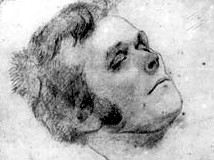
Alexander Pearce
Murderer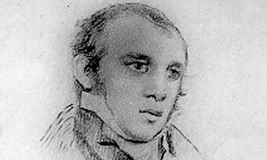 Mark Jefferies
Murderer · Australia · 1820
Mark Jefferies was an escaped convict who was described as a rapist and a canni…
5 victims
Mark Jefferies
Murderer · Australia · 1820
Mark Jefferies was an escaped convict who was described as a rapist and a canni…
5 victims
 Christopher Flannery
Murderer · Australia · 1979
Christopher Dale Flannery (1949 - missing and believed murdered ca. May 9, 1985…
12 victims
Christopher Flannery
Murderer · Australia · 1979
Christopher Dale Flannery (1949 - missing and believed murdered ca. May 9, 1985…
12 victims
 John Makin
Murderer · Australia · 1892
John Makin (14 February 1845 – 15 August 1893) was an Australian baby farmer wh…
12 victims
John Makin
Murderer · Australia · 1892
John Makin (14 February 1845 – 15 August 1893) was an Australian baby farmer wh…
12 victims
 Ned Kelly
Murderer · Australia · 1878
Edward “Ned” Kelly (June 1854 or 1855 – 11 November 1880) was an Irish Australi…
6 victims
Ned Kelly
Murderer · Australia · 1878
Edward “Ned” Kelly (June 1854 or 1855 – 11 November 1880) was an Irish Australi…
6 victims
 Bevan Von Einem
Murderer · Australia · 1979
Bevan Spencer von Einem (born c.1945), also known as Bevan von Einem (with the…
5 victims
Bevan Von Einem
Murderer · Australia · 1979
Bevan Spencer von Einem (born c.1945), also known as Bevan von Einem (with the…
5 victims
 Joseph Schwab
Murderer · Australia · 1987
Joseph Schwab was a German man who murdered five tourists in the Northern Terri…
5 victims
Joseph Schwab
Murderer · Australia · 1987
Joseph Schwab was a German man who murdered five tourists in the Northern Terri…
5 victims
 John Martini
Serial killer · USA · 1977
John Martini Sr. was sentenced to death in New Jersey on December 12, 1990. The…
6 victims
John Martini
Serial killer · USA · 1977
John Martini Sr. was sentenced to death in New Jersey on December 12, 1990. The…
6 victims
 Debora Green
Murderer · USA · 1995
Debora Green (born Debora Jones, February 28, 1951) was an American physician.…
2 victims
Debora Green
Murderer · USA · 1995
Debora Green (born Debora Jones, February 28, 1951) was an American physician.…
2 victims
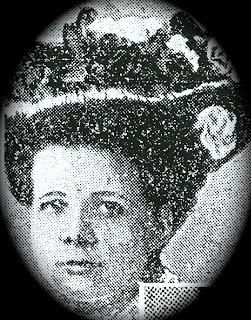 Augusta Fullam
Murderer · India · 1911
Augusta Fullam Augusta Fullam was sentenced to death in 1913. Her sentence was…
2 victims
Augusta Fullam
Murderer · India · 1911
Augusta Fullam Augusta Fullam was sentenced to death in 1913. Her sentence was…
2 victims
 Derrick Leon Jackson
Murderer · USA · 1988
Derrick Leon Jackson was executed by lethal injection in Texas on July 20, 2010…
2 victims
Derrick Leon Jackson
Murderer · USA · 1988
Derrick Leon Jackson was executed by lethal injection in Texas on July 20, 2010…
2 victims
 Demetrius Carey
Homicide · USA · 2005
Demetrius Carey was a 14-year-old student at Westview Middle School near Opa-lo…
1 victim
Demetrius Carey
Homicide · USA · 2005
Demetrius Carey was a 14-year-old student at Westview Middle School near Opa-lo…
1 victim
- Gender
- male
- Country
- Australia
- Location
- Tasmania, Australia
- Date of birth
- 1790
- Age at first offence
- 32
- Characteristics
- cannibalism, escape
- Victim profile
- Men ( his fellow escapees )
- Method of murder
- Beating with an axe
- Date(s) of murder
- 1822 - 1824
- Years active
- 1822–1824
- Date of arrest
- —
- Status
-
Executed
Executed by hanging in the yard of the Hobart Town jail at 9am on July 19, 1824
Timeline
- 1819 — Alexander Pearce was sentenced at Armagh in 1819 to penal transportation to Van Diemen's Land for "the theft of six pairs of shoes".
- February 1821 — Alexander Pearce arrived in Tasmania in February 1821.
- 18 May 1822 — Alexander Pearce was advertised in the Hobart Town Gazette as an absconder with a 10-pound reward on his head.
- 1822 — Alexander Pearce was transported to Sarah Island; on his escape he escaped with seven other convicts.
- September 20, 1822 — The convicts Alexander Pearce, Alexander Dalton, Thomas Bodenham, William Kennerly, Matthew Travers, Edward Brown, Robert Greenhill and John Mather were cutting Huon pine logs on the eastern side of Macquarie Harbour.
- July 19, 1824 — Alexander Pearce was hanged in the yard of the Hobart Town jail at 9am.
- July 19, 1824 — Alexander Pearce received the last rites from a priest.
- June 20, 1824 — Alexander Pearce stood trial for murder.
- June 25, 1824 — The Hobart Town Gazette described Alexander Pearce as "laden with the weight of human blood, and believed to have banqueted on human flesh".
- November 6, 2008 — The horror/thriller film Dying Breed about Alexander Pearce was released.
Background
Alexander Pearce (1790 - 1824) was also known as Pierce. He was an Irish-born penal convict in Tasmania and a bushranger who escaped from the Macquarie Harbour Penal Settlement and was known for cannibalising his fellow escapees while travelling through the Tasmanian Wilderness. He was the sole survivor of a nine-week escape through difficult wilderness terrain.
Alexander Pearce was a farm labourer from County Fermanagh.
He had been transported to Sarah Island in 1822.
The offence
Alexander Pearce gained a reputation as a bushranger and was best known for cannibalising his fellow escapees while travelling through the West Coast of Tasmania. He was tried and convicted of murdering and cannibalising Thomas Cox.
Investigation
After Alexander Pearce was captured near Hobart, he made a confession that he and the other men had cannibalised each other over a number of weeks, with Pearce being the last to survive. The Hobart magistrate did not believe Pearce's cannibalism story and was convinced the other men were still alive and living in the bush. Pearce was returned to Sarah Island.
When Pearce surrendered 11 days after a second escape attempt near the mouth of the King River, human flesh was found in his pocket even though guards found that he had other food with him.
At the time of trial, witnesses said Pearce had given himself up because he had no hope of ultimately escaping, and that he was horror-struck at his own inhuman conduct.
Arrest
Alexander Pearce was captured over 100 days after escaping with other convicts, near Hobart.
Within a year of the first escape, Pearce escaped a second time with Thomas Cox. He was found within ten days of that escape attempt. After surrendering near the mouth of the King River, just south of present-day Strahan, he was taken back and the human flesh in his pocket was found.
Trial
The trial for the murder of Thomas Cox took place on June 20, 1824, in the court room where it was very cold and there was heavy snow on Mount Wellington.
Chief justice John Lewes Pedder presided at the trial for the murder of Thomas Cox. The prosecutor was the attorney-general Joseph Tice Gellibrand. Alexander Pearce had no defence counsel and there was no record that he said anything on his own behalf.
At the trial:
- The chief justice pronounced the death sentence and ordered that the body be delivered to the surgeons for dissection.
- Thirty days later, after receiving the sacraments from the Catholic chaplain, Father Philip Conolly, Pearce was hanged in the yard of the Hobart Town jail at 9am on July 19, 1824.
The Hobart Town Gazette described Alexander Pearce as "laden with the weight of human blood, and believed to have banqueted on human flesh".
Sentencing
Alexander Pearce was sentenced to death and the chief justice ordered that the body be delivered to the surgeons for dissection.
Outcome
Alexander Pearce was hanged in the yard of the Hobart Town jail at 9am on July 19, 1824, after receiving the last rites from a priest.
Aftermath
Alexander Pearce was the subject of a song by Australian rock/folk band Weddings Parties Anything titled "A Tale They Won't Believe".
The Drones also had a song titled "Words From The Executioner To Alexander Pearce".
On November 6, 2008, the horror/thriller film Dying Breed was released. It featured the entirely fictional descendants of Pearce. It was shot in Tasmania and Melbourne, including at the Pieman River on the West Coast of Tasmania. Despite references to the contrary in the film, the once-common suggestion that the Pieman River was named after Alexander Pearce was not correct; "The Pieman" was said to be Thomas Kent of Southampton, a pastry-cook who was transported to Van Diemen's Land in 1816. The river had significant timber, mining and industrial heritage along its shores.
The Last Confession of Alexander Pearce was a 2008 film. It was shot on location in Tasmania and Sydney in April and May 2008. It was shown on RTE Ireland on 29 December 2008 and ABC1 Australia on 25 January 2009.
Other details
Alexander Pearce was sentenced at the County Armagh Lent assizes of 1819 to transportation for seven years for "the theft of six pairs of shoes".
In Van Diemen's Land, between his arrival in Tasmania in February 1821 and early August 1822 when he was sent to Macquarie Harbour, he absconded twice, received four floggings, and received one of 50 lashes for embezzling two turkeys and three ducks, one of 25 for being drunk and disorderly, and another 50 and six months working in chains for stealing a wheelbarrow.
In March 1822, Alexander Pearce absconded again, and after three months he was recaptured. Magistrates of Hobart Town sent him to Macquarie Harbour for the remainder of his original sentence.
He bolted into the bush into the west coast wilderness about six weeks after arriving at Macquarie Harbour, joining seven other convicts. The seven other convicts were Alexander Dalton, Thomas Bodenham, William Kennerly, Matthew Travers, Edward Brown, Robert Greenhill and John Mather.
The escapees planned to commandeer a whaleboat, sail north out of Macquarie Harbour, heading to freedom on a Pacific island, or even China. They overpowered their overseer but bungled the getaway and plunged impulsively into rainforests and mountains surrounding the harbour. They headed east but were ill-equipped for a 225-kilometre journey.
Eight days into the escape, the men realised that their only hope for survival was cannibalism. They killed and ate Alexander Dalton because Dalton had volunteered to be a flogger and such men were hated.
Next day, Brown and Kennerly decided to return to Sarah Island to avoid being killed and eaten. They made it back to the coast of Macquarie Harbour but died from exhaustion soon after.
The remaining five men continued, led by Greenhill, who was said to have been a sailor and navigational skills using the sun and the stars. As the journey continued, one by one, the weakest man was killed with an axe and butchered for food. After five weeks, only three men remained: Greenhill, Pearce and Travers. Most killing had been done by Greenhill, but Pearce and Travers also participated. The men initially cooked flesh and innards, but eventually ate them raw.
Driven by extreme hunger, Greenhill faced killing his injured friend Travers, who had been bitten on the foot by a venomous tiger snake. Greenhill and Pearce half-dragged and carried Travers for five days until Travers begged them to kill him. The only weapon left was the axe; they killed Travers in his sleep and ate his flesh.
Pearce and Greenhill struggled for eight days, playing cat and mouse with each other, desperate to stay awake, fearing that the other would attack if he closed his eyes and nodded off. Pearce kept awake long enough to grab the axe and kill sleeping Greenhill with a blow to the head.
After Pearce made it to the settled districts, he was sheltered by a convict shepherd until he was captured several months later. He lived rough for several months, robbing farms and stealing sheep, before he was recaptured.
Pearce was returned in chains to Sarah Island, where his fellow convicts treated him as a hero.
Several months later Pearce bolted again from a work party. The escape was headed north along the east coast of Macquarie Harbour with a young man named Thomas Cox, who pestered Pearce to accompany him on an escape attempt.
When Pearce surrendered 11 days later near the mouth of the King River, just south of present-day Strahan, guards found some of the remains of Cox in Pearce's pockets, even though he still had other food available to him. Pearce was taken to Hobart and tried and convicted of murdering and cannibalising Thomas Cox.
Pearce later admitted he had murdered Cox because Cox was a hindrance to him. At the time of surrender, witnesses said guards found that he had other food with him.
The Drones song titled "Words From The Executioner To Alexander Pearce" was also mentioned.
Paul Collins authored Hell's Gates: the terrible journey of Alexander Pearce, Van Dieman's Land Cannibal; South Yarra, 2002; ISBN 1-74064-083-7. The record also mentioned the reference Collins, Paul. Hell's Gates: the terrible journey of Alexander Pearce, Van Dieman's Land Cannibal.
Other further reading listed included:
- Sprod, Dan. Alexander Pearce of Macquarie Harbour. Hobart: Cat & Fiddle Press, 1977. ISBN 0-85853-031-7
- Kidd, Paul B. Australia's Serial Killers ISBN 0 7329 1036 6
- "A journey through hell's gate" published October 29 2002 by Paul Collins.
A navigation artefact named "Alexander Pearce (1790 - 1824) (also known as Pierce, see reference cited Mark Jefferies)" appeared with a duplication of case information, and should not be treated as additional facts.
Spotted an error, or have more information about this case?