Kenneth Brown
Murderer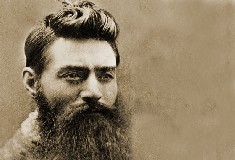 Ned Kelly
Murderer · Australia · 1878
Edward “Ned” Kelly (June 1854 or 1855 – 11 November 1880) was an Irish Australi…
6 victims
Ned Kelly
Murderer · Australia · 1878
Edward “Ned” Kelly (June 1854 or 1855 – 11 November 1880) was an Irish Australi…
6 victims
 Christopher Flannery
Murderer · Australia · 1979
Christopher Dale Flannery (1949 - missing and believed murdered ca. May 9, 1985…
12 victims
Christopher Flannery
Murderer · Australia · 1979
Christopher Dale Flannery (1949 - missing and believed murdered ca. May 9, 1985…
12 victims
 John Makin
Murderer · Australia · 1892
John Makin (14 February 1845 – 15 August 1893) was an Australian baby farmer wh…
12 victims
John Makin
Murderer · Australia · 1892
John Makin (14 February 1845 – 15 August 1893) was an Australian baby farmer wh…
12 victims
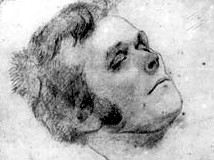 Alexander Pearce
Murderer · Australia · 1822
1819 — Alexander Pearce was sentenced at Armagh in 1819 to penal transportation…
6 victims
Alexander Pearce
Murderer · Australia · 1822
1819 — Alexander Pearce was sentenced at Armagh in 1819 to penal transportation…
6 victims
 Bevan Von Einem
Murderer · Australia · 1979
Bevan Spencer von Einem (born c.1945), also known as Bevan von Einem (with the…
5 victims
Bevan Von Einem
Murderer · Australia · 1979
Bevan Spencer von Einem (born c.1945), also known as Bevan von Einem (with the…
5 victims
 Joseph Schwab
Murderer · Australia · 1987
Joseph Schwab was a German man who murdered five tourists in the Northern Terri…
5 victims
Joseph Schwab
Murderer · Australia · 1987
Joseph Schwab was a German man who murdered five tourists in the Northern Terri…
5 victims
 Jackie Arklöv
Murderer · Sweden · 1999
Jackie Arklöv was sentenced to life imprisonment. Jackie Arklöv (born June 6, 1…
2 victims
Jackie Arklöv
Murderer · Sweden · 1999
Jackie Arklöv was sentenced to life imprisonment. Jackie Arklöv (born June 6, 1…
2 victims
 Taylor Marks
Murderer · USA · 2009
Taylor Marks was an Akron woman who was accused of plotting to kill her mother,…
1 victim
Taylor Marks
Murderer · USA · 2009
Taylor Marks was an Akron woman who was accused of plotting to kill her mother,…
1 victim
 Farris Morris
Murderer · USA · 1994
Farris Genner Morris Jr. was the defendant in State of Tennessee v. Farris Genn…
2 victims
Farris Morris
Murderer · USA · 1994
Farris Genner Morris Jr. was the defendant in State of Tennessee v. Farris Genn…
2 victims
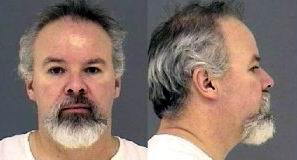 Scott Lee Kimball
Serial killer · USA · 2003
Scott Lee Kimball was a convicted serial killer. He pleaded guilty to two count…
4 victims
Scott Lee Kimball
Serial killer · USA · 2003
Scott Lee Kimball was a convicted serial killer. He pleaded guilty to two count…
4 victims
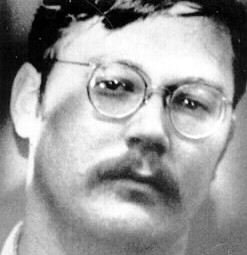 Edmund Kemper
Serial killer · USA · 1964
Edmund Emil Kemper III was born December 18, 1948. He was also known as “The Co…
10 victims
Edmund Kemper
Serial killer · USA · 1964
Edmund Emil Kemper III was born December 18, 1948. He was also known as “The Co…
10 victims
- Gender
- male
- Country
- Australia
- Location
- Western Australia, Australia
- Date of birth
- 1837
- Age at first offence
- 39
- Characteristics
- parricide, alcohol, domestic violence
- Victim profile
- His wife
- Method of murder
- Shooting
- Date(s) of murder
- January 1876
- Years active
- 1876
- Date of arrest
- Same day
- Status
-
Executed
Executed by hanging on June 10, 1876
Overview
Kenneth Brown (1837 – 10 June 1876) was an explorer and pastoralist in Western Australia. He was hanged for murdering his wife.
Background
Brown was born in England in 1837. He was the eldest son of Thomas Brown and later became the older brother of Maitland Brown. In 1840, the Brown family emigrated to Western Australia, arriving in March 1841. They initially settled at York.
In 1850, the family took up land in the Champion Bay area, where they established Glengarry. The following year Thomas Brown was appointed to an official position in Fremantle, and the family moved there. During the 1850s, Brown spent most of his time at Glengarry. He was often the only family member there and became increasingly responsible for its management.
Although Glengarry was primarily a sheep station, Brown developed a passion for horse breeding, and over time Glengarry became one of the most successful racehorse breeding establishments in the colony.
Brown undertook exploring expeditions between 1852 and 1863:
- In 1852 he explored the country behind Glengarry with Major Logue.
- Two years later, he was a member of Robert Austin's expedition of 1854.
- In 1859 he explored up the Murchison River with William Dalgety Moore to look for new land.
- In June 1862 he again explored up the Murchison, this time with Thomas Burges.
- In 1863, he helped to mount an expedition to the Glenelg River. The party included Brown and Samuel Hamersley and was financed by a group of pastoralists including Kenneth and Maitland Brown, Hamersley and Lockier Burges.
The following year Brown filed suit against Burges and others, seeking payment for his part in the expedition. The case was eventually settled out of court.
In 1859 Brown married Mary Eliza Dircksey Wittenoom. They had two daughters, but Mary died during childbirth in 1868.
In June 1863 Brown’s father died. Kenneth and Maitland formed a partnership under which they managed Glengarry. Over the next decade, the Champion Bay area suffered from drought, wheat rust, and sheep scab. By 1871, Glengarry was heavily mortgaged.
In 1872, Brown withdrew from the partnership with his brother and left Glengarry. For a time he maintained an interest in horses and horse-racing, but with no real success. After a year, he left the colony for Melbourne.
Cowan (1988) wrote of him at this time:
He apparently began to lose considerable sums, he became increasingly restless, and drank heavily. His behaviour from this time became erratic. He was given to outbursts of temper, compounded, and perhaps in part caused, by drinking.
While in Melbourne, Brown married again, but the marriage was almost at once a failure. By the time he returned to Western Australia with his wife, they were constantly and openly quarrelling.
The offence
In January 1876, after a day of heavy drinking and constant arguing with his wife, Brown shot her dead.
Brown refused to provide any explanation or excuse at his trial.
Investigation
No investigation details were provided.
Trial
Brown’s family attempted to mount a defence of diminished responsibility, but were ultimately unsuccessful.
Kenneth Brown was found guilty of murder.
Sentencing
Kenneth Brown was hanged on 10 June 1876.
Outcome
Kenneth Brown was executed by hanging on 10 June 1876.
Aftermath
Many years later, the daughter of Kenneth Brown’s second marriage claimed that while travelling in America she had met her father in a hotel. Because of this, a story persisted that Maitland had arranged Kenneth’s escape to the United States.
Kenneth Brown’s second child by his first marriage was Edith Cowan (nee Brown).
Other details
- Brown died on 10 June 1876.
- Mary died during childbirth in 1868.
- In 1863, Brown’s father died and the partnership between Kenneth and Maitland formed to manage Glengarry.
- Glengarry became one of the most successful racehorse breeding establishments in the colony.


Spotted an error, or have more information about this case?