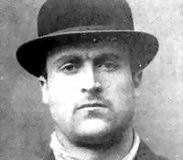
William Henry Kennedy
Murderer Albert Burrows
Murderer · United Kingdom · 1920
Albert Burrows (also named Albert Edward Burrows): married farm labourer who to…
4 victims
Albert Burrows
Murderer · United Kingdom · 1920
Albert Burrows (also named Albert Edward Burrows): married farm labourer who to…
4 victims
 Lock Ah Tam
Murderer · United Kingdom · 1925
Lock Ah Tam was 54 when he killed his wife and two daughters. He had been a suc…
3 victims
Lock Ah Tam
Murderer · United Kingdom · 1925
Lock Ah Tam was 54 when he killed his wife and two daughters. He had been a suc…
3 victims
 Buck Ruxton
Murderer · United Kingdom · 1935
Buck Ruxton (21 March 1899, Bombay – 12 May 1936, Manchester) was also known as…
2 victims
Buck Ruxton
Murderer · United Kingdom · 1935
Buck Ruxton (21 March 1899, Bombay – 12 May 1936, Manchester) was also known as…
2 victims
 Walter Graham Rowland
Murderer · United Kingdom · 1934
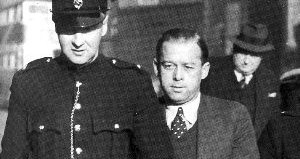
Defendant: Walter Graham Rowland Age: 39 (labourer) Residence/Origin: from Mell…
2 victims
Walter Graham Rowland
Murderer · United Kingdom · 1934
Defendant: Walter Graham Rowland Age: 39 (labourer) Residence/Origin: from Mell…
2 victims
 Paul Michael McManus
Murderer · USA · 2001
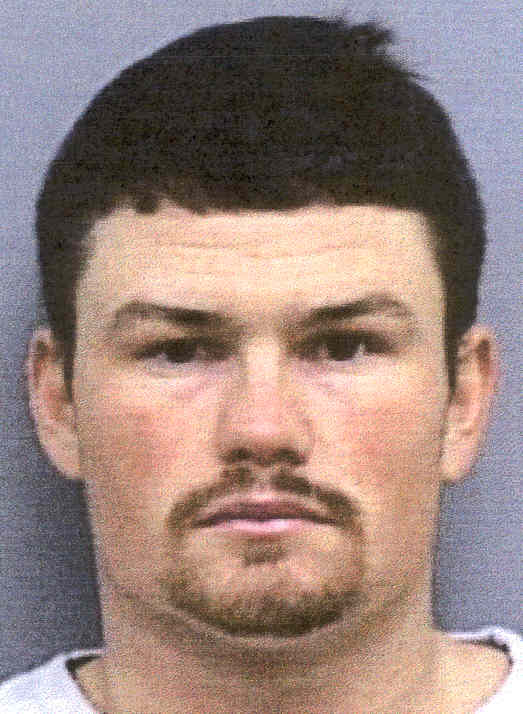
Paul Michael McManus McManus had a history of mental illness. His estranged wif…
3 victims
Paul Michael McManus
Murderer · USA · 2001
Paul Michael McManus McManus had a history of mental illness. His estranged wif…
3 victims
 Shawna Forde
Murderer · USA · 2009
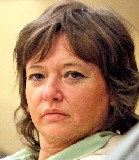
Shawna Forde was sentenced to death on February 22, 2011. She was convicted of…
2 victims
Shawna Forde
Murderer · USA · 2009
Shawna Forde was sentenced to death on February 22, 2011. She was convicted of…
2 victims
 Alexander Pearce
Murderer · Australia · 1822
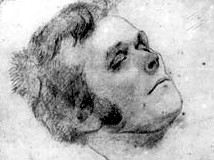
1819 — Alexander Pearce was sentenced at Armagh in 1819 to penal transportation…
6 victims
Alexander Pearce
Murderer · Australia · 1822
1819 — Alexander Pearce was sentenced at Armagh in 1819 to penal transportation…
6 victims
 David Lamar Anthony
Murderer · USA · 2001
David Lamar Anthony (born 1948), better known as David Anthony, was convicted o…
3 victims
David Lamar Anthony
Murderer · USA · 2001
David Lamar Anthony (born 1948), better known as David Anthony, was convicted o…
3 victims
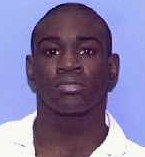 Jamaal Howard
Murderer · USA · 2000
Name: Jamaal Howard · TDCJ Number: 999383 · Date of Birth: 02/08/1980 · Convict…
1 victim
Jamaal Howard
Murderer · USA · 2000
Name: Jamaal Howard · TDCJ Number: 999383 · Date of Birth: 02/08/1980 · Convict…
1 victim
- Gender
- male
- Country
- United Kingdom
- Location
- Howe Green, Essex , England, United Kingdom
- Date of birth
- 1891
- Age at first offence
- 36
- Characteristics
- to avoid arrest, police officer
- Victim profile
- Police Constable George William Gutteridge, 36
- Method of murder
- Shooting (Webley revolver)
- Date(s) of murder
- September 27, 1927
- Years active
- 1927
- Date of arrest
- January 25, 1928
- Status
-
Executed
Executed by hanging at Wandsworth prison on May 31, 1928
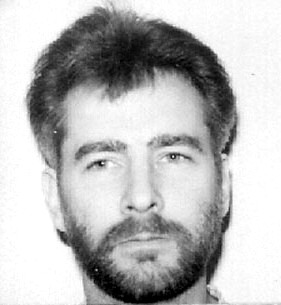
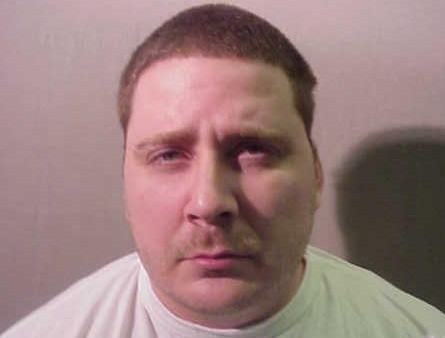
Case record: William Henry Kennedy
Status
William Henry Kennedy was executed by hanging at Wandsworth prison on May 31, 1928.
Background
William Henry Kennedy was an odd-job man employed by Frederick Guy Browne from June until 17th December 1927. Browne had to sack Kennedy because he could not stop him from drinking. Kennedy came from Irish parents and had an Irish accent. He was born in Ayrshire. He had deserted, or been dismissed from, several Army regiments and had convictions for indecent exposure, housebreaking, theft, drunk and disorderly behaviour and larceny.
Frederick Guy Browne employed habitual drunkard 42-year-old Kennedy as an odd-job man from June until 17th December 1927. Browne had convictions for carrying firearms, stealing motorcycles and cars and for fraudulently claiming insurance on them. Because he was too violent for Parkhurst he was moved to Dartmoor Prison, where he probably met Kennedy. Browne then drove Kennedy to Euston station on 17th December and Kennedy went to Liverpool. Kennedy stayed there for three weeks before returning to London and marrying on 18th January. Kennedy knew nothing of Browne's arrest.
Kennedy, having three more days of freedom, left his home in a hurry at 11.40pm on Wednesday 25th January and had no shirt on, with his trousers and boots undone. He was trying to hide his face but was approached by DS Bill Mattinson, who knew Kennedy of old.
The offence
In the early hours of Tuesday 27th September 1927, William Henry Kennedy and Frederick Guy Browne were on the Romford to Ongar road in Essex at about 4am when they were stopped by PC Gutteridge.
They were driving a Morris Cowley car that they had stolen earlier from Billericay. PC Gutteridge had got off his bicycle and was standing to the side of the road. As the car approached he indicated with his lamp for them to stop, but they ignored this and drove past. The policeman immediately blew on his police whistle and the car stopped.
PC Gutteridge approached the drivers window and began to ask questions. He took out his notebook and began to write in it when Browne fired two shots at the policeman. Both shots hit PC Gutteridge in the face, and PC Gutteridge staggered back and fell down. Both men got out of the car and walked over to where the wounded policeman was lying injured. Browne stooped down and fired a bullet into each of the policemans eyes, killing him. The body was later found in the lane two hours later.
It was deduced that PC Gutteridge had stopped a car and was about to record details when he had been shot. His body was found with his helmet and notebook beside him, and his pencil still in his hand. A post office worker, Bill Ward, later drove past and saw the body by a bank at the side of the road.
PC George Gutteridge was shot four times, twice through the left cheek and once through each eye. Each eye had been shot away by two further bullets. Two holes were found on the left side of the face just in front of the ear that appeared consistent with the entry of two large bullets, and two exit wounds were found on the right side of the neck. Time of death was placed between four and five hours prior to discovery.
The killing was connected with the theft of a Morris Cowley car, registration number TW6120, belonging to Dr Edward Lovell from Billericay on the same night.
Investigation
The car belonging to Dr Edward Lovell had been stolen from his locked garage in London Road, Billericay, during the previous night. Neighbours remembered the sound of a car being started at about 2.30am and driving off down Mountnessing Road. The car had already been found in Brixton, South London. Its nearside mudguard had been bent, there was blood on the bodywork and there was an empty cartridge case under the passenger seat.
A check of local crimes revealed the blue Morris-Cowley stolen from Dr Edward Lovell. The vehicle was subsequently found abandoned in Stockwell, London, and bloodstains were later found on the bodywork, with an empty cartridge case on the floor.
At the scene and after post mortem, bullets and a cartridge case were recovered for ballistics examination. At the scene, two .45 bullets were prized out of the road surface and at the subsequent post mortem on PC Gutteridge two more bullets were recovered. A search revealed an empty cartridge case, marked RVIV on the floor, and the cartridge case was marked RLIV. The marking indicated that it was an old Mark IV type made at the Royal Laboratory in Woolwich Arsenal for troops in the First World War. The cartridge case seemed to have been scarred by a fault in the breech block of the gun that had fired it.
Ballistics expert Robert Churchill determined that the weapon had been a Webley, and he compared the markings on the cartridge case to those on the revolver. The police recovered the car and found a cartridge case marked RLIV, and the fault in the breech block was used for comparison. Another account described that a cartridge case marked RVIV had been found on the floor, and there was also blood on the running board of the car.
Two Webley revolvers were found in the River Thames, but neither proved to be the fatal weapon in that earlier stage. Later, Robert Churchill proved the murder weapon was the same Webley revolver found in Browne's possession, by comparison microscope evidence and by examining the deformed bullets with sufficient rifling characteristics.
The Metropolitan Police kept watch on Browne. Browne was arrested as he returned to his premises in Clapham, where he was found in possession of a number of loaded firearms, including a .45 Webley revolver.
Four months passed before further developments. On 20th January 1928 police arrested 46-year-old Frederick Guy Browne at his garage near Clapham Junction on a charge of stealing a Vauxhall, a car he had sold to a butcher in Sheffield in the previous November.
A further suspect was William Kennedy, an associate of Browne, who fled London and returned to Liverpool, where he was well known to the Liverpool City Police. Observations were kept at an address and he was eventually arrested.
Arrest and detention
On 20th January 1928 police arrested 46-year-old Frederick Guy Browne at his garage near Clapham Junction on a charge of stealing a Vauxhall.
A search of Browne's person revealed twelve .45 cartridges in his back pocket and a fully loaded Webley revolver inside the driver's door of the car he had been driving. Police also found sixteen .45 cartridges wrapped in paper in the garage's office, twenty-three .22 cartridges, a small revolver and a fully loaded Smith & Wesson at Browne's lodgings.
Kennedy was later approached by DS Bill Mattinson at 11.40pm on Wednesday 25th January. Kennedy recognized the detective and pulled a pistol from his pocket. He shouted, "Stand back, Bill - or I'll shoot you!" and fired at the policeman. There was only a click as the gun failed to fire. Mattinson grabbed Kennedy's gun arm with his left hand and hit him with the other. Mattinson shouted for assistance and held on to Kennedy until three of his colleagues came to his aid. It was then found that the safety catch was on.
By the following evening, Kennedy had been returned to London and was in custody at New Scotland Yard. He was visited by DI Berrett, who asked if he knew anything about the murder of PC Gutteridge. Kennedy asked if he could have time to think and did so for several minutes. He then asked if he could see his wife. After speaking to his wife, who had travelled down from Liverpool with him, he made a statement.
Kennedy's statement implicated Browne in the murder. In the statement, which took three hours to take down, Kennedy implicated Browne in the murder and said that Browne had fired the shot.
In the process of investigating other matters, police interviewed Browne’s accomplice Browne about another stolen car. Four months after the offence, police found a Webley revolver in Browne's garage during an interview connected to another stolen car. The gun was proved to be the same one that had killed PC Gutteridge.
Trial
At their Old Bailey trial that opened on 23rd April 1928, Kennedy and Browne were tried.
At the trial, Browne maintained his innocence of any involvement in the crime, claiming he was at home in bed that night.
The trial included forensic evidence given by Robert Churchill. This evidence included the marks made on the cartridge case, which proved that the gun found in Browne's car was the murder weapon, and the composition of the propellant in the cartridges. Photographs were used to show that the markings on the cartridge case matched those on the revolver.
Both men were found guilty and sentenced to death at the Old Bailey.
Sentencing
Both men were sentenced to death.
Appeals
No appeal information was included.
Outcome
Frederick Guy Browne and William Henry Kennedy were executed on 31 May 1928.
Browne was hanged at Pentonville. Kennedy was hanged at Wandsworth at the same time. While waiting for sentence to be carried out, Browne tried to commit suicide three times, once by hanging himself and then by cutting his throat. He even tried to go on a hunger strike and had to be force fed. He was not sucessful.
The individuals who carried out the executions were given as: Browne at Pentonville by Robert Baxter and Henry Pollard, and Kennedy at Wandsworth by Thomas Pierrepoint and Robert Wilson.
Other details
A well-known earlier description stated that on 27 September 1927 just before 6am the body of PC George Gutteridge was found in a country lane near to Howe Green, between Romford and Ongar, in Essex. The body had been propped up against a bank with the legs sticking out into the road, and the policeman's helmet lay near-by as did his pocket book. His police whistle hung loose on its chain and his pencil was held in his right hand. The murdered officer was wearing his full uniform and cape.
The investigation described that Detective Inspector Crockford from Romford took up the investigation, and Detective Chief Inspector James Berrett of Scotland Yard took up enquiries. One account described that the murder hunt went on for four months and that DCI Berrett and his assistant Sergeant Harris worked 130 out of 160 consecutive hours at one point.
The investigation described that it was thought that the reason for the deliberate shooting out of the eyes of PC Gutteridge was because of a superstition that said that the last sight a man saw was photographically imprinted on the retinas of the eyes.
A post office worker later known as Bill Ward drove in Essex near Stapleford Abbott and found PC George Gutteridge. Ward recognised the body as that of George Gutteridge. Ward then went to a nearby cottage, Rose Cottage at Howe Green, where Alfred Perrit lived to summon help. Another account stated that "We know that a Mr. Warren (a bus driver) was involved in obtaining help," and that some accounts reported he drove to Havering police house to alert Police Constable Webb, but it also stated that it could not be confirmed because neither Mr. Warren nor Police Constable Webb were called at the subsequent trial at the Old Bailey.
The first officer on the scene was Police Constable Albert Blockson, who took charge until Detective Inspector John Crockford arrived from Romford about 7.45 am.
There was an additional account about PC Gutteridge’s service: George Gutteridge served from 5th April 1910 and 23rd February 1919. He had joined Essex County Constabulary in April 1910 and served as constable 489. After a month's training at Headquarters he was posted to Southend. He subsequently served at Romford and Grays, before resigning in April 1918 to join the army where he served for 10 months in the Machine Gun Corps. On 23rd February 1919 he rejoined Essex County Constabulary, returning initially to Grays, and then to Epping Division from 14th March 1922. He was posted to a section station that included four beats at Stapleford, Lambourne End, Stanford Rivers, and Kelvedon Hatch. He was based at Stapleford Abbots, a village half way.
George Gutteridge was married to Rose Annette Emmerline. The couple lived at 2 Towneley Cottages, Stapleford Abbots with their two children, Muriel and Alfred (known as Jack). The village postman was Harry Alexander, living next door at number 3. One of his sons, John, later married PC Gutteridge's daughter, Muriel, in 1938.
The memorial and graves described that George Gutteridge's grave was in Warley Cemetery, and that the inscription read: "In proud memory of George William Gutteridge, Police Constable, Essex Constabulary, who met his death in the performance of his duty on September 27th 1927". It also described that the stone was unveiled by the Essex Chief Constable, Captain A J Unett, in 1928. The bullets and Webley revolver used to kill George Gutteridge were described as in the Essex Police Museum, and other exhibits relating to Browne and Kennedy were described as in the Black Museum at Scotland Yard.
A memorial stone was described as set at Gutteridge Lane, on the Romford to Chipping Ongar road, midway between the Royal Oak and The Rabbits public houses, with the alignment of the road having changed since 1927 and a short stretch renamed Gutteridge Lane.
Another account stated that PC 218 with serial number 2664 was associated with George Gutteridge.
Spotted an error, or have more information about this case?