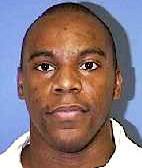
Alvin Braziel
Murderer Dr. Wouter Basson
Murderer · 1992
Wouter Basson (born July 6, 1950) was a South African cardiologist and the form…
230 victims
Dr. Wouter Basson
Murderer · 1992
Wouter Basson (born July 6, 1950) was a South African cardiologist and the form…
230 victims
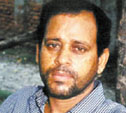 Ershad Sikder
Murderer · Bangladesh · 1990
Ershad Sikder was an influential political figure in the south-western city of…
30 victims
Ershad Sikder
Murderer · Bangladesh · 1990
Ershad Sikder was an influential political figure in the south-western city of…
30 victims
 Brian Kevin Rosenfeld
Murderer · USA · 1985
Brian Kevin Rosenfeld Brian Kevin Rosenfeld was sentenced to three concurrent l…
23 victims
Brian Kevin Rosenfeld
Murderer · USA · 1985
Brian Kevin Rosenfeld Brian Kevin Rosenfeld was sentenced to three concurrent l…
23 victims
 Russell Ellwood
Murderer · USA · 1991
Russell Ellwood was a former taxi driver. Authorities suspected him of killing…
20 victims
Russell Ellwood
Murderer · USA · 1991
Russell Ellwood was a former taxi driver. Authorities suspected him of killing…
20 victims
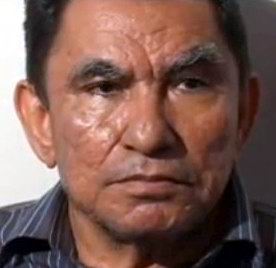 Anisio Ferreira de Sousa
Murderer · Brazil · 1989
September 4, 2003 — Anísio Ferreira de Sousa was sentenced to 77 years in priso…
19 victims
Anisio Ferreira de Sousa
Murderer · Brazil · 1989
September 4, 2003 — Anísio Ferreira de Sousa was sentenced to 77 years in priso…
19 victims
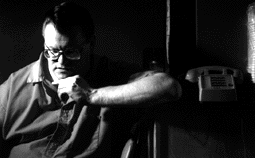 Duncan McKenzie
Murderer · USA · 1974
Duncan Peder McKenzie Jr. was convicted of the murder of Conrad, Montana school…
1 victim
Duncan McKenzie
Murderer · USA · 1974
Duncan Peder McKenzie Jr. was convicted of the murder of Conrad, Montana school…
1 victim
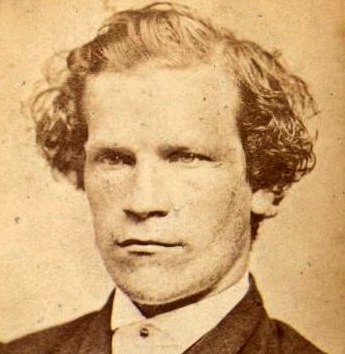 Franz Müller
Murderer · United Kingdom (on a train) · 1864
Franz Müller was a German tailor. He murdered Thomas Briggs, a City banker. On…
1 victim
Franz Müller
Murderer · United Kingdom (on a train) · 1864
Franz Müller was a German tailor. He murdered Thomas Briggs, a City banker. On…
1 victim
 Colin Howell
Murderer · United Kingdom · 1991
Colin Howell (born 14 March 1959) was a Northern Irish convicted double murdere…
2 victims
Colin Howell
Murderer · United Kingdom · 1991
Colin Howell (born 14 March 1959) was a Northern Irish convicted double murdere…
2 victims
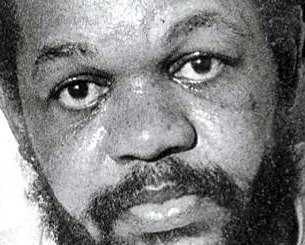 Wilbert Lee Evans
Murderer · USA · 1981
Wilbert Lee Evans Wilbert Lee Evans was sentenced to die for shooting Deputy Sh…
1 victim
Wilbert Lee Evans
Murderer · USA · 1981
Wilbert Lee Evans Wilbert Lee Evans was sentenced to die for shooting Deputy Sh…
1 victim
 Dr. Thomas Neill Cream
Serial killer · USA / United Kingdom · 1881
Dr. Thomas Neill Cream (May 27, 1850 – November 16, 1892) was a serial killer w…
5 victims
Dr. Thomas Neill Cream
Serial killer · USA / United Kingdom · 1881
Dr. Thomas Neill Cream (May 27, 1850 – November 16, 1892) was a serial killer w…
5 victims
- Gender
- male
- Country
- —
- Location
- —
- Date of birth
- March 16, 1975
- Age at first offence
- 18
- Characteristics
- armed robbery, rape
- Victim profile
- Douglas White, 27
- Method of murder
- Shooting Loca tion : Dallas County, Texas, USA
- Date(s) of murder
- September 21, 1993
- Years active
- 1993
- Date of arrest
- January 2001
- Status
-
Sentenced to death
Sentenced to death on August 9, 2001
Case details
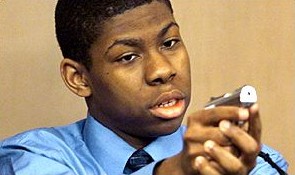
Alvin Braziel, also named Alvin Avon Braziel Jr., was convicted of capital murder under Tex. Penal Code Ann. §19.03(a). Following the jury’s answers to the special issues set forth in Texas Code of Criminal Procedure Article 37.071, §§ 2(b) and 2(e), the trial judge sentenced Alvin Braziel to death under Art. 37.071 §2(g). Direct appeal to the Texas Court of Criminal Appeals was automatic under Art. 37.071 §2(h). The judgment was affirmed.
Timeline
- 8/9/2001 — Alvin Braziel was sentenced to death.
- 9/21/1993 — Alvin Braziel committed the offence in Mesquite.
- Jan 2001 — Alvin Braziel was linked to the crime when his DNA was found to match the DNA taken from the female victim.
- July 2001 — Alvin Braziel was convicted of capital murder.
- October 1, 2003 — The Texas Court of Criminal Appeals delivered its opinion affirming the trial court’s judgment.
Background
Alvin Braziel had prior prison record #792374 on a 5 year sentence from Dallas County for 1 count of sexual assault of a child. The current offense was committed prior to the offender being incarcerated for the sexual assault conviction. Alvin Braziel was described as a Dallas Texas laborer as a prior occupation.
Alvin Braziel’s TDCJ number was 999393. His date of birth was 3/16/1975. His education level was listed as 0. His age at the time of receipt was 26, and his age at the offense was 18.
Alvin Braziel was identified as Black, male, with black hair, brown eyes. His height was listed as 5 ft 6 in and weight as 166. His county and state were listed as Dallas County, Texas, and his race and gender of victim were identified as a white male and a white female.
The case described the existence of a newlywed couple: the victim’s wife was Lora White, and the victim’s husband was Douglas White. The co-defendants were listed as none.
The offence
On 9/21/1993 at 9:00 p.m. in Mesquite, Alvin Braziel approached a newlywed couple walking on a jogging trail of a community college. Braziel demanded money. When it was discovered that neither of the two had any money in their possession, Braziel shot the 27 year old white male, resulting in his death. Braziel then sexually assaulted the 23 year old white female.
Investigation
The case stated that Braziel linked to the crime in January 2001 when his DNA was found to match the DNA taken from the female victim.
The appellate opinion described that in February 2001 Lora was contacted by Detective Michael Bradshaw, who informed her that they had found a DNA match. Bradshaw testified that he probably told Lora the suspect’s age, although Lora testified that Bradshaw did not tell her anything about the suspect except that he was incarcerated.
Arrest
The record in the appellate opinion described no separate arrest event; it described photo lineups and the linking of DNA in January 2001.
Trial
Alvin Braziel was convicted in July 2001 of capital murder under Tex. Penal Code Ann. §19.03(a). The trial judge sentenced appellant to death pursuant to the jury’s answers to the special issues set forth in Texas Code of Criminal Procedure Article 37.071, §§ 2(b) and 2(e), under Art. 37.071 §2(g).
Evidentiary and procedural issues
Point of error two — identification suppression
Alvin Braziel claimed that the trial court erred in denying his request to suppress the out-of-court photographic identification of Alvin Braziel by witness Lora White, in violation of the Due Process Clause of the United States Constitution.
It was established at the suppression hearing that Lora and Douglas White were walking along a jogging trail on the Eastfield College campus on the evening of September 21, 1993. A man carrying a pistol stepped out from behind some bushes and demanded money. Lora testified that the man was within about four steps of them and was not wearing anything covering his face. The man shot Douglas twice and then took Lora to some nearby bushes where he sexually assaulted her. Douglas ultimately died as a result of the shooting. Lora observed the perpetrator closely throughout the offense. During the sexual assault, the man was within inches of Lora’s face. The encounter with the man lasted from ten to twenty minutes. Lora testified that although it was a dark night, the trail was close to a highway and a parking lot where there were lights.
Lora described the offender to police as a black man between the ages of 19 and 24, 5'6" to 5'8" in height, and weighing 140 to 160 pounds. Lora described him as wearing a bandana on his head, an orange wind breaker and calf-length baggy shorts.
An initial composite drawing was made by the Dallas police department within a couple of weeks of the offense, but Lora was not satisfied that it was an accurate depiction. A second drawing was done by a different artist in February of 1994, which Lora testified accurately resembled the offender.
Lora viewed a photo lineup in 1994 but did not identify anyone as the offender.
In February 2001, Lora was contacted by Detective Michael Bradshaw, who informed her that they had found a DNA match. A week to ten days later Lora viewed a photo lineup in Bradshaw’s office. The lineup consisted of six photographs, all six being black males approximately the same age. Bradshaw did not tell Lora whether or not the suspect they had located through DNA evidence would be in the lineup.
Lora was given written instructions about viewing the lineup, providing in part that:
"[T]he person who committed the crime may or may not be in the group of photographs,"
that "[i]t is equally important to eliminate innocent persons as it is to identify those persons responsible," and that "[y]ou are in no way obligated to identify anyone."
After reading and signing the instructions, Lora unequivocally identified Alvin Braziel as the offender. Lora testified that she would be able to identify appellant in the courtroom based on her contact with him on the night of the offense, even if she had not viewed the lineup.
A couple of weeks before the suppression hearing, Bradshaw and Lora went to the courthouse for a meeting with the prosecutor. Bradshaw decided to show Lora the courtroom so that she could easily find it on the day of trial, not realizing that jury selection was ongoing in appellant’s case. They looked in at the courtroom through the window at the back for about ten to fifteen seconds. Lora testified that she only saw the back of appellant’s head.
The appellate opinion stated that appellant argued that when Bradshaw told Lora they had found a suspect through a DNA match, he tainted the identification by suggesting that the suspect would be in the lineup. Appellant also argued that the lineup was suggestive because appellant’s photograph was distinguishable from the others, claiming individuals in three of the other photographs had skin tone lighter than appellant’s.
The appellate opinion applied a two-step test to assess admissibility of an in-court identification:
- whether the out-of-court procedure was impermissibly suggestive; and
- whether the suggestive procedure gave rise to a very substantial likelihood of irreparable misidentification.
The appellate opinion concluded that the photo array itself was not impermissibly suggestive. It stated that all of the individuals were black males of approximately the same age, and that although there were slight variations in skin tone between individuals, Alvin Braziel did not stand out as significantly or noticeably darker than the others.
The appellate opinion stated that the fact Bradshaw informed Lora prior to the lineup that they had found a suspect was more troubling, but that even if such exchange rendered the procedure impermissibly suggestive, appellant did not meet his burden in proving a very substantial likelihood of irreparable misidentification. It relied on Lora’s time to view the assailant’s uncovered face at a very close proximity, her high level of attention, and her general and detailed descriptions, including consistency with Alvin Braziel’s physical characteristics. It stated that Lora’s identification of appellant in the lineup was unequivocal, and that the other factors weighed in support of reliability. It also stated that the lineup procedures were not so corruptive as to outweigh the factors supporting the identification, noting that Bradshaw did not tell Lora that the suspect would appear in that particular lineup and that Lora was specifically instructed in writing that the offender "may or may not" be in the lineup and that she was under no obligation to identify anyone. It also noted that Lora testified she could have identified Alvin Braziel in court even without seeing the earlier photographic lineup.
The appellate opinion held that the trial court did not err in denying the motion to suppress the out-of-court identification evidence. Point of error two was overruled.
Point of error one — DNA evidence admissibility
Alvin Braziel claimed that the trial court erred in admitting the State’s DNA evidence on the grounds that proper DNA testing procedures were not followed and that the DNA results were not reliable due to error in the actual testing process.
The appellate opinion described that the trial court’s task under Rule of Evidence 702 was to determine whether the proffered scientific evidence was sufficiently reliable and relevant to assist the jury. It described the reliability requirement as requiring showing (1) validity of the underlying scientific theory, (2) validity of the technique applying the theory, and (3) proper application of the technique on the occasion in question.
The appellate opinion described that the general rule was that reviewing courts considered only evidence presented at the hearing on a motion to suppress and not testimony subsequently elicited at trial, but that consideration of trial evidence was appropriate when issues were consensually re-litigated at trial. It concluded that reliability of the tests was litigated extensively by both parties before the jury, so it considered evidence presented at the 702 hearing as well as evidence presented at trial.
The appellate opinion stated that tests were conducted on the DNA in Alvin Braziel’s case by Genescreen in Dallas and by a Department of Public Safety (DPS) lab in Garland.
In the Rule 702 hearing, expert witness Paul Goldstein, a professor of Genetics at the University of Texas at El Paso, testified for the defense. Goldstein testified that there were problems in the testing procedures at both labs, resulting in unreliable tests. He testified that the lab reports reflected unacceptable aberrations, producing unreliable results. Goldstein also stated that the tests were scientifically invalid because more modern and accurate technology was now available. On cross-examination, Goldstein conceded that neither deviation from protocol nor the alleged aberrations would necessarily produce or indicate a false match.
At the end of the hearing, the parties became aware that Goldstein had not received an external audit report on the Garland DPS lab. Goldstein had mistakenly reviewed an audit report for a DPS lab in Austin, believing it pertained to the Garland lab. The State agreed to furnish the report to Goldstein. The trial court ruled the DNA evidence admissible. The court noted that the 702 hearing might be continued later if appellant wanted to discuss the external audit report for the Garland lab.
Katherine Long, a forensic scientist at Genescreen in Dallas, testified for the State before the jury. She stated that she performed the DNA testing comparing Alvin Braziel’s DNA with the DNA from the victim’s rape kit. Long testified that she used the standard protocol and procedures accepted in the scientific community. She maintained that the Genescreen laboratory had internal quality controls and that she followed those guidelines during the testing. Long testified that the lab used the more advanced DNA testing technology referred to by Goldstein, but she stated that the advanced technology was inappropriate for forensic testing in humans. Long testified that the tests she performed in appellant’s case were accurate and reliable and that appellant’s DNA profile matched the samples from the victim’s rape kit.
Appellant called Goldstein, who testified before the jury that the test results in Alvin Braziel’s case were not reliable, and that the analyses done in appellant’s case were problematic. The next day, the Rule 702 hearing was continued out of the presence of the jury. Appellant recalled Goldstein, who testified that protocol at the lab was not followed and therefore test results were not reliable. On cross-examination, Goldstein conceded there was nothing to show that there was a false match in appellant’s case. The court clarified that the date of the audit report was November 2001.
Two separate tests were run in appellant’s case, in July 2000 and February 2001. Appellant’s objection to the DNA tests was again overruled.
When the jury returned, the State called John Donahue, Serology Expert at the DPS Garland Lab, who also performed DNA analyses on samples from Lora White, Douglas White, and Alvin Braziel. Donahue testified that protocol was followed and that his findings were consistent with Long’s findings. Appellant recalled Goldstein, who testified that the procedures and protocol at the Garland lab were not acceptable. Finally, the State recalled Long to respond to Goldstein’s criticisms. She testified that the tests were properly conducted and the results accurate.
The appellate opinion held that viewing the evidence in a light favorable to the trial court’s ruling, the State’s witnesses testified to the reliability, validity, and proper application of the DNA testing procedures and met each challenge by appellant with reasonable and coherent explanations as to why the tests utilized and the results should be viewed as reliable. It overruled point of error one.
Point of error three — denial of mistrial after emotional outburst
Alvin Braziel claimed that the trial court should have granted his request for a mistrial after the State prompted an extreme emotional outburst from the victim’s wife, Lora, in front of the jury.
During Lora’s direct examination at the guilt or innocence phase, the prosecutor showed her an autopsy photograph of the victim, prompting response:
[Lora]: God, why did you have to do that? I do not believe you did that. (Crying.) (Witness exiting courtroom.)
[The Court]: All right. Let’s send the jury out please.
[The Bailiff]: All rise.
[Lora]: Oh, God. Oh, God. Oh, God. (Crying.) (Witness heard from outside the courtroom.)
[Lora]: I can’t believe you didn’t tell me you were going to do that. (Crying.) Why did you do that? (The jury exits the courtroom.)
Appellant moved for a mistrial, arguing the State attempted to elicit an emotional response from the witness and that the prejudicial effect of the outburst could not be overcome. The State responded by stating it had warned Lora that she would be shown a photograph and denied attempting to elicit an emotional response. The motion was denied.
When Lora returned to the courtroom after a recess, she apologized and acknowledged that the prosecutor had told her ahead of time that during her testimony he would show her an autopsy photo of her deceased husband.
The appellate opinion contrasted the case with Stahl v. State, and held the instant case distinguishable. It stated that the statements by Lora during her outburst were not directed at the defendant. It stated that the prosecutor referred to the outburst once during his closing argument, responding to an argument of defense counsel, and that appellant did not object to the prosecutor’s argument. It held that the prosecutor’s conduct did not rise to the level of misconduct described in Stahl and that appellant had not shown the trial court abused its discretion in denying his mistrial. Point of error three was overruled.
Point of error four — admission of prison records
Alvin Braziel claimed that the trial court erred in admitting into evidence Alvin Braziel’s prison records that were not certified or self-authenticating.
During the punishment phase, the State offered records from the Texas Department of Criminal Justice -- Institutional Division (TDCJ--ID) reflecting incidents of rule violations by Alvin Braziel while incarcerated. Appellant objected to the admission, stating:
"I don’t think it’s properly authenticated and not a proper predicate at this time."
On appeal, Alvin Braziel argued the records were not properly authenticated because they did not bear the official seal of the TDCJ certifying that they were true and correct. The appellate opinion held that appellant’s general objection failed to preserve error in the absence of anything in the record reflecting that the court or opposing counsel knew the specific basis of appellant’s claim. It concluded the issue was not preserved for appeal and overruled point of error four.
Point of error five — jury instructions on parole eligibility and future dangerousness
Alvin Braziel claimed the trial court erred in informing the jury about the forty-year minimum for parole eligibility in the case of a life sentence, but further instructing the jury not to consider that minimum when answering special issue one on future dangerousness. He relied on Simmons v. South Carolina and the opinion of four justices respecting denial of certiorari in Brown v. Texas.
The appellate opinion noted that appellant did not object to the court’s instructions at trial, but claimed egregious harm. It cited Almanza v. State and noted this argument had been raised and rejected previously in Feldman v. State. Point of error five was overruled.
Point of error six — failure to define terms in punishment instructions
Alvin Braziel claimed the trial court erred in failing to submit in the jury instructions at punishment definitions of the terms "probability," "criminal acts of violence," or "continuing threat to society." He argued that the failure to define these terms prevented them from narrowing the class of persons eligible to receive the death penalty, making the charge unconstitutionally vague. The appellate opinion stated this argument had been raised and rejected in other cases (citing Feldman v. State). Point of error six was overruled.
Point of error seven — constitutionality regarding jury votes for negative answers
Alvin Braziel claimed the Texas death penalty scheme violated his rights against cruel and unusual punishment and due process by requiring at least ten "no" votes for the jury to return a negative answer to the punishment special issues. The appellate opinion stated this argument had been raised and rejected previously, citing Wright v. State and Chamberlain v. State. Point of error seven was overruled.
Points of error eight and nine — alleged impossibility of simultaneously restricting discretion and allowing mitigation
Alvin Braziel claimed the Texas death penalty scheme was unconstitutional under both the United States and Texas constitutions because of the impossibility of simultaneously restricting the jury’s discretion to impose death while also allowing unlimited discretion to consider all evidence mitigating against imposition of death penalty. He relied on Justice Blackmun’s dissent in Callins v. Collins. The appellate opinion stated the argument had been addressed and rejected, citing Hughes v. State. Points of error eight and nine were overruled.
Points of error ten and eleven — cumulative effect
Alvin Braziel claimed that the cumulative effect of the above-enumerated constitutional errors violated his rights under the state and federal constitutions. The appellate opinion stated it had found no constitutional errors and that non-errors could not in cumulative effect cause error. It overruled points of error ten and eleven.
Sentencing
37.071 §2(g).
The appellate opinion affirmed the judgment of the trial court.
Outcome
The Texas Court of Criminal Appeals affirmed the judgment of the trial court. The opinion was delivered October 1, 2003.
Other details
Lora testified she could identify the perpetrator in the courtroom based on her contact with him on the night of the offense even if she had not viewed the lineup. Lora also testified that she would be able to identify appellant even if she had not viewed the earlier photographic lineup.
The appellate opinion quoted that in Stahl the witness said:
A. Oh, my God.
Q. Can you identify the picture, Mrs. Newton?
A. Oh, my God. My baby. My God.
[DEFENSE COUNSEL]: Can we have the members of the Jury go to the Jury room?
[THE WITNESS]: May he rest in hell. May he burn in hell. Oh, my baby.
In the record of the identification suppression issue, Lora and Douglas White were described as walking along the Eastfield College campus jogging trail on the evening of September 21, 1993. The appellate opinion described that Douglas was shot twice and died as a result of the shooting, and that Lora was sexually assaulted.
The appellate opinion stated that the judgment of the trial court was affirmed. It also noted that the opinion was delivered by Holcomb, J., with other justices joining various portions of the opinion. Keller, P.J., joined the opinion except discussion of point of error number two, with which she concurred in the result. Johnson, J., joined the opinion except discussion of point of error number four, with which she concurred in the result.
Spotted an error, or have more information about this case?