
Eugene de Kock
Murderer Jim Jones
Murderer · Guyana · 1978
James Warren "Jim" Jones (May 13, 1931 – November 18, 1978) was the American fo…
900 victims
Jim Jones
Murderer · Guyana · 1978
James Warren "Jim" Jones (May 13, 1931 – November 18, 1978) was the American fo…
900 victims
 Ervil LeBaron
Murderer · USA · 1972
Ervil Morrell LeBaron (1925 to August 16, 1981) was the leader of a polygamous…
35 victims
Ervil LeBaron
Murderer · USA · 1972
Ervil Morrell LeBaron (1925 to August 16, 1981) was the leader of a polygamous…
35 victims
 Marvin Gray
Murderer · USA · 1975
Marvin Gray was convicted killer who claimed responsibility for 23 slayings and…
23 victims
Marvin Gray
Murderer · USA · 1975
Marvin Gray was convicted killer who claimed responsibility for 23 slayings and…
23 victims
 Gustavo Pissardo
Mass murderer · Brazil · 1994
Gustavo Pissardo (Flávio Craveiro) was sentenced to 63 years in prison in April…
5 victims
Gustavo Pissardo
Mass murderer · Brazil · 1994
Gustavo Pissardo (Flávio Craveiro) was sentenced to 63 years in prison in April…
5 victims
 Norman Thorne
Murderer · United Kingdom · 1924
Norman Thorne — defendant; electrical engineer; murdered Elsie Emily Cameron; l…
1 victim
Norman Thorne
Murderer · United Kingdom · 1924
Norman Thorne — defendant; electrical engineer; murdered Elsie Emily Cameron; l…
1 victim
 Sarah Kolb
Homicide · USA · 2005
Sarah Kolb was convicted in connection with the murder of 16-year-old Adrianne…
1 victim
Sarah Kolb
Homicide · USA · 2005
Sarah Kolb was convicted in connection with the murder of 16-year-old Adrianne…
1 victim
 Joshua Jenkins
Homicide · USA · 1996
Joshua Jenkins was a 15-year-old American killer who killed five members of his…
5 victims
Joshua Jenkins
Homicide · USA · 1996
Joshua Jenkins was a 15-year-old American killer who killed five members of his…
5 victims
- Gender
- male
- Country
- S outh Africa
- Location
- S outh Africa
- Date of birth
- 1949
- Age at first offence
- 21
- Characteristics
- police officer, abuse, murder for hire
- Victim profile
- Black anti-apartheid activists
- Method of murder
- Shooting - Bombs
- Date(s) of murder
- 1970's - 1980's
- Years active
- 1970–1980
- Date of arrest
- —
- Status
-
Imprisoned
Sentenced to 212 years for crimes against humanity on 1996; still in prison
Overview
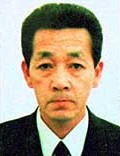
Eugene de Kock was a former assassin for the apartheid government in South Africa. He was nicknamed “Prime Evil” by the media and was the commander of the Vlakplaas unit of the South African Police counter insurgency group. He was known for executing anti-apartheid activists. De Kock testified during the Truth and Reconciliation Commission and made multiple revelations relating to ANC deaths. He was also interviewed by Pumla Gobodo-Madikizela, who released the book A Human Being Died That Night: A South African Story of Forgiveness about her interviews with De Kock, her time on the Truth and Reconciliation Commission, and what causes a moral person to become a killer.
Timeline
- 1990 — Gobodo-Madikizela recalled being caught up with a jubilant crowd celebrating the capture of a police captain, a suspected apartheid agent, who was subsequently mutilated and killed.
- 1995 — De Kock went on trial after democratic elections brought the African National Congress to power.
- 1996 — Eugene de Kock was sentenced to 212 years for crimes against humanity; Archbishop Desmond Tutu opened the first hearing of the Truth and Reconciliation Commission in April 1996.
- 1997 — Gobodo-Madikizela started visiting C-Max.
- 1998 — BBC News published “The voice of 'Prime Evil'” on Wednesday, October 28, 1998.
- July 2007 — In a local radio interview, de Kock claimed that former president FW de Klerk had hands “soaked in blood” and had ordered political killings and other crimes during the anti-apartheid conflict.
The offence
De Kock participated in state-sanctioned death squads and was described as carrying out atrocities associated with apartheid-era operations. He was described as masterminding operations to murder anti-apartheid activists and as directing killing operations from within “the center of the chaos, the blood, the bodies, and the killing, directing it” (18). His victims said he took the same painstaking care, as commander of the Vlakplaas government hit squad during the apartheid era, and that he would first kill his target and then incinerate, burn, or blow up the remains so that no scrap of evidence was left. The book-related narrative characterized his actions in terms of torture, ambushes, and executions, and “the torture, the ambushes, the executions, the exultation in inflicting suffering.”
De Kock was reported as being responsible for “six murders and 83 lesser counts” and as being sentenced to 212 years for crimes against humanity.
Investigation
During the Truth and Reconciliation Commission, De Kock made revelations relating to ANC deaths. He received amnesty for some crimes in return for testimony from the Truth and Reconciliation Commission, but that did not affect the court’s prison sentence.
Prison and interactions with Pumla Gobodo-Madikizela
De Kock was serving a double life sentence for human rights crimes and was held in the “C-Max” section of Pretoria Central Prison. When visitors came, his feet were chained to a metal stool bolted to the floor. Gobodo-Madikizela’s first visit to C-Max involved a demonstration by warders and De Kock standing up with leg-chains clanking and extending his hand, smiling, and saying: “It’s a pleasure to meet you.”
A series of interviews in C-Max totalling 46 hours convinced Gobodo-Madikizela that the commanding officer of state-sanctioned death squads was genuinely remorseful and had changed. During one discussion, Gobodo-Madikizela briefly touched De Kock’s left hand as a gesture of consolation. Several weeks later, De Kock requested to speak to her during a break in a Truth and Reconciliation Commission hearing and, after they greeted each other, he confessed “with an expression that seemed to reflect genuine amazement that” she had touched his “trigger hand” (39).
Gobodo-Madikizela said De Kock broke down when he recalled meeting widows and that he said: “I wish I could do more than (say) I’m sorry. I wish there was a way of bringing their bodies back alive. I wish I could say, 'Here are your husbands'.” She said she touched his trembling hand and that this reflex troubled her; she later said: “He's got blood all over and for me to be drawn like that . . . it made me question my sense of empathy.” She said that De Kock subsequently said the hand she touched was his trigger hand, and she recorded him as saying: “I had touched his leprosy, and he seemed to be telling me that, even though I did not realise it at the time, I was from now on infected with the memory of having embraced into my heart the hand that had killed, maimed and blown up lives.”
Gobodo-Madikizela stated that he was “struggling with his past,” trying to make sense of what happened (44), and she wrote: “It gave me a sense of hope that he was in some emotional pain about what he had done. And the grace-filled gestures of forgiveness I had witnessed from people who lived with psychological scars as daily reminders of their trauma gave me even greater hope. In wrestling with my empathy, somehow I found solace in these gestures of forgiveness by victims. They validated my own feelings of empathy toward de Kock” (44-45).
Accusations and remarks about other leaders
In a local radio interview in July 2007, de Kock claimed that former president FW de Klerk had hands “soaked in blood” and had ordered political killings and other crimes during the anti-apartheid conflict. This was described as a response to de Klerk’s statements that he had a “clear conscience” regarding his time in office.
De Kock was described as having been on a crusade to finger his old bosses who he said let him fall for his crimes once he had outgrown his usefulness as an apartheid killing machine. He was described as disputing the label of psychopath and arguing that he never took pleasure in killing his victims, that it was a job, and that he was acting under orders from the very top. De Kock was also described as being willing to document the complicity of his colleagues and superiors without exonerating himself.
Trial
In 1995, a year after democratic elections brought the African National Congress to power, De Kock went on trial and the public learned details connected to his operations. Archbishop Desmond Tutu opened the first hearing of the Truth and Reconciliation Commission in April 1996, with a charter described as being to expose the truth about South Africa's dark past and lay to rest the ghosts that the nation could never return to haunt.
Sentencing
De Kock was sentenced to 212 years for crimes against humanity in 1996. Outside Pretoria’s supreme court, black South Africans cheered and danced when he was sentenced. The narrative said the sentence meant De Kock would stay caged until the day he died and that he remained in C-Max in Pretoria’s central prison with his body in orange overalls and his feet chained to a metal stool bolted to the floor when visitors came.
Quotes involving de Kock, Gobodo-Madikizela, and others
Gobodo-Madikizela was quoted as saying: “Yes, if the authorities asked my opinion I would say Eugene de Kock should be pardoned,” and: “He has been visited by the widows of some of his victims. He is an example of how dialogue can happen.”
She was also quoted as saying: “In a way it worries me that the reaction has been so positive.”
Gobodo-Madikizela was quoted recalling a conversation in which she asked, “Did he ever kill one of her friends or relatives,” and recorded as saying she told him “no.” She was also quoted as saying: “What struck me was this little boy's frightened face.” She said: “He was a desperate soul seeking to affirm to himself that he still belonged to the human universe.”
Gobodo-Madikizela was quoted about forgiveness as: “Just at the moment the perpetrator begins to show remorse . . . the victim becomes the gatekeeper to what the outcast desires - re-admission into the human community.”
Gobodo-Madikizela was quoted about forgiveness as: “in a way” and that it eases victims’ resentment and pain, including a reference to Winnie Madikizela-Mandela hugging the mother of a 14-year-old boy she denied killing.
Gobodo-Madikizela was quoted about what she saw as “extraordinary,” asking the central question: “Was evil intrinsic to de Kock, and forgiveness therefore wasted upon him?” (15).
The narrative included block-quoted text from A Human Being Died That Night:
“He spoke with a heavy Afrikaans accent: ‘It’s a pleasure to meet you.’ I knew the face; I had seen it in the newspapers, and at public hearings during his first appearance before the Truth and Reconciliation Commission, but this was the closest I had ever been to Eugene de Kock. As he smiled shyly, perhaps politely, rising to greet me, I saw a flicker of boyishness, of uncertainty. At the same time, my mind registered ‘Prime Evil,’ the name that marked him as the surest evidence of all that had happened under apartheid. De Kock had not just given apartheid’s murderous evil a name. He had become that evil. The embodiment of evil stood there politely smiling at me” ( A Human Being Died That Night , 6; emphasis in original).
The narrative included block-quoted text from the book as:
“It gave me a sense of hope that he was in some emotional pain about what he had done. And the grace-filled gestures of forgiveness I had witnessed from people who lived with psychological scars as daily reminders of their trauma gave me even greater hope. In wrestling with my empathy, somehow I found solace in these gestures of forgiveness by victims. They validated my own feelings of empathy toward de Kock” (44-45).
Other details
Gobodo-Madikizela was described as a psychologist at the University of Cape Town. She published A Human Being Died That Night: A South African Story of Forgiveness and it was described as being dubbed by some as “Interviews with a Vampire,” and as a bestseller in the US and South Africa. It was described as praised by South Africa's Nobel laureate for literature, J. M. Coetzee, hailing a “coolly intelligent analysis of how the conscience gets to be numbed”. Afrikaans-language newspapers welcomed the book as a brave contribution to understanding the past and shaping the future.
The narrative described Archbishop Desmond Tutu liking the book and reconciliation being described as South Africa’s leitmotif for the past decade. It also described Archbishop Desmond Tutu and President Nelson Mandela as promoting reconciliation, and described concern by some South Africans that the Truth and Reconciliation Commission may have stolen their right to punish perpetrators.
Gobodo-Madikizela was described as having been born in the impoverished township of Langa outside Cape Town, growing up witnessing police brutality and discrimination, earning a clinical psychology degree, and studying in the US. She served with Archbishop Tutu on the human rights violations committee of the Truth and Reconciliation Commission. She was described as being inspired by victims’ stories to write a book about vengeance and forgiveness, and as being intrigued by De Kock’s request to meet and apologise to the widows of some men he murdered, and by the widows’ decisions to forgive him.
The narrative described De Kock’s background as growing up in a conservative Afrikaner family as white minority rule entered crisis. It described De Kock leading the army’s counter-insurgency unit Koevoet in Namibia, and when riots worsened in South Africa, he was brought home in the 1980s to head Vlakplaas, described as a farm where security services interrogated suspects and refined their killing techniques, including letter bombs, booby trapped headphones and vehicles, and poison.
De Kock’s father was described as drinking heavily and abusing his mother. As a child De Kock was described as being ridiculed for stuttering, leaving feelings of shame and aggression, which he learned to relieve through his own violence.
The narrative included a remark about De Kock’s interactions in a Truth and Reconciliation Commission amnesty hearing in Pretoria in July, when he came to relieve himself during a break in testimony. It included a quoted observation: “When you find yourself standing in a gentleman's toilets and someone comes up behind you, it can be quite unnerving. When you turn round and see that the individual is a mass murderer serving a 212-year prison sentence, it is downright terrifying. But that is what happened during an adjournment at a Truth and Reconciliation Commission amnesty hearing in Pretoria in July.” It also included another quote describing De Kock as a “joker in the pack” and: “It's a pleasure to meet you.”
Gobodo-Madikizela was quoted about forgiving De Kock and also as criticizing President Thabo Mbeki for controversial views on HIV/AIDS causes and treatment, and she recorded criticism: “For a leader to lead young people on this path is unforgivable.”
Gobodo-Madikizela said her book was dedicated to a younger sister, Sesi, who died from HIV/AIDS. She also said she defied her family’s wishes by leaving a husband who had AIDS.
The narrative included a statement by Gobodo-Madikizela: “He has been visited by the widows of some of his victims. He is an example of how dialogue can happen.” It also included discussion that forgiveness could sometimes humiliate the victim and can enable victims’ resentment and pain to ease.
Finally, the narrative described De Kock’s status in prison: he was still in prison after serving the 212-year sentence.
Spotted an error, or have more information about this case?