Gamal Lineveldt
Serial killer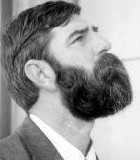 Louis Van Schoor
Serial killer · South Africa · 1986
Louis van Schoor was a security guard and an ex-policeman who was convicted and…
39 victims
Louis Van Schoor
Serial killer · South Africa · 1986
Louis van Schoor was a security guard and an ex-policeman who was convicted and…
39 victims
 Moses Sithole
Serial killer · South Africa · 1994
Moses Sithole (November 17, 1964) was a serial rapist and serial killer in Sout…
38 victims
Moses Sithole
Serial killer · South Africa · 1994
Moses Sithole (November 17, 1964) was a serial rapist and serial killer in Sout…
38 victims
 Norman Afzal Simons
Serial killer · South Africa · 1986
Norman Afzal Simons was a former teacher. He later converted to Islam in 1993,…
22 victims
Norman Afzal Simons
Serial killer · South Africa · 1986
Norman Afzal Simons was a former teacher. He later converted to Islam in 1993,…
22 victims
 Bulelani Mabhayi
Serial killer · South Africa · 2007
Bulelani Mabhayi was a serial killer who terrorised the rural villagers of Thol…
20 victims
Bulelani Mabhayi
Serial killer · South Africa · 2007
Bulelani Mabhayi was a serial killer who terrorised the rural villagers of Thol…
20 victims
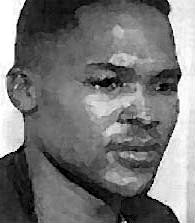 Velaphi Ndlangamandla
Serial killer · South Africa · 1998
Velaphi Ndlangamandla, known as the “saloon killer”, was convicted in connectio…
19 victims
Velaphi Ndlangamandla
Serial killer · South Africa · 1998
Velaphi Ndlangamandla, known as the “saloon killer”, was convicted in connectio…
19 victims
 William Bryan Cruse
Spree killer · USA · 1987
William Bryan Cruse William Bryan Cruse was a retired librarian and lived in Pa…
6 victims
William Bryan Cruse
Spree killer · USA · 1987
William Bryan Cruse William Bryan Cruse was a retired librarian and lived in Pa…
6 victims
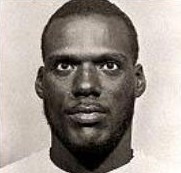 Harrison Graham
Serial killer · USA · 1986
Harrison Graham was a 28-year-old mentally retarded drug abuser who lived in a…
7 victims
Harrison Graham
Serial killer · USA · 1986
Harrison Graham was a 28-year-old mentally retarded drug abuser who lived in a…
7 victims
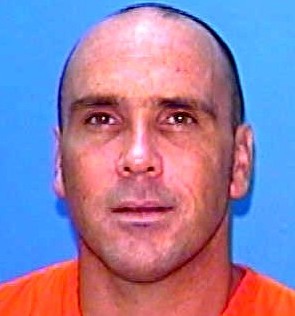 John Buzia
Murderer · USA · 2000
John Buzia was sentenced to death on March 11, 2004. · 03/14/00 — John Buzia di…
1 victim
John Buzia
Murderer · USA · 2000
John Buzia was sentenced to death on March 11, 2004. · 03/14/00 — John Buzia di…
1 victim
 Deyan Deyanov
Homicide · Spain · 2011
Jennifer Joan Mills-Westley was murdered on 13 May 2011 in Tenerife. Her death…
1 victim
Deyan Deyanov
Homicide · Spain · 2011
Jennifer Joan Mills-Westley was murdered on 13 May 2011 in Tenerife. Her death…
1 victim
 William Patrick Fyfe
Serial killer · Canada · 1979
William Patrick Fyfe was a Canadian serial killer who was convicted of five cou…
25 victims
William Patrick Fyfe
Serial killer · Canada · 1979
William Patrick Fyfe was a Canadian serial killer who was convicted of five cou…
25 victims
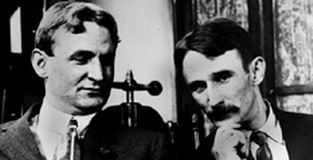 James & John McNamara
Mass murderer · USA · 1910
James B. (“J.B.”) McNamara · John J. (“J.J.”) McNamara · The brothers were Iris…
21 victims
James & John McNamara
Mass murderer · USA · 1910
James B. (“J.B.”) McNamara · John J. (“J.J.”) McNamara · The brothers were Iris…
21 victims
- Gender
- male
- Country
- South Africa
- Location
- Cape Town, Western Cape, South Africa
- Date of birth
- 1919
- Age at first offence
- 21
- Characteristics
- rape
- Victim profile
- Women
- Method of murder
- Beating with a piece of hard piping and an axe
- Date(s) of murder
- 1940 - 1941
- Years active
- 1940–1941
- Date of arrest
- March 16, 1941
- Status
-
Executed
Executed by hanging in 1942
Case details
Gamal Salie Lineveldt (also given as Gamal Salie) was a Malay male, 23 years of age, of small stature and slender build. He was arrested and was found guilty of four counts of murder, receiving the death sentence, which was duly carried out. He was executed by hanging in 1942.
Timeline
4 October 1940 — A middle-aged European woman was discovered injured and seemingly unable to move in the “Port Jackson” bush outside a farm fence in the Lansdowne District; she died early the following morning. 22 October 1940 — Between 9 and 10 p.m., the proprietress of a Kennel business on the Prince George Drive, Wynberg, was murdered while reading the evening paper at her living-room table; it was discovered at 7 a.m. the next day. 11 November 1940 — A young European woman was assaulted in broad daylight at Wetton, and she died after lingering some days. 25 November 1940 — The next crime was committed; a married couple’s landlady was found dead across a bed at Thornhill Rd., Rondebosch, with head injuries and a gash in the neck. 11 March 1941 — An European woman was molested in a Wynberg street by a coloured man who touched her clothing in an offensive manner. 16 March 1941 — Gamut Salie Linneveld (Gamal Salie Lineveldt) was arrested at the Gaiety Theatre, Wynberg. 10 June 1941 — Before the Supreme Court at Cape Town, he was found guilty of four counts of murder and received the death sentence. 1942 — He was hanged.
The offence
In the Lansdowne District incident, a middle-aged European woman was found injured, unconscious, and alive. She had been attacked after covering about half-a-mile from the Lansdowne terminus and was struck down, with her wrists bound with one of her stockings. She was dragged across sandy ground towards the farm fence where apparently her hands had worked free. Her hat, a ring, and her handbag (which had contained only a small amount of money) were missing, with indications that robbery was not the sole motive of the crime. Expert opinion regarding the injuries concluded that while they could have resulted from a motor accident, they could also have been caused by an instrument that had “weight, bluntness and momentum”.
In the Wynberg kennel proprietress case, the European woman was assaulted similarly to the first case. There were two wounds on the head, and a pathologist expressed the opinion that a heavy blunt instrument had been used. Parts of the woman’s spectacles were near the opened evening paper on the table, and it was clear that while sitting in her chair she received the first heavy blow. The assailant dragged her to the settee behind the chair where his second blow was delivered. The victim’s stockings were removed. The condition of the woman’s clothing established beyond reasonable doubt that the crime had been committed by the offender in the first case. A handbag on the table had been rifled, but no other search had been made for money or valuables, and the remainder of the house was undisturbed.
In the Wetton incident, at about 10.15 a.m. a young European woman was washing clothes near a tap in front of the premises. She entered the house and was struck with a heavy blow on the head as she came through the door to the front stoep. She fell and was dragged to a bush in the grounds to the left front of the house. A young Malay returning from delivering groceries came across the assailant and victim. The assailant was described as a “strange coloured man” of medium build. He ran through the gate to the road, the Malay gave chase, and the assailant later mounted a bicycle and made off toward Lansdowne. After considerable ground had been covered, he was seen escaping into the bush some distance off. The Malay reported the matter immediately to the Lansdowne Police, and a detective accompanied him to continue the search. The young woman died after lingering some days.
In the Thornhill Rd., Rondebosch case, returning in the late afternoon, a man discovered his landlady lying dead across a bed with her feet touching the floor. Her head had received brutal blows, and there was a gash in the neck indicating that a sharp-edged instrument had been used. The room was in disorder, and a more complete examination made it clear it was a further murder in the series under investigation. Footprints were discovered at the back of the property, and the spoor of the bicycle tyres were found near the fence. Similar prints in the garden led to the assumption that the culprit had entered through the open window of a back bedroom adjoining the one in which the body was found. The house itself yielded a clue described as “of supreme importance only when the right suspect was in police hands.”
In all four cases, it was described that the offender worked alone.
Investigation
Continuous rain throughout the Lansdowne day cheated the police of many clues, and little information of value could be picked up at the scene. A statement was obtained that at about 6 o’clock on the morning the body was found, a large dark motorcar with a tall European wearing a blazer standing alongside had been seen near the spot; on being observed, this man entered the car and drove rapidly towards town. Investigations were directed to the possibility of an accident preceding the ultimate crime due to expert opinion.
After the Wynberg kennel proprietress murder, the search for suspects that had commenced with the Lansdowne case continued feverishly. It was believed that the culprit had made himself well acquainted with both the premises and the locality and knew that his victim lived alone. Despite exhaustive searching, no success was achieved.
For the Wetton case, the intensive search involved notifying surrounding stations, mustering men from Cape Town, and encircling the area, with an intensive search continuing through the night and into the following day. A fair description of the wanted man was built up from witnesses, though details about clothing differed rather materially. A bicycle with red tyres was identified as an important clue. Police continued the general search with vigour, visiting employers and stationing men for observation on non-Europeans. The possibility that the wanted man was a dagga or drug addict was borne in mind. Careful dissemination of the red-tyre information was treated as necessary to avoid warning the culprit, but inconvenience was caused to many innocent people, including at least one University student.
After the Rondebosch murder, Senior Detective Officers under the personal direction of the then Head of the Union C.I.D. hurried from the Transvaal to supervise and assist. They worked to relieve local police of sole responsibility, and squads of police and detectives worked from dawn to late at night searching difficult country of sand and bush extending to Bellville and to Fish Hoek and Strandfontein. Detachments were stationed at key points to intercept workers returning from the Cape Town side. Thousands of persons were interrogated and hundreds were detained for more thorough examination. The hunt continued for two months, but though the objective was not attained, no more murders were committed and it was considered not unlikely that the murderer had left the district.
After a European woman was molested in a Wynberg street, a shop-to-shop search became necessary to trace a delivery boy. After the boy was traced to the employment of a Wynberg butcher, he admitted knowing the suspect but was unable to say where he could be found. The boy succeeded in locating the suspect and directed detectives to the Gaiety Theatre, Wynberg, where Linneveld was arrested.
Arrest
Gamut Salie Linneveld (Gamal Salie Lineveldt) was arrested on 16 March 1941 at the Gaiety Theatre, Wynberg. He was minus his left thumb. In his possession were found a ring and silver hat ornament identified as having been worn by the Lansdowne victim. A bicycle with handlebars of the “butterfly” type described by a witness in the Wetton case and an axe were found in his room, and a red bicycle tyre was discovered hidden away. Palm-prints connected him with the Prince George Drive case, and other prints proved his association with the Rondebosch crime.
Opportunity was given to several European women who had reported unpleasant assaults or cases of criminal injuria to attend a parade including Linneveld. One or two identified him, while others were uncertain. One woman recognized him as the man she had once seen hanging around her house for a considerable time. The Malay who had chased the suspect at Wetton failed to pick him out and Linneveld did not conform to descriptions given to police of the wanted man.
He made no secret of having committed the crime. He explained that he had chopped his thumb off because he feared the police might have his thumbprint.
Trial
He confessed to all counts. Before the Supreme Court at Cape Town on 10 June 1941, he was found guilty of four counts of murder and received the death sentence. The death sentence was duly carried out.
Sentencing
He received the death sentence on 10 June 1941.
Outcome
He was hanged in 1942.
Aftermath
A “leader” in a well-known Cape daily was quoted with concluding lines describing the investigation’s lead from the attack on a woman and the subsequent police work.
"An attack on a woman, a fairly common-place crime apparently remote from the crimes, eventually provided the lead which led to the arrest of Linneveld. As reported to the public it looked easy but what must be realized is that for this one investigation which brought success there were many weary scores of others which were followed up with equal promptness, energy and thoroughness. The apprehension of this perpetrator of the most baffling type of crime in the criminal calendar was a triumph for the thorough, painstaking police system and a tribute to the Force, from the Chiefs to the hundreds of detectives and constables who put in so many weeks of heart-breaking effort."
Lt-Col P.H. Golby, Deputy Commissioner S.A. Police (Criminal Investigation Deparment) was associated with the case remarks.

Spotted an error, or have more information about this case?