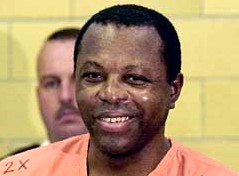
Amos Lee King
Murderer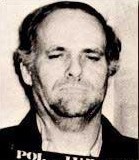 Ervil LeBaron
Murderer · USA · 1972
Ervil Morrell LeBaron (1925 to August 16, 1981) was the leader of a polygamous…
35 victims
Ervil LeBaron
Murderer · USA · 1972
Ervil Morrell LeBaron (1925 to August 16, 1981) was the leader of a polygamous…
35 victims
 Brian Kevin Rosenfeld
Murderer · USA · 1985
Brian Kevin Rosenfeld Brian Kevin Rosenfeld was sentenced to three concurrent l…
23 victims
Brian Kevin Rosenfeld
Murderer · USA · 1985
Brian Kevin Rosenfeld Brian Kevin Rosenfeld was sentenced to three concurrent l…
23 victims
 Marvin Gray
Murderer · USA · 1975
Marvin Gray was convicted killer who claimed responsibility for 23 slayings and…
23 victims
Marvin Gray
Murderer · USA · 1975
Marvin Gray was convicted killer who claimed responsibility for 23 slayings and…
23 victims
 Yahweh ben Yahweh
Murderer · USA · 1980
Yahweh ben Yahweh was born and legally named Hulon Mitchell Jr. (October 27, 19…
23 victims
Yahweh ben Yahweh
Murderer · USA · 1980
Yahweh ben Yahweh was born and legally named Hulon Mitchell Jr. (October 27, 19…
23 victims
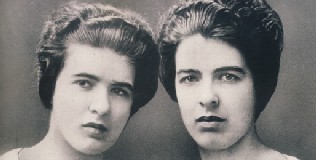 Christine & Léa Papin
Murderers · France · 1933
Christine Papin was born 8 March 1905 and died 18 May 1937. Léa Papin was born…
2 victims
Christine & Léa Papin
Murderers · France · 1933
Christine Papin was born 8 March 1905 and died 18 May 1937. Léa Papin was born…
2 victims
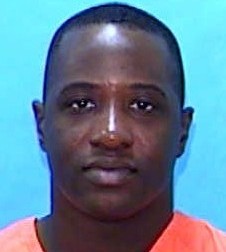 Antonio Melton
Homicide - Murderer · USA · 1990
Antonio Melton was sentenced to death on May 19, 1992. He was born on 12/29/72.…
2 victims
Antonio Melton
Homicide - Murderer · USA · 1990
Antonio Melton was sentenced to death on May 19, 1992. He was born on 12/29/72.…
2 victims
 Vanessa Williamson
Murderer · USA · 2010
Vanessa Kay Williamson was convicted by a Shasta County jury and was sentenced…
1 victim
Vanessa Williamson
Murderer · USA · 2010
Vanessa Kay Williamson was convicted by a Shasta County jury and was sentenced…
1 victim
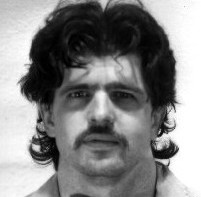 David Edwin Mason
Serial killer · USA · 1980
David Edwin Mason was raised by strict fundamentalist (Pentecostal) parents. Ac…
6 victims
David Edwin Mason
Serial killer · USA · 1980
David Edwin Mason was raised by strict fundamentalist (Pentecostal) parents. Ac…
6 victims
 Evan Nakahara
Murderer · USA · 1989
Evan Teek Nakahara was convicted in Los Angeles County of his girlfriend Beatri…
1 victim
Evan Nakahara
Murderer · USA · 1989
Evan Teek Nakahara was convicted in Los Angeles County of his girlfriend Beatri…
1 victim
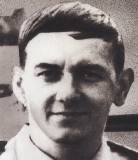 Alain Lamare
Homicide · France · 1978
Alain Lamare (born 1956) was a French gendarme known to the public under the ni…
1 victim
Alain Lamare
Homicide · France · 1978
Alain Lamare (born 1956) was a French gendarme known to the public under the ni…
1 victim
- Gender
- male
- Country
- USA
- Location
- Pinellas County, Florida, USA
- Date of birth
- August 16, 1954
- Age at first offence
- 23
- Characteristics
- rape, arson
- Victim profile
- Natalie "Tillie" Brady, 68, and James McDonough ( prison counselor )
- Method of murder
- St abbing with knife
- Date(s) of murder
- March 18, 1977
- Years active
- 1977
- Date of arrest
- Same day
- Status
-
Executed
Executed by lethal injection in Florida on February 26, 2003
Case details
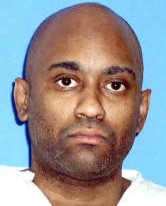
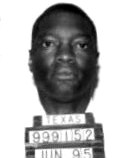
- Name: Amos Lee King Jr.
- Gender: Male
- Race: Black
- Hair color: Black
- Eye color: Brown
- Height: 6'01''
- Weight: 226
- Birth date: 08/16/1954
- Age at execution: 48
Background
Amos King was serving a sentence for larceny of a firearm at Tarpon Springs Community Correctional Center, a minimum security work-release facility. Natalie “Tillie” Brady was a 68-year-old widow who lived alone in a home about 1,500 feet from the Tarpon Springs Community Correctional Center.
King became involved in a case involving the 1977 killing of Natalie Brady, who was raped, stabbed and beaten, and whose home was set on fire.
King had a prior conviction for Robbery in 1972.
The offence
On March 18, 1977, Natalie “Tillie” Brady was killed at her Tarpon Springs home. Brady’s body was found in a doorway where she had crawled to escape the flames. The evidence described Brady as having been raped, stabbed and beaten.
Investigators concluded the fire had been set intentionally sometime between 3:00 and 3:30 a.m. Brady had received two stab wounds, bruises over the chin, and burns on the leg. An autopsy revealed other injuries, including bruises on the back of the head, hemorrhaging of the brain, hemorrhaging of the neck, and broken cartilage in the neck. The autopsy also reported “a ragged tear of the vagina which apparently had been caused by blood-stained wooden knitting needles found at the scene.” It also reported evidence of forced sexual intercourse.
The killing was described as occurring after King slipped away from a work-release prison, then went to Brady’s home, proceeded to rob, sexually assault, and stab her, and set her home on fire.
Investigation
A prison counselor, James McDonough, discovered King missing during a routine bed check. McDonough found King outside the building with blood on his pants.
Medical examiner testimony described King's blood type as present in the victim's vaginal washings. The testimony also described that the paring knife used by King to assault McDonough was “consistent” with the wounds found on Tillie, with an admission that the examiner could not say this knife caused the wound. A knife salesman testified that the paring knife was manufactured by the same company and was similar in design to other kitchen knives found in Tillie’s house. An old friend of the deceased testified that the paring knife resembled one Tillie kept in her house.
There were disputes and later claims about evidence. Defense lawyers alleged key evidence, including semen-infused vaginal washings, was destroyed by the state two years after King’s trial. A later description stated that earlier testing by the Florida Department of Law Enforcement on the nightgown and needles turned up no biological material from an attacker and earlier tests also proved inconclusive.
Arrest
King was discovered missing during a routine bed check at about 3:40 a.m. on the night of the incident. He was found outside the building with blood on his pants.
It was described that King fought with McDonough and stabbed McDonough with a knife more than 25 times and fled. McDonough later testified that King attacked him when McDonough tried to handcuff him, and that a blood stain was found on the crotch of King’s pants.
King was described as being caught trying to sneak back into the prison around the same time firefighters and police arrived at Brady’s home.
Trial
King was convicted of the 1977 rape and murder of Brady. The case included described circumstantial evidence.
During the appellate litigation described in the record, the Supreme Court held that (1) the State did not systematically exclude blacks from jury; (2) defendant was not allowed to relitigate innocence or guilt; (3) statistical studies were insufficient to demonstrate unconstitutional discrimination in imposing death penalty; (4) lingering doubt was not appropriate mitigating circumstance; (5) there was no reversible error in admission of evidence; and (6) one jury finding of aggravating circumstances was not appropriate. The decision was described as “Affirmed.”
In the trial-related proceedings described, after retrial of the penalty phase for murder, ordered by the Eleventh Circuit Court of Appeals, a jury before the Circuit Court, Pinellas County, Philip A. Federico, C.J., recommended the death sentence and the judge imposed that sentence. It was described that the Eleventh Circuit Court of Appeals had ordered the retrial because King received ineffective assistance of counsel in the penalty phase.
Two distinct quotes were attributed to defense counsel Thomas Cole:
- “Judge, I am beat, I have got to go home and get some sleep.”
- “I can’t think anymore.”
Sentencing
After retrial of the penalty phase, the jury recommended the death sentence and the judge imposed that sentence.
King was condemned for the 1977 killing of Natalie Brady.
Appeals
Florida Supreme Court docket references
- Florida Supreme Court Docket #68631 — Amos Lee King, Jr., Appellant vs. State of Florida, Appellee, 514 So. 2d 354; September 24, 1987.
- Docket #76537 — Amos Lee King, Jr., Appellant, vs. State of Florida, Appellee, 597 So. 2d 780; March 5, 1992.
- Docket #SC03-260 — Amos Lee King, Appellant, vs. State of Florida, Appellee, 840 So. 2d 1047; February 24, 2003.
The record also referenced “King v. State , 390 So.2d 315 (Fla. 1980), cert. denied, 101 S. Ct. 1529 (1981). (Direct Appeal).” It also referenced “King v. State , 407 So.2d 904 (Fla. 1981) (PCR).” It referenced “King v. State , 514 So.2d 354 (Fla. 1987), cert. denied, 108 S. Ct. 2916 (1988). (Direct Appeal).”
Federal appellate references
The record referenced “King v. Strickland , 714 F.2d 1481 (11th Cir. 09/02/1983).”
Later narrative described that King’s death sentence had been argued before the U.S. Supreme Court, vacated, retried, and reinstated.
Later narrative also described that King lost recent appeals in:
- the 11th U.S. Circuit Court of Appeals in Atlanta, and
- the federal court in Tampa.
Execution-related filings and Supreme Court
The record described that the U.S. Supreme Court rejected King's last appeal about 30 minutes after his execution was scheduled to occur, and that a flurry of last-minute appeals was filed in the Florida Supreme Court with the last motion arriving after 6 p.m. It also described that the state high court did not rule on the new appeals before the execution.
Outcome
Amos King was executed by lethal injection in Florida on February 26, 2003.
King was pronounced dead at 6:43 p.m. at Florida State Prison.
The execution was described as being scheduled for 6 p.m. but delayed by last-minute appeals. It was also described that the U.S. Supreme Court rejected King’s last appeal about 30 minutes after the execution was scheduled. It was described that the Florida Supreme Court did not rule on the new appeals before the execution.
Final statement and final day
King gave a final statement, including:
- “I would like the governor and the family to know I am an innocent man, and the state had evidence to that effect. I'm sorry for the victim's family, for all the things we have gone through.”
King was described as thanking his attorney, Peter Cannon, during his final statement.
King continued talking after his microphone was turned off, and the audience could only see his mouth move.
Monica Watson and Peggy Scheerer were described as crying in the front row. Monica Watson later said she could remember her aunt without thinking of the murder and that “No one deserves to die the way she did.”
A religious adviser Kevin Malone spent much of King’s final day with him. Another narrative described King spent his final day with his religious adviser, Casey Walpole, a Gainesville Buddhist.
Other details
Victim
- Name: Natalie “Tillie” Brady
- Age: 68
- Relationship: widow who lived alone
- Location: Tarpon Springs home about 1,500 feet from Tarpon Springs Community Correctional Center
- Named description: Brady was described as an old Tarpon Springs family and a well-liked Christian woman.
- Harm described: raped, stabbed and beaten; body found in a doorway where she crawled to escape flames.
Persons mentioned
- James McDonough — prison counselor; stabbed by King
- Peter Cannon — attorney King thanked
- Monica Watson — niece of the victim
- Peggy Scheerer — niece of the victim
- Natalie Brady — victim
- Kevin Malone — Buddhist priest referenced as spending much of King’s final day with him
- Casey Walpole — religious adviser described as a Gainesville Buddhist
- David Menschel — an attorney with the Innocence Project referenced in connection with DNA testing uncertainty and doubt
- Wendy Hallowell — spoken with Tillie's niece
- Liz Hirst — Bush spokeswoman referenced in connection with appeals and delay
- Jeb Bush — governor referenced in connection with execution and stays
- Ron Word — referenced in connection with executioner by name
- Debra Buchanan — Department of Corrections referenced regarding special meal policy
- Abe Tarapani — referenced in connection with feelings of many Tarpon Springs residents
- Anita Protos — former Tarpon Springs mayor referenced regarding “needs to burn to a crisp”
- Blaine LeCouris — Tarpon Springs police chief in 1977 referenced about work release program and community debate
- Mark LeCouris — current police chief referenced as Blaine LeCouris’s son
- Richard Dieter — executive director of the Death Penalty Information Center referenced in connection with national reaction
- Rudolph Holton — referenced in connection with exonerations from death row
- Barry Scheck — attorney with the Innocence Project referenced in connection with a stay
- Wendy Berger — governor’s death penalty lawyer referenced in connection with meeting with Scheck
- Thomas Cole — defense counsel referenced in connection with ineffective assistance claims
- Anthony Rondolino — support attorney referenced as joining defense less than a week before trial began
- Philip A. Federico — Circuit Court, Pinellas County judge referenced in connection with recommendation and sentencing
- Paul H. Roney — judge referenced in connection with Eleventh Circuit Court of Appeals written reasoning
- Judge Paul H. Roney — quoted regarding “King was convicted on circumstantial evidence…”
- Judge Paul H. Roney — included in the quote
- Abe Bonowitz — director of Floridians for Alternatives to the Death Penalty referenced in press release language
- Abraham J. Bonowitz — director name used in a sent press release
- SueZann Bosler — referenced as a protester in a described demonstration
- Bill Pelke — referenced as a protester in a described demonstration
- Abe Bonowitz — director quoted about “We remember the victim, Natalie Brady,” and the phrase “But not with more killing.”
- Monica Watson — included as quoted regarding doubt and memories
Administrative and inmate execution details
- The record stated King was not offered a special meal because he already had received two of them during previous stays.
- The record referenced execution-related delays and stays including a 30-day stay by Gov. Jeb Bush due to additional DNA testing.
- A later description stated a third round of DNA tests failed to provide any proof of innocence or guilt, and King remained scheduled to be executed Feb. 26.
- A judge allowed a third series of tests on the nightgown Natalie Brady wore when she was raped and murdered, and also tested wooden knitting needles presumed used in the attack.
- The record described that earlier testing by the Florida Department of Law Enforcement on the nightgown and needles turned up no biological material from an attacker and earlier tests proved inconclusive.
Inmate location details
King was an inmate at Tarpon Springs Community Correctional Center, a work release facility described as just 1,500 feet from Brady’s home.
Execution history references
The record described that King had been scheduled for execution in January, July and December in 2002, and had received a stay both times earlier than December. The record also described that King had previous execution dates in 1981 and 1988. The record described that Gov. Bob Graham signed King’s first warrant in 1981, and Gov. Bob Martinez signed another in 1988. It was also described that King survived execution attempts by three governors, and that under Bush, his execution was stayed four times last year.
Spotted an error, or have more information about this case?