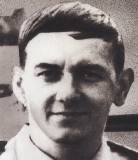
Alain Lamare
Homicide Gaston Dominici
Homicide · France · 1952
Gaston Dominici was convicted of the triple murder of three Britons in France i…
3 victims
Gaston Dominici
Homicide · France · 1952
Gaston Dominici was convicted of the triple murder of three Britons in France i…
3 victims
 Henri-Antoine Charrière
Homicide · France · 1930
Henri-Antoine Charrière was born in Ardèche, France. He had two older sisters.…
1 victim
Henri-Antoine Charrière
Homicide · France · 1930
Henri-Antoine Charrière was born in Ardèche, France. He had two older sisters.…
1 victim
 Leszec Pekalski
Homicide · Poland · 1984
1984–1992 — Leszek Pękalski was believed to have killed at least 17 people. · 1…
17 victims
Leszec Pekalski
Homicide · Poland · 1984
1984–1992 — Leszek Pękalski was believed to have killed at least 17 people. · 1…
17 victims
 Edward Charles Allaway
Homicide · USA · 1976
Edward Charles Allaway Edward Charles Allaway was found not guilty by reason of…
7 victims
Edward Charles Allaway
Homicide · USA · 1976
Edward Charles Allaway Edward Charles Allaway was found not guilty by reason of…
7 victims
 Motta Navas
Serial killer · India · 1996
Motta Navas was currently in custody awaiting trial. Motta Navas was born in 19…
7 victims
Motta Navas
Serial killer · India · 1996
Motta Navas was currently in custody awaiting trial. Motta Navas was born in 19…
7 victims
 Edwin Grace
Mass murderer · USA · 1972
Edwin James Grace was a 33-year-old gunman from Brooklyn who worked as a Pinker…
6 victims
Edwin Grace
Mass murderer · USA · 1972
Edwin James Grace was a 33-year-old gunman from Brooklyn who worked as a Pinker…
6 victims
 Bill Douglas Gates
Murderer · USA · 1999
Bill Douglas Gates was sentenced to death on February 21, 2001. Gates had a TDC…
1 victim
Bill Douglas Gates
Murderer · USA · 1999
Bill Douglas Gates was sentenced to death on February 21, 2001. Gates had a TDC…
1 victim
 James Lewis Jackson
Murderer · USA · 1997
James Lewis Jackson was convicted of capital murder involving the strangling de…
3 victims
James Lewis Jackson
Murderer · USA · 1997
James Lewis Jackson was convicted of capital murder involving the strangling de…
3 victims
- Gender
- male
- Country
- France
- Location
- Chantilly, Oise, France
- Date of birth
- 1956
- Age at first offence
- 22
- Characteristics
- mentally ill, fugitive, motive unknown, murder for hire
- Victim profile
- A 19-year-old woman
- Method of murder
- Shooting
- Date(s) of murder
- December 1, 1978
- Years active
- 1978
- Date of arrest
- April 7, 1979
- Status
-
Found insane on January 14, 1983; declared irresponsible for his acts and was not tried; a non-suit order was issued on 14 January 1983.
Case overview
Alain Lamare (born 1956) was a French gendarme known to the public under the nicknames “tueur de l’Oise” and “tueur fou de l’Oise”. He was arrested in connection with a series of crimes in the department of Oise from May 1978 to April 1979, and he was declared irresponsible for his acts, so he was not tried.
Timeline
- May 1978 — A Peugeot 504 was found abandoned in the forest of Chantilly; several windows were broken as if by gunfire. A handwritten plan for a hold-up at the post office of Pierrefonds was also found nearby.
- May 1978 (a few days earlier) — The Peugeot 504 was identified as stolen from the woman of a gendarme who had left the keys on the ignition.
- Two months after the abandoned vehicle — Karine, a 17-year-old girl, was attacked as she left a cinema at Pont Sainte Maxence; she identified her attacker’s vehicle, a stolen Renault 12 grenat.
- Dix jours after the aggression of Karine — In Creil, a vehicle was found rigged and exploded; a police officer was burned on the hands and face. The rigged Renault 12 grenat was stolen earlier from Martial Doucet, an Aisne farmer, who had also left the keys on the ignition.
- Shortly after the rigged-vehicle incident — Police received an anonymous letter at the Creil police station claiming responsibility for the rigging of the Renault 12 and the aggression of Karine.
- 16 November 1978 — Clermont-sur-Oise gendarmes were called to an accident at Fitz-James involving a 20-year-old woman knocked down while she rode a bicycle; the driver fled.
- Two days later (after 16 November 1978) — The Peugeot 504 matching the stolen vehicle description was found in front of the gare d’Orry la Ville; Yonnel Carpentier, a young auxiliary gendarme, opened the passenger-side door and the car ignited, injuring him slightly.
- After the Fitzgerald-James bicycle attack — The captain Pineau learned of a post office robbery at Sénarpont; the escape was said to be in a Citroën GS stolen with keys left on the ignition.
- During the link-up investigation (after the post office robbery at Sénarpont) — Photographic comparisons were used: the 28 photos were shown and the description matched. Police found fingerprints at Sénarpont identical to those on the 504 at the “carrefour des ripailles”.
- 1 December 1978 — A 19-year-old woman was found shot near the Chantilly racetrack after being taken the stop from Pont Sainte Maxence; she died from her injuries.
- Two days after 1 December 1978 — The GS used for the Sénarpont hold-up was found on the parking of the gare d’Orry la Ville with the same booby-trap device, described as having been thwarted in time.
- 12 December 1978 — The four gendarmerie companies of Oise were gathered to be informed of collected elements.
- 29 December 1978 — The killer attacked again: Andrée, a 19-year-old girl, was taken by stop in a Peugeot 504 verte at the exit from Compiègne; she was shot at three times and remained paralyzed after she jumped from the vehicle and fell onto the road.
- After the 29 December 1978 aggression (same day) — Gendarmes set up roadblocks; a Peugeot 504 verte appeared at a checkpoint on a bridge but the driver did not slow down and escaped. A chase followed, described as continuing until the vehicle was found later stuck in a marshy zone.
- Early 1979 (after January and February) — During January and February he committed no crimes but continued to steal vehicles (five in total).
- 17 March 1979 — He stole the luxurious car of an old minister but broke down on the motorway; when CRS arrived he claimed to be the son of the minister; he later disappeared again in a brown GS after escaping in the garage.
- 3 April 1979 — A third more precise portrait robot was published.
- 7 April 1979 — Maréchal des logis chef Claude Morel decided to speak to captain Pineau about the identity he believed matched the portrait robot.
- 8 April 1979 — Alain Lamare was arrested; the search of his home was planned for 6:00 a.m. and ended at 4:00 p.m. The subsequent reporting and a press-car convoy accident occurred, including the death of adolescent Gérard Bastien (14 years old).
- 14 January 1983 — An ordonnance de non-lieu was rendered; he was declared irresponsible for his acts after psychiatric expertises and counter-expertises.
- 2009 — He was described as still interned at the psychiatric hospital of Sarreguemines and still a gendarme, with his resignation being rendered void due to his illness declaring him irresponsible at the time.
The offences
Alain Lamare was linked to a sequence of crimes and attempted crimes described as taking place from May 1978 to April 1979 in Oise. He was said to have reached murder and five attempts, with one murder described as certain.
Abandoned vehicle and planned hold-up (May 1978)
In May 1978, gendarmes from the PSIG (Peloton de surveillance et d'intervention) made a nighttime patrol in the forest of Chantilly. On a dirt path at the “carrefour des ripailles” they discovered an abandoned Peugeot 504. Several windows were broken, apparently by gunfire. The first officers alerted the PJ in Creil, described as the unit usually in charge of these kinds of cases in Oise.
Policemen found multiple clues: a small rope-like cord that appeared to have been used to tie someone to a seat; cigarette butts of “gitane blanche”; a hypodermic syringe; papers of candy and chewing gum; shell casings; and on the passenger seat a blood-stained handkerchief. Investigators also found, a few meters from the vehicle, a handwritten plan that appeared to indicate preparations for a hold-up at the post office in the nearby city of Pierrefonds.
The vehicle identification showed it had been stolen a few days earlier from the woman of a gendarme, who had left the keys on the ignition.
Attack on Karine (Pont Sainte Maxence; age 17)
Two months later, Karine, described as a young girl of 17, was attacked as she left a cinema at Pont-Sainte-Maxence. As she returned home, a man driving a Renault 12 grenat approached and shot her three times. She was slightly wounded at the calf and had only time to identify the attacker’s vehicle. The car was also described as stolen with the keys left on the ignition. At the time, no link was established between the Karine attack and the case involving the Peugeot 504.
Rigged vehicle in Creil and injury to a police officer
Ten days after Karine’s aggression, a police officer noticed a badly parked vehicle in a quiet street in Creil. Opening the door triggered a detonation followed by a fire. The officer was burned on the hands and face but survived. The Renault 12 grenat was described as being rigged.
The vehicle was later found to have been stolen a month and a half earlier from Martial Doucet, an Aisne farmer, who had left the keys on the ignition.
Similarities among incidents were described as leading investigators to connect the three affairs.
Anonymous letter and investigative leads
Police soon received, at the Creil police station, a letter claiming responsibility for the rigging of the Renault 12 and Karine’s aggression. The evidence accompanying the letter, including the registration card for the Renault, was described as leaving no doubt as to the author of the acts. The author said he would repeat the crimes. The letter contained a sentence that stated: “Karine me connaît mais elle ne pourra jamais faire le rapprochement”
The letter did not mention the Peugeot 504 incident, but a link was established by comparing fingerprints taken from the two vehicles.
At the reading of the letter, Daniel Neveu, identified as an “inspecteur principal” at the Creil police station, was struck by the style of writing resembling language used in a police or gendarmerie report.
The attacker’s route was described as reconstituted using the stolen cheques taken from Martial Doucet; this was said to total about twenty. Witnesses were described as giving enough information to produce a portrait robot, but it was described as unusable because it was imprecise.
Ballistics expertise was also described: the weapon used was a Beretta 9 mm short, described as rare and appreciated by collectors and military personnel. A search among the unit’s own men was conducted but no schedule matched the three incidents.
Another booby-trapped vehicle and the injury of Yonnel Carpentier (Fitz-James / Orry-la-Ville)
Despite the threats in the letter, “nothing happened for three months.” On 16 November 1978, gendarmes from Clermont-sur-Oise were called to Fitz-James after a bicycle accident: a 20-year-old woman was hit by an automobile and the driver fled. Passersby noted the license number, which matched a Peugeot 504 stolen from the Beauvais station parking lot with keys left on the ignition.
Two days later, the Peugeot 504 was found in front of the gare d’Orry la Ville by a gendarmerie patrol. Yonnel Carpentier, described as a young auxiliary gendarme, approached and opened the passenger-side door. The car immediately caught fire, injuring him slightly. The incident was described as the second booby-trapped vehicle case in three months.
Although the investigation was said to have been officially given to the PJ, the captain Pineau was described as carrying out his own investigation. He assembled photos of sexual offenders in the region—said to total 28 photos. He learned that a robbery had just occurred at the post office in Sénarpont.
Robbery at the post office of Sénarpont (hold-up; GS photo match)
The robbery described at Sénarpont involved a thief who escaped in a Citroën GS stolen with keys left on the ignition. Captain Pineau decided to show his set of photos to the postal worker, who stopped at photo no. 6. He then told the postière that she resembled the man but that he looked younger with ears “décollées”. The young cyclist who had been knocked down was shown the 28 photos and made the exact same statement.
Police also found that fingerprints taken at the Sénarpont post office were identical to those on the 504 car at the “carrefour des ripailles,” indicating the same individual.
First murder near Chantilly (1 December 1978; victim age 19)
On 1 December 1978, an event occurred near the Chantilly racetrack: passersby discovered a 19-year-old woman shot by gunfire at the roadside. Before dying, she stated she had been attacked by a man in his thirties who had taken her “by stop” at Pont Sainte Maxence.
Expertise was described as showing she was killed with the same weapon, a Beretta 9 mm short. A witness was described as claiming to have seen her get into a blue GS, described as the same GS used for the Sénarpont hold-up.
Two days later, the GS was described as being found on the Orry la Ville station parking lot with the same rigging device, thwarted in time.
Another investigation coordination (12 December 1978)
On 12 December 1978, due to the scale of the case, the four gendarmerie companies of Oise met to be informed of the collected elements. The captain Pineau was described as reading the anonymous letter and making the same observation as inspector Neveu, that certain expressions came from a “gendarme” vocabulary. Despite those similarities, Pineau’s superior refused to investigate within his own unit, declining.
Attack on Andrée (29 December 1978; victim age 19; paralysis)
On 29 December 1978, the killer struck again. He took Andrée, a 19-year-old girl, in stop at the exit from Compiègne while she was in a Peugeot 504 verte. On a less frequented road, he changed his attitude and fired three shots with his gun. She was injured but managed to jump from the vehicle and fell heavily onto the road. Still conscious, she recounted her ordeal to witnesses at the scene.
After the aggression, Andrée was described as remaining paralyzed.
Manhunt and escape
Immediately after the aggression on 29 December 1978, gendarmes established roadblocks around the area. Two hours after the attack, a Peugeot 504 verte appeared on one of the roadblocks located on a bridge. The driver did not slow and managed to escape. The chase was described as ending because the vehicle got away at a level crossing after a train passed.
After losing the trace, the gendarmes found the vehicle stuck in a marshy zone. A search described as using human and aerial means was organized, but the individual escaped again.
Early 1979 actions: vehicle theft and investigative tracking
In January and February, he was described as committing no crimes but continuing to steal cars, totaling five. Investigators continued to track the perpetrator’s path by following the route created by stolen cheques.
The perpetrator was described as attempting to blur the trail by traveling frequently.
On 17 March 1979, he stole the luxurious car of a former minister but suffered a breakdown on the motorway. When CRS arrived, he was described as having the audacity to present himself as the son of the minister. At the towing company garage, he escaped while driving a brown GS and disappeared into the countryside.
After this incident, individuals from the forces of order were described as having seen him closely, enabling a more precise portrait robot, published on 3 April 1979.
Investigation and identification
Portrait robot and internal suspicion
At the gendarmerie brigade of Clermont, maréchal des logis chef Claude Morel was described as believing the person in the portrait robot was one of his former gendarmes: Alain Lamare, aged 23. It was described as being only him who had that belief within the brigade, with only his wife sharing the point of view.
Morel then sought evidence by comparing the anonymous letter’s writing with archived “PV” documents of Lamare. He observed similarities in the writing.
On 7 April 1979, Morel decided to speak to captain Pineau, who did not know Lamare because he had arrived in Clermont after a transfer to the PSIG in Chantilly.
Morel also told Pineau about Lamare’s passion for weapons.
Establishing that Lamare was involved
Captain Pineau was described as warning Henri Cavalier, identified as the hierarchical superior of the suspect at Chantilly. By checking Lamare’s duty schedule, it was said they found that during each event, Lamare had been off duty. Cavalier was described as being shocked but then realizing that Lamare had been the gendarme most involved in the affair. It was said that he had discovered most of the stolen cars. The investigation team described no further doubt that Lamare was the perpetrator and then focused on neutralizing him.
Arrest
Henri Cavalier decided to use a stratagem to bring Lamare back to the brigade without arousing his suspicion. He arranged an operation on a camp of gypsies to recall all patrols. When arriving at the brigade, Lamare was described as placing his “fusil mitrailleur” on the orders of adjudant Cavalier, who then restrained him as he was about to draw a second weapon hidden in his “trois-quarts.” Lamare was interrogated all night; he denied strongly.
He was described as being confronted with fingerprints that matched those taken from the stolen vehicles. The Chantilly brigade was described as shocked and stunned.
A house search was scheduled for 6:00 a.m. The search described discovering multiple incriminating elements at his apartment, including weapons, keys, and cigarette butts of “gitane blanche” even though he was described as a non-smoker.
At around 1:00 p.m., once Lamare’s arrest was announced on the radio, a crowd of onlookers gathered in front of the building.
The search was described as ending at 4:00 p.m. on Sunday 8 April. After leaving, as Lamare was placed into the gendarmerie vehicle, the vehicle drove very fast in a near-riot atmosphere with journalists pursuing. While crossing a press vehicle convoy, two young people on motor scooters were described as being hit by a press car. One of them, Gérard Bastien, 14 years old, died on the scene. It was described as the last “indirect” victim of Lamare.
That evening, Lamare was described as having confessed his crimes to the investigating judge, with the note that these were his only explanations and that he then sealed himself into a complete silence.
The arrest was described as explaining the mysterious phrase from the first anonymous letter about Karine’s ability to recognize the attacker.
Psychiatric assessment and court outcome
After a “battle” of psychiatric experts and counter-experts, Alain Lamare was described as declared irresponsible for his acts and affected by a rare mental illness: “l’héboïdophrénie” (described as a form of schizophrenia).
He was said to never be tried. A non-suit order (“ordonnance de non-lieu”) was issued in 1983 on 14 January.
In 2009, he was described as still being interned at the psychiatric hospital of Sarreguemines and still being a gendarme, with his resignation described as rendered void because his illness declared him irresponsible at the time.
Other details
Workplace role and involvement
Lamare was described as serving in a brigade of the PSIG (Peloton de surveillance et d'intervention) in Chantilly and as having taken part in investigations; he was described as qualifying the killer as “salaud de tueur”.
After the arrest, colleagues learned they were on the list of those who would be next, which was described as further demoralizing them.
Public impact
The arrest was described as a “seismic” moment for the gendarmerie. It was described as previously having been raised from the beginning that a gendarme could be the culprit, but that this hypothesis had been set aside without verification because it was described as unthinkable for the hierarchy.
A general of the gendarmerie, on the night of the arrest, was described as having made Lamare sign a resignation letter to save the institution’s honor.
The case was described as receiving significant media attention, with journalists and crowds gathering the next morning for a search of Lamare’s apartment in his presence.
Film themes
The theme of the “impossible criminal” was described as having been previously discussed in 1970 in the film “Enquête sur un citoyen au-dessus de tout soupçon,” an Italian film by Elio Petri with Gian Maria Volonte in the principal role.
Five years earlier, Costa-Gavras was described as having adapted the novel “Compartiment tueurs,” which evokes the role of a criminal investigator investigating his own crimes.

Spotted an error, or have more information about this case?