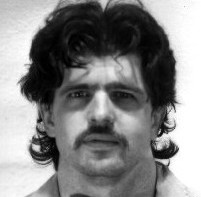
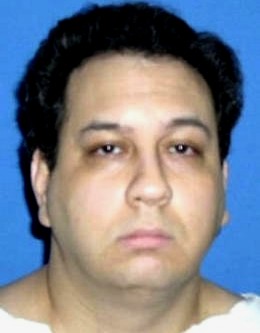
David Edwin Mason
Serial killer Carl Eugene Watts
Serial killer · USA · 1974
Carl Eugene Watts (born November 7, 1953; died September 21, 2007), also known…
100 victims
Carl Eugene Watts
Serial killer · USA · 1974
Carl Eugene Watts (born November 7, 1953; died September 21, 2007), also known…
100 victims
 Rodney Alcala
Serial killer · USA · 1977
Rodney James Alcala (born August 23, 1943) was also known as Rodrigo Jacques Al…
100 victims
Rodney Alcala
Serial killer · USA · 1977
Rodney James Alcala (born August 23, 1943) was also known as Rodrigo Jacques Al…
100 victims
 Donald Harvey
Serial killer · USA · 1970
Donald Harvey was known as an American serial killer and a self-professed “Ange…
87 victims
Donald Harvey
Serial killer · USA · 1970
Donald Harvey was known as an American serial killer and a self-professed “Ange…
87 victims
 Donald Leroy Evans
Serial killer · USA · 1975
Donald Leroy Evans (born July 5, 1957) was an American serial killer who murder…
60 victims
Donald Leroy Evans
Serial killer · USA · 1975
Donald Leroy Evans (born July 5, 1957) was an American serial killer who murder…
60 victims
 Michael Swango
Serial killer · USA · 1981
Michael Swango (Joseph Michael Swango) was a physician and American serial kill…
60 victims
Michael Swango
Serial killer · USA · 1981
Michael Swango (Joseph Michael Swango) was a physician and American serial kill…
60 victims
 Efren Saldivar
Serial killer · USA · 1989
Efren Saldivar (born 30 September 1969) was an American serial killer who murde…
50 victims
Efren Saldivar
Serial killer · USA · 1989
Efren Saldivar (born 30 September 1969) was an American serial killer who murde…
50 victims
 Barbara Stager
Murderer · USA · 1988
Barbara Stager (born October 30, 1948) was an American woman convicted in 1989…
2 victims
Barbara Stager
Murderer · USA · 1988
Barbara Stager (born October 30, 1948) was an American woman convicted in 1989…
2 victims
 Joshua Wayne Andrews
Murderer · USA · 2000
Joshua Wayne Andrews was a serial killer accused of killing several people in V…
5 victims
Joshua Wayne Andrews
Murderer · USA · 2000
Joshua Wayne Andrews was a serial killer accused of killing several people in V…
5 victims
 Thomas Eugene Braun
Spree killer · USA · 1967
Thomas Eugene Braun was sentenced to death in California. · Thomas Eugene Braun…
4 victims
Thomas Eugene Braun
Spree killer · USA · 1967
Thomas Eugene Braun was sentenced to death in California. · Thomas Eugene Braun…
4 victims
 John Lotter
Murderer · USA · 1993
John L. Lotter was convicted in connection with the December 1993 deaths of Tee…
3 victims
John Lotter
Murderer · USA · 1993
John L. Lotter was convicted in connection with the December 1993 deaths of Tee…
3 victims
 Elijah Page
Murderer · USA · 2000
Elijah Page was executed by lethal injection in South Dakota on July 11, 2007.…
1 victim
Elijah Page
Murderer · USA · 2000
Elijah Page was executed by lethal injection in South Dakota on July 11, 2007.…
1 victim
- Gender
- male
- Country
- USA
- Location
- California, USA
- Date of birth
- December 2, 1956
- Age at first offence
- 24
- Characteristics
- robbery, torture, mentally ill
- Victim profile
- 4 elderly victims (3 female and 1 male) / His male lover / His cellmate
- Method of murder
- Strangulation / Shooting / Garotted with a towel
- Date(s) of murder
- 1980 / 1982
- Years active
- 1980–1982
- Date of arrest
- —
- Status
-
Executed
Executed by asphyxiation-gas in California on August 24, 1993
Case record: David Edwin Mason
Background
David Edwin Mason was raised by strict fundamentalist (Pentecostal) parents. According to the probation officer's report, his behavior was uncontrollable from an early age. He set fires, cut and choked himself, held a knife to his infant brother as if to stab him, and assaulted other school children. His parents beat him, locked him in his room, and subjected him to verbal and psychological abuse. At age 14, Mason was made a ward of the court.
Mason had four previous commitments for:
- Robbery with intent to commit murder;
- Assault and attempted robbery;
- Robbery with false imprisonment; and
- Various weapons charges.
In July 1977, Mason stabbed a store clerk with an ice pick after robbing the store. He threatened to kill her if she called the police and testified against him. Mason was sentenced in November 1977 to 36 months in state prison.
In March 1980, Mason assaulted and attempted to rob a victim who was returning home late at night. During the ensuing fight, Mason struck the victim on the top of the head with a gun.
In December 1980, Mason gained admittance to the home of an elderly couple under the pretext of selling and delivering firewood. Mason handcuffed the victims to chairs and robbed them of $47,000 worth of jewelry and coins.
At the time of his arrest in February 1981, Mason had in his possession a loaded sawed-off shotgun and pistol and other ammunition. He was convicted and sentenced in April 1982. He confessed to these crimes and was sentenced in June 1982 to a total of 124 months in state prison for both 1980 crimes.
Mason was implicated in two, possibly three escape attempts from county jail. He was found with deadly weapons secreted on his person and in his cell.
Although Mason had no recent disciplinary infractions, he received five disciplinary actions between 1983 and 1988:
- 07/13/83 Possession of contraband (weapon stock)
- 01/24/85 Attempting to introduce contraband into the institution (T-shirt)
- 08/05/87 Flooding tier
- 12/12/87 Force and violence (fist fighting)
- 06/30/88 Throwing potential caustic substance on prisoner (cup of coffee)
David Edwin Mason (December 2, 1956 – August 24, 1993) was executed in San Quentin's gas chamber in 1993. This marked the second execution in the state of California since 1967.
The offence
Mason beat, strangled and robbed four elderly victims within a nine-month period. While being held in county jail awaiting trial, Mason killed his cellmate. Mason was also wanted in Butte County for shooting and killing his male lover while the victim was sleeping.
The murders included:
- A murder of an elderly female victim on March 6, 1980.
- A murder of an elderly male victim on August 18, 1980.
- A murder of an elderly female victim on November 11, 1980.
- A murder of an elderly female victim on December 6, 1980.
- A murder of his cellmate on May 9, 1982.
Victim #1 — 73-year-old female The victim knew Mason for several years. She employed him for odd jobs and invited him into her apartment and showed him her alarm system, including panic buttons. On March 6, 1980, Mason took advantage of his position of trust. He entered her home, choked her when she tried to escape to activate the alarm, robbed her, tied her up, beat and strangled her to death.
Victim #2 — 75-year-old male On August 18, 1980, Mason beat, strangled and robbed the victim whom he may have known previously.
Victim #3 — 72-year-old female On November 11, 1980, Mason strangled the victim and beat her over the head with a crescent wrench. Her vaginal tissue was cut and bruised.
Victim #4 — 75-year-old female On December 6, 1980, Mason beat, strangled and robbed the victim who had bruises and cuts over most of her body. Her clothes were partially ripped off.
Victim #5 — male cellmate at Alameda County Jail With help from another inmate, Mason beat and garotted his cellmate to death with a knotted towel on May 9, 1982. He then hung the victim from a heavy shower rod in an attempt to make the murder look like a suicide.
Mason was wanted in Butte County for shooting and killing his male lover while the victim was sleeping.
Investigation
Mason confessed to his crimes in a tape recording titled “David Mason-Epitaph,” which he gave to his parents. When questioned by police, Mason also confessed, providing details of the crimes that were known only to investigators.
Mason later recanted his confessions and claimed he confessed because of his desire to die after his lover was murdered.
Arrest
Trial
Mason was convicted of five counts of first degree murder with special circumstances in the Superior Court of Alameda County, California. He received the sentence of death on each count.
The California Supreme Court affirmed Mason's conviction and sentence in People v. Mason, 52 Cal.3d 909, 277 Cal.Rptr. 166, 802 P.2d 950, cert. denied (1991).
Sentencing
Mason received the sentence of death on each count in the Superior Court of Alameda County.
In the state proceedings, on January 27, 1984 he was sentenced to die.
Appeals
While being held in county jail awaiting trial, Mason killed his cellmate on May 9, 1982.
Federal habeas and competency proceedings Mason filed a federal habeas corpus petition on April 23, 1992 in the United States District Court for the Northern District of California through his appellate counsel in the state proceedings, attorney Charles C. Marson. Mason verified the petition one day later.
In response, the district court stayed Mason's execution date of April 28, 1992 and appointed Marson to represent Mason in the federal proceedings.
On January 4, 1993, Marson filed an amended habeas corpus petition which Mason did not verify.
In a letter to the district court dated January 7, 1993, Mason indicated that he was satisfied with the decision of the California Supreme Court, that he had decided not to seek further relief in federal court, and that he had neither the need nor the desire to be represented by Marson.
On January 21, 1993, the State of California filed a motion to dismiss Mason's petition.
On February 4, 1993, Marson filed opposition papers and declarations from several mental health professionals stating that Mason was suffering from mental illnesses that were affecting his decision to withdraw his petition. The district court appointed an independent psychiatric expert to examine Mason and scheduled a hearing to determine Mason's competency.
Prior to the competency hearing, the district court received several letters from Mason reiterating his desire to both abandon federal review of his death sentence and to dismiss Marson as counsel. Mason complained that Marson had ignored his objections and continued the federal proceedings because Marson was personally opposed to the death penalty. Mason contended that Marson would be unable to adequately represent his interests. Mason stated he had retained his own attorney, Michael Brady, and requested the court to appoint Brady as his counsel.
On March 5, 1993, the court recognized the appearance of Brady as counsel for Mason, but ordered Marson to remain Mason's court-appointed attorney until his mental competence was determined.
On May 13 and 14, 1993, the district court conducted a hearing to determine Mason's competency. At that hearing:
- Marson called Dr. Kathleen Wayland (psychologist) and Dr. David V. Foster (psychiatrist who reviewed evidence).
- Both experts testified that Mason was suffering from post-traumatic stress disorder (“PTSD”) and that this condition affected his decision to abandon his petition for habeas corpus.
- Marson supplemented this testimony with declarations already in the record from Dr. Wayland, Dr. Foster, Dr. Karen B. Fromming, Dr. Jules Burstein, and three of Mason's sisters: Darlene Mason Hill, Linda Sue Mason Miller, and Joy Louise Mason.
- The State called Dr. David Kessler, the psychiatrist appointed by the court to independently evaluate Mason. Prior to the hearing, Dr. Kessler submitted a report concluding Mason was mentally competent. During the hearing, Dr. Kessler testified that Mason did not suffer from PTSD. Dr. Kessler stated that Mason had suffered throughout his life from an antisocial personality disorder, but that this had not affected his decision to forego federal habeas review.
- Mason himself testified to the court and counsel.
On June 7, 1993, the district court entered an order finding Mason competent to substitute counsel and to dismiss the action. The court stated it would dismiss the petition upon receipt of a request signed by Mason and his counsel, if any.
On June 10, 1993, Mason filed a request that Michael Brady be substituted for Charles Marson. On the same date, Mason filed a request to dismiss his petition and vacate the stay of execution.
On June 14, 1993, the district court relieved Marson as counsel of record, substituted Brady, and granted a voluntary dismissal of the petition pursuant to Fed.R.Civ.P. 41(a)(1).
The Superior Court thereafter issued a death warrant setting Mason's execution date for August 24, 1993 at 12:01 a.m.
Rule 59(e) motion and next-friend intervention On June 28, 1993, Marson filed a motion to set aside the judgment pursuant to Fed.R.Civ.P. 59(e).
On July 22, 1993, three of Mason's siblings, and three persons—Randy Alana, Patrick Tafoya, and Lee Terry Farmer—filed a motion to intervene in the Rule 59(e) motion as next friends through attorney Richard Mazer. Shortly thereafter, Mason's siblings withdrew from the next friend petition.
A hearing was held on July 30, 1993, at which time the district court denied the motion to set aside the judgment and the motion to intervene.
On August 3, 1993, the district court granted Marson's request for a certificate of probable cause and a stay of execution pending appeal, while denying a similar request made by the next friends.
Appeals to the United States Court of Appeals for the Ninth Circuit Marson appealed the June 14, 1993 judgment on behalf of Mason. The next friends appealed both the June 14 judgment and the denial of their motion to intervene.
A United States Court of Appeals order addressed the stay of execution:
- On August 20, 1993, a three-judge panel considered the appeals and issued an order concerning the stay of execution. The order stated it would vacate the stay of execution upon issuance of mandate at 4:00 PDT on August 23, 1993, and stated that on that date and time the stay would be of no further force and effect. The panel consisted of Circuit Judges HUG, POOLE, and BEEZER, with HUG writing.
- The district court stay described in the order had been entered by the district court and was to remain in effect pending further action by the court.
The order also described the conviction and sentence as:
- Mason convicted in California state court of five murders and received the sentence of death on each count.
- Judgment affirmed on appeal by the California Supreme Court.
- Three petitions for writs of habeas corpus denied by that court.
A separate later order addressed the mandate:
- On October 6, 1993, an order stated: “The mandate is recalled.” It stated that the en banc court remanded the cause to the panel which had initial jurisdiction after completion of duties pursuant to Death Penalty Rule 22-4(e)(3).
At least two dissents were included with the later materials:
- Preger son, Circuit Judge, dissenting, included discussion that the en banc court allegedly did not complete duties as required and that the merits were not addressed as expected under rules.
- Noonan, Circuit Judge, dissenting, added points including that death-penalty rules were not observed and precedent was not observed.
Specific court findings on mental competence The district court’s findings of fact included:
- Mr. Mason was not suffering from a mental disease, defect, or disorder other than possibly antisocial personality disorder.
- Mr. Mason's capacity to decide to discharge his attorney and abandon this action was not substantially affected by any antisocial personality disorder.
- Mr. Mason's decision to discharge his attorney and dismiss this action was made freely and voluntarily with a full understanding of the ramifications and the consequences of his decision.
The later appellate decision concluded that the district court's factual determination was upheld and affirmed the order dismissing the action. It also said the stay of execution was addressed in a separate order.
Outcome
Mason was executed in the gas chamber at San Quentin State Prison on August 24, 1993. He was the first condemned inmate to voluntarily waive his appeals on a federal level. The execution was scheduled for 12:01 a.m.
Execution procedure and last day details At two minutes before midnight, a federal judge called the prison to verify that Mason's attorney was present should Mason wish to stop the proceedings.
At 12:05 a.m., Mason was escorted onto the chamber.
At 12:08 a.m., Warden Daniel Vasquez stepped into the chamber, pointed out the location of Mason's attorney in the witness area, and asked Mason if he had changed his mind and wished to stop the proceedings. Mason said: “No Warden, I want to proceed; thank you Warden.”
At 12:09 a.m., the lethal gas was introduced into the chamber.
Mason was pronounced dead at 12:23 a.m.
Mason spent his last day visiting with family members. At approximately 6:00 p.m., he was escorted to the death watch cell. Mason was given unlimited use of the telephone to converse with his family members. Mason refused any last meal, requesting only ice water while in the death watch cell. Mason told the warden that he had no final words to impart.
Prior legal status referenced in the materials The materials referenced:
- “On January 27, 1984 he was sentenced to die.”
- “Execution: Inmate Mason was executed August 24, 1993 in the gas chamber at San Quentin State Prison.”
- The case action “Affirmed” and “Court Date: 01/10/1991” with “Case #: 74687A,” and “Victims: Names unavailable.”
Timeline
- 03/08/1980 — Offense date recorded as 03/08/1980.
- 01/10/1991 — Court date recorded as 01/10/1991; case referenced as “Case #: 74687A.”
- 04/23/1992 — Attorney Charles C. Marson filed a federal habeas corpus petition on Mason’s behalf.
- 04/28/1992 — District court stayed Mason’s execution date.
- 1992 — Mason verified the federal habeas petition one day after filing.
- 01/04/1993 — Marson filed an amended habeas corpus petition that Mason did not verify.
- 01/07/1993 — Mason sent a letter to the district court reiterating satisfaction with the California Supreme Court decision and desire to abandon further federal relief and dismiss Marson.
- 01/21/1993 — State of California filed a motion to dismiss Mason’s petition.
- 02/04/1993 — Marson filed opposition papers and mental health declarations.
- 03/05/1993 — Brady was recognized as counsel; Marson remained until competency was determined.
- 05/13/1993 — District court conducted a competency hearing.
- 05/14/1993 — Continued competency hearing.
- 06/07/1993 — District court found Mason competent to substitute counsel and dismiss the federal action.
- 06/10/1993 — Mason requested substitution of Michael Brady and requested dismissal and vacatur of the stay.
- 06/14/1993 — District court relieved Marson, substituted Brady, and granted voluntary dismissal; a death warrant was later issued setting execution for 08/24/1993 at 12:01 a.m.
- 06/28/1993 — Marson filed a motion to set aside the judgment under Fed.R.Civ.P. 59(e).
- 07/22/1993 — Next friends (including Randy Alana, Patrick Tafoya, and Lee Terry Farmer) filed a motion to intervene in the Rule 59(e) motion as next friends.
- 07/30/1993 — District court denied the Rule 59(e) motion and denied the motion to intervene.
- 08/03/1993 — District court granted Marson’s request for a certificate of probable cause and a stay of execution pending appeal; denied similar request by the next friends.
- 08/20/1993 — Ninth Circuit panel issued an order concerning the stay of execution and issuance of mandate on 08/23/1993.
- 08/23/1993 — Mandate scheduled for issuance at 4:00 PDT; stay described as ending then.
- 08/24/1993 — Mason executed by asphyxiation-gas at San Quentin State Prison.
- 10/06/1993 — Ninth Circuit order recalled the mandate and remanded to the panel.
Other details
Victim and date details included in the materials
Mason killed four elderly people in 1980: one on March 6, 1980, one on August 28 (as referenced in one portion of the materials), one on November 11, 1980, and one on December 6, 1980, and a murder of a cellmate in 1982. The case materials separately describe the second elderly victim homicide as occurring on August 18, 1980.
Mental competence and counsel roles in federal proceedings
The materials described an unusual circumstance in which petitioner and appointed attorney contested the petitioner’s competence. Mason sought permission to have counsel of his choice represent him in upholding his competence to guide the course of litigation. Marson was court-appointed attorney in state appeals and filed the federal habeas petition. Mason was entitled to guide the course of his litigation, including dismissing the action if mentally competent.
At the competency hearing, the counsel who participated included Marson, Brady, the deputy attorney general Rivlin for the state, and Mason himself.
Verbatim quotations
Warden Daniel Vasquez asked Mason whether he had changed his mind and wished to stop the proceedings; Mason answered: “No Warden, I want to proceed; thank you Warden.”
Criminal case identifiers and recorded court action
The materials included: “County of Residence: Alameda County,” “Offense: Alameda,” “Victims: Names unavailable,” “Offense Date: 03/08/1980,” “Court Action: Affirmed,” “Court Date: 01/10/1991,” and “Case #: 74687A.”
Execution-related scheduling and verification details
A federal judge called the prison two minutes before midnight to verify Mason's attorney presence in case Mason wished to stop proceedings. Mason was escorted onto the chamber at 12:05 a.m., and the warden questioned him at 12:08 a.m. The lethal gas was introduced at 12:09 a.m., and Mason was pronounced dead at 12:23 a.m.
Spotted an error, or have more information about this case?