
Frederick Deeming
Mass murderer James Dunham
Mass murderer · USA · 1896
James C. Dunham was a multiple murderer who killed his wife and members of his…
6 victims
James Dunham
Mass murderer · USA · 1896
James C. Dunham was a multiple murderer who killed his wife and members of his…
6 victims
 John Nordlund
Mass murderer · Sweden · 1900
John Filip Nordlund (also known as ”Mälarmördaren”, ”Mordlund”, ”Svarte Filip”)…
5 victims
John Nordlund
Mass murderer · Sweden · 1900
John Filip Nordlund (also known as ”Mälarmördaren”, ”Mordlund”, ”Svarte Filip”)…
5 victims
 William Zeigler
Mass murderer · USA
William Thomas Zeigler Jr. was prosecuted in Florida for the murders of four pe…
1975 victims
William Zeigler
Mass murderer · USA
William Thomas Zeigler Jr. was prosecuted in Florida for the murders of four pe…
1975 victims
 Joseph Kibweteere
Mass murderer · Uganda · 2000
Joseph Kibweteere led a breakaway sect known as the Movement for the Restoratio…
1000 victims
Joseph Kibweteere
Mass murderer · Uganda · 2000
Joseph Kibweteere led a breakaway sect known as the Movement for the Restoratio…
1000 victims
 Gameel Al-Batouti
Mass murderer · USA · 1999
Gameel Al-Batouti (also rendered “Gamil ElBatouty” or “El Batouty” in U.S. offi…
216 victims
Gameel Al-Batouti
Mass murderer · USA · 1999
Gameel Al-Batouti (also rendered “Gamil ElBatouty” or “El Batouty” in U.S. offi…
216 victims
 Albert Fentress
Homicide · USA · 1979
Albert Fentress was a former school teacher and later lived in psychiatric hosp…
1 victim
Albert Fentress
Homicide · USA · 1979
Albert Fentress was a former school teacher and later lived in psychiatric hosp…
1 victim
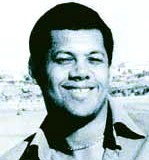 Victor Miller
Murderer · United Kingdom · 1988
Victor Miller was a computer operator in the United Kingdom. He was described a…
1 victim
Victor Miller
Murderer · United Kingdom · 1988
Victor Miller was a computer operator in the United Kingdom. He was described a…
1 victim
 Christine Adewunmi
Murderer · USA · 2012
Christine Adewunmi killed herself by shooting herself the same day. Christine A…
3 victims
Christine Adewunmi
Murderer · USA · 2012
Christine Adewunmi killed herself by shooting herself the same day. Christine A…
3 victims
 Robert Anthony Preston
Murderer · USA · 1978
Robert Anthony Preston (born 11/13/57) was convicted in the Eighteenth Judicial…
1 victim
Robert Anthony Preston
Murderer · USA · 1978
Robert Anthony Preston (born 11/13/57) was convicted in the Eighteenth Judicial…
1 victim
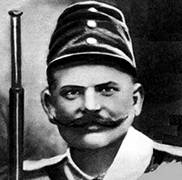 Bela Kiss
Serial killer · Hungary · 1900
Béla Kiss (1877 – ?) was a Hungarian serial killer. He murdered at least 24 you…
24 victims
Bela Kiss
Serial killer · Hungary · 1900
Béla Kiss (1877 – ?) was a Hungarian serial killer. He murdered at least 24 you…
24 victims
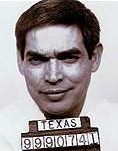 Juan Raul Garza
Murderer · USA / Mexico · 1990
Juan Raul Garza was executed by lethal injection by the U.S. Government at Indi…
8 victims
Juan Raul Garza
Murderer · USA / Mexico · 1990
Juan Raul Garza was executed by lethal injection by the U.S. Government at Indi…
8 victims
- Gender
- male
- Country
- United Kingdom/Australia
- Location
- United Kingdom/Australia
- Date of birth
- July 30, 1853
- Age at first offence
- 38
- Characteristics
- parricide, motive unknown, escape
- Victim profile
- His wife Marie and their four children / His second wife, Emily Mather
- Method of murder
- Beating with an axe
- Date(s) of murder
- 1891 - 1892
- Years active
- 1891–1892
- Date of arrest
- March 11, 1892
- Status
-
Executed
Executed by hanging in the Melbourne Gaol on May 23, 1892
Overview
Frederick Bailey Deeming (30 July 1853 – 23 May 1892) was an English-born Australian murderer.
Background
Deeming was born in Kent, England, of respectable parents. He ran away to sea at 16 and afterwards began a long career of crime, largely thieving and obtaining money under false pretences. Most of his time was spent in Australia and South Africa, but he was in England in February 1890, when he contracted a bigamous marriage with a Miss Matheson whom he afterwards deserted; he already had a wife and three children. A fourth child was born.
The offence
Rainhill, Merseyside (wife and children)
In July 1891, Deeming murdered his wife and children at Rainhill, Merseyside. He buried the bodies under the floor of the house he had rented and covered them with cement. He explained their disappearance by saying that his wife was his sister who had been staying with him, and had now gone to join her husband at Port Said.
Windsor, Victoria (wife)
In September, Deeming married a Miss Mather and took her to Melbourne, arriving in December. He rented a house in the suburb of Windsor and murdered his wife on about 24 December 1891. He buried her under the hearthstone of one of the bedrooms and again covered the body with cement. He paid a month’s rent in advance, early in January spent some time in Melbourne and Sydney, where he became engaged to be married to another woman, and then went to Western Australia with the understanding that she would follow him.
Investigation
On about 3 March 1892, a new tenant at the Windsor house complained of a bad smell. The hearthstone was raised and the body was found. In the meantime, by means of forged testimonials, Deeming had obtained a position at Southern Cross. As part of the preparation of his house for his new bride, he purchased a barrel of cement.
Police inquiries led from Melbourne to England, where it was discovered that Deeming had committed other murders. The horrifying story of Deeming’s crimes first came to light when police were called on March 3, 1892 to investigate a “vile smell” emanating from a house at number 57 Andrew Street in Windsor, a Melbourne suburb. Beneath a hearthstone of the fireplace in the unoccupied dwelling, uniformed police unearthed the decomposing body of a young woman about 30 years old embedded in cement. A post-mortem revealed that her throat had been cut and that she had been dead for about three months. There was no sign of blood anywhere in the house.
The two detectives assigned to the case were Det. Sgts. William Considine and Henry Cawsey. They checked the cottage’s previous tenant. The letting agent told them that the premises had been leased to a man named Druin. A local iron-monger who had delivered some cement, a broom, trowel, closet pan and a spade to Druin a few weeks earlier described him as being in his mid-30s, fair haired with a fair reddish beard and a large distinctive moustache and was of medium height and slight build. The iron-monger noticed that the flamboyant Mr. Druin dressed with a lot of jewelry and spoke loudly with a Lancashire, England accent. Tracing a torn luggage ticket found in the house, Considine and Cawsey discovered that Mr. Druin had arrived in Melbourne from the United Kingdom on Dec. 9, 1891, on the passenger vessel Kaiser Wilhelm II accompanied by his young wife, Emily. He had traveled under the name Albert Williams.
When questioned, other passengers recollected the loud, boasting, oafish behavior of Mr. Williams and his fictitious adventures. He repeatedly offended the ship’s crew by accusing them of stealing his valuables. Suspecting that the putrefying corpse in the cement beneath the fireplace in Windsor was that of Emily Williams, the detectives issued a nationwide alert for Albert Williams. A description of him and his unusual characteristics was wired to every police station in Australia.
An employee of a coastal shipping company told police of having seen a man answering to the missing Williams’ description boarding a vessel that sailed Jan. 23 from Melbourne to Perth in Western Australia. Police issued a “WANTED” poster to every settlement in Western Australia. The poster went out for Baron Swanston, who was found and had taken a job as the engineer in charge of machinery at the Fraser Gold Mine. Deeming was arrested at about 1:00 p.m. on March 14, 1892. As he was handcuffed, Deeming said: “I shall say nothing. I am innocent. I have never been to Windsor to the best of my knowledge. I do not know where it is.” He then added, “My name is not Williams.” The arresting trooper, PC Williams replied, “I can’t help that,” as he loaded him into the wagon to take him to jail.
The investigation then focused on Rainhill in England. Local police inquiries led them to the Rainhill newsagency, which was owned and operated by a Mrs. Mather. She was the mother of the dead Emily Williams-Deeming found under the fireplace in Windsor, Victoria. Liverpool police visited Dineham Villa and broke in, encountering a pungent smell identifiable as the odor of death. Policemen retched as they made their way to the source of the smell. After they pulled the fireplace apart with crowbars and shovels, they removed the hearthstones to find the bodies of a woman and two children, all in an advanced state of decomposition. The corpses were wrapped in oilcloth. The woman lay upon her back, while the two children were turned with their faces downward, lying one on each side of her. They found another two children embedded in cement, including an infant and a small girl lying at the woman’s feet. Police found a book with the bodies in which the name Deeming had been crossed out and Williams added.
At the Rainhill inquest into their deaths two days later, the coroner surmised that the nine-year-old girl had woken from her sleep as the murderer was silently going about his business and had been strangled to keep her quiet. Two distressed men from Liverpool identified the woman, formerly Marie James, and the children as the wife and family of their brother, Frederick Deeming.
Arrest and transport
Deeming had arrived from England in 1881. Four years later, he was operating a gas fitting shop in Sydney. He lived with his English wife Marie and their two baby daughters in a house they had bought in the inner Sydney suburb of Petersham. When his gas fitting shop burned and the insurance money fell short, he resorted to petty theft, including raiding his client’s gutterings of lead and selling it as scrap. Irate customers besieged him every time it rained. Others said Deeming was an expert at drawing unwanted attention. He served a short jail stint after mouthing off in a bar that he had given false evidence in bankruptcy court. Those who remembered the Deemings described Deeming’s wife as not like “Emily Williams,” claiming she was older, shorter and with a much darker complexion, implying two Mrs. Deemings.
With Deeming locked up in Southern Cross awaiting extradition to Melbourne to face a murder charge, detectives tried to find the missing Mrs. Deeming and the children. The only lead was a crumpled up invitation found in the house to a dinner given by Albert Williams at the Commercial Hotel, Rainhill, a village 14 kilometers east of Liverpool, England. Considine and Cawsey telegraphed Lancashire police requesting investigation of the dinner.
Deeming was traced to Southern Cross, arrested, and taken to Melbourne. Furious demonstrations against him were made on the journey to Perth, and again on the way to Albany.
Deeming left Southern Cross in the charge of three armed constables for the five-day train trip to Perth. The train stopped overnight in different towns. He fainted twice on the journey and could not sleep or eat. A strict watch was kept over him day and night, and the handcuffs were never removed.
When Deeming arrived in York, a crowd greeted him. As he stepped from the train under close guard, he raised his chained arms and said, “Ladies and gentlemen, you need not look at me. I am not guilty, but I have been victimized.” When the train moved off, he smiled at the glaring crowd. At Perth, instead of disembarking at Perth Central Railway station, he was taken off at the nearby Lord St. Crossing, placed in a waiting van, and taken to the Waterside Lockup.
At the lockup, an inventory was taken of a trunk filled with Deeming’s possessions. It included a silver case with “Emily” engraved on the outside with one pair of gloves inside. There was also a double photo frame containing two photos: one of Deeming and a little girl about six years old, and the other of a family group of a father, mother and three children. A pocketbook contained a small timetable of trains to and from Rainhill and St. Helen’s Junction. Other items included one small battle-axe with a very sharp blade, one master mason’s apron with an F.B.D. monogram, and a book of Common Prayer with “December 26th 1889 Emily,” written on the leaf of the cover.
Deeming’s extradition hearing took place on March 24, 1892, in the Perth Police Court. He held frequent conferences with his counsel, Richard Haynes, QC. Det. Sgt. Cawsey waited as Deeming’s lawyer fought extradition on grounds that Deeming could not have a fair trial in Melbourne because of the angry mob outside the Perth courthouse. The extradition order was granted, and Deeming was placed in the custody of Det. Cawsey.
At 11:00 a.m. on March 27, 1892, Deeming, Cawsey, three armed police officers, and two reporters boarded the train at Midland Junction on the outskirts of Perth for the 250-mile overnight rail trip to Albany to rendezvous with the S.S. Ballarat. The ship was traveling to Melbourne. The train’s first stop for coal and water was at York, 60 miles outside of Perth, where a huge angry crowd formed. At another stop, in Beverley, Deeming was smuggled into a room in the railway station; when the crowd found out, they threatened to bash the door down and drag him away.
Deeming then had a fit and began to struggle and kick so violently that it took four men to hold him down for the full half-hour of spasms. He had two similar fits shortly afterwards. At Albany, the train stopped about 50 yards from the prison to avoid further scuffle. Deeming was transferred to the care of the Prison Governor, Mr. McGovern, without fuss. Once inside the prison, Deeming cheered up, protested innocence, and joined in games of draughts with his keepers. He received a medical check-up showing he was in perfect health apart from a lot of anxiety and fear.
Deeming and his escorts stayed overnight, with the plan to escort him to the S.S. Ballarat to Adelaide, and then train to Melbourne. Det. Cawsey guarded him, along with Constable Williams, who had arrested him at Southern Cross, and a Det. Smyth from Albany. Deeming was alternately handcuffed to the three for the entire journey.
During hourly surveillance, the guards found Deeming’s large moustache missing. In Deeming’s prison clothes they found a piece of a glass bottle. Inside the cell, they found the neck of a medicine bottle. The smaller piece of glass had been broken off and used as a razor. The guards discovered that 75 percent of the moustache hairs had been plucked out by the roots. The glass had been used chiefly to cut the hair above the corners of his mouth. Det. Cawsey was concerned because the moustache had been one of the chief attributes by which he had been tracked and could clinch the prosecution’s case. It was concluded no one had helped Deeming and that he had picked up the piece of glass in the exercise yard.
When the S.S. Ballarat dropped anchor at Larges Bay in South Australia two days later, the team guarding Deeming was told that a large and aggressive crowd had already formed at the Port Adelaide wharf. The guards decided to continue the voyage to Melbourne rather than risk abduction and lynching on the train journey from Adelaide to Melbourne. During the sea journey Deeming complained: “They might wait until I’m found guilty,” and then added, “Many innocent men have been hanged. I’m not afraid to die. If I have to die I’ll die like a man, but first I’ll make sure some revelations that will astonish the world.”
At 9:00 a.m. on April 2, 1892, the Ballarat anchored in Port Phillip Bay and Deeming was taken to Police Court. He was formally charged with the murder of Emily Williams. When asked his name, he refused to answer and was charged as Albert Williams. The trial began in Melbourne on May 2, 1892, with the accused being charged in the name of Albert O. Williams.
Trial
The defense was that Deeming was not guilty on grounds of insanity. Six doctors examined him, including some as many as six times, but none could state unequivocally that he was insane. The trial lasted four days. Doctors suggested he suffered from epileptic fits. He was infected with venereal disease, which may have impaired his mind; he was described as moody and loquacious and as fantasising about his past.
Deeming claimed his dead mother had told him to kill Emily Mather and that he sometimes had been overwhelmed by an irresistible impulse to slaughter the current lady in his life.
Dr. Shields, a prison physician, said: “I have frequently conversed with him but cannot believe anything he says.” On whether Deeming knew the difference between right and wrong, Shield said Deeming told him, “That stealing for example, was a matter of conscience. Murder was also permissible in certain circumstances.” Shield further said Deeming told him, “He said that Deeming had told him that several times he had gone out with a revolver searching for women who had given him venereal disease, intending to kill them.” Deeming believed in their extermination.
As the trial reached its conclusion, Deeming took the stand, ignoring strong advice from his lawyer. Deeming’s statement included the following:
“I don’t think there has ever been a man brought into court that has ever been prejudged more than I have been. Before I arrived in the colony my photographs were distributed about the city of Melbourne, in paper shops, in jewelers’ shops, and it is from these photographs I have been identified. I will ask the jury themselves if it would be possible to go and pick out 200 people in Melbourne who would not execute me without the option of a trial.”
He denied that his wife Emily was actually dead and said:
“And my only comfort is in knowing that I have not done it and that the woman is not dead. And that alone will comfort me, let the end be what it may.”
He then boasted:
“It is not giving up this life I fear - not the slightest. I have gone through the world and after the dangers I have faced I am not afraid to give up my life. I have been on the Zambezi among the black fellows and have been battered about the head and gone among bears and gone into lion’s caves and brought them out alive, as it has been stated in the papers, and now they are alive in the hands of a man in England.”
Sentencing
Deeming was found guilty and was hanged on 23 May 1892.
Appeals
After a failed appeal to the Privy Council, Deeming was hanged in the Melbourne Gaol.
Outcome
Frederick Bailey Deeming was executed by hanging in the Melbourne Gaol on 23 May 1892.
Aftermath
On the execution day, a crowd of 12,000 gathered and cheered when Deeming was declared dead. His body was buried in an unmarked grave at the (Old) Melbourne Gaol on 24 May 1892 and later transferred, with other bodies of hanged criminals, to another unmarked grave site at Pentridge Gaol.
Timeline
- July 1891 — Deeming murdered his wife and children at Rainhill, Merseyside, buried the bodies under the floor, and covered them with cement.
- 22 Sep 1891 — Deeming, alias Williams, married Emily Mather at Rainhill.
- Dec 1891 — Deeming and his new wife arrived in Melbourne aboard the Kaiser Wilhelm II; he rented a house in Andrew Street, Windsor, and purchased cement and tools from an ironmongery.
- About 24 Dec 1891 — Deeming murdered his wife in Windsor and buried her under the hearthstone, covering the body with cement.
- January to March 1892 — Deeming operated under several aliases, posing as an engineer, traveled to Sydney under the name of Baron Swanston, and planned for another marriage.
- 3 Mar 1892 — Discovery of a female body (Emily) in a house in Windsor.
- 6 March 1892 — The suspect was established as the last occupant of the house, Albert Williams; the police identified several aliases used by the suspect.
- 7 March 1892 — A warrant was issued for the arrest of “Albert Williams”.
- 9 March 1892 — Notices appeared in the Victorian Government Gazette and the Victoria Police Gazette offering a reward of £100 for information leading to the arrest and conviction of Albert Williams, with a description included.
- 11 Mar 1892 — “Williams”, now known to be Frederick Bailey Deeming, was arrested in the mining town of Southern Cross, Western Australia, in the disguise of Baron Swanston.
- 14 Mar 1892 — Deeming was arrested at about 1:00 p.m. at Southern Cross and said: “I shall say nothing. I am innocent. I do not know where it is.” and “My name is not Williams.”
- March 16, 1892 — The discovery of five bodies in England was on March 16, 1892.
- 24 Mar 1892 — Extradition hearing took place in Perth Police Court.
- 27 Mar 1892 — Deeming and escorts boarded the train at Midland Junction for travel to Albany to rendezvous with the S.S. Ballarat.
- 2 Apr 1892 — The S.S. Ballarat anchored in Port Phillip Bay and Deeming was whisked away to Police Court; he was charged with the murder of Emily Williams.
- 2 May 1892 — The trial concluded; the jury delivered a verdict of “Guilty” after taking one hour and twenty minutes to deliberate; Deeming was sentenced to death by hanging.
- 23 May 1892 — Deeming was hanged in the Melbourne Gaol.
- 24 May 1892 — Deeming’s body was buried in an unmarked grave at the (Old) Melbourne Gaol.
Other details
Deeming arrived in Melbourne by ship after his arrest process completed, with his arrival greeted by angry crowds. Deeming was traced to Southern Cross, and he was arrested and taken to Melbourne. During the transport to Perth and Albany, demonstrations against him were made. Deeming fainted twice and could not sleep or eat during the train journey to Perth; handcuffs were never removed.

Spotted an error, or have more information about this case?