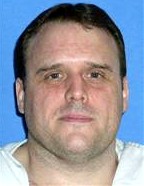
Patrick Bryan Knight
Murderer Brian Kevin Rosenfeld
Murderer · USA · 1985
Brian Kevin Rosenfeld Brian Kevin Rosenfeld was sentenced to three concurrent l…
23 victims
Brian Kevin Rosenfeld
Murderer · USA · 1985
Brian Kevin Rosenfeld Brian Kevin Rosenfeld was sentenced to three concurrent l…
23 victims
 Russell Ellwood
Murderer · USA · 1991
Russell Ellwood was a former taxi driver. Authorities suspected him of killing…
20 victims
Russell Ellwood
Murderer · USA · 1991
Russell Ellwood was a former taxi driver. Authorities suspected him of killing…
20 victims
 Robert Martines Perez
Murderer · USA · 1994
Name: Robert Martines Perez · Other name used in proceedings: Robert Martinez P…
15 victims
Robert Martines Perez
Murderer · USA · 1994
Name: Robert Martines Perez · Other name used in proceedings: Robert Martinez P…
15 victims
 Billy Frank Vickers
Murderer · USA · 1993
Billy Frank Vickers Vickers was executed by lethal injection in Texas on Januar…
14 victims
Billy Frank Vickers
Murderer · USA · 1993
Billy Frank Vickers Vickers was executed by lethal injection in Texas on Januar…
14 victims
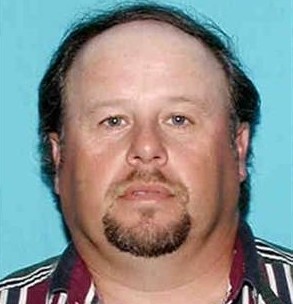 Ronald Dominique
Serial killer · USA · 1997
Ronald Joseph Dominique (born 1964) was an American serial killer from the Bayo…
23 victims
Ronald Dominique
Serial killer · USA · 1997
Ronald Joseph Dominique (born 1964) was an American serial killer from the Bayo…
23 victims
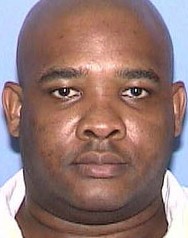 Shannon Charles Thomas
Murderer · USA · 1993
Shannon Charles Thomas was executed by lethal injection in Texas on November 16…
3 victims
Shannon Charles Thomas
Murderer · USA · 1993
Shannon Charles Thomas was executed by lethal injection in Texas on November 16…
3 victims
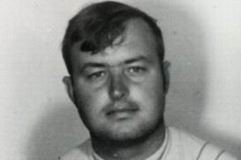 Gerard Schaefer
Serial killer · USA · 1969
Gerard John Schaefer was born in Wisconsin on March 25, 1946. He was the oldest…
9 victims
Gerard Schaefer
Serial killer · USA · 1969
Gerard John Schaefer was born in Wisconsin on March 25, 1946. He was the oldest…
9 victims
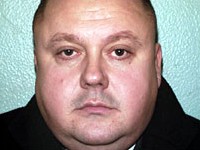 Levi Bellfield
Murderer · United Kingdom · 2003
Levi Bellfield (born 17 May 1968) was a British murderer. He was described by p…
3 victims
Levi Bellfield
Murderer · United Kingdom · 2003
Levi Bellfield (born 17 May 1968) was a British murderer. He was described by p…
3 victims
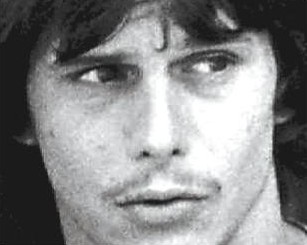 Walter Milton Correll
Murderer · USA · 1985
Walter Milton Correll Jr. was convicted of capital murder and robbery in Virgin…
1 victim
Walter Milton Correll
Murderer · USA · 1985
Walter Milton Correll Jr. was convicted of capital murder and robbery in Virgin…
1 victim
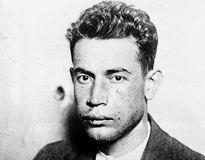 José de León Toral
Murderer · Mexico · 1928
José de León Toral (Matehuala, 23 December 1900 — Mexico City, 9 February 1929)…
1 victim
José de León Toral
Murderer · Mexico · 1928
José de León Toral (Matehuala, 23 December 1900 — Mexico City, 9 February 1929)…
1 victim
- Gender
- male
- Country
- USA
- Location
- Randall County, Texas, USA
- Date of birth
- January 12, 1968
- Age at first offence
- 23
- Characteristics
- abduction, robbery
- Victim profile
- Walter, 56, and Mary Ann Werner, 58
- Method of murder
- Shooting
- Date(s) of murder
- August 27, 1991
- Years active
- 1991
- Date of arrest
- —
- Status
-
Executed
Executed by lethal injection in Texas on June 26, 2007
Case record
Defendant
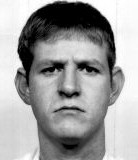
Patrick Bryan Knight (also known as “Dead Man Laughing”).
Victims
Walter Werner and Mary Ann Werner.
Co-defendant
Robert Bradfield.
Timeline
- August 26, 1991 — Walter and Mary Ann Werner left their Amarillo home for work; Patrick Knight and a companion, Robert Bradfield, broke into the couple’s home after the couple left; Knight lived in a trailer house next door to the Werners’ home.
- August 27, 1991 — Knight and Bradfield drove around in the Werners’ vehicles attempting to obtain the Werner’s money.
- September 6, 1991 — A Randall County grand jury indicted Knight for capital murder.
- 1991 — Knight was arrested and incarcerated in the Randall County Jail from the time of his arrest; Knight confessed and led officers to the location of the victims’ bodies during an investigation into the Werners’ disappearance.
- 1993 — Knight was moved to death row.
- September 17, 1993 — Knight was found guilty of capital murder.
- September 20, 1993 — Following a separate punishment hearing, Knight was sentenced to death.
- March 6, 1996 — The Texas Court of Criminal Appeals affirmed Knight’s conviction and sentence.
- March 10, 1999 — The Texas Court of Criminal Appeals denied writ of habeas corpus.
- March 15, 1999 — Knight filed a preliminary federal petition for writ of habeas corpus.
- May 12, 1999 — Knight filed an amended federal habeas petition.
- September 27, 2004 — The federal district court denied Knight’s federal habeas petition.
- October 27, 2004 — Knight filed an application for certificate of appealability.
- November 23, 2004 — The federal district court denied certificate of appealability.
- January 12, 2006 — The 5th Circuit Court granted in part and denied in part Knight’s request for a certificate of appealability.
- June 30, 2006 — The 5th Circuit Court affirmed the district court’s denial of federal habeas relief.
- August 2, 2006 — The 5th Circuit Court denied Knight’s petition for rehearing.
- November 7, 2006 — Knight petitioned the U.S. Supreme Court for a writ of certiorari.
- February 20, 2007 — The Supreme Court denied Knight’s petition for certiorari.
- June 26, 2007 — Knight was executed by lethal injection in Texas; he was pronounced dead at 6:21 p.m. Tuesday evening (execution occurred after 6 p.m.).
Background
Knight lived in a trailer house next door to Walter and Mary Ann Werner in Amarillo.
Knight grew up in Slidell, La., and was known in prison as the “Insane Cajun.”
The offence
Entry and restraint
After Walter and Mary Ann Werner left their Amarillo home for work on August 26, 1991, Patrick Knight and a companion, Robert Bradfield, broke into the couple’s home.
When the Werners arrived at home that evening, Knight and Bradfield locked them in the basement of their home.
Attempt to obtain money in the victims’ vehicles
The next day, Knight and Bradfield drove around in the Werners’ vehicles attempting to obtain the Werner’s money.
Abduction, forced travel, and execution-style killing
Around midnight on Tuesday, Knight bound, gagged, and blindfolded Walter and Mary Ann Werner, forced them into their own van, and drove them to a location in the country about four miles away from their home.
Knight made them get out of the van and kneel, and then he shot each of them in the back of the head.
Knight dragged their bodies into a ditch on the side of the road and returned to his trailer house and went to sleep.
Investigation
During an investigation into the Werners’ disappearance, law enforcement officers questioned Knight.
Knight initially denied involvement but later confessed and led the officers to the location of the victims’ bodies.
Knight had been incarcerated in the Randall County Jail from the time of his arrest in 1991 until he was moved to death row in 1993.
Arrest and custody
Knight’s incarceration in the Randall County Jail lasted from his arrest in 1991 until he was moved to death row in 1993.
Knight was kept isolated in a single cell for almost the entire two years he was in jail prior to trial.
Cindy Risley, a jailer with the Randall County Jail, developed a personal relationship with Knight, who began calling Risley “Mom”.
Punishment phase evidence
During the punishment phase, the State presented evidence including the following:
- Knight was on probation for the burglary of a grocery store at the time of the murders.
- Knight stole money from a convenience store cash register while the clerk was away from the register.
- On the day of the murders, Knight went to Ted Ramirez’s home and threatened to kill him.
- On the same day, Knight went to Deborah Martin’s home and told her he would “get” her and her boyfriend for accusing him of stealing.
- While in jail awaiting trial, Knight told other inmates that he planned to avoid prison by pretending he was insane when he killed the Werners, and he asked other inmates for advice on what kinds of statements and behavior could result in a diagnosis of insanity.
- Knight had problems getting along with other inmates in the jail and threatened to kill his cellmates with a shank made from a coat-hanger.
- Knight hid razor blades, scissors, sharpened paper clips, and rope in his cell.
- Knight threatened to kill himself and others rather than be sent to prison, and he staged a suicide attempt while in jail.
- A jury list was found in his cell.
- There was testimony that Knight’s next-door neighbor believed several head of cattle had been killed as a result of Knight’s recklessly firing a gun at objects on his neighbor’s property, and that Knight was responsible for destroying part of a fence between their properties.
Knight’s counsel did not call any witnesses at the punishment phase, but elicited mitigating evidence through cross-examination of the State’s witnesses, including that no violent acts had been observed against anyone else and that Knight’s prior crimes did not involve physical harm to anyone, among other points described in the federal appellate decision.
Trial
Charges and verdict
- The September 6, 1991 indictment alleged capital murder.
- Knight was found guilty of capital murder on September 17, 1993.
Sentence
- Following a separate punishment hearing, Knight was sentenced to death on September 20, 1993.
Sentencing
Knight received a death sentence on September 20, 1993.
Appeals
Texas Court of Criminal Appeals
State habeas proceedings
- April 22, 1997 — Knight filed a state application for writ of habeas corpus.
- March 10, 1999 — The Texas Court of Criminal Appeals denied writ.
Federal habeas proceedings
U.S. Supreme Court
Knight v. Quarterman (5th Circuit)
Knight’s appeal included consideration of:
- whether the prosecution suppressed mitigating evidence on future dangerousness (Brady claim),
- whether counsel rendered ineffective assistance at both phases by failing to investigate and present evidence of mental condition and other mitigating circumstances,
- and whether the trial judge’s decision excluding a prospective juror violated his rights.
The 5th Circuit affirmed denial of federal habeas relief.
Outcome
Execution and final statement
Patrick Knight was executed by lethal injection in Texas on June 26, 2007.
He was pronounced dead at 6:21 p.m.
In his final statement, Knight said:
“I said I was going to tell a joke,” Knight said during his final statement. “Death has set me free. That’s the biggest joke (because) I deserve this.
“And the other joke is I am not Patrick Bryan Knight and ya’ll can’t stop this execution now,” he said.
Another version of the same statement included:
“I said I was going to tell a joke,” he said Tuesday evening, strapped to the Texas death chamber gurney for lethal injection. “Death has set me free. That's the biggest joke. I deserve this.”
“And the other joke is that I am not Patrick Bryan Knight and y'all can't stop this execution now,” he added. “Go ahead. I'm finished.”
Execution-room remarks attributed to staff
Texas Department of Criminal Justice spokeswoman Michelle Lyons said officials fingerprinted the inmate to ensure identity.
Randall County Sheriff Joel W. Richardson said he witnessed Knight’s execution.
Richardson said:
“Patrick Knight started that nightmare.
"Mary and Walter Werner will not be brought back because of anything that happened here tonight, but Patrick Knight certainly won't be able to do this to anybody else again... And despite all the hype about his joke, it turns out he's not much of a comedian. He's simply an executed cold-blooded killer.”
Other details
Prior criminal history and probation
Knight was arrested in 1989 for burglary of a building and given a four-year probated sentence, which was ultimately dismissed in lieu of his current incarceration and death sentence for capital murder.
Knight was previously incarcerated ninety days in Randall County for criminal mischief.
Trial-court and habeas counsel references
The federal appellate decision described claims about:
- Deputy Cindy Risley’s testimony and Knight’s relationship with her,
- trial counsel’s investigation and decision not to present witnesses at the punishment phase,
- and the exclusion of prospective juror David Johnson.
Additional factual references in proceedings
The federal appellate decision included discussion that Knight’s lead trial counsel, Jon Waggoner, traveled to New Orleans in early August 1993 to interview people and secure medical and educational records, and that Dr. J. Randall Price examined Knight in early September 1993.
The appellate decision also described findings about Knight’s mental health evaluations and counsel’s strategic decision-making at the punishment phase, as well as the procedural handling of Knight’s jury-related claims on voir dire.
Spotted an error, or have more information about this case?