William Heilwagner
Murderer? Will Purvis
Murderer? · USA · 1883
Will Purvis was a member of the White Caps, a group described as having foundat…
1 victim
Will Purvis
Murderer? · USA · 1883
Will Purvis was a member of the White Caps, a group described as having foundat…
1 victim
 Richard Allen Williams
Murderer? · USA · 1992
Boone County Prosecutor Kevin Crane dismissed the charges in August 2003 after…
10 victims
Richard Allen Williams
Murderer? · USA · 1992
Boone County Prosecutor Kevin Crane dismissed the charges in August 2003 after…
10 victims
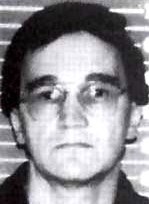 James DeBardeleben
Murderer? · USA · 1965
James DeBardeleben (James Mitchell “Mike” DeBardeleben), born March 20, 1940, w…
8 victims
James DeBardeleben
Murderer? · USA · 1965
James DeBardeleben (James Mitchell “Mike” DeBardeleben), born March 20, 1940, w…
8 victims
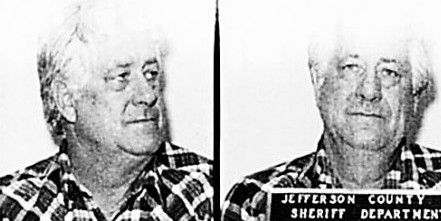 Thomas McCormick
Murderer? · USA · 1975
Thomas McCormick recruited homeless men from a Denver church mission to work on…
8 victims
Thomas McCormick
Murderer? · USA · 1975
Thomas McCormick recruited homeless men from a Denver church mission to work on…
8 victims
 Todd Warzecha
Murderer? · USA · 1972
Todd Warzecha was a prime suspect in two unsolved Mid-Michigan murders. Michiga…
6 victims
Todd Warzecha
Murderer? · USA · 1972
Todd Warzecha was a prime suspect in two unsolved Mid-Michigan murders. Michiga…
6 victims
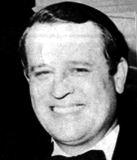 Dr. John Robert Hill
Murderer? · USA · 1950
Dr. John Robert Hill was a prominent Houston surgeon. His wife was Joan Robinso…
5 victims
Dr. John Robert Hill
Murderer? · USA · 1950
Dr. John Robert Hill was a prominent Houston surgeon. His wife was Joan Robinso…
5 victims
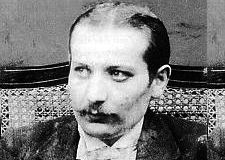 Mathias Kneibl
Murderer · Germany · 1900
Mathias Kneißl was known as Robber Kneißl (in German Räuber Kneißl , in Austro-…
2 victims
Mathias Kneibl
Murderer · Germany · 1900
Mathias Kneißl was known as Robber Kneißl (in German Räuber Kneißl , in Austro-…
2 victims
 William Parente
Murderer · USA · 2009
Parente killed his family and died by suicide from cutting in the Sheraton hote…
3 victims
William Parente
Murderer · USA · 2009
Parente killed his family and died by suicide from cutting in the Sheraton hote…
3 victims
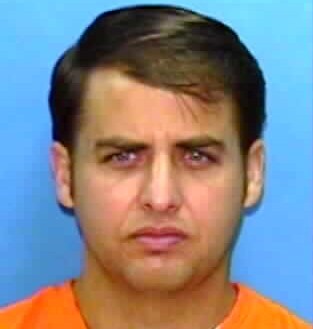 Anthony Braden Bryan
Murderer · USA · 1983
Anthony Braden Bryan was the petitioner and appellant in multiple proceedings,…
1 victim
Anthony Braden Bryan
Murderer · USA · 1983
Anthony Braden Bryan was the petitioner and appellant in multiple proceedings,…
1 victim
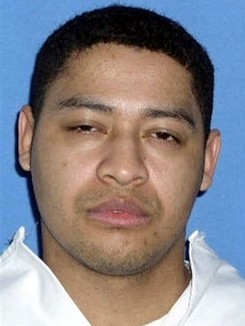 Kenneth Parr
Murderer · USA · 1998
Name: Kenneth Parr · TDCJ Number: 999312 · Date of birth: 01/16/1980 · Age at r…
1 victim
Kenneth Parr
Murderer · USA · 1998
Name: Kenneth Parr · TDCJ Number: 999312 · Date of birth: 01/16/1980 · Age at r…
1 victim
 Reginald Blanton
Murderer · USA · 2000
Name: Reginald Blanton TDCJ Number: 999395 Date of birth: 6/3/1981 Race: Black…
1 victim
Reginald Blanton
Murderer · USA · 2000
Name: Reginald Blanton TDCJ Number: 999395 Date of birth: 6/3/1981 Race: Black…
1 victim
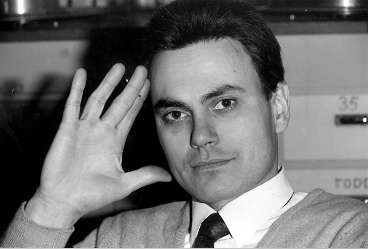 John Ausonius
Murderer · Sweden · 1991
John Ausonius (born Wolfgang Alexander Zaugg on July 12, 1953), also known in t…
1 victim
John Ausonius
Murderer · Sweden · 1991
John Ausonius (born Wolfgang Alexander Zaugg on July 12, 1953), also known in t…
1 victim
- Gender
- male
- Country
- USA
- Location
- Davenport, Iowa, USA
- Date of birth
- 1833
- Age at first offence
- 48
- Characteristics
- miscarriage of justice, murder for hire, rape
- Victim profile
- Dora Heilwagner ( his daughter-in-law )
- Method of murder
- Shooting
- Date(s) of murder
- September 1881
- Years active
- 1881
- Date of arrest
- —
- Status
-
Executed
Executed by hanging at Rock Island, Illinois, on March 24, 1882; the case later involved a confession by Otto Heilwagner to the murder of Dora Heilwagner, and William Heilwagner had been innocent.
Name
William Heilwagner
Background
Dora Heilwagner was shot and killed on a farm eleven miles north of the city, on the Happy Hollow Road. Suspicion soon centered on the only other person known to have been at her farmhouse at the time: her elderly father-in-law, William Heilwagner, a Bavarian immigrant who hated her for her wild behavior.
The offence
Dora Heilwagner was shot and killed.
The circumstances described a chain of circumstantial evidence wrapped around William Heilwagner, and it was said that the evidence included the defleshed skull of the victim.
Investigation
Early the next morning after the murder, it was demonstrated that Heilwagner shared news of his daughter-in-law's death before anyone else knew she was dead. The exhibits included the defleshed skull of the victim.
Trial
William Heilwagner’s trial took place a few months later and lasted for a few days.
The prosecution established that he had visited the home of his daughter-in-law on the evening of the murder and that he had been in a rage over a dispute that had arisen between them concerning the loss of some milk. The evidence included the testimony of the defendant’s 17-year-old daughter, who said that her father was drunk on the day of the murder and was railing against Dora, calling her "the low livedest thing around."
The defense attorney repeatedly pointed to the lack of direct evidence and the lack of witnesses to prove the state’s theory, but this did not avail.
A conviction and death sentence were imposed.
Appeals
A higher court examined the proceedings for flaws, found none, and rendered its approval.
Sentencing
He was convicted and sentenced to death.
Outcome
William Heilwagner was hanged at Rock Island, Illinois, in March, 1882, before a group consisting largely of reporters. His last words were:
“Gentlemen, I am innocent of this crime.”
Aftermath
Ten years passed. In a lodging house in Quincy, Illinois, another man, Otto Heilwagner, sat down and wrote a long and detailed confession to the crime for which William Heilwagner had been hanged. The confession was to the murder of Dora Heilwagner and said that she was murdered because she was an adulteress.
He left the note in his room, then took himself to a nearby bridge, threw himself into the water, and drowned. The suicide was Otto Heilwagner, who was described as the old man’s son and the husband of the victim. The man that old William Heilwagner sacrificed himself to save was Otto Heilwagner.
Charles Edward Russell was described as having become convinced that the correct result was reached and that Heilwagner was guilty. Russell, a reporter for Joseph Pulitzer’s New York World, had decided to dig into the case. He went to the jail where Heilwagner was being housed and tried to interview the old man, looking for an exclusive and something to explain doubts about the evidence. All the reporter could elicit from the condemned was:
“I just go weed my onions.”
Heilwagner refused to cooperate with any effort to save him. He refused to be visited by a minister. He was unrepentant, uncommunicative.
Russell heaped blame upon himself for the execution of an innocent:
“If I had been expert at my trade I might have saved that man.”
Russell came to firmly oppose the death penalty because of the risk of executing people who were not guilty. He wrote:
“The chance is too terrible,”
“We take it in one case in ten when we condemn men to death. Shall we keep taking it?”
Timeline
- September of 1881 — The typical peace and quiet of Davenport, Iowa, were shattered by news of murder; Dora Heilwagner was shot and killed on the Happy Hollow Road.
- January 25, 1882 — "Rock Island. The Murder Trial. Wm. Heilwagner Tried for the Murder of Dora Heilweigner on the Night of the 6th of September Last--The Testimony of the Prisoner's Daughter," Davenport Weekly Gazette, Jan. 25, 1882.
- Dec. 10, 1928 — "Once When the Wrong Man Was Hanged," The Davenport Democrat and Leader, Dec. 10, 1928.
- March 24, 1882 — William Heilwagner was executed by hanging at Rock Island, Illinois.
- Ten years later — In a lodging house in Quincy, Illinois, Otto Heilwagner wrote a long and detailed confession; he then left the note, went to a nearby bridge, threw himself into the water, and drowned.
- 2003 — Robert Miraldi published The Pen is Mightier: The Muckraking Life of Charles Edward Russell (Palgrave MacMillan, 2003).
People
- Dora Heilwagner — victim; was shot and killed.
- William Heilwagner — defendant; Dora’s elderly father-in-law; Bavarian immigrant.
- Otto Heilwagner — later confessed; described as William Heilwagner’s son and Dora’s husband.
- William Heilwagner’s 17-year-old daughter — testified that her father was drunk and called Dora "the low livedest thing around."
- Charles Edward Russell — reporter for Joseph Pulitzer’s New York World; investigated the case; tried to interview Heilwagner in jail.
- Joseph Pulitzer — associated with the New York World via ownership described.
- Robert Miraldi — author of The Pen is Mightier: The Muckraking Life of Charles Edward Russell.
Other details
Heilwagner refused to be visited by a minister and was described as unrepentant and uncommunicative. Russell and others associated with the case became convinced that Heilwagner was guilty, and Russell and many others were horrified after the later confession and suicide.

Spotted an error, or have more information about this case?