David Lawrie
Mass murderer Gameel Al-Batouti
Mass murderer · USA · 1999
Gameel Al-Batouti (also rendered “Gamil ElBatouty” or “El Batouty” in U.S. offi…
216 victims
Gameel Al-Batouti
Mass murderer · USA · 1999
Gameel Al-Batouti (also rendered “Gamil ElBatouty” or “El Batouty” in U.S. offi…
216 victims
 Timothy McVeigh
Mass murderer · USA · 1995
Timothy James McVeigh (April 23, 1968 – June 11, 2001) was a United States Army…
168 victims
Timothy McVeigh
Mass murderer · USA · 1995
Timothy James McVeigh (April 23, 1968 – June 11, 2001) was a United States Army…
168 victims
 Julio Gonzalez
Mass murderer · USA · 1990
Julio Gonzalez was sentenced to 174 twenty-five-year sentences (a total of 4,35…
87 victims
Julio Gonzalez
Mass murderer · USA · 1990
Julio Gonzalez was sentenced to 174 twenty-five-year sentences (a total of 4,35…
87 victims
 David Burke
Mass murderer · USA · 1987
David Augustus Burke (May 18, 1952–December 7, 1987) was an employee of USAir,…
43 victims
David Burke
Mass murderer · USA · 1987
David Augustus Burke (May 18, 1952–December 7, 1987) was an employee of USAir,…
43 victims
 George Jo Hennard
Mass murderer · USA · 1991
George Jo Hennard carried out a mass killing at a Luby’s Cafeteria in Killeen,…
23 victims
George Jo Hennard
Mass murderer · USA · 1991
George Jo Hennard carried out a mass killing at a Luby’s Cafeteria in Killeen,…
23 victims
 Billi Jo Smallwood
Murderer · USA · 2007
Billi Jo Smallwood was sentenced to 25 years in prison on December 12, 2012, af…
2 victims
Billi Jo Smallwood
Murderer · USA · 2007
Billi Jo Smallwood was sentenced to 25 years in prison on December 12, 2012, af…
2 victims
 Kayoko Nakai
Murderer · Japan · 2000
Kayoko Nakai was 66 and ran a rival telephone dating club in Kobe at the time o…
4 victims
Kayoko Nakai
Murderer · Japan · 2000
Kayoko Nakai was 66 and ran a rival telephone dating club in Kobe at the time o…
4 victims
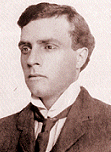 Pleasant Armstrong
Murderer · USA · 1902
Pleasant Armstrong was hanged on January 22, 1904. He was convicted of murder i…
1 victim
Pleasant Armstrong
Murderer · USA · 1902
Pleasant Armstrong was hanged on January 22, 1904. He was convicted of murder i…
1 victim
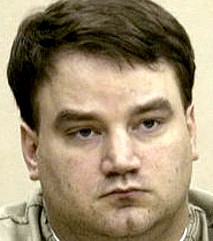 Charles McCoy
Murderer · USA · 2003
Charles McCoy Jr. was an admitted highway shooter in Ohio. His defense attorney…
1 victim
Charles McCoy
Murderer · USA · 2003
Charles McCoy Jr. was an admitted highway shooter in Ohio. His defense attorney…
1 victim
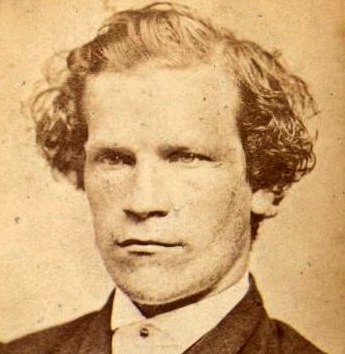 Franz Müller
Murderer · United Kingdom (on a train) · 1864
Franz Müller was a German tailor. He murdered Thomas Briggs, a City banker. On…
1 victim
Franz Müller
Murderer · United Kingdom (on a train) · 1864
Franz Müller was a German tailor. He murdered Thomas Briggs, a City banker. On…
1 victim
- Gender
- male
- Country
- USA
- Location
- Kent County, Delaware, USA
- Date of birth
- J une 29, 1961
- Age at first offence
- 31
- Characteristics
- parricide, drugs
- Victim profile
- Michelle Lawrie, 25 (his estranged wife), two of the couple's children and a neighbor's child
- Method of murder
- St abbing with knife - Fire
- Date(s) of murder
- August 6, 1992
- Years active
- 1992
- Date of arrest
- Same day (surrenders)
- Status
-
Executed
Executed by lethal injection in Delaware on April 23, 1999
Case record
David J. Lawrie was a 37-year-old convicted murderer in Delaware.
Timeline
- August 6, 1992 — After his estranged wife filed for divorce, Lawrie walked to their house, doused it with gasoline, and set it ablaze; he then broke into a bedroom where Mrs. Lawrie, their daughters, and two children Mrs. Lawrie was babysitting were hiding, stabbed Michelle Lawrie in the chest, and escaped through a window.
- Aug. 5, 1992 — Lawrie pleaded guilty to terroristic threatening in Family Court and was released with orders to have no contact with his wife.
- July 8, 1993 — A jury convicted Lawrie of four counts of murder and sentenced him to death.
- April 19, 1996 — James B. Clark, who was put to death on April 19, 1996, was identified as the last to be executed in the state before Lawrie.
- January 1996 — Billy Bailey was identified as having been executed in January 1996 by hanging.
- April 23, 1999 — Lawrie was executed early in the morning by lethal injection; he was pronounced dead at 12:17 a.m. after being injected with three drugs.
Background
Lawrie’s estranged wife filed for divorce before the murders.
Lawrie had been on death row since his 1993 conviction.
In the days leading up to the execution, Lawrie had “come to terms with it,” and he did not request a pardon.
Lawrie told his attorneys not to take the case before the Delaware Board of Pardons.
Gov. Thomas R. Carper chose not to intervene; his spokesman, Anthony Farina, stated that Carper had not intervened in any other executions since taking office.
The offence
On the morning of August 6, 1992, Lawrie broke into his estranged wife’s home in the Dover suburb Rodney Village.
He doused the house with gasoline and set it ablaze.
He then broke into a bedroom where Mrs. Lawrie was babysitting were hiding, and he stabbed Michelle Lawrie in the chest.
After the stabbing, he escaped through a window.
Lawrie set the house on fire by lighting gasoline he had poured on the floor.
Lawrie was described as having said he had been high on drugs prior to the killing.
Victims
The victims were:
- Michelle Lawrie, his estranged wife, who was 25-year-old.
- Fawn, 4-year-old.
- Tabitha, 2-year-old.
- Charles Humbertson, 3-year-old.
- Charles’ sister, Lisa Humbertson, who was 8 years old at the time and survived.
The record described that Lawrie admitted killing his estranged wife, two daughters, and another child in a home in Rodney Village on the morning of August 6, 1992.
Lisa Humbertson testified that:
- Michelle Lawrie handed her out the window to her estranged husband.
- When Michelle Lawrie tried to escape, he shoved her back inside.
When the fire occurred, Charles Humbertson, Fawn, and Tabitha died in the fire along with Mrs. Lawrie.
Lisa was treated at the hospital for minor injuries and released.
Investigation and forensic findings
A state Medical Examiner’s Office autopsy report reported:
- Michelle died of stab wounds to her chest and smoke inhalation.
- The three children died of smoke inhalation.
Deputy fire marshal Robert J. Montgomery stated:
"In my 25 years of fire investigations, this was the worst I have ever investigated," said deputy fire marshal Robert J. Montgomery. "It is a case I will never forget."
Lawrie left the fire scene and ran almost a mile to a stranger’s house, where he told the man he had just hurt his wife and kids and asked him to call police.
Lawrie surrendered without incident.
Arrest
Lawrie surrendered without incident after leaving the fire scene.
Trial
Lawrie was convicted of murder and sentenced to death.
A jury voted 9-3 that the aggravating circumstances of his crime far outweighed any mitigating factors.
Lawrie was convicted of:
- Four counts of murder (described as first-degree murder in the deaths of the children and second-degree murder for killing his wife).
Lawrie’s conviction was described as having been reached after witnesses and investigators testified in court to what Lawrie had admitted.
Sentencing
Lawrie was sentenced to death on July 8, 1993.
He had been on death row since his 1993 conviction.
Appeals and last-ditch efforts
A last-ditch effort to hold off the execution failed when the U.S. Supreme Court denied a request for an appeal earlier this week.
Lawrie’s attorney, Gary F. Traynor, stated:
- the high court refused requests for a stay of execution
- a review of the case was refused.
Execution
Lawrie was scheduled to be executed by lethal injection at the Delaware Correctional Center in Smyrna.
He was executed early on April 23, 1999, and was pronounced dead at 12:17 a.m. after being injected with three drugs.
Lawrie’s last meal included:
- two bacon cheeseburgers
- french fries
- a chocolate milkshake
Moments before his death, Lawrie said:
"I would like to thank my family and friends for being by my side all the way," he said moments before his death. "I would not have made it this far without my family."
The execution was described as occurring at Delaware Correctional Center, after protesters assembled nearby.
Aftermath
David Lawrie executed Delaware Citizens Opposed to the Death Penalty staged a rally in front of Legislative Hall Thursday as the final hours of David J. Lawrie’s life ticked away.
More than 75 protesters gathered Thursday night at the Smyrna Rest Stop and were escorted by State Police to a vigil adjacent to the prison.
At approximately 11 p.m., the group was taken to within 800 feet of the execution trailer, where it stood vigil in an area cordoned off by snow fences.
State police and prison guards stood watch as the group lit candles and raised placards as midnight neared.
The protesters pulled a large brass bell on a trailer to the site.
Kevin O’Connell said:
"The bell is our symbol," said Kevin O'Connell, a leading anti-death penalty advocate in the state. "We use it for a number of reasons - for the victims of violent crimes, for the condemned, the family members of the condemned and the family members of the victims. For us, it is a symbol of truth."
Kevin O’Connell coordinated the night gathering and asked participants to sign a moratorium asking the state to adopt the position taken by the American Bar Association, which called last year for a nationwide moratorium on the death penalty.
O’Connell said:
"We're getting a cross-section of people from Delaware (to sign,)" said Mr. O'Connell.
Three clergy members took part in the night vigil:
- Fr. Barry Langley, a Franciscan friar from Wilmington
- Rev. Richard Reissmann, pastor of St. John's Holy Angels Church in Wilmington
- Brother Stephen Strausbaugh, former Catholic chaplain at DCC
Placards carried by protesters included:
- “Abolish the death penalty”
- “Execute justice, not people”
- “An eye for an eye makes the whole world blind (Gandhi).”
Dover resident Anne Coleman said:
"One of these days the United States is going to wake up and find its trading partners in Europe are pulling out," Ms. Coleman said. "This is one of the states that still executes mentally-retarded people. Shame, shame on Delaware. Healing cannot occur by putting violence into its place."
Jeanne Wilhelm said:
"God is the creator of life and God alone is responsible for taking life," she said. "That is a judgment I would not want on my conscience."
Jeanne Wilhelm also said:
"But with a death penalty still on the books, "how do those 2 fit together?" she asked.
Camden attorney Sandra Dean said:
"I represented David Lawrie in Family Court the day before the murders, so I've followed this case more closely than some others," Ms. Dean said. "It was a completely unremarkable hearing, like many others. I remember his wife asked for him not to go to jail. She just wanted him to leave her alone."
Sandra Dean also said:
"I think there's a sad lack of people from the bar and clergy here today," she said. "Those are the groups that should be out here."
Jonathan Pearson, acting deputy director for Amnesty International’s mid-Atlantic region office in Washington, D.C., said:
"Tonight, the state of Delaware is going to continue the cycle of violence," he said. "Tonight the state of Delaware is going to continue the cycle of killing, and tonight the state of Delaware is going to continue the cycle of premeditated killing. . . . There are hundreds of thousands of other people who share your beliefs. Keep fighting."
Donald Goldsborough, 28, of Smyrna, said:
"I think it's a good deterrent, for one thing," he said. "It's not full payment, but when somebody is found guilty of murder, it's part of a way to pay. I believe God would have the state penalize people who commit murder that way."
Goldsborough also said:
"Was he surprised to hear Lawrie stabbed 3 prison guards late Wednesday?"Just a little bit, but then again, no," he said. "Anybody capable of committing the crime he committed could do that too, so I guess it's not too surprising."
Other details
Lawrie was described as 99-04-23 in one part of the record.
Lawrie’s deaths were described as involving his wife, two of their children, a friend’s child, and additional details about the babysitting arrangement.
It took almost 7 years to bring the case to a close, beginning in “a rage of fire ad smoke in a modest home south of Dover.”
Ronald Sharp, best man at the wedding of David and Michelle Lawrie, said:
"He knows what he did is wrong and he knows his time is coming," said Ronald Sharp, best man at the wedding of David and Michelle Lawrie.
Ronald Sharp also said:
"I guess he just loved her too much and wasn't going to let her go," Mr. Sharp said earlier this week.
The record described that:
- there were currently 19 people sentenced to death in Delaware
- Delaware had executed 8 people since 1992, with 7 by chemical injection and 1, Billy Bailey in January 1996, by hanging.
According to court records described in the record:
- Lawrie and his estranged wife had a confrontation in which he threatened to kill her
- she had him arrested for terroristic threatening and offensive touching
- he pleaded guilty to terroristic threatening in Family Court on Aug. 5, 1992
- he was released with orders to have no contact with his wife.
The record also described that Lawrie had an incident described as terroristic threatening and offensive touching in relation to his estranged wife.
Spotted an error, or have more information about this case?