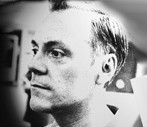
Charles William Yukl
Murderer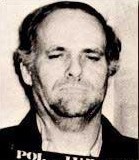 Ervil LeBaron
Murderer · USA · 1972
Ervil Morrell LeBaron (1925 to August 16, 1981) was the leader of a polygamous…
35 victims
Ervil LeBaron
Murderer · USA · 1972
Ervil Morrell LeBaron (1925 to August 16, 1981) was the leader of a polygamous…
35 victims
 Marvin Gray
Murderer · USA · 1975
Marvin Gray was convicted killer who claimed responsibility for 23 slayings and…
23 victims
Marvin Gray
Murderer · USA · 1975
Marvin Gray was convicted killer who claimed responsibility for 23 slayings and…
23 victims
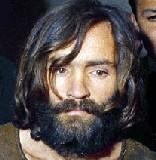 Charles Manson
Murderer · USA · 1969
Charles Milles Manson (born November 12, 1934) was an American criminal and mus…
9 victims
Charles Manson
Murderer · USA · 1969
Charles Milles Manson (born November 12, 1934) was an American criminal and mus…
9 victims
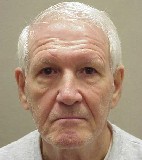 Robert Reldan
Murderer · USA · 1974
Name: Robert Reldan Robert Reldan was sentenced to life in prison on two counts…
8 victims
Robert Reldan
Murderer · USA · 1974
Name: Robert Reldan Robert Reldan was sentenced to life in prison on two counts…
8 victims
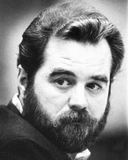 Dennis Duane Webb
Murderer · USA · 1973
Defendant: Dennis Duane Webb · Victims: John Rainwater and Lori Rainwater · Cou…
7 victims
Dennis Duane Webb
Murderer · USA · 1973
Defendant: Dennis Duane Webb · Victims: John Rainwater and Lori Rainwater · Cou…
7 victims
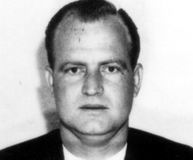 Gary Gene Tison
Murderer · USA · 1967
Gary Gene Tison was serving life sentences at the Arizona state prison. He had…
7 victims
Gary Gene Tison
Murderer · USA · 1967
Gary Gene Tison was serving life sentences at the Arizona state prison. He had…
7 victims
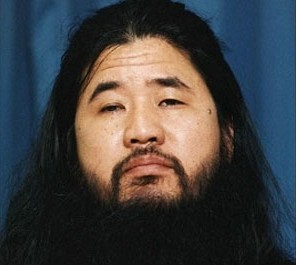 Shoko Asahara
Murderer · Japan · 1995
Shoko Asahara was the founder of Japan's controversial Buddhist religious group…
12 victims
Shoko Asahara
Murderer · Japan · 1995
Shoko Asahara was the founder of Japan's controversial Buddhist religious group…
12 victims
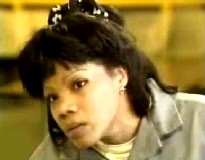 Awilda Lopez
Murderer · USA · 1995
Awilda Lopez was born on April 28, 1966. She was sentenced in relation to the b…
1 victim
Awilda Lopez
Murderer · USA · 1995
Awilda Lopez was born on April 28, 1966. She was sentenced in relation to the b…
1 victim
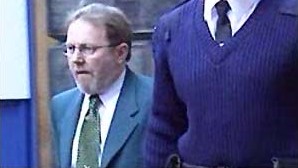 Andrew Walker
Murderer · United Kingdom · 1985
Royal Scots corporal Andrew Walker killed three Army colleagues in a payroll ro…
3 victims
Andrew Walker
Murderer · United Kingdom · 1985
Royal Scots corporal Andrew Walker killed three Army colleagues in a payroll ro…
3 victims
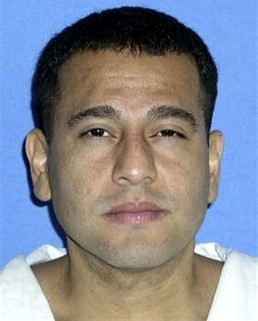 Carlos Alberto Granados
Murderer · USA · 1998
Name: Carlos Alberto Granados · Gender: Male · Age: 36 at execution · Race: His…
1 victim
Carlos Alberto Granados
Murderer · USA · 1998
Name: Carlos Alberto Granados · Gender: Male · Age: 36 at execution · Race: His…
1 victim
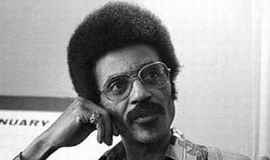 Warren Kimbro
Murderer · USA · 1969
Warren Aloysious Kimbro was a Black Panther Party member in New Haven, Connecti…
1 victim
Warren Kimbro
Murderer · USA · 1969
Warren Aloysious Kimbro was a Black Panther Party member in New Haven, Connecti…
1 victim
- Gender
- male
- Country
- USA
- Location
- New York, USA
- Date of birth
- 1935
- Age at first offence
- 31
- Characteristics
- mutilation
- Victim profile
- Suzanne Reynolds, 25 / Karen Schlegel, 23
- Method of murder
- St abbing with knife / Strangulation with a necktie
- Date(s) of murder
- 1966 / 1974
- Years active
- 1966–1974
- Date of arrest
- —
- Status
-
Died in custody
Hanged himself in prison with a shredded mattress cover on August 22, 1982; his death was ruled a suicide.
Other details
Charles William Yukl was a piano teacher in New York City and also worked in music as an accompanist and performer. He was self-employed as a piano teacher.
Background
Charles Yukl was born in Baltimore in 1935 to Czech parents. His parents were talented musicians who tethered him to a piano bench, and he was determined to mold him into a virtuoso. By age 4, Yukl could sight-read music. His mother, Dorothea Freitag, pushed him aside if he played a Chopin étude well and would play it better. Yukl's parents split up when he was 7. His mother moved to New York, where she had a long career as a composer and accompanist. Yukl moved to Los Angeles with his father, a trumpet player. His father was remote. At age 9, Yukl began seeking his father's attention by misbehaving, including setting eight arson fires. Yukl was described as a bright but disinterested student who excelled only at typing.
At age 17, Yukl dropped out of North Hollywood High and joined the Navy. He spent two years chronically AWOL before he washed out.
Yukl moved to New York in 1956 and reunited with his mother after 14 years. Their relationship had not improved. He worked days as a typist and nights as a pianist, earning a reputation as a ragtime specialist under the stage name Yogi Freitag. Yukl appeared regularly at the Red Onion in Manhattan and the Band Box in Union City, N.J., and he took weekend gigs in Bucks County, Pa., the Catskills, and Lake George in the Adirondacks. He was described as a shutterbug. In a photography class, he met a young Danish woman, Enken, whom he married in 1961.
The record described their sex life as disastrous, with Enken estimating they had sex less than once a year. By 1966, Yukl had begun a sideline as a $5-an-hour piano teacher and accompanist. One of his clients was Suzanne Reynolds, an aspiring singer.
The offence
On August 19, 1974, Karin Schlegel arrived at Yukl's Waverly Place flat to begin private after-hours tutoring at the director's apartment. The apartment was described as filled with photographic gear, including cameras, backdrops, lights, and deflectors. The account described Yukl as fondling himself while he leered at her through the lens. Schlegel demanded, “What are you doing?” Yukl replied, “D-d-do I turn you on?”
On August 20, 1974, the nude and strangled body of Karen Schlegel was discovered on the rooftop of an apartment house in Greenwich Village. The body was described as having been dead twelve hours when found by a janitor. The account stated that Yukl was a tenant of the house where Karen died. It also stated that he confessed to luring his victim with an advertisement placed in a theatrical magazine. It described that Karen Schlegel had been strangled with a necktie, stripped, and carried to the roof where she was found.
Investigation
Michael Newton, described as a parole officer, saw a TV news story about the murder and phoned a cop friend at the 13th Precinct. The conversation included the parole officer saying, “You know the body on the roof on Waverly Place?” and that the response was, “That’s where Charlie Yukl lives.” After a brief investigation, Yukl was charged with the murder.
Arrest
Yukl was charged with the murder following the investigation.
Trial
Psychiatrists found Yukl competent for trial, and he was formally indicted on September 6. On June 3, 1976, Yukl accepted a sentence of fifteen years to life in return for his guilty plea.
Sentencing
Yukl was sentenced to fifteen years to life following his guilty plea on June 3, 1976.
Outcome
On August 22, 1982, Yukl hanged himself in prison with a shredded mattress cover. His death was ruled a suicide.
Other offences and earlier case details
In 1966, the record stated that police responded to a homicide report at Yukl's apartment house and discovered the body of 25-year-old Suzanne Reynolds. The account described that Reynolds, a student of Yukl's, had been beaten, stripped, and stabbed to death before Yukl “found” her in a vacant flat, investigating after he “noticed” the open door on his way upstairs.
Yukl was arrested and charged with the murder next morning. The account stated that Yukl confessed under questioning before his attorney arrived at the jail. It also stated that months of wrangling over constitutional issues led to a plea bargain in February 1968, with reduced charges of manslaughter earning Yukl a sentence of seven to fifteen years in prison.
The account described that objections from the state were overruled, citing Yukl as “a good risk for parole.” It also stated that Yukl was released on parole in June 1973, two years before the expiration of his “guaranteed minimum” sentence. It said he waited fourteen months before he killed again.
The record provided additional biographical material related to Yukl’s earlier conviction and later parole. It included a statement attributed to Wallkill Warden Harold Butler: “I’ve seen thousands of inmates, and if we’re supposed to release anyone, he was the right guy,” and also: “There wasn’t a mark on his record ... I trusted him so much that I probably would have left him alone with my wife or daughter.” It included a statement attributed to Dr. Emanuel Feuer: “We were sure he was rehabilitated and one of the best, brightest, most articulate prisoners I have ever seen.” It also included Feuer’s quoted explanation of Yukl’s violence: “He hated women, who reminded him of his mother. He resented the pressure she put on him ... to succeed as a pianist.”
The record also described additional details about the earlier homicide, including that Dr. Elliot Gross began the autopsy, that the examination lasted longer than expected due to pressure to be thorough, and the cause of death as “asphyxiation due to strangulation.” It described that the body had also been sodomized and listed injuries described as “bone fractures, hemorrhages, abrasions, contusions of the face and neck, face lacerations, and multiple slash and incised wounds.” It stated that Gross recorded the case as case number 9198 with an appropriately numbered paper tag on the body's right big toe. It also described that the file involved detectives, an assistant district attorney John Keenan, and a judge Francis K. O’Brien who ordered Yukl held without bail pending grand jury action. It stated that on October 25, 1966, Yukl was officially charged with murder in the first degree.
The account included additional quoted statements attributed to Yukl, including “I-I-I had an urge to kill.” It also stated that when pressed by a judge to account for his actions, he said: “I-I-I had an urge to kill.” The record further stated that Yukl pleaded guilty to murder in that earlier case and was sent away for 15 years to life. It described that on Aug. 21, 1982, Yukl barricaded himself in his cell at Clinton prison, was talked out by a shrink, sent to the infirmary, and found dead there the next day. It also stated that he hanged himself with a strip of sturdy cloth torn from his mattress cover.
Quotes included in the case narrative (verbatim)
Suzanne Reynolds said nothing in the provided narrative excerpt, but Yukl was quoted repeatedly during the earlier account and the later incident included these specific quotes:
- Schlegel demanded: “What are you doing?”
- Yukl replied: “D-d-do I turn you on?”
- Yukl was quoted as saying: “I-I-I had an urge to kill.”
- Wallkill Warden Harold Butler was quoted as saying: “I’ve seen thousands of inmates, and if we’re supposed to release anyone, he was the right guy,” and: “There wasn’t a mark on his record ... I trusted him so much that I probably would have left him alone with my wife or daughter.”
- Dr. Emanuel Feuer was quoted as saying: “We were sure he was rehabilitated and one of the best, brightest, most articulate prisoners I have ever seen.” and: “He hated women, who reminded him of his mother. to succeed as a pianist.”
- Michael Newton was quoted as saying: “You know the body on the roof on Waverly Place?” and he said the cop friend replied: “That’s where Charlie Yukl lives.”
Spotted an error, or have more information about this case?